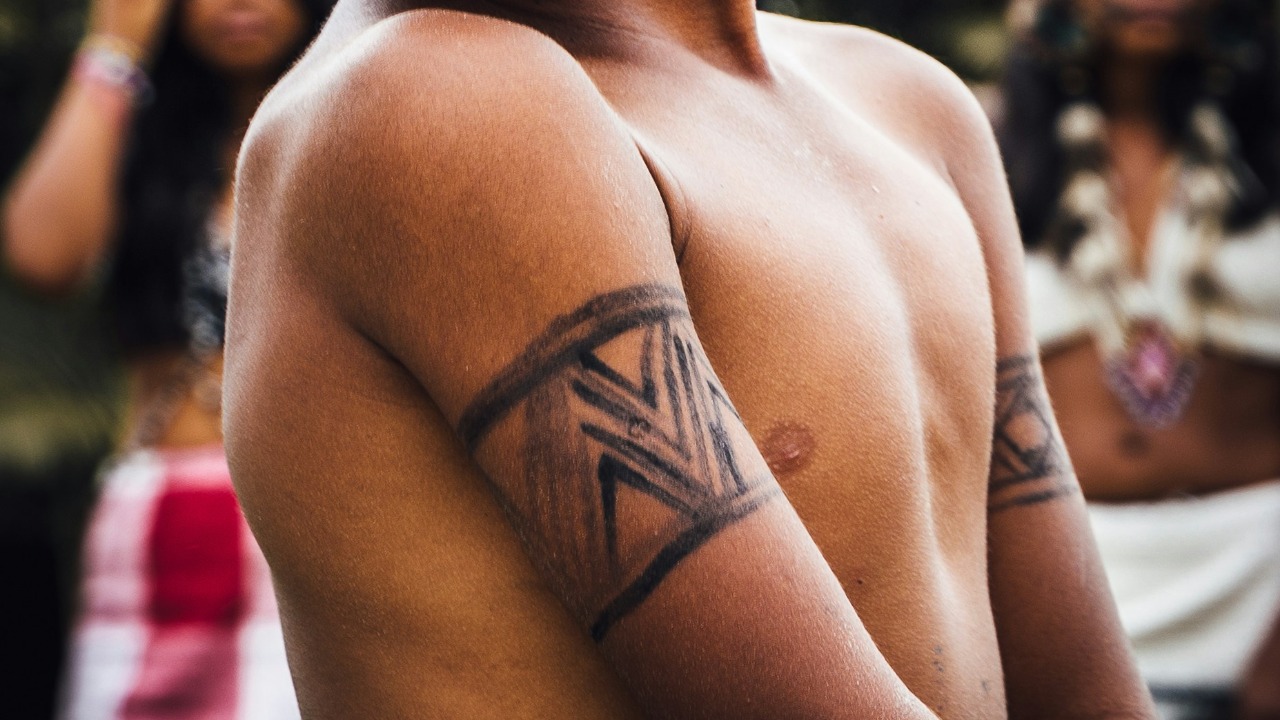

Archaeologists working in Sudan have uncovered something that upends assumptions about childhood in the ancient world: tiny mummified faces and limbs marked with deliberate ink designs. The 1,400-year-old Nubian toddler tattoos are not isolated curiosities but part of a broader pattern of body marking that is only now coming into focus. I see in this discovery a rare chance to watch a community negotiate faith, illness and identity on the skin of its youngest members.
The finds raise unsettling questions about pain, protection and power in a medieval society that blended African traditions with Christianity along the Nile. Researchers can map the ink, date the burials and catalog the motifs, yet the reasons adults chose to tattoo children who could barely walk remain elusive. That uncertainty is exactly what makes these small bodies such a powerful archive of belief.
The Nubian child mummies that changed the tattoo story
The turning point came at Kulubnarti, a cluster of cemeteries on an island in the Nile in what is now Sudan, where excavations revealed mummified children whose skin still carried inked symbols. Instead of a single odd case, investigators found that body marking was woven into community life, with tattoos appearing on faces, hands and torsos of the very young. The remains date to roughly 1,400 years ago, placing these children in a medieval Christian Nubian society that had already been in dialogue with the wider Mediterranean world for centuries.
When I look at the reporting on these burials, what stands out is how ordinary the tattooed children seem in every respect except their ink. They were wrapped and interred like their peers, suggesting that the practice was not a punishment or a marginal ritual but something compatible with mainstream belief. The study that first spotlighted the toddler tattoos framed them as part of a broader pattern of body art in the region, noting that the marks appear on individuals from different social backgrounds at Kulubnarti and other sites along the Nile, rather than being confined to a single elite or stigmatized group, a pattern described in detail in the Nubian toddler tattoo coverage.
Youngest-ever tattooed children and the scale of the practice
What makes these finds globally significant is not only their age but the age of the children themselves. Researchers argue that some of the tattooed individuals from Kulubnarti and neighboring cemeteries are among the youngest ever documented with permanent body art, including toddlers who may have been as young as one or two. That pushes the known lower boundary of tattooing far below the adolescent initiations that dominate popular imagination, forcing me to rethink how early in life communities could inscribe social meaning on the body.
The scale of the evidence is equally striking. Austin and colleagues did not base their conclusions on a handful of skeletons but on a systematic examination of 1,048 m mummified human remains from three archaeological sites in modern Sudan and documented tattoos on dozens of them. According to the same analysis, most of the Kulubnarti people with tattoos were children under age 11, a demographic skew that is hard to dismiss as coincidence and that suggests a cultural logic specifically tied to childhood rather than adult self-expression, as summarized in the report that notes how Most of the Kulubnarti individuals with ink were very young.
From 350 BCE to 1400 CE, a long arc of Nubian tattooing
The toddler tattoos sit at one end of a much longer story of body marking in the Nile corridor. Researchers at the Arizona State University and the University of Missouri have traced evidence of tattooing in Nubia across remains spanning from 350 BCE to 1400 CE, showing that the practice predates Christianity and survives well into the medieval period. That temporal sweep matters, because it suggests that what happened at Kulubnarti was not a brief fad but part of a deep regional tradition that adapted to new religious and political realities.
When I place the toddler tattoos against this 350 to 1400 CE backdrop, they look less like an anomaly and more like a late chapter in a story of continuity and change. An Abstract describing the broader project on Nubian tattooing emphasizes that evidence for body art in the region is long-standing, but that no systematic studies had previously compared application techniques, motifs and demographics across such a wide time span. The new work fills that gap, showing that while the tools and symbols may have shifted, the idea of inscribing meaning on skin remained a resilient thread in Nubian cultural life.
How scientists actually see the ink on 1,400-year-old skin
One of the quiet revelations of this research is methodological. Tattoo ink on mummified skin is often invisible to the naked eye, especially after centuries of desiccation and discoloration, so the team turned to multispectral imaging to coax the designs back into view. By photographing the remains under different wavelengths of light and digitally enhancing the contrasts, they could distinguish carbon-based pigments from the surrounding tissue, revealing crosses, lines and other motifs that would otherwise have gone unnoticed.
The technical approach is not just a laboratory trick, it reshapes the historical record. A study described in Proceedings of the National Academy of Sciences notes that the team uncovered remains of previously unknown individuals with tattoos by using this imaging, and that the ink was often applied by pricking or scraping rather than with a needle in the modern sense. I find it telling that the same technology used to read erased manuscripts is now being used to read erased bodies, turning what looked like plain skin into a dense archive of social information.
Motifs, methods and the puzzle of toddler pain
The motifs on the children’s faces and limbs are not random doodles. Reports describe crosses and other linear designs that likely carried religious or protective meanings, especially in a community where Christianity had taken root but older beliefs had not entirely vanished. The analysis of the 1,400-Year-Old mummies of Nubian children with facial tattoos emphasizes that archaeologists in Sudan have discovered not only the marks themselves but also patterns in their placement, suggesting that certain parts of the body were favored for specific symbols.
That raises a difficult question I cannot ignore: what did it mean to subject a toddler to the pain of tattooing? The same analysis notes that the motifs and application methods were consistent enough to imply experienced practitioners, which hints at a ritualized context rather than ad hoc experimentation. If adults believed that a cross on a child’s forehead could shield them from illness or spiritual harm, the short-term suffering might have been framed as a necessary sacrifice, a logic that resonates with other painful protective practices in world history, from scarification to ear piercing.
Christianity, the Nile River Valley and the meaning of marked faces
The religious backdrop to these tattoos is as important as the ink itself. The remains in question come from three archaeological sites in the Nile River Valley in modern Sudan, spanning a period when Christianity was spreading through Nubia and reshaping local ritual life. Some scholars argue that facial tattoos in particular may have been influenced by Christian symbols, turning the skin into a kind of portable icon that signaled faith and sought divine protection.
At the same time, the long chronology from 350 BCE to 1400 CE suggests that tattooing did not originate with Christianity, but that the new religion may have provided fresh meanings for an older practice. One analysis explicitly frames the phenomenon as part of a broader story of how Christianity may have brought face tattoos to medieval Nubia, not by inventing the needle but by infusing existing body art with crosses and other motifs tied to the new faith. In that light, a toddler’s marked face becomes a site where local tradition and imported theology meet, a living canvas for negotiating what it meant to be both Nubian and Christian.
Kulubnarti’s harsh environment and the search for protection
Life at Kulubnarti was not gentle, and that context matters when thinking about why adults might have turned to tattoos for their children. Bioarchaeological studies of the skeletons point to high rates of childhood stress, malnutrition and disease, painting a picture of a community under constant pressure from its environment. In such a setting, any practice that promised to shield the vulnerable, whether spiritually or socially, would have carried enormous appeal.
Researchers who worked on the Kulubnarti material have suggested that some tattoos may have been linked to health issues, perhaps as amulets against fevers or other ailments that disproportionately struck the young. The report that notes how Settings in the study focused on individuals from Kulubnarti between roughly 550 and 855 CE underscores that the community lived through periods of environmental and political instability. When I connect those dots, the toddler tattoos look less like aesthetic choices and more like desperate investments in any available form of protection.
Unveiling the Mystery: competing theories about why toddlers were tattooed
Even with all this data, the core question remains unsettled: why mark such young children at all? One line of interpretation, highlighted in an analysis titled Unveiling the Mystery, treats the tattoos as part of a broader strategy for navigating the era’s cultural and religious transitions. In this view, marking toddlers with crosses or other motifs was a way to anchor them firmly within a Christianized community at a time when identities were in flux, a kind of spiritual citizenship stamped on the body before the child could speak.
Another possibility is that the tattoos functioned as protective charms or indicators of vulnerability, perhaps reserved for children who were sickly or born under ominous circumstances. The same discussion of Why Nubians Tattooed Toddlers Years Ago and the companion section Unveiling the Past, Tattooing Children, emphasizes that the practice likely carried layered meanings that combined health, faith and social belonging. I find it plausible that no single explanation will suffice, and that different families may have turned to the needle for different reasons, all of them now collapsed into the silent testimony of ink on ancient skin.
What the PNAS study adds, and what it cannot answer
The publication of the team’s findings in PNAS marks a milestone in the scientific study of ancient tattooing. By combining multispectral imaging, demographic analysis and contextual archaeology, the researchers have moved the conversation beyond isolated curiosities to a population-level understanding of who was tattooed, where and possibly why. The fact that They published their findings in a high-profile venue also signals that body art, once dismissed as marginal, is now recognized as a key line of evidence for reconstructing past lives.
Yet even the most sophisticated imaging cannot recover the voices of the parents who held their toddlers still while ink was pushed into tender skin. The study can map correlations between age, sex, motif and burial context, but it cannot tell me how a mother explained the procedure to a frightened child, or whether a father believed the cross on a forehead would truly keep fever at bay. That gap between data and experience is where interpretation must tread carefully, acknowledging the power of the evidence while resisting the temptation to project modern sensibilities onto a community that lived and died along the Nile more than 1,000 years ago.
More from MorningOverview