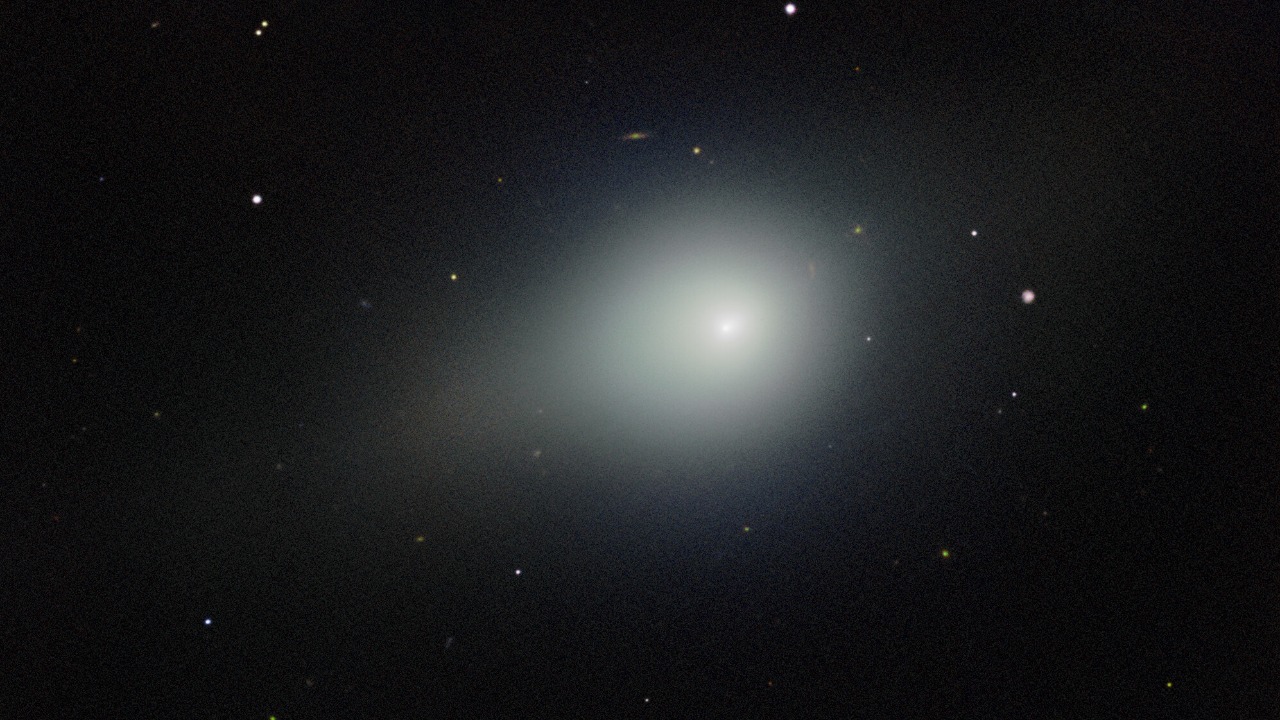

When the interstellar comet 3I/ATLAS swept through the inner solar system in Dec, it offered Earth a rare glimpse of material forged in another star’s neighborhood and turned a niche astronomical event into a global spectacle. Its closest pass by Earth on Friday, Dec. 19, 2025, became a moment when professional observatories, space probes and backyard telescopes all converged on the same icy visitor. I watched as a routine catalog entry transformed into a cultural touchstone, reshaping how people imagine our place in the wider galaxy.
3I/ATLAS captivated scientists because it carried clues from beyond Sol, and it captivated everyone else because it felt like a message in a bottle from deep space. The comet’s brief visit forced hard questions about how we study such fast, one‑off objects, how we communicate about them and how quickly speculation can outrun evidence in the age of viral feeds.
From quiet survey blip to “3I” status
The story began quietly, with the Asteroid Terrestrial, Last Alert System spotting a faint, moving point that would later be cataloged as 3I/ATLAS. That same network has discovered other icy bodies, which is why references to Comet ATLAS already existed before this object earned its own designation. Once astronomers realized that its path could not be bound to the Sun, the object was formally tagged as the third known interstellar visitor, and 3I/ATLAS, also known as C/202…, joined a very short list of bodies that have crossed our system from outside Sol, with a trajectory that takes it no closer than 1.8 AU, posing no threat, to Earth, according to 3I/ATLAS.
That interstellar origin was not assumed, it had to be demonstrated. Scientists measured the object’s speed and the shape of its orbit and confirmed that it was not gravitationally bound to the Sun, which meant it must have come from beyond our solar system. Those calculations, combined with follow‑up imaging, led to the conclusion that Comet 3I/ATLAS is only the third known object to pass through our solar system from interstellar space, a status summarized in Quick Facts.
What makes an interstellar comet different
Interstellar objects are not just visitors, they are messengers from other planetary nurseries, and Comet 3I/ATLAS fits that bill. As an interstellar object, it comes from outside our Sol system, which means its ices and dust preserve conditions from a completely different protoplanetary disk. In practical terms, that gives astronomers a sample of alien chemistry without sending a spacecraft to another star, a point underscored in the Comet 3I/ATLAS frequently asked questions.
Because 3I/ATLAS is unbound, it follows a hyperbolic path that will carry it back into interstellar space once it leaves the Sun’s gravitational influence. That trajectory, combined with its speed, means scientists have only a short window to observe it before it fades into the dark. The same FAQ explains that this object is an interstellar comet, not an asteroid, because it shows the characteristic coma and tail of sublimating ice, making it a rare chance to compare how a comet from another system behaves relative to the icy bodies that orbit within Sol.
ESA and NASA scramble to observe a fleeting visitor
Once the interstellar nature of 3I/ATLAS was clear, The European Space Agency moved quickly to coordinate observations. The European Space Agency, ESA, reacted promptly to the discovery of ATLAS on 1 July 2025, and Soon after they were alerted they began organizing ground and space‑based campaigns to track the comet’s brightness, rotation and outgassing, as detailed in ESA observations. That rapid response reflects how much was learned from the previous two interstellar objects and how determined agencies were not to miss another opportunity.
NASA also leaned on its existing hardware to capture the comet from a unique vantage point. NASA’s Parker Solar Probe observed interstellar comet 3I/ATLAS from Oct. 18 to Nov. 5, 2025, using its WISPR (Wide‑Field Imager for Parker Solar Probe) instrument while the spacecraft was about 19 million miles from the comet, according to Parker Solar Probe. That geometry let researchers see how the comet’s tail interacted with the solar wind from inside the flow, something that is impossible from Earth’s orbit alone.
The safe but dramatic Earth flyby
For all the drama around its arrival, 3I/ATLAS was never a danger to the planet. Comet 3I/ATLAS is only the third known object to pass through our solar system from interstellar space, and its closest approach kept it about 270 million kilometers from Earth, a distance that the Quick Facts page notes as roughly 1.8 AU, which posed no threat to the planet, as spelled out in the same Comet overview. That safe separation did not stop some corners of the internet from speculating about impacts, but the orbital math was clear.
Even at that distance, the geometry of the flyby made for a compelling show. The interstellar comet 3I/ATLAS made its closest approach to Earth today (Dec. 19, 2025), a moment that live blogs framed as the key chance to see the object as it swept past our planet’s orbit, according to coverage that told readers Here is the latest news you need. That same reporting emphasized that the comet’s speed and distance meant it would not linger, so observers had to be ready during that narrow window.
How 3I/ATLAS became a viral obsession
What surprised me most was not that astronomers were excited, but how quickly the wider public latched onto this icy traveler. Earlier in Dec, one feature traced how interstellar comet 3I/ATLAS went from a routine discovery to a viral obsession in 2025, noting that social media prompts to Share, Join the conversation, Follow and Add the story as a preferred source on Google helped push the comet into mainstream feeds, as described in a piece on how interstellar comet 3I/ATLAS captured attention. The narrative of a visitor from another star system arriving in our “cosmic neck of the woods” proved irresistible.
Local outlets helped translate that cosmic story into something people could act on. One Arizona‑focused explainer framed the object in accessible terms, asking Whether you need an introduction to or a refresher about 3I/ATLAS and promising everything to know about the interstellar object as it neared Earth, a service‑oriented approach laid out in what to know. That mix of national fascination and local guidance turned the flyby into a shared event, not just a headline.
The view from backyards, livestreams and Florida beaches
As the flyby approached, practical questions took over: where is 3I/ATLAS, and how can people see it? Coverage aimed at Florida readers explained that the interstellar comet 3I/ATLAS is making its closest approach to Earth on Friday, Dec. 19, 2025, and noted that Scientists confirmed the object originated outside our solar system and could be observed with a small telescope, according to a guide on where is 3I/ATLAS. That reassurance, that a modest backyard setup was enough, helped democratize the experience.
On the day of closest approach, another update emphasized that Interstellar comet 3I/ATLAS made news in July 2025 and could now be watched from Florida with a telescope or via online livestreams, answering What is 3I/ATLAS and Why scientists say it is an interstellar comet in a single package, as described in the piece on what is 3I/ATLAS. Between those guides and a wave of YouTube streams, the comet became a kind of global star party, with people comparing views from different latitudes in real time.
Hubble, Parker and the science payoff
Behind the public spectacle, the science case for 3I/ATLAS was compelling. Given that it is only the third interstellar object ever observed zipping through our solar system, astronomers devoted some of their most powerful instruments to the comet, including the Hubble Space Telescope, which captured images of the coma and tail as the object was heated by the Sun in October, as reported in a feature that opened with the word Given. Those images showed jets of gas and dust streaming off its solid, icy nucleus, behavior that could be compared directly with comets born in our own system.
Closer to the Sun, NASA’s Parker Solar Probe added a different layer of data. As noted earlier, NASA’s Parker Solar Probe observed interstellar comet 3I/ATLAS from Oct. 18 to Nov. 5, 2025, with WISPR while about 19 million miles from the comet, a configuration that let scientists study how the solar wind shaped the tail and how charged particles interacted with the comet’s outflow, as detailed in the Parker Solar Probe blog. Together, Hubble’s high‑resolution imaging and Parker’s in situ vantage point turned a fleeting flyby into a rich laboratory for understanding how interstellar ices respond to our star.
Misinfo, “alien spaceship” fantasies and the Center for an Informed Public
As with previous interstellar visitors, the gap between what scientists knew and what the public wanted to believe filled quickly with speculation. A detailed analysis from the Center for an Informed Public at the University of Washington, By Mert Can Bayar, traced how conspiracy narratives took shape around the comet. On July 1, 2025, the ATLAS survey quietly logged the object, but as more details emerged, claims that 3I/ATLAS was an alien craft began to flourish, a pattern dissected in the report hosted by the Center for an Informed Public.
That work highlighted how ambiguous images and technical language can be repurposed into sensational claims when context is stripped away. It also showed how quickly fringe ideas can jump platforms once influencers frame a scientific event as a mystery that “they” are hiding, a dynamic that played out in parallel with careful explainers from agencies and local outlets. The University of Washington team’s focus on the survey data and the timeline of posts around 3I/ATLAS offers a template for how researchers might respond the next time an interstellar object becomes a canvas for alien fantasies.
Media, livestreams and the aesthetics of a passing comet
Part of the comet’s appeal lay in how it looked, and how that look was packaged. A widely shared video described how, deep in the black, something is moving fast, interstellar Comet 3i Atlas, a visitor from beyond our solar system, is now sweeping through the inner regions, pairing dramatic narration with animations and telescope footage in a clip titled 3I/ATLAS. That kind of cinematic framing helped people who could not see the comet directly feel as if they were part of the encounter.
Long‑form features also leaned into the emotional resonance of a brief visit. One reflective piece noted that 3I/ATLAS recently passed by Earth on Friday, Dec. 19, and gave astronomers a fleeting but invaluable chance to study material that had traveled into our solar system from interstellar space, describing how researchers were already saying goodbye to the interstellar visitor that briefly called our solar system home, as recounted in Saying Goodbye. That tone, halfway between scientific report and elegy, captured why a lump of ice and rock could stir such feeling.
What 3I/ATLAS leaves behind
Now that 3I/ATLAS is receding into the dark, what remains is a trove of data and a set of lessons about how we respond to rare cosmic events. The ESA FAQ on Comet 3I/ATLAS stresses that each interstellar object helps refine models of how planetary systems form and scatter debris, and that this comet, as an interstellar object coming from outside our Sol system, adds a crucial third data point to that emerging picture, as summarized in the ATLAS overview. For scientists, the real legacy will be in the spectra, light curves and plasma measurements that will be analyzed for years.
For the rest of us, the legacy is more intangible but no less real. The live blogs that told readers where to look, the Arizona explainers that asked Whether you need an introduction, the Florida guides that walked through What and Why, and the viral prompts to Share and Follow all turned a distant comet into a shared human experience. As one live coverage hub put it while tracking the interstellar comet 3I/ATLAS during its closest approach to Earth in Dec, the event was a reminder that, every so often, something from far beyond our world sweeps through our skies and briefly unites our attention, a sentiment woven through the rolling updates that said ATLAS was closest to Earth today.
More from MorningOverview