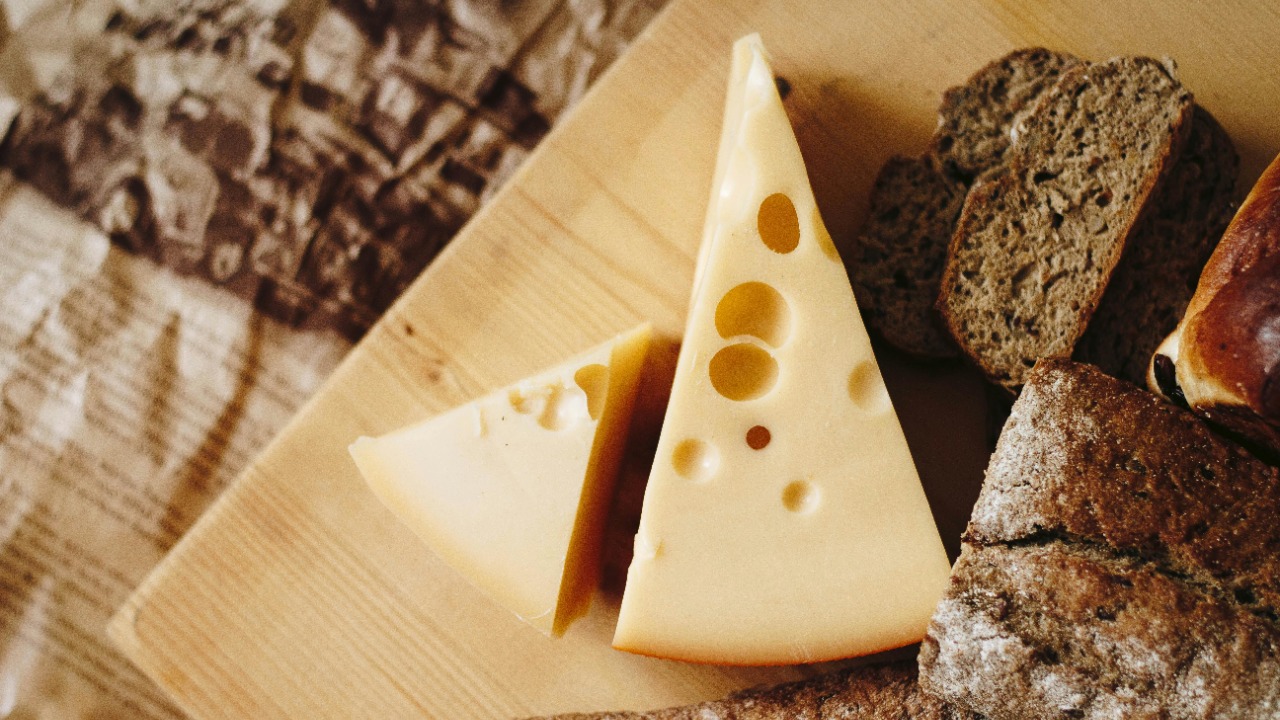

For decades, public health advice has warned people away from full-fat dairy, casting foods like cheddar and cream as indulgences to be rationed. A long-running body of research from Sweden is now challenging that script, linking higher intake of high-fat cheese and cream to a lower risk of dementia over time. The findings do not give anyone a free pass to binge on saturated fat, but they do suggest that certain rich dairy products may play a more nuanced role in brain health than traditional low-fat dogma allows.
Instead of focusing only on cholesterol and calories, the new evidence pushes the conversation toward how complex foods interact with the aging brain. By tracking people’s diets and cognitive outcomes over roughly a quarter of a century, the researchers behind this work argue that high-fat cheese and cream could offer a modest but meaningful layer of protection, particularly against vascular forms of dementia. I will walk through what the data actually show, how strong the signal looks, and what it might mean for anyone trying to eat in a way that keeps memory and thinking as sharp as possible into older age.
What the long Swedish study actually found
The core of the story is a large population study that followed adults in Sweden for about 25 years, carefully recording what they ate and who went on to develop dementia. According to a detailed summary of the project, the researchers found that people who consumed more high-fat cheese and cream had a lower risk of dementia compared with those who ate little or none of these foods, even after accounting for other lifestyle factors. The work is framed in the original report as a set of Highlights that emphasize a potential “dose” of protection for the brain rather than a miracle cure.
One key detail is that the protective association was specific to high-fat dairy, not to low-fat versions or to other animal fats. A separate overview of the same Swedish cohort notes that the study tracked a broad range of dairy products and found that high-fat cheese and cream stood out, while low-fat dairy and non-dairy fats did not show the same pattern of benefit. That broader context is captured in an analysis of dairy consumption linked to lower dementia risk, which stresses that the participants were all from Sweden and that the effect was tied to specific foods rather than to total fat intake.
How much cheese and cream seemed to matter
When researchers translated food-frequency questionnaires into real-world portions, the numbers were surprisingly modest. People who ate at least two slices of high-fat cheese a day, roughly equivalent to 40 grams, had about a 13 percent lower risk of developing dementia than those who rarely ate cheese. A separate breakdown of the same data reports that those higher cheese eaters saw up to a 16 percent reduction in risk, a range that is echoed in coverage describing a 13 to 16 percent lower incidence among people who regularly consumed high-fat cheese and cream, as summarized in a report on Key takeaways from the Swedish work.
Cream intake showed a similar pattern. People who averaged at least 20 grams of high-fat cream per day, about one and a half tablespoons, also had a lower dementia risk than those who consumed none. That specific figure appears in multiple explainers, including one that notes that People who reached that 20 gram threshold did better cognitively over time, while low-fat cream or butter did not show the same association. Another summary aimed at general readers translates the cheese portion into half an ounce, pointing out that eating at least 15 grams (0.5 ounces) of full-fat cheese daily was linked to lower dementia risk in the Swedish data, a detail highlighted in a feature on New research into full-fat cheese.
Who was studied and how dementia was tracked
The Swedish project was not a quick snapshot but a long observational study that followed thousands of adults into older age. One technical summary notes that 3,208 people developed dementia during the follow-up period, which gives a sense of the statistical power behind the findings. The same report explains that the participants were tracked for an average of 25 years and that they kept detailed records of their food preparation methods, allowing researchers to distinguish between high-fat and low-fat dairy and to adjust for other dietary patterns.
Another layer of evidence comes from Japan, where a separate cohort of older adults was used to examine cheese intake and dementia risk in a different cultural and dietary context. In that study, Participants aged ≥65 years without prior LTCI certification were included, and cheese consumption was assessed at baseline before people were followed for incident dementia. The authors report that baseline covariates were well balanced and that higher cheese intake was associated with a lower hazard ratio for dementia (0.95, p = 0.015), reinforcing the idea that cheese, and not just Swedish eating habits, may be linked to cognitive outcomes in older adults.
Why high-fat cheese might help the brain
The Swedish team and outside commentators have been careful not to overclaim on mechanisms, but several plausible explanations have emerged. High-fat cheeses like cheddar, Gouda, and Brie are rich in fat-soluble vitamins, bioactive peptides, and specific fatty acids that may support neuronal membranes and reduce inflammation. A detailed explainer on whether cheeses like cheddar, Gouda, and Brie are linked to lower dementia risk notes that these products also contain fermentation-derived compounds that could influence the gut microbiome, which in turn has been tied to brain health, a line of reasoning explored in a piece asking What high-fat cheese and cream might be doing in the brain.
Another hypothesis centers on vascular health. The Swedish data show particularly strong associations with vascular dementia, a condition in which the brain does not receive enough blood because of problems in the vessels that supply it. One analysis aimed at general science readers notes that when looking specifically at vascular dementia, the risk reduction associated with daily cheese intake was even more pronounced, a point emphasized in a feature that opens with the line When a daily dose of cheese could reduce dementia risk. The idea is that certain dairy fats and proteins may improve lipid profiles, reduce blood pressure, or affect clotting in ways that ultimately protect small vessels in the brain, although those pathways remain under active investigation.
What the neurologists and nutrition experts are saying
Neurologists who work with patients living with dementia have greeted the Swedish findings with cautious optimism. One clinician-focused overview notes that a higher intake of high-fat cheese and cream was linked to lower dementia risk in the Swedish cohort, but it also stresses that the study is observational and cannot prove cause and effect, a nuance captured in a summary of Key Takeaways from the research. Another piece aimed at people living with neurological conditions frames the results as part of a broader conversation about brain-healthy diets, explaining that the data suggest high-fat dairy may lower dementia risk but should be interpreted alongside evidence for patterns like the Mediterranean and MIND diets, a balance reflected in an article titled Could Cheese Help Boost Brain Health and New Study Suggests High, Fat Dairy May Lower Dementia Risk, which is summarized in a feature on Could Cheese Help Boost Brain Health.
Nutrition experts, for their part, are using the study to argue for a more nuanced view of saturated fat. One researcher quoted in coverage of the Swedish work points out that there is no one-size-fits-all diet and that high-fat cheese and cream can be part of a healthy pattern when eaten in moderate amounts. That perspective is echoed in a broadcast segment that notes that People should not interpret the findings as a license to consume unlimited cheese, but rather as evidence that full-fat dairy may not be as harmful, and may even be beneficial for the brain, when it is part of an overall balanced diet rich in plants, whole grains, and unsaturated fats.
Why low-fat dairy did not show the same benefit
One of the most striking aspects of the Swedish data is what did not help. Across multiple analyses, low-fat dairy products, including low-fat cheese, milk, and cream, did not show a significant association with reduced dementia risk. A detailed news report on the study notes that low-fat dairy and other animal fats were not linked to lower dementia risk, in contrast to high-fat cheese and cream, a distinction spelled out in a segment explaining that Low-fat dairy and low-fat cream or butter did not appear to confer the same protection.
There are several possible reasons for this divergence. Removing fat from dairy changes not only the calorie content but also the matrix of fat-soluble vitamins, bioactive lipids, and texture that may influence how the body digests and uses these foods. Some researchers speculate that the fermentation process in full-fat cheeses, combined with their intact fat content, could be key to the observed benefits, while low-fat versions may lack some of those components. A research-focused article from Lund University, titled Full-fat cheese linked to a lower risk of dementia, underscores that the protective association was seen with full-fat cheese specifically, not with reduced-fat products, a point that is central to the analysis provided in the university’s overview of Full-fat cheese and dementia risk.
How this fits into the broader debate over fat and brain health
The Swedish findings land in the middle of a long-running debate about dietary fat, cardiovascular disease, and cognitive decline. For years, public health guidelines have urged people to limit saturated fat to protect the heart, and by extension the brain, given the tight link between vascular health and dementia. The new data do not overturn that guidance, but they do suggest that the source and context of saturated fat matter. A broad overview of the Swedish work notes that the debate about low-fat diets has long shaped health advice, yet the new evidence indicates that full-fat cheese may be an exception, a nuance that is front and center in the university analysis of full-fat cheese and dementia.
Other commentators have seized on the story to highlight how nutrition science is evolving. One consumer-focused feature opens with a celebratory tone for cheese lovers, explaining that eating high-fat cheese may lower dementia risk and that cheese can be part of a brain-healthy diet when combined with fruits, vegetables, and whole grains. That piece, which uses the playful framing Cheddar Lovers, Rejoice and the phrase Eating High, Fat Cheese May Lower Dementia Risk, underscores that Cheese is not a standalone solution but one component of a broader lifestyle approach, a message captured in a report titled Cheddar Lovers, Rejoice that also notes the findings were published in a leading neurology journal.
What this means for your plate right now
For individuals trying to translate these findings into daily choices, the message is both encouraging and measured. The Swedish data suggest that incorporating modest amounts of high-fat cheese and cream into meals could be compatible with, and possibly supportive of, long-term brain health, especially when those foods replace ultra-processed snacks or refined carbohydrates rather than adding extra calories on top. A European explainer on the study notes that Participants in the study who ate at least two slices of high-fat cheese a day and those who used cream in cooking had lower dementia risk, but it also stresses that these foods were part of traditional Swedish meals rather than constant snacking.
At the same time, clinicians are reminding patients that more research is needed before anyone rewrites their entire diet around cheese. One hospital-based summary of the work quotes the lead researcher as saying that more research is needed to confirm the results and to explore whether consuming certain high-fat dairy truly protects the brain or whether it is a marker for other healthy behaviors. That cautionary note is central to a hospital health library piece titled More research is needed, which explains that for the new study, researchers compared people who consumed high-fat cheese and cream to those who consumed none, and that the association, while promising, does not prove causation, a point underscored in the overview of how high-fat cheese and cream might protect the brain.
The limits of the evidence and what comes next
As compelling as the Swedish data are, they come with important caveats. The study is observational, which means it can identify associations but cannot definitively say that high-fat cheese and cream cause lower dementia risk. There could be unmeasured confounders, such as socioeconomic status, other aspects of diet, or genetic factors, that influence both dairy intake and brain health. A detailed news report on the study emphasizes that the participants were all from Sweden, a country with specific dietary patterns and healthcare systems, which may limit how directly the findings apply to other populations, a limitation noted in the summary of Dairy Consumption Linked to lower dementia risk.
Researchers are already calling for randomized controlled trials and mechanistic studies to test whether specific components of cheese and cream can be isolated and studied more directly. Some are interested in whether particular cheese styles, such as aged versus fresh, or specific fermentation cultures, might have different effects on the brain. A general-interest feature that asks whether cheese could protect brain health notes that the current work is a starting point, summarizing the findings as a set of Highlights that point to a possible “dose” of protection for the brain but stop short of prescribing cheese as medicine, a framing that appears in the question, Could cheese protect your brain health, in a report that asks Could cheese protect your brain health.
How to balance enjoyment, risk, and emerging science
For now, the most practical takeaway is a modest one. If you enjoy full-fat cheeses like cheddar, Gouda, or Brie, the emerging evidence suggests you may not need to feel guilty about including them in your diet in small daily amounts, especially if you are otherwise eating in line with established brain-healthy patterns rich in vegetables, fruits, legumes, and whole grains. A lifestyle-focused piece that asks whether eating more high-fat cheese and cream could help avoid dementia frames the Swedish data as a 13 to 16 percent reduction in risk for those who regularly consumed these foods, a figure that is presented as one of several Key statistics rather than as a guarantee.
At the same time, it is worth remembering that dementia risk is shaped by a web of factors, including genetics, education, physical activity, sleep, and cardiovascular health. Cheese alone will not override the effects of smoking, uncontrolled hypertension, or social isolation. A consumer-friendly explainer that asks whether eating more high-fat cheese and cream can help avoid dementia closes by reminding readers that diet is just one piece of the puzzle and that regular exercise, cognitive engagement, and medical care remain central to protecting brain health. Another feature that reports that a daily dose of cheese could reduce dementia risk underscores that the study’s findings are promising but not prescriptive, summarizing the core message with the line that A daily dose of cheese may help, but only as part of a much larger lifestyle picture.
More from MorningOverview