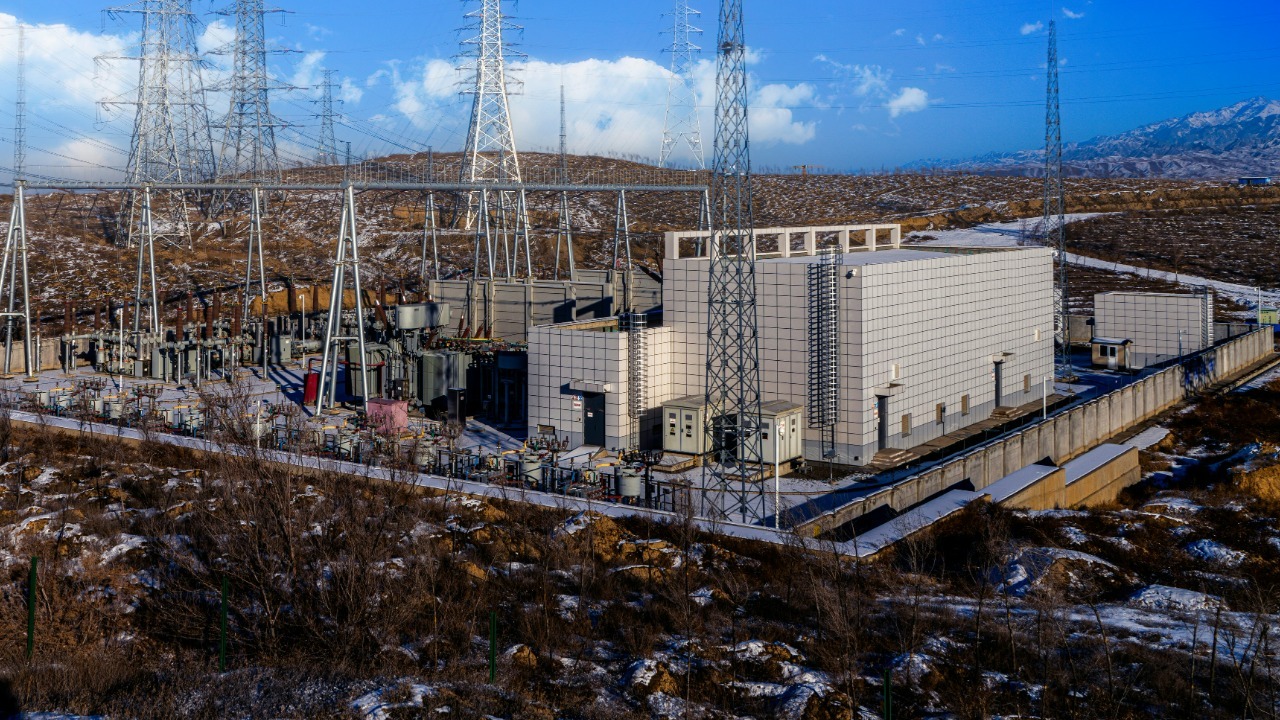

Michigan regulators have cleared the way for what is set to become the state’s largest artificial intelligence hub, approving power contracts for OpenAI’s massive Stargate data center even as public anger over costs, climate impacts, and process transparency intensifies. The decision locks Michigan into a central role in OpenAI’s $500-billion national buildout, but it has also turned a once-obscure utility proceeding into a flashpoint for residents worried they will be left paying the bill. I see the clash in Michigan as a test case for how far communities are willing to go to resist the physical footprint of the AI boom.
The project’s backers frame it as a once-in-a-generation economic opportunity, while critics describe it as a “uniquely evil” bargain that trades higher bills and weaker climate rules for a handful of high-tech jobs. As construction timelines accelerate and legal challenges loom, the Stargate data center has become a proxy fight over who benefits from AI and who bears its hidden costs.
Stargate’s Michigan green light and the $500-billion bet
At the center of the controversy is a sprawling facility that utility filings describe as Michigan’s largest AI data center, a project that hinges on a dedicated supply of new power and a tight construction schedule. Regulators have now allowed DTE Energy to move ahead with contracts that will feed the site, clearing a major hurdle for a complex that is expected to draw enormous amounts of electricity and to begin construction on an aggressive timeline tied to OpenAI’s broader infrastructure push. The approval effectively signals that state officials are willing to prioritize this industrial-scale computing hub over lingering doubts about how it will reshape the grid and local communities.
The Michigan build is one piece of OpenAI’s sweeping “Stargate” initiative, a $500-billion nationwide program that Chief Executive Officer Sam Altman has pitched as essential to keep up with the computational demands of advanced AI models. In regulatory documents, the utility describes the project as part of OpenAI’s $500-billion, nationwide “Stargate” push, a phrase that underscores both the staggering capital at stake and the company’s ambition to anchor AI capacity in a handful of mega-sites rather than scattered server rooms. That framing, captured in one filing that even references a $500 figure in the context of the broader investment, has helped turn what might have been a niche energy proceeding into a high-profile referendum on how much public risk should underwrite private AI expansion, as reflected in the description of Michigan’s largest AI data center.
Regulators, DTE, and the 1.4-gigawatt power deal
The approval that unlocked the project rests on a complex set of power contracts between DTE and the data center’s backers, designed to guarantee a dedicated supply of up to 1.4 gigawatts of electricity. That scale rivals the output of a large nuclear plant, and it has forced regulators to weigh the risk that such a single customer could distort planning for the rest of the grid. By signing off on the deal, the Michigan Public Service Commission signaled that it believes the structure of the contracts, and the promises of cost recovery from the customer, are enough to protect other ratepayers from being dragged into a financial hole if the project falters.
One key element is DTE’s agreement with Green Chile Ventures, a subsidiary of Oracle that is acting as the data center’s development arm. Under that contract, Green Chile Ventures is required to pay 80% of certain costs tied to the new power infrastructure, a provision that supporters say will shield ordinary customers from the most volatile expenses associated with the buildout. The arrangement, described in detail in filings that outline how DTE and Green Chile Ventures, an Oracle subsidiary, will share risk, is central to the argument that the project can be integrated into the grid without saddling households with runaway costs, as laid out in coverage of how DTE’s contract with Green Chile Ventures assigns 80% of the burden.
Sam Altman’s vision and the national Stargate strategy
OpenAI CEO Sam Altman has framed Stargate as a necessary response to the explosive growth in AI workloads, arguing that only a handful of hyperscale data centers can deliver the reliability and efficiency needed for the next generation of models. Shortly after President Donald Trump took office, Altman rolled out the $500 billion Stargate project as a kind of moonshot for American AI capacity, positioning it as both an industrial policy play and a technological imperative. In that narrative, Michigan is not just another site but a flagship node in a network that is supposed to keep U.S. companies ahead in the global race for compute.
Regulatory filings and public remarks tie the Michigan facility directly to this national strategy, describing it as one of several mega-projects that will collectively absorb hundreds of billions of dollars in capital and vast amounts of electricity. The same documents that reference the $500 billion Stargate plan also note that the Michigan power contracts were evaluated on their impact on prices, reliability, and the environment, a triad of concerns that encapsulates the broader debate over whether AI infrastructure should be treated like traditional heavy industry. In my view, the fact that a single corporate initiative can command this level of regulatory attention, and that a CEO like Sam Altman can link local utility decisions to a national $500 billion vision, shows how tightly intertwined AI has become with energy policy, as reflected in the detailed account of how regulators weighed the Stargate plan.
“Uniquely evil” or economic lifeline? Local backlash intensifies
Outside the hearing rooms, the reaction has been far less measured, with some Michigan residents branding the Stargate data center “uniquely evil” and warning that it will drive up bills while undermining the state’s climate ambitions. Opponents argue that the project effectively asks households to subsidize a private AI boom through higher rates and relaxed environmental safeguards, all for a facility that will employ far fewer people than traditional factories or auto plants. That anger has spilled into public meetings and street protests, where residents have framed the data center as a symbol of how tech companies extract value from communities without offering commensurate benefits.
One of the most potent critiques centers on the claim that the project could mean higher bills and the end of Michigan’s climate laws, a fear that has galvanized Local activists who see the data center as incompatible with the state’s clean energy trajectory. Legal filings and interviews describe how local opponents view their best hope as persuading courts to overturn or delay the Public Service Commission’s approval of DTE’s ex parte request, a procedural move they say cut the public out of a decision with sweeping consequences. When I look at that language, especially the stark phrase “Higher bills and the end of Michigan’s climate laws,” it is clear that the fight is about more than one facility, it is about whether communities trust regulators to balance innovation and protection, a tension captured in reporting on how Local residents frame the Michigan data center fight.
Process, transparency, and the Public Service Commission
The way the approval unfolded has become almost as controversial as the project itself, with critics accusing the Michigan Public Service Commission of rushing the decision through with too little public input. The state attorney general has argued that the proceeding moved too quickly and relied on an ex parte process that limited opportunities for residents and consumer advocates to scrutinize the details of the power contracts. That critique goes beyond procedural nitpicking, it reflects a broader concern that regulators are bending normal rules to accommodate a politically favored AI project.
Documents describing the commission’s actions emphasize that the body signed off on power contracts for a $7B Stargate data center, a figure that underscores the scale of the commitment and the stakes of any miscalculation. In my assessment, when a regulator approves a $7B Stargate data center package through a process that the attorney general calls rushed, it risks eroding public trust not only in this decision but in future energy planning debates. The tension is evident in accounts of how the Public Service Commission handled the $7B Stargate data center, which have become rallying points for opponents who say the process was stacked against them.
Oracle’s role and the corporate power behind the project
Although OpenAI’s name dominates the public conversation, Oracle’s fingerprints are all over the Michigan deal, both through its subsidiary Green Chile Ventures and its broader cloud ambitions. The company has been positioning itself as a key infrastructure partner for AI workloads, and the Stargate data center fits neatly into that strategy by anchoring a massive new cluster of servers on the DTE grid. For Oracle, the project is not just about one facility in Michigan, it is about proving that it can deliver the scale and reliability that AI customers now demand.
Regulatory accounts describe how Oracle and OpenAI together won Michigan approval to power the new data center, highlighting the way corporate alliances can shape state-level energy decisions. The phrase “Oracle, OpenAI Win Michigan Approval to Power New Data Center” captures the essence of that partnership, signaling that the state has effectively endorsed a joint vision for how AI and cloud computing should be integrated into the regional grid. I see that as a reminder that the real power in these debates often lies not with a single startup or utility, but with a constellation of firms that can align their interests to secure favorable regulatory outcomes, as illustrated in the description of how Oracle and OpenAI Win Michigan Approval to Power New Data Center.
From Saline streets to statewide politics: a “sleeping giant” awakens
What might once have been a niche fight over utility rates has spilled into the streets of SALINE and other communities, where Residents have marched with signs and megaphones to protest the data center surge. Earlier this month, demonstrators filled a main thoroughfare on a Monday, turning local frustration into a visible challenge to both DTE and state leaders who have embraced the AI buildout. Those scenes suggest that data centers, once invisible back-office infrastructure, are becoming a “sleeping giant” in Michigan politics, capable of mobilizing voters who see them as threats to their wallets and environment.
Accounts from SALINE describe how Residents have linked the Stargate project to broader concerns about land use, water consumption, and the direction of the state’s energy policy, arguing that the benefits are too concentrated in corporate hands. In my view, when people are willing to take to the streets on a Monday over what used to be an obscure ENERGYWIRE topic, it signals a shift in how infrastructure politics works, with data centers joining pipelines and power plants as flashpoints. That dynamic is captured in reporting that calls the issue a “sleeping giant” and details how Residents in SALINE, Michigan have turned data centers into a rallying cause.
American anger, national stakes, and Michigan’s leverage
The backlash in Michigan is part of a broader wave of American Anger Starts to surface around the physical and social footprint of AI infrastructure, from power-hungry server farms to the transmission lines that feed them. Coverage of the Stargate Data Center Approved decision has emphasized that the project is moving forward not because Michiganders are without concerns, but despite a growing sense that communities are being asked to absorb risks they did not choose. That disconnect between national tech ambitions and local consent is what turns a single data center into a symbol of something larger boiling beneath the surface.
Descriptions that pair phrases like Michigan and American Anger Starts to Boil with references to the Stargate Data Center App approval capture the sense that this is no longer just a local zoning dispute. Instead, it is a test of how much leverage states and communities have when national AI strategies collide with their own climate goals and economic priorities. From my perspective, the fact that a decision labeled “Stargate Data Center Approved” can trigger such intense reaction suggests that future projects will face even tougher scrutiny, especially if residents feel that their concerns are being sidelined in the rush to build, a tension laid bare in accounts of how American Anger Starts to Boil around the Michigan Stargate Data Center.
What comes next for Michigan and Stargate
With regulatory approvals in hand, the immediate next step is for DTE and its partners to translate contracts into concrete, from new substations and transmission lines to the data halls themselves. That buildout will unfold under the watchful eye of both supporters, who see the project as a cornerstone of Michigan’s tech future, and opponents, who are already exploring legal and political avenues to slow or reshape it. The Michigan regulators who signed off on power contracts for the Stargate project will now have to live with the consequences of their decision, including any unanticipated strains on the grid or public backlash if costs creep upward.
At the same time, the broader national conversation about AI infrastructure is likely to treat Michigan as a bellwether, studying whether the promised jobs and investment materialize and how the grid holds up under the new load. Detailed accounts of how Michigan regulators sign off on power contracts for Stargate, including references to CEO Sam Altman speaking during public events, will serve as a reference point for other states weighing similar proposals. I expect that every new mega-data center proposal will now be read against the Michigan experience, with policymakers asking whether they are prepared for the kind of scrutiny and resistance that has emerged around Stargate, a question that hangs over descriptions of how Michigan regulators sign off on power contracts and how Michigan and Stargate have become shorthand for the new politics of AI.
More from MorningOverview