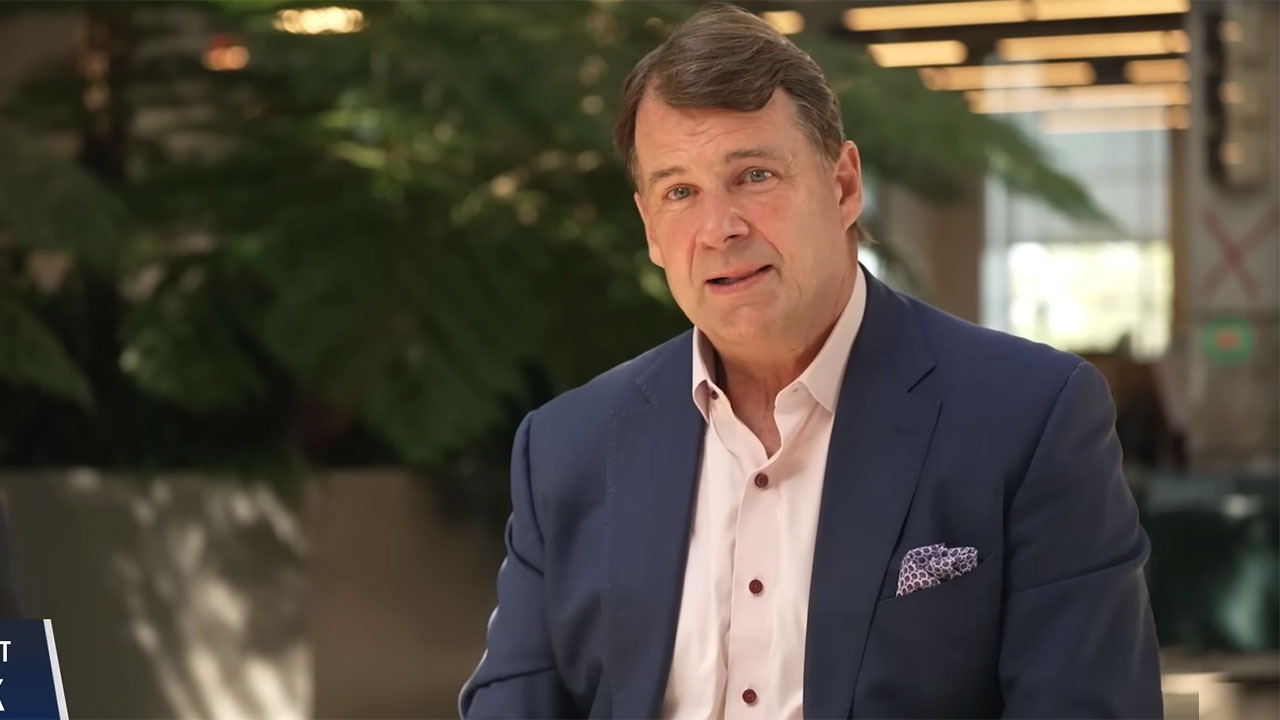

Ford is drawing a line under a century-old idea that a mass-market automaker should try to serve every driver. In Dearborn, Michigan, chief executive Jim Farley has made clear that the company will no longer chase the fantasy of a single lineup that fits all budgets, tastes, and technologies, and is instead narrowing its bets to where it believes it can actually make money. That shift collides with a painful reset of its electric-vehicle ambitions and a broader rethink of what “affordable” really means in the age of software, batteries, and geopolitical competition.
From Dearborn declaration to global reset
When Jim Farley told an audience in Dearborn, Michigan that Ford is “done” trying to build a car for everyone, he was not just offering a catchy sound bite, he was codifying a strategic break with the company’s past. The message, delivered as Ford reevaluates its product mix and trims back some of its most ambitious electric projects, signaled that one of America’s most recognizable carmakers is prepared to walk away from segments and customers that do not support its profit targets. In that moment, the idea of a universal Ford, stretching from entry-level compacts to luxury EVs, gave way to a more selective vision focused on specific use cases and higher value per vehicle.
The context for that declaration is a broader retrenchment from certain all-electric ambitions that had been framed as the company’s future only a few years ago. Farley’s comments, reported from Dearborn, Michigan, came as Ford acknowledged that its earlier push to electrify everything from pickups to crossovers had run into the hard realities of cost, charging infrastructure, and consumer hesitation. The company’s leadership is now openly prioritizing segments where it believes it has a durable edge, a shift that aligns with reporting that Ford is stepping back from some of its most aggressive EV plans and rebalancing toward hybrids, commercial vehicles, and new revenue streams linked to data and energy storage in America and beyond, as detailed in coverage of the remarks from Dearborn, Michigan.
The $19.5 billion reckoning behind the rhetoric
Farley’s philosophical pivot is backed by one of the largest financial write-downs in Ford’s history, a $19.5 billion acknowledgment that its first wave of electric bets did not pencil out. The company has disclosed that this charge includes a specific hit of $8.5 billion tied to EV assets, a figure that captures both sunk investment in plants and platforms and the cost of unwinding production plans that no longer match demand. For a legacy automaker already juggling high labor costs and intense price competition, that kind of balance-sheet shock is a blunt reminder that scale alone does not guarantee success in a new technology cycle.
The company’s own framing of the charge underscores how sharply expectations have shifted since it laid out an aggressive EV growth plan in 2021. Executives now concede that the market for big, fully electric trucks and SUVs is smaller and more volatile than they had projected, especially once generous subsidies began to fade. Reporting on the pullback notes that the charges announced on a Monday are directly connected to major changes in Ford’s electrification roadmap, including the decision to slow or cancel some projects outright and to reallocate capital toward more flexible architectures and hybrid offerings that can be adjusted as consumer preferences evolve, a reality spelled out in detail in the company’s explanation of the $19.5 billion pivot.
EV demand cools and the Lightning loses its spark
Behind the accounting is a more basic problem: the customers Ford expected to flock to its flagship electric pickup did not arrive in sufficient numbers once the early adopters were served. As EV demand trends downward after the end of a key federal tax credit in September, the economics of building a large, battery-heavy truck at scale have become far less attractive. Ford has responded by cutting production of the electric F-150 Lightning and ultimately deciding to end that fully electric line, a move that would have been unthinkable when the model was launched as a symbol of the company’s future but now looks like a necessary retreat from a segment that is not delivering adequate returns.
Farley has been candid that the company misread how quickly mainstream truck buyers would embrace a full battery-electric pickup, especially in regions where towing, cold weather, and sparse charging networks are daily realities. In public comments, he has pointed to a clear rise in demand for hybrids and plug-in hybrids, arguing that these powertrains better match what people are willing to pay for and how they actually use their vehicles. Coverage of the production cuts notes that Ford is redeploying resources away from the Lightning and toward products that can be built profitably at lower volumes, with Farley explaining that the company has to “respond to consumers’ preferences” and focus on vehicles that genuinely save people money, a rationale laid out in reports on how Farley said the shift would work.
Shelving the fully electric F-150 Lightning
The decision to shelve the fully electric F-150 Lightning is more than a product cancellation, it is a symbolic retreat from the idea that every iconic nameplate must go all-in on batteries. Ford has confirmed that the current Lightning, which was marketed as a technological showcase and a proof point that EVs could handle real truck work, will not continue in its existing form. Instead, the company is recalibrating its approach to pickups, exploring configurations that blend electric capability with combustion or hybrid systems rather than insisting on a pure EV solution for every use case.
Reporting on the move emphasizes that this is a recalibration, not an abandonment of electrification altogether, but it does mark a clear end to the notion that the F-150 must be fully electric to be future-proof. Analysts quoted in coverage of the decision argue that Ford is acknowledging the limits of current battery technology for heavy-duty, long-range hauling, particularly in rural markets where charging remains sparse. The shelving of the fully electric Lightning, referenced explicitly as the F-150 Lightning, is framed as part of a broader recalibration of Ford’s EV strategy that accepts a more gradual, mixed-powertrain transition rather than a rapid, all-electric leap.
“Expanding Customer Choice” without serving everyone
Farley’s insistence that Ford will no longer build a car for everyone might sound at odds with the company’s own language about “Expanding Customer Choice,” but in practice the two ideas are converging. In its latest strategy update, Ford describes a portfolio that deliberately spans Gas, Hybrids and Low, Cost Electric Vehicle Platform offerings, but within a narrower band of segments where it believes it can differentiate on capability, software, and total cost of ownership. The company is not trying to cover every price point or body style; instead, it is concentrating on trucks, commercial vehicles, and a new generation of smaller, more affordable EVs that can be built and sold profitably.
By 2030, Ford expects approximately half of its global sales to come from a mix of traditional combustion engines, hybrids, and lower cost EVs, a blend that reflects both regulatory pressure and consumer pragmatism. The company is investing in a dedicated Low, Cost Electric Vehicle Platform and retooling facilities like its Rouge Electric Vehicle Center in Dearborn, Michigan to support this more focused lineup. In corporate materials, the strategy is framed as a way to expand choice within targeted categories rather than to blanket the entire market, a nuance captured in the description of how Ford is Expanding Customer Choice with Gas, Hybrids and Low, Cost Electric Vehicle Platform investments.
China’s challenge and the end of copycat EVs
One reason Ford is narrowing its ambitions is the brutal competitive pressure from Chinese manufacturers that have mastered low-cost EV production and in-car technology. Farley has publicly acknowledged that Chinese EVs now offer superior in-vehicle tech, including advanced connectivity, AI companions, and automated features that Western brands are still racing to match. In his view, trying to go head-to-head with these players on their home turf, or by mimicking their products for global markets, would be a losing proposition for Ford, especially if it attempted to do so across every segment.
Instead, Farley has argued that Ford should focus on areas where it can leverage its strengths in trucks, commercial fleets, and software services, while partnering or selectively sourcing technology rather than reinventing everything in-house. In a discussion shared with enthusiasts, he noted that “Chinese” EV makers have set a new bar for what customers expect inside the cabin, from seamless apps to voice-driven interfaces, and that Ford must be more disciplined about where it invests its own capital. That perspective, captured in a conversation about the F-150 Lightning and EV strategy, reinforces the logic behind stepping away from a universal product strategy and concentrating on distinctive offerings, as reflected in comments attributed to Farley in a Jul discussion of Chinese competition.
Betting on a new affordable EV platform
Ford’s retreat from the current Lightning does not mean it is giving up on electric vehicles; instead, it is redirecting investment into a new architecture designed from the ground up for affordability and efficiency. The company has outlined a $5 billion commitment to a simple, efficient, flexible ecosystem that can support a family of affordable, electric, software-defined vehicles, including a midsize electric truck. This platform is intended to strip out complexity, reduce parts counts, and make it easier to update vehicles over the air, all while using battery chemistries and manufacturing techniques that lower costs enough to reach mainstream buyers without massive subsidies.
Central to that plan is the use of lithium iron phosphate (LFP) batteries produced in the United States, which promise lower material costs and improved durability at the expense of some energy density. Ford argues that for many use cases, especially urban driving and light commercial work, the trade-off is worth it if it brings sticker prices down and improves total cost of ownership. The company’s description of the program highlights how the result is meant to be a “simple, efficient, flexible ecosystem” for a new generation of EVs, a phrase that appears in its explanation of the Aug platform and its use of LFP batteries in the U.S.
Farley’s candid EV autopsy and the Trump factor
Farley has been unusually blunt in public forums about what went wrong with Ford’s first EV push and how politics has reshaped the market. In a televised interview, he acknowledged that competitors “have very affordable EVs that makes sense” and that Ford does not want to pour capital into segments where it cannot match those economics. He also stressed that the company intends to “go to very aff” price points only where it can do so profitably, a nod to the reality that chasing volume for its own sake is no longer the guiding principle. That candor reflects a broader recognition that the company’s earlier EV strategy was too optimistic about both costs and demand.
In a separate discussion of the policy environment, Farley has been quoted as saying that President Donald Trump’s approach to regulation and incentives would effectively halve the EV market compared with prior expectations, forcing automakers to recalibrate their plans. He noted that he had established Ford’s Model E division in 2022 to operate like a startup within the company, but that the path forward now looks more hybrid and extended-range electric vehicle focused than originally envisioned. The description of how Farley, Ford, and the Model E unit are adapting to a landscape where the future may be “hybrid and EREV” underscores how political shifts and consumer caution have combined to make a universal EV strategy untenable, a point laid out in coverage of how Farley, Ford, Model E and hybrids fit together.
Inside the decision to walk away from some EVs
The internal debate that led Ford to walk away from certain EV projects has spilled into public view through interviews and analyst commentary. In one widely shared video, Farley explains that the company does not want to invest in its own EVs in markets where others already offer very affordable options that make more sense for local buyers. He frames the decision as a disciplined choice to focus on “very aff” vehicles only where Ford can bring something distinctive, rather than trying to be all things to all people in a crowded field. That is a stark contrast to the earlier rhetoric of an all-encompassing EV revolution led by Detroit.
Commentators dissecting the $19.5 billion charge have argued that Farley and his team recognized “a while” ago that the original EV growth plan was not aligned with what customers actually wanted to buy. One analyst went so far as to say that a colleague who had warned that the market would be smaller was “100%” correct, and that Ford’s leadership had finally internalized that reality. The discussion of how Ford is taking a $19.5 billion charge on its electric vehicle strategy pivot, and how executives now talk about aligning with what people truly want, is captured in video analysis that highlights how 100% of the earlier optimism has been tempered by experience.
The EV retreat and a bet on energy storage
Ford’s pullback from the EV race is not just about individual models, it is about reallocating capital to adjacent businesses that might offer steadier returns. The company has signaled a dramatic shift in its electrification strategy, stepping away from big, full-size EVs that do not meet sales expectations or financial viability tests and channeling more investment into areas like battery storage for data centers. That move reflects a belief that the same expertise in batteries and power management that underpins EVs can be monetized in other sectors where demand is more predictable and margins may be higher.
Analysts describe this as the beginning of an “EV retreat” in which Ford accepts that it cannot win every race and instead focuses on niches where it can build durable advantages. Jim Farley, CEO at Ford, is quoted as saying that some of the earlier EV bets were simply “not working for us,” a concise summary of why the company is now more selective about where it deploys its engineering and manufacturing muscle. The shift toward data center energy storage and away from certain vehicle programs is detailed in analysis that opens with the phrase “The EV Retreat Begins Ford,” underscoring how the company is repositioning itself for a different kind of electrified future, as described in coverage of how The EV Retreat Begins Ford to bet on data center energy storage.
Counting the cost: $13 billion in EV losses
The scale of Ford’s EV missteps is stark when tallied in cumulative losses. The AP reports that the company has lost $13 billion on its all-electric lineup, a portfolio that includes the Mustang Mach and other battery-only models that have struggled to achieve consistent profitability. Those losses reflect not just high upfront investment in factories and tooling, but also aggressive pricing and incentives needed to move vehicles in a market where many buyers remain wary of range, charging, and resale values. For shareholders, the figure is a sobering reminder that the first wave of EV enthusiasm came with a hefty bill.
Those financial results help explain why Ford is now so explicit about narrowing its focus and refusing to chase every possible customer. The company is effectively admitting that it overreached by trying to electrify too many segments too quickly, without a clear path to sustainable margins. The decision to end production of the F-150 Lightning and to rethink other EV programs is part of a broader effort to stop the bleeding from that $13 billion experiment and to redirect resources toward more promising ventures, a narrative laid out in reporting that notes how The AP reports that the company has lost $13 billion on its all-electric lineup, which also includes the Mustang Mach.
What “not for everyone” means for drivers
For consumers, Ford’s decision to stop trying to build a car for everyone will be felt in the showroom as a more curated, less sprawling lineup. Entry-level buyers who once might have expected a basic Ford sedan or compact hatchback may find that the brand is steering them toward crossovers, small trucks, or hybrid models that fit within its new strategic sweet spot. Some niche segments will likely be left to rivals, particularly in markets where local manufacturers or Chinese brands can deliver cheaper EVs with more advanced in-car tech. The trade-off for shoppers is fewer choices with a blue oval badge, but potentially better-supported products with clearer value propositions.
At the same time, Ford is betting that a tighter focus will allow it to invest more deeply in the vehicles it does offer, from over-the-air software updates to integrated energy and fleet-management services. That could mean more robust support for commercial customers, more capable midsize electric trucks built on the new platform, and hybrid powertrains that feel less like compromises and more like the default choice. Farley’s public comments, including those in a widely viewed interview where he explains why the company is ending Ford Lightning EV production and how “we are” rethinking where to invest, suggest that he sees this as a necessary evolution rather than a retreat, a perspective he lays out in detail in a conversation about how Decisions on the Lightning fit into the broader strategy.
Ford’s narrower future and the industry’s next chapter
Ford’s pivot away from trying to serve every driver is a microcosm of a larger reckoning across the auto industry. The first phase of the EV era was defined by bold promises, sprawling product plans, and a belief that scale would solve everything; the second phase is shaping up to be more sober, more segmented, and more attuned to the messy realities of infrastructure, policy, and consumer behavior. By drawing a clear boundary around where it will compete, Ford is effectively conceding that the age of the universal carmaker is over, at least for companies that must answer to public markets and navigate volatile political winds.
Whether this narrower strategy pays off will depend on execution: delivering genuinely affordable EVs on the new platform, making hybrids that feel modern rather than transitional, and turning battery expertise into profitable energy and software businesses. For now, the combination of a $19.5 billion charge, $13 billion in EV losses, and the shelving of the F-150 Lightning has bought Ford the freedom to reset expectations and to tell investors and customers alike that it will no longer chase every trend. In that sense, Farley’s declaration that Ford is done trying to build a car for everyone is less a surrender than a bet that focus, not ubiquity, will define the winners of the next automotive chapter.
Supporting sources: Ford cuts electric F-150 Lightning production, takes $19.5B charge in strateg….
More from MorningOverview