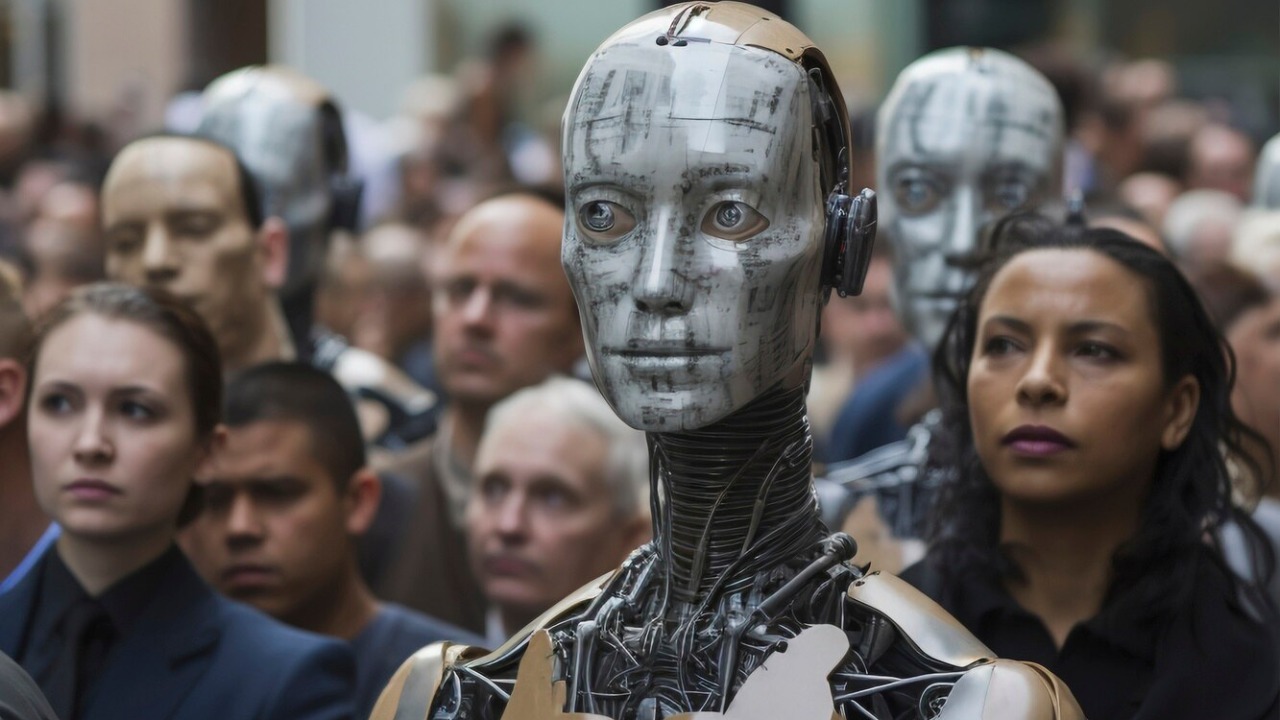

Warnings about a looming “cyber dystopia” are no longer the stuff of science fiction scripts, they are coming from mainstream academics and technologists who argue that our digital infrastructure is already cracking under pressure. From fragile networks and weaponized algorithms to a predicted 15‑year stretch of AI‑driven turmoil, their message is blunt: the systems we depend on are being built faster than they are being secured or governed, and the window to change course is closing.
Instead of a single apocalyptic event, these experts describe a slow, grinding breakdown in trust, privacy and basic social stability, driven by hacks, automated manipulation and opaque corporate power. They argue that unless governments, companies and citizens treat this as a structural crisis rather than a series of isolated glitches, the dystopian future will not be a surprise twist, it will simply be the logical outcome of choices we are making right now.
The professor who says the alarms are already blaring
When University of Calgary Sociology professor Dean Curran talks about a coming cyber dystopia, he is not speculating about some distant future, he is describing a trajectory he believes is already visible in everyday life. In his view, the spread of networked devices, from banking apps to smart doorbells, has created a dense web of dependence that most people barely notice until it fails, and he argues that this quiet dependence is exactly what makes the system so dangerous.
Curran’s warning, highlighted by a profile of the University of Calgary Sociology professor, is that society is drifting toward a digitally mediated order in which power is concentrated in a handful of platforms and infrastructure providers, while accountability and resilience lag far behind. He argues that “nobody is going to stop it until it is too late” because the incentives of tech companies, investors and even governments are aligned around speed and convenience, not long term safety, and that this misalignment is what turns ordinary connectivity into the backbone of a potential crisis.
A fragile system of constant hacks and quiet failures
The most immediate evidence for this fragility is not theoretical, it is the drumbeat of breaches, ransomware incidents and data leaks that have become part of the background noise of modern life. One analysis of this trend quotes a stark assessment that “constant hacks, ransomware attacks and data leakages are warning signs that this is a deeply fragile system,” arguing that these events are not isolated crimes but symptoms of a structural weakness in how digital infrastructure is designed and maintained.
That same warning, attributed to a commentator identified as Sep in a piece on looming digital collapse, stresses that the current approach is essentially to patch holes as they appear and hope that no single failure cascades into a broader breakdown. The argument is that as more critical services, from hospitals to municipal water systems, are wired into the same vulnerable networks, the risk of a society‑wide crisis grows, yet the pace of connection continues to outstrip the pace of reform, leaving what Sep calls a deeply fragile system in place.
Everyone knows tech is out of hand, but apathy rules
Even outside academic circles, there is a growing sense that digital technology has slipped its original promise of simple convenience and is now reshaping daily life in ways that feel intrusive and hard to control. One summary of public sentiment puts it bluntly, noting that “everyone knows that the use of technology is getting out of hand,” and that while “sure, tech has brought an immeasurable amount of good,” the tradeoffs around surveillance, addiction and inequality are becoming impossible to ignore.
What worries Curran and others is not just the scale of these problems, but the lack of meaningful pushback. The same account that opens with “Everyone knows” and “Sure, tech has brought an immeasurable amount of good” also stresses that there are “some serious problems” and yet very little structural change, capturing a mood of resignation that makes a darker future more likely. In that telling, people scroll past scandals about data misuse and algorithmic bias, shrug, and go back to the same platforms, a pattern that reinforces Curran’s fear that serious problems will be left to fester until they are unmanageable.
Mo Gawdat’s 12 to 15 year window of AI turmoil
Into this landscape of fragile infrastructure and public apathy steps a more specific prediction from former Google executive Mo Gawdat, who has tried to put a timeline on how long the most turbulent phase of AI‑driven disruption might last. In a widely discussed interview, Gawdat said he forecasts “the length of the dystopia at exactly 12 to 15 years,” describing a period in which automation, synthetic media and algorithmic decision making will outpace the ability of laws and social norms to adapt.
Gawdat ties this window to a starting point in 2027, arguing that the slope of disruption will steepen from that year as more sectors adopt advanced AI systems and as economic and political institutions struggle to absorb the shock. He frames this not as a permanent collapse but as a painful transition in which jobs, information ecosystems and even personal identity are reshaped by systems that most people do not understand, a forecast he laid out while speaking to host Steven Bartlett and that has been summarized as a warning that the dystopia will last 12 to 15 years starting in 2027.
A 15 year AI dystopia, already starting to show
Other accounts of Gawdat’s thinking sharpen the point further, describing his view that the world will enter a 15 year AI dystopia in 2027 and that the early signs are already visible. In this framing, the dystopia is not defined by killer robots or cinematic catastrophe, but by a steady erosion of human agency as recommendation engines, automated scoring systems and generative models quietly shape what people see, buy and believe.
One summary of his remarks notes that “this dystopia isn’t far off, we have already started seeing signs of it as of last year and will continue to see an acceleration,” capturing his belief that the curve has already begun to bend. Gawdat’s concern is that without deliberate guardrails, the next decade and a half will be dominated by economic dislocation, information warfare and a widening gap between those who can harness AI and those who are simply processed by it, a period he describes as a 15 year AI dystopia rather than a smooth technological upgrade.
Yuval Noah Harari’s warning on trust and algorithmic power
Historian and philosopher Yuval Noah Harari approaches the same terrain from a different angle, focusing less on timelines and more on the erosion of trust that comes when powerful AI systems are deployed without clear accountability. In a conversation on the podcast Possible, Harari argued that the core danger is not just smarter machines, but the way they can be used to manipulate attention, emotions and political choices at scale, especially when they are controlled by a small number of corporations or governments.
Harari’s prescription is that any serious AI governance effort must treat the preservation of human trust as the “number one design requirement,” not an afterthought. He warns that if systems are built primarily to maximize engagement or profit, they will inevitably exploit cognitive vulnerabilities and deepen polarization, turning public discourse into a battlefield of synthetic content and micro‑targeted persuasion. In that sense, his appearance on Possible with Yuval Noah Harari reinforces Curran’s broader fear: a cyber dystopia is not just about outages and hacks, it is about a slow collapse in the shared reality that makes democratic decision making possible.
Yoshua Bengio and the unbearable risk of getting AI wrong
AI pioneer Yoshua Bengio adds another layer to this picture by emphasizing how even low probability risks can be unacceptable when the stakes are existential. In a detailed interview, Bengio explained that if you are running a scientific experiment that “could turn out really, really bad,” then even a small chance of catastrophe should be treated as a serious constraint, because the downside is simply too large to ignore.
Applied to AI, Bengio’s reasoning suggests that society should be willing to slow or redirect development if there is a credible risk of systems that could escape human control or be weaponized in ways that destabilize entire regions. He argues that the burden of proof should not rest on critics to show that disaster is certain, but on developers to show that it is sufficiently unlikely, a stance he articulated in a conversation transcribed as saying that even if the probability were low “it would still be unbearable,” a phrase captured in the Dec interview transcript.
Authoritarian regimes, algorithms and a new kind of vulnerability
While much of the public debate focuses on how AI might empower surveillance states, some analysts argue that the relationship between algorithms and authoritarianism is more complicated. One examination of this dynamic notes that in the long term, authoritarian regimes are likely to face a different kind of danger: instead of criticizing them, AIs might simply learn to serve the narrow preferences of those in power, amplifying their blind spots and making the system brittle.
The analysis suggests that when decision making is centralized in a small elite and then further concentrated in opaque models, the result can be a feedback loop in which bad assumptions are reinforced rather than challenged. Over time, this can make regimes more vulnerable to shocks, because the algorithms that manage everything from resource allocation to censorship are tuned to please “just a single paranoid individual” rather than to reflect reality, a scenario explored in detail in a piece that opens with the phrase In the long term and argues that dictatorships will be vulnerable to their own code.
Why no one is stepping in to change course
Across these perspectives, a common thread is the sense that the people and institutions best positioned to slow or redirect the march toward a more hostile digital environment are either unwilling or unable to do so. Curran’s claim that “nobody is going to stop it until it is too late” reflects his view that regulators are outpaced, companies are rewarded for growth over safety, and citizens are too dependent on the services in question to mount sustained resistance.
Layered on top of that are the structural incentives described by Harari, Bengio and Gawdat: platforms that profit from engagement have little reason to reduce addictive design, labs racing for breakthroughs have every reason to downplay low probability risks, and political leaders may be tempted to use AI tools for short term advantage even if they corrode long term trust. Taken together, their warnings sketch a future in which the cyber dystopia is not imposed from outside, but emerges from a series of rational decisions made inside existing systems, each one defensible on its own terms, yet collectively steering society toward a digital order that is more fragile, more unequal and far harder to escape.
More from MorningOverview