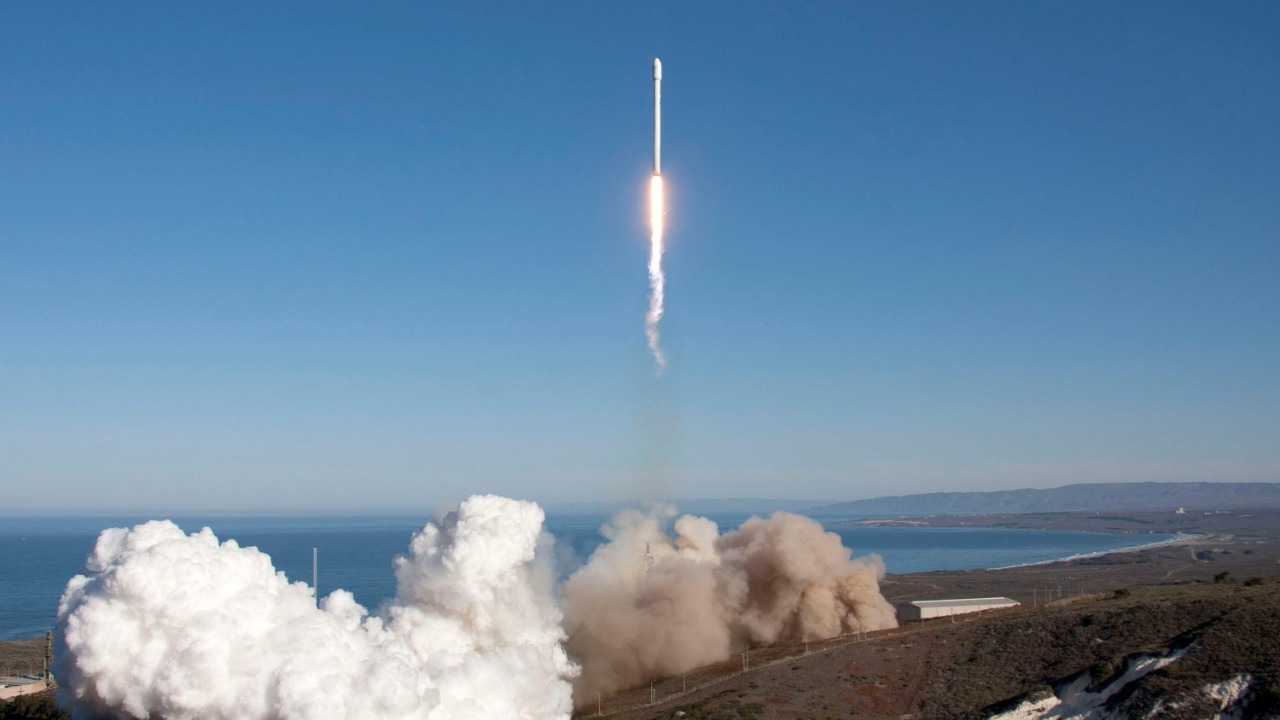

Rocket Lab has set a new personal best for annual launch cadence, using its latest Electron flight to loft a quartet of experimental DiskSat spacecraft for the U.S. military and NASA. The mission, part of a broader Space Test Program campaign, pairs a record-breaking commercial launcher with a radically different satellite form factor that looks more like a flying platter than a traditional boxy bus. Together they signal how quickly small launch and small spacecraft design are evolving toward more agile, lower orbit operations.
By placing four flat, round satellites into orbit on a single dedicated ride, Rocket Lab has turned what might have been a niche technology demo into a milestone for both government customers and the wider smallsat industry. The DiskSat experiment is designed to probe how very low Earth orbit can be used for defense and science missions, while the company’s 20th Electron flight of the year underscores how responsive launch is becoming a routine tool rather than a rare event.
Rocket Lab’s record year and the “Don’t Be Such A Square” mission
Rocket Lab’s latest Electron flight did more than add another notch to the company’s manifest, it pushed the small launcher to a new annual high. The DiskSat mission was identified as Rocket Lab’s 20th launch of 2025, surpassing the company’s previous single year record of 16 and confirming that Electron has matured into a workhorse for government and commercial customers alike. That kind of cadence matters because it shows that responsive access to orbit is no longer theoretical, it is being delivered at scale for missions that range from national security payloads to technology demonstrations.
The company framed the flight, nicknamed Don’t Be Such A Square, as a showcase of its flexibility and agile launch capabilities, highlighting how Electron can be tailored to the needs of defense, civil, and commercial space users. By integrating four unconventional DiskSat spacecraft on a single mission and delivering them to a precise orbit, Rocket Lab demonstrated that its record-setting year is not just about quantity, but about handling increasingly complex and bespoke payloads.
Inside the STP-S30 campaign and Space Test Program goals
The DiskSat launch sits within the broader Space Test Program S30 campaign, a U.S. Department of Defense effort to fly small, experimental satellites that push the boundaries of what can be done in orbit. Under the STP-S30 banner, the U.S. Space Force is using Electron to validate new spacecraft platforms, sensors, and operational concepts that can later migrate into operational constellations. The four DiskSats are part of this portfolio, giving program managers a way to test how a radically different satellite shape behaves in the space environment and how it can be controlled over time.
Reporting on the mission notes that Rocket Lab Launches Space Test Program S30 Mission With DiskSat Satellite as part of a series of launches of small, experimental satellites, underscoring how STP has become a proving ground for rapid iteration. By flying these payloads on a dedicated Electron, the Space Test Program can gather data on spacecraft performance, communications, and maneuvering in orbits that are increasingly important for both defense and civil applications.
What makes a DiskSat different from a traditional small satellite
DiskSat is not just another cubesat variant, it is a fundamentally different geometry that trades the familiar cube or rectangular prism for a flat, circular body. The four spacecraft launched on Electron are described as flat, round satellites, a design that allows a large surface area for solar arrays and instruments while keeping the overall mass and volume compatible with small launchers. This disk-like form factor can be stacked efficiently inside a fairing, which is how Rocket Lab managed to deploy a quartet of them on a single flight without resorting to a larger rocket.
According to mission descriptions, Rocket Lab launches 4 experimental DiskSats for the U.S. military using The Electron, placing the flat, round spacecraft into an altitude that balances atmospheric drag with mission lifetime. The DiskSats will not be flying as low as some future very low Earth orbit concepts on this inaugural mission, but their shape and configuration are already tuned for operations where drag, power generation, and attitude control are tightly coupled.
NASA’s role and the DiskSat technology demonstration
While the Space Force is using DiskSat as part of its Space Test Program, NASA is also deeply invested in the platform as a way to rethink small spacecraft architecture. The agency’s DiskSat technology demonstration mission is designed to test the performance of a new small spacecraft platform that can support high power and agile maneuvering in compact form. By flying one of the DiskSats as a NASA payload, the mission gives the civil space agency a chance to validate how this design handles power generation, thermal control, and propulsion in orbit.
NASA describes NASA’s DiskSat technology demonstration as a mission that will test a new small spacecraft platform designed for orbit changes and maintenance, with a focus on how a disk-shaped bus can support sustained operations. By sharing a ride with military DiskSats, the NASA spacecraft benefits from the same launch conditions while pursuing its own objectives, a model that could become more common as agencies look to stretch budgets and accelerate technology maturation.
Targeting very low Earth orbit and why VLEO matters
One of the most important aspects of the DiskSat experiment is its connection to very low Earth orbit, or VLEO, a regime that sits closer to the atmosphere than traditional low Earth orbits. Operating in VLEO offers potential advantages for imaging resolution, communications latency, and radiation environment, but it also introduces significant challenges because atmospheric drag is stronger and more variable. The DiskSat platform is being developed with this environment in mind, even if the first mission is flying slightly higher to focus on basic performance and control.
Prelaunch coverage emphasized that Targeting very low Earth orbit is one of the goals of STP-S30, with One of the aims being to demonstrate sustained operations in VLEO, generally defined as altitudes that have historically been inaccessible to long duration satellite missions. By flying DiskSat in an orbit that approximates some of these conditions, the Space Force and NASA can gather data on drag, attitude control, and propulsion that will inform future missions that venture even lower.
How Electron delivered all four DiskSats to orbit
From a launch perspective, the DiskSat mission was a test of Electron’s ability to handle multiple unconventional payloads and deploy them precisely. The rocket lifted off with four DiskSats stacked inside its fairing, then used its upper stage and kick stage to place them into their target orbit. The mission profile required careful sequencing to ensure that each flat, round spacecraft separated cleanly and began its own commissioning sequence without interfering with the others.
Mission updates confirm that successful launch puts all 4 DiskSats into orbit, with the flat, round spacecraft now on their way to their respective next milestones in the mission. That outcome validates both the mechanical design of the DiskSat deployment system and the performance of Electron’s kick stage, which has become a signature feature of Rocket Lab’s approach to precise orbital insertions for small payloads.
Space Force, NASA, and the politics of small launch
The DiskSat mission also reflects a broader political and institutional shift toward embracing small launch vehicles for high priority government work. The U.S. Space Force and NASA are both leaning on Electron to carry experimental hardware that could shape future constellations and science missions, a sign that small rockets are no longer seen only as backup options. This shift is happening at the same time that national space policy is emphasizing resilience, diversification of launch providers, and the ability to reconstitute capabilities quickly if larger systems are disrupted.
One report on the mission notes that the Senate confirms Jared Isaacman as 15th NASA Administrator in the same news cycle that highlights the DiskSat launch for the U.S. Space Force and NASA. That juxtaposition underscores how leadership decisions at the top of NASA, including the role of Jared Isaacman as NASA Administrator, intersect with programmatic choices to back novel spacecraft like DiskSat and to partner with companies such as Rocket Lab on missions that blend defense and civil objectives.
Why Rocket Lab’s launch record matters for the smallsat economy
Rocket Lab’s achievement of 20 Electron launches in a single year is more than a bragging right, it is a signal to the smallsat market that dedicated launch capacity is becoming more predictable. For operators that need specific orbits or tight schedules, relying solely on rideshare slots on larger rockets can be limiting. A launcher that can fly this often, and that is willing to tailor missions around a handful of payloads, changes the calculus for companies and agencies planning constellations or time sensitive experiments.
Coverage of the DiskSat mission notes explicitly that the mission was Rocket Lab’s 20th of 2025, extending the company’s single year launch record from a previous high of 16. That kind of growth curve suggests that the smallsat economy can increasingly count on a steady drumbeat of dedicated flights, which in turn encourages more ambitious spacecraft designs like DiskSat that benefit from custom orbits and mission profiles rather than generic rideshare opportunities.
What comes next for DiskSat and very low orbit operations
With all four DiskSats safely in orbit, the focus now shifts from launch to on orbit performance and the long list of experiments each spacecraft is expected to run. Over the coming months, engineers will track how the flat, round satellites handle power generation, attitude control, and drag in their current orbit, and they will test propulsion systems designed for orbit changes and maintenance. The data will feed directly into decisions about whether to scale DiskSat into larger constellations or adapt its design for specific mission types, from imaging to communications.
Mission planners have already signaled that the DiskSat experiment is a stepping stone toward more aggressive operations in very low Earth orbit, where the balance between performance and survivability is much tighter. As the Space Test Program, NASA, and Rocket Lab digest the results, they will be able to refine both spacecraft and launch strategies for future flights that push closer to the atmosphere. The combination of a high cadence launcher like Electron and a purpose built platform like DiskSat suggests that the next wave of low orbit missions will be flatter, faster, and more frequent than anything that has come before.
More from MorningOverview