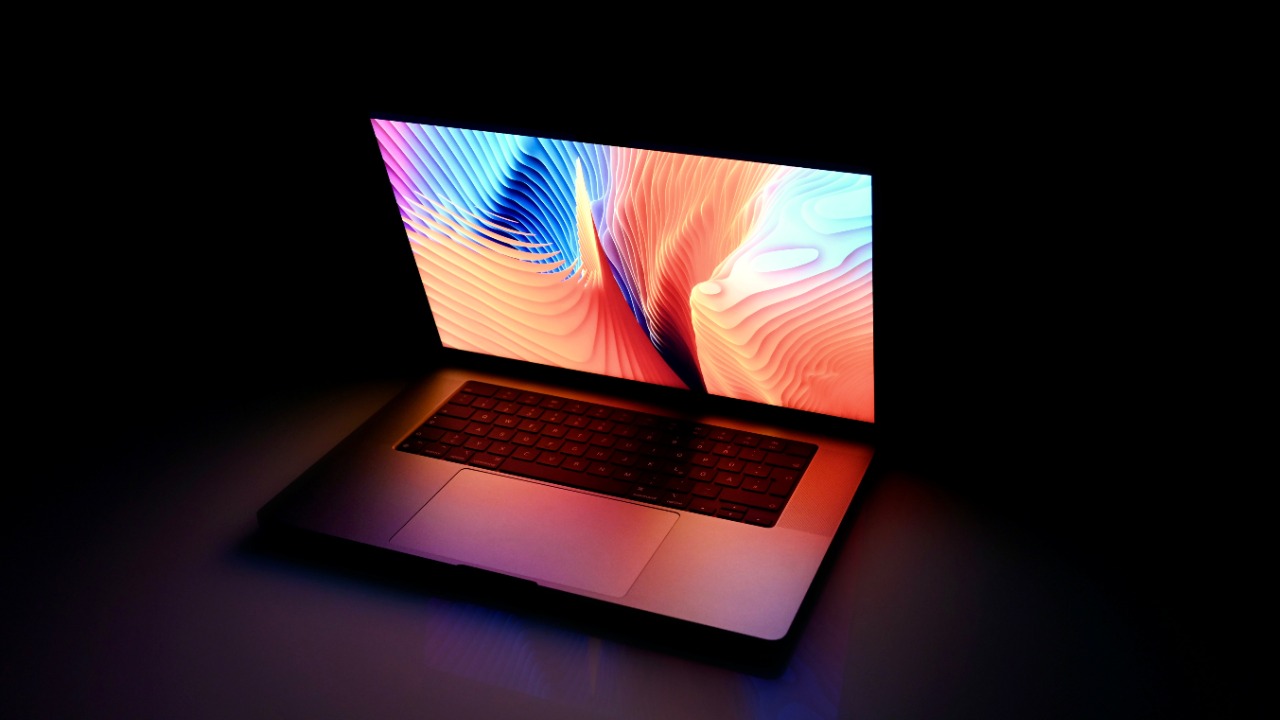

The next MacBook Pro refresh is shaping up to be more than a routine chip bump, with a wave of M6 leaks pointing to a deep redesign that could change how the flagship laptop looks, feels, and even how you interact with the screen. From a long‑rumored shift to OLED panels to a thinner chassis and possible touchscreen, the reported changes are big enough that I think many buyers will want to pause their upgrade plans and pay attention.
What is emerging is a picture of a MacBook Pro that leans into new display technology, a revamped enclosure, and a fresh generation of silicon built on TSMC’s 2 nm process, all arriving as Apple reshuffles the rest of the MacBook lineup. If the current reporting holds, the M6 generation will not just be faster, it will mark a clear break from the design language that has defined the Pro line since the 2021 models.
The M6 MacBook Pro leaks are converging on a true redesign
The most striking thread running through the latest reports is that the M6 MacBook Pro is being treated as a clean break rather than a minor iteration. Multiple leakers and analysts describe a thinner, sleeker chassis that moves away from the current squared‑off look, with one detailed preview of the 2026 MacBook lineup calling the upcoming Pro refresh the most transformative change in Apple’s notebook range, pairing new display technology with a modernized enclosure that is meant to visually signal a new era for the Pro line. That same analysis frames the M6 generation as the point where Apple fuses cutting‑edge panel tech and industrial design into a single flagship statement for professionals and power users, positioning the Pro models as the showcase for its next wave of hardware ambition, a shift that aligns with the broader roadmap for the company’s high‑end laptops described in a comprehensive preview.
On the leak side, early looks at the M6 MacBook Pro design highlight slimmer bezels, a refined hinge, and a body that appears noticeably thinner than today’s machines, with one widely shared breakdown of the “7 biggest changes” emphasizing how the new shell works in tandem with the display upgrade rather than treating it as a cosmetic tweak. That same report, which has been circulating via Dec Pro leaks, underscores that the redesign is not just about shaving millimeters but about rebalancing the machine around a new OLED panel, updated thermals, and a more compact overall footprint that still leaves room for the ports and performance Pro buyers expect.
OLED is the headline upgrade, but it may be limited to higher tiers
The single biggest change that keeps surfacing is the move from mini‑LED to OLED in the MacBook Pro display, a shift that would finally bring the laptop in line with the best panels on Apple’s phones and tablets. Detailed reporting on the M6 generation describes Apple “switching to OLED” for the Pro line, with the new screens promising deeper blacks, higher contrast, and more precise control over brightness across the panel, a combination that should be especially noticeable in HDR video work and color‑critical photo editing. One in‑depth roundup of the upcoming lineup stresses that the switch to OLED is not happening in isolation, but is part of a broader package of changes to the M6 MacBook Pro, including a redesigned chassis and updated internals, all of which are laid out in a Dec OLED Pro overview.
However, the OLED story comes with a catch that will matter a lot for buyers: several reports say the new panels will be reserved for the M6 Pro and M6 Max versions of the MacBook Pro, leaving the base M6 model on older display tech. One detailed analysis of the roadmap states that Apple is working on a revamped M6 Pro and M6 Max MacBook Pro with OLED, while explicitly noting that the company’s decision is to “reserve OLED” for those higher‑end configurations, a move that could push creative professionals who care about panel quality toward more expensive machines and delay OLED for mainstream users until later in the cycle, a trade‑off spelled out in a Nov Power On report.
A thinner chassis and OLED go hand in hand
One reason the redesign and the display upgrade keep getting mentioned together is that OLED panels open the door to a slimmer, lighter MacBook Pro without sacrificing rigidity. Reporting on the M6 generation notes that the switch to OLED displays could allow future Pro models to adopt a thinner design, since OLED does not require the same backlight structure as mini‑LED, which in turn gives Apple more freedom to shave down the lid and potentially the overall profile. That connection between panel tech and industrial design is spelled out in a detailed look at what to expect from the M6 MacBook Pro, which links the move to OLED directly to a thinner chassis and a more modern silhouette for the Pro line, a relationship highlighted in a Nov OLED Pro preview.
Separate leaks echo that the M6 redesign will deliver a noticeably slimmer body, with some sources describing a chassis that looks closer to a MacBook Air in side profile while still carrying the Pro branding and port selection. One forum discussion focused on the M6 Pro and M6 Max versions notes that the model will enjoy a revamped design with a thinner chassis and other refinements, tying those physical changes to the same generation that is expected to get OLED and the broader redesign, a combination that has been discussed in detail in Nov forum leaks.
Touchscreen, hole‑punch camera, and the end of the notch
Beyond the panel technology itself, some of the most eye‑catching rumors center on how you might interact with that OLED screen. One long‑running thread around the M6 MacBook Pro points to a touchscreen display, a major philosophical shift for Apple, which has “very publicly been against touchscreen computers” in the past. According to one detailed discussion of the leaks, the M6 MacBook Pro is rumored to feature an OLED touchscreen with a hole‑punch camera, and another report claims that Apple could be gearing up to ditch the notch entirely in favor of a more modern cutout, a set of changes that would bring the laptop’s front‑of‑screen experience closer to the company’s phones and tablets, as laid out in Oct Pro OLED discussions.
Separate reporting on Apple’s laptop roadmap reinforces the idea that a touchscreen MacBook Pro is on the table, describing plans for the company’s biggest redesign yet for the Pro line, including a touch‑enabled display and a camera cutout similar to the iPhone’s Dynamic Island. That same coverage notes that this shift follows the company’s recent announcement of M5‑powered MacBook Pros, positioning the touchscreen models as part of the next wave rather than a mid‑cycle tweak, and framing the change as a response to both user demand and competitive pressure in the high‑end Windows laptop space, a context laid out in a Pros touchscreen report.
M6 silicon: TSMC 2 nm and a new performance ceiling
Under the hood, the M6 MacBook Pro is expected to debut a new generation of Apple silicon built on TSMC’s 2 nm process, which should deliver both higher performance and better efficiency than the current 3 nm chips. One detailed account of TSMC’s roadmap notes that the 2 nm (2N) process marks a major leap from the 3 nm process used in the past three generations of Apple’s A‑series chips, and explicitly describes this node as the foundation for future M6‑series Mac chips, setting expectations for a significant jump in CPU and GPU capabilities as well as improved battery life under heavy workloads, a trajectory outlined in a TSMC Apple update.
More granular reporting on Apple’s Mac roadmap adds that the redesigned MacBook models expected next year are set to boast M6 chips that could adopt a completely new packaging based on TSMC’s 2 nm technology, with the Neural Engine more tightly integrated into the overall system. That same analysis points to four MacBooks on the horizon, including redesigned Pro models that will serve as the showcase for this new silicon, and notes that the tighter integration of the Neural Engine is aimed at accelerating on‑device AI workloads, a priority that aligns with Apple’s broader push into machine learning features across macOS, as detailed in a TSMC‑based M6 roadmap.
How M6 fits into Apple’s staggered MacBook Pro rollout
To understand why the M6 MacBook Pro looks so ambitious, it helps to see it in the context of Apple’s staggered rollout of M5 and M6 chips across the MacBook lineup. Recent reporting notes that Apple is going to refresh the rest of the MacBook Pro lineup with M5 Pro and M5 Max chips in early 2026, having already released an M5 MacBook Pro earlier, and that early benchmarks for the M5 Max show multi‑core scores around 15,437, underscoring how the company is using the M5 generation as a bridge before the more radical M6 redesign arrives. That same roadmap makes clear that the M6 machines are not replacing the M5 models overnight, but instead are part of a phased strategy that keeps the Pro line fresh while reserving the biggest design and display changes for the later wave, a sequence laid out in an Apple Pro and Max roadmap.
Other coverage of the current generation underscores how Apple has already split the Pro line between an early M5 MacBook Pro and delayed M5 Pro and M5 Max models, with one detailed summary explaining that Apple released the M5 MacBook Pro in October 2025 but that M5 Pro and M5 Max models are arriving later, and that earlier reporting from Macworld and Bloomberg’s Mark Gurman had already pointed to a thinner design and a notch change on the horizon. That staggered approach, described in a Nov Macworld Apple Pro and Max recap, sets the stage for the M6 generation to be the moment when Apple consolidates those design hints into a full overhaul, rather than dribbling out cosmetic tweaks across multiple minor revisions.
OLED exclusivity and the price of going “Pro”
One of the more contentious aspects of the M6 MacBook Pro leaks is the suggestion that OLED will be exclusive to the M6 Pro and M6 Max models, effectively turning the display itself into a premium upsell. A detailed breakdown of the rumors notes that Apple’s M6 Pro and M6 Max MacBook Pro models will be the only ones receiving the OLED upgrade, and frames this as potentially bad news for many Apple fans who may not be able to afford the higher‑end configurations, especially if the base M6 MacBook Pro sticks with mini‑LED or another non‑OLED technology. That same analysis warns that we may be seeing base models left behind on older panels while the Pro and Max tiers become the showcase for the best screens, a dynamic laid out in a Nov Wccftech Apple Pro and Max analysis.
Another detailed report on the same theme goes further, stating that M6 Pro and M6 Max MacBook Pro Models Will Receive The OLED Upgrade And Redesign, Forcing Customers To Fork Over Massive premiums if they want the full package of new features. That coverage also notes that Apple will finally retire its current mini‑LED approach in those top‑tier models, effectively pushing anyone who wants the best display and the new design into the most expensive configurations, a strategy that could widen the gap between entry‑level and professional MacBook buyers, as spelled out in a Nov Pro Models Will Receive The OLED Upgrade And Redesign, Forcing Customers To Fork Over Massive.
Why this could be a “supercycle” upgrade moment
Given the combination of OLED, a thinner chassis, new silicon, and possible touchscreen support, some observers are already framing the M6 MacBook Pro as the one to wait for if you are on an older Intel or early Apple silicon machine. One detailed video breakdown characterizes the OLED MacBook Pro as getting more interesting by the day as leaks and rumors pile up, and explicitly raises the idea that the M6 generation could trigger a “supercycle” of upgrades as professionals who skipped the M2, M3, and even M5 machines finally see enough change to justify a big spend. That framing, which leans on the idea that OLED plus a redesign is a once‑in‑several‑years event for the Mac, is laid out in a Nov OLED Pro supercycle discussion.
Other commentators echo that sentiment, with one in‑depth video analysis arguing that the M6 MacBook Pro is “the one to wait for,” and pointing out that a late 2026 release is something that Apple has done in the past multiple times, with the most recent example cited as a previous Mac cycle where the company held back a major redesign for the end of a chip generation. That perspective, which emphasizes Apple’s history of saving its boldest laptop changes for the tail end of a silicon transition, is laid out in a M6 MacBook Pro – The One to Wait For! Apple analysis, and it helps explain why so many potential buyers are now weighing whether to buy an M5 machine or hold out for the M6 wave.
What the leaks say about day‑to‑day experience
Beyond the specs and timelines, the leaks offer some clues about how the M6 MacBook Pro might feel in everyday use. One detailed video focused on “Dynamic Island” style changes for the MacBook Pro notes that Apple is reportedly moving away from mini‑LED and switching to OLED for the Pro line, and emphasizes that OLED means better contrast, more vibrant colors, and potentially smoother animations, all of which should make everything from Final Cut timelines to Safari scrolling feel more responsive and visually rich. That same breakdown highlights how the move to OLED could also improve battery efficiency when displaying darker content, a practical benefit for users who spend long days in apps like Xcode, Logic Pro, or Adobe Premiere, as discussed in a Dec Apple LED OLED Pro deep dive.
Another set of leaks, including a widely shared “first look” at the all‑new design and a separate video that opens with “holy smokes guys we just got some brand new leaks about the long awaited MacBook Pro redesign,” focus on how the thinner chassis, updated display, and new camera cutout will change the feel of the machine on a desk. Those reports describe slimmer bezels, a more compact footprint, and a refined hinge that should make the laptop easier to open and adjust, while still keeping the Pro identity intact, a mix of changes that is broken down in detail in both a Dec MacBook Pro M6 leak video and an Oct Pro redesign leak, which together paint a picture of a machine that feels more modern and less bulky without sacrificing the seriousness that professionals expect.
How it compares to other rumored MacBook changes
The M6 MacBook Pro redesign is not happening in isolation, and some of the rumored changes echo broader shifts across Apple’s laptop lineup. One detailed look at rumors for a 2026 MacBook Pro redesign notes that another change for the 2026 model is its display, with The Apple laptop rumored to use the tandem OLED display currently seen in other devices, and frames this as part of a larger trend toward OLED across Apple’s portable products. That same report highlights how OLED could enable better battery life and more flexible refresh rates, and positions the MacBook Pro as the flagship beneficiary of this shift, a context laid out in a Jun Another The Apple OLED rumor.
At the same time, broader previews of Apple’s MacBook lineup in 2026 stress that the most transformative changes are forecasted for the flagship MacBook Pro models, with Industry insiders suggesting that these machines will combine new display technology with a sleek, modern design that sets them apart from the rest of the range. That framing, which positions the Pro line as the spearhead for Apple’s next‑generation laptop strategy, is spelled out in a Dec Pro Industry preview, and it reinforces the idea that the M6 MacBook Pro is the machine where Apple plans to roll together its most ambitious ideas about displays, silicon, and industrial design.
Should you wait for M6 or buy now?
For anyone in the market for a high‑end MacBook, the practical question is whether to buy an M5 Pro machine or hold out for the M6 redesign. On one hand, the current M5 MacBook Pro and the upcoming M5 Pro and M5 Max models already deliver strong performance, with multi‑core scores that will be more than enough for many workflows, and they retain the familiar design and mini‑LED displays that have proven themselves in real‑world use. On the other hand, the weight of the leaks around OLED, a thinner chassis, possible touchscreen support, and TSMC 2 nm‑based M6 chips suggests that waiting could net you a laptop that feels like a generational leap rather than a modest step, especially if you care about display quality and future‑proofing for AI‑heavy workloads, a trade‑off that is implicit in the Nov M6 expectations.
Ultimately, the decision will come down to timing and budget. If you need a machine now and can find a good deal on an M5 Pro or M5 Max, the current generation remains a safe bet with plenty of headroom. If you can wait into the M6 window, especially toward the late‑2026 timeframe that several reports point to, the combination of OLED, a redesigned chassis, and new silicon could make the M6 MacBook Pro the most compelling upgrade in years, and the leaks so far make a strong case that this is the major upgrade you should at least know about before you commit to your next Mac.
More from MorningOverview