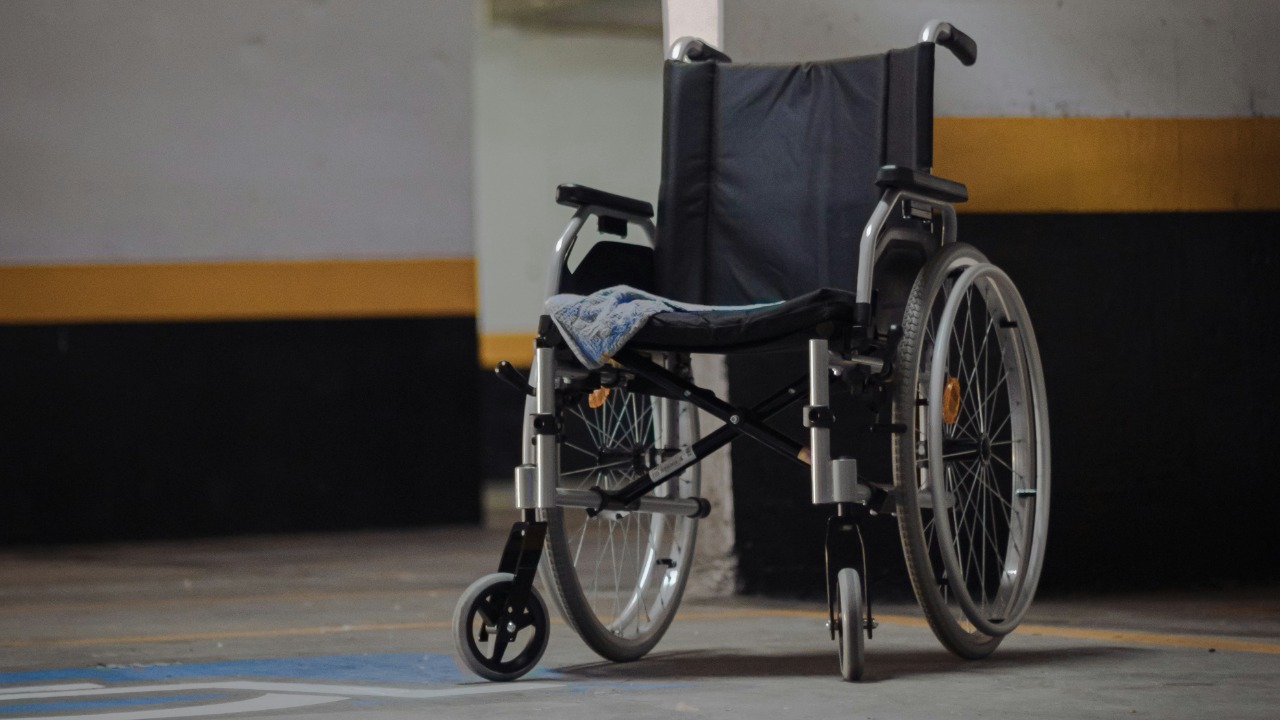

Blue Origin has crossed a threshold that spaceflight has talked about for years but never actually reached: a person who uses a wheelchair has now traveled beyond the edge of space. The journey of aerospace engineer Michaela “Michi” Benthaus on the company’s New Shepard rocket turns a long‑promised ideal of inclusive exploration into a concrete, televised reality.
Her suborbital flight is more than a feel‑good milestone. It is a live test of how commercial spacecraft, training regimes, and safety systems adapt when the crew includes someone who navigates the world on wheels, and it sets a new baseline for what “access to space” must mean in practice rather than in marketing copy.
The historic passenger at the heart of Blue Origin’s milestone
The breakthrough begins with Michaela (Michi) Benthaus herself, an aerospace engineer who has spent her career inside the systems that now carry her past the Kármán line. She works at the European Space Agency, and she is the first person who uses a wheelchair to be selected for a crewed spaceflight, a role that shifts disabled people from the margins of outreach campaigns into the center of mission design. Reporting on the mission identifies her as Michaela (Michi) Benthaus, an aerospace engineer at the European Space Agency, underscoring that she arrives on this flight as a technical peer, not a token guest.
Her path to the capsule has not been straightforward. Michaela, often referred to as Michi, lives with a spinal cord injury that followed a mountain biking accident, a detail that highlights how quickly an active life can be reframed by disability without erasing ambition or expertise. Coverage of the crew selection notes that Michaela (Michi) Benthaus, an aerospace engineer at the European Space Agency, sustained a spinal cord injury in a mountain biking accident, yet remained embedded in the space sector, which makes her presence on New Shepard feel less like a symbolic gesture and more like overdue recognition.
How Blue Origin’s NS‑37 flight made space history
Blue Origin framed this mission as a turning point for its suborbital program, and the designation of the flight captures that. The company flew Michaela Benthaus on its New Shepard vehicle as part of the NS‑37 mission, which, as its name suggests, is the 37th overall flight of the reusable rocket and capsule system. Pre‑launch briefings described NS‑37 as an autonomous New Shepard flight that would carry a six‑person crew on a suborbital trajectory, with the vehicle designed to reach more than 100 km above Earth, the internationally recognized boundary of space, before returning from liftoff to capsule touchdown in a tightly choreographed arc, a profile detailed in coverage of Blue Origin’s New Shepard NS‑37.
The company and outside observers alike have described the launch as a historic first, emphasizing that this is the first time a wheelchair user has traveled into space on any crewed vehicle, government or commercial. One detailed account of the mission calls it Blue Origin’s Historic Launch and notes that the NS‑37 flight carried the first ever wheelchair user to travel to space, with the New Shepard system climbing to more than 100 km above the planet before returning to its West Texas landing zone, a profile that marks a new chapter in Blue Origin’s history.
From delay to liftoff: the technical hiccup that raised the stakes
The road to this milestone was not perfectly smooth, and that matters because it shows how seriously Blue Origin treated the safety of a crew that included a wheelchair user. Earlier in the campaign, Jeff Bezos’ company postponed the first attempt to fly Michaela Benthaus due to a technical issue, a decision that temporarily pushed back the moment when a wheelchair user would first cross into space. Reporting on the scrubbed attempt notes that Jeff Bezos’ Blue Origin delayed the flight after identifying a problem, underscoring that the company was willing to absorb public disappointment rather than compromise on mission readiness.
That delay set up a second, more scrutinized countdown, with the rescheduled launch drawing extra attention from disability advocates, space fans, and engineers watching to see how the company would respond under pressure. Coverage of the revised plan urged viewers to watch Blue Origin launch the first wheelchair user to space after the delay, highlighting that the mission would stream live and that the company was targeting a new liftoff window for the same six‑person crew, a framing captured in guides on how to watch Blue Origin make history.
Inside the New Shepard capsule: adapting a suborbital rocket for a wheelchair user
New Shepard has always been marketed as a relatively gentle ride to space, but flying a wheelchair user forced Blue Origin to confront specific design and training questions. The New Shepard system consists of a booster and a crew capsule that separates near the top of the trajectory, with the capsule providing several minutes of microgravity before returning under parachutes. Technical previews of NS‑37 emphasized that this would be the 37th flight of the autonomous New Shepard vehicle and that the mission profile, from liftoff to capsule touchdown, was designed to be repeatable and predictable, a key factor when adapting procedures for a passenger who uses a wheelchair, as outlined in descriptions of New Shepard.
Live coverage of the launch highlighted the hardware and cabin environment in more visceral terms, noting that the New Shepard NS‑37 mission would fly on a rocket roughly 37 m tall and that the capsule interior had been prepared to support a crew that included a wheelchair user during the high‑G ascent and reentry phases. A broadcast preview of Rocket Launch Live described how Blue Origin’s upcoming New Shepard NS‑37 mission would feature a vehicle about 37 m in height and an interior configured for suborbital tourism, details that take on new weight when one of those tourists relies on assistive devices on Earth.
The six‑person crew and the role of AstroAccess
Michaela Benthaus did not fly alone, and the composition of the crew helps explain why this mission matters beyond a single seat. Blue Origin’s next human spaceflight was built around a six‑person manifest that included Michaela Benthaus alongside five other passengers, with the company explicitly noting that she could become the first person who uses a wheelchair to go to space. Local reporting on the launch from West Texas described how the six‑person crew on Blue Origin’s next New Shepard flight would include Michaela Benthaus, positioning her as part of a broader cohort rather than an isolated experiment.
Behind the scenes, disability‑focused organizations helped shape the mission, and one of the most visible was AstroAccess, which has spent years flying parabolic aircraft campaigns with disabled ambassadors to test accessible procedures in microgravity. Social media posts celebrated that an AstroAccess Ambassador, identified as michi BENTHAUS, was Flying to SPACE on Blue Origin’s New Shepard rocket, with the announcement framed as “Icymi” to signal that the community had been building toward this moment for some time, a sentiment captured in a post that describes an Icymi AstroAccess Ambassador BENTHAUS Flying SPACE on Blue Origin.
From advocacy to launchpad: how the mission was framed to the public
Public messaging around the flight leaned heavily into the idea that this was the first time ever a person who uses a wheelchair would fly to space, and that framing shaped how audiences understood the stakes. One widely shared explainer introduced the mission by stating that, for the first time ever, a person who uses a wheelchair would fly to space and that the journey would help expand access to exploration, language that mirrored Blue Origin’s own emphasis on inclusion and was echoed in coverage that credited Dec, Glasser and Julia Jacobo with highlighting aerospace engineer Michaela Benthaus as central to that narrative.
Other reports repeated the same core message with slight variations, reinforcing the idea that this was a singular moment in spaceflight history rather than just another tourist launch. One account stated plainly that, for the first time ever, a person who uses a wheelchair will fly to space and paired that with a note that MORE coverage would examine how companies like SpaceX plan to land American astronauts on the moon, linking the milestone for disabled access to the broader arc of human exploration, a connection reflected in a piece that opens with “For the 1st time ever, a person who uses a wheelchair will fly to space” and points readers to MORE about the lunar race.
What it took to get a wheelchair user onto a commercial rocket
Behind the celebratory headlines sits a long technical and cultural shift inside the space industry, one that involved both commercial players and veterans of earlier programs. One report on the mission notes that a former SpaceX leader, described as a Former SpaceX Executive, helped make history with the first wheelchair user set to fly to space, drawing on two decades of experience at SpaceX and ongoing advisory roles in the aerospace community to argue that suborbital flight might be possible for a wider range of bodies than traditional astronaut corps once assumed, a perspective captured in coverage titled Former Executive Helps Make History With First Wheelchair User Set Fly Space World.
Blue Origin’s own ecosystem has also been shaped by people who spent years at rival companies, and that cross‑pollination shows up in local coverage that notes one key figure spent two decades at SpaceX and remains influential in the aerospace community, serving in advisory roles across different projects while helping shepherd Blue Origin’s human spaceflight operations in Texas. A profile of the mission points out that this veteran “spent two decades at SpaceX and remains influential in the aerospace community, serving in advisory roles across different projects” while supporting Blue Origin’s work in Texas, a reminder that institutional knowledge from earlier programs helped make this inclusive flight technically credible.
The live moment: how the world watched Michi Benthaus reach space
When the countdown finally reached zero, the mission unfolded as both a technical exercise and a media event, with live streams and social feeds turning a remote West Texas launchpad into a global stage. One live broadcast, labeled Blue Origin HISTORIC LAUNCH LIVE, invited viewers to watch as Michi Benthaus became the first wheelchair user to reach space on NS‑37, with the stream’s description explicitly celebrating “Michi Benthaus First Wheelchair User to Reach Space” and encouraging audiences to see the mission as part of a broader push to expand access to space, language preserved in the video metadata that promotes Blue Origin HISTORIC LAUNCH LIVE Michi Benthaus First Wheelchair User Reach Space.
Social platforms amplified the moment in parallel, with Blue Origin’s own channels underscoring that the company would make history when it sent the first person who uses a wheelchair past the Kármán line, the internationally recognized boundary of space. One post noted that Blue Origin had targeted a specific launch window for this mission and that the person who uses a wheelchair on board would become the first ever to journey into space, a framing that turned the NS‑37 flight into a symbol of the company’s broader ambition to open access, as captured in an update that declared Blue Origin would send the first person who uses a wheelchair past the Kármán line.
Why this milestone matters for disability, tourism, and the next rockets
For disability advocates, the significance of this flight lies less in the few minutes of microgravity and more in the precedent it sets for who is considered “flight ready.” The mission confirms that a person who uses a wheelchair can safely complete a commercial suborbital profile, from high‑G ascent to weightlessness to reentry, provided that training and hardware are adapted with care. Early explainers on the mission stressed that, for the first time ever, a person who uses a wheelchair will fly to space and that this would help expand access to exploration, a point made explicitly in coverage that opened with “For the 1st time ever, a person who uses a wheelchair will fly to space” and framed the journey as a test of how companies like Blue Origin can broaden access to exploration.
The implications extend to the hardware pipeline as well. Blue Origin has been clear that New Shepard is only one part of its portfolio, with the larger New Glenn orbital rocket intended to carry heavier payloads and, eventually, more ambitious missions. Local reporting on the NS‑37 flight noted that Blue Origin’s next New Shepard mission, which included Michaela Benthaus, would launch from West Texas even as the company continued work on its larger New Glenn orbital rocket, a reminder that lessons from this inclusive suborbital flight will likely inform how future vehicles accommodate a wider range of passengers, as described in coverage of Blue Origin’s next New Shepard.
A new baseline for who gets to be called an astronaut
As commercial spaceflight matures, each new category of passenger forces the industry to revisit its definitions of risk, merit, and even the word “astronaut.” Blue Origin’s decision to fly Michaela Benthaus, an aerospace engineer who uses a wheelchair, alongside five other passengers on NS‑37 signals that disability is no longer an automatic disqualifier for suborbital travel, and that expertise and preparation can outweigh outdated medical gatekeeping. One early profile of the mission highlighted that Michaela Benthaus would become the first person who uses a wheelchair to fly to space and credited Dec, Glasser and Julia Jacobo with foregrounding her role as an aerospace engineer, a framing that positioned her as a professional peer to other crew members rather than a passive tourist, as seen in coverage that introduced Dec Glasser and Julia Jacobo’s subject.
At the same time, the mission underscores how much work remains before space can credibly claim to be accessible. Guides on how to watch the launch reminded audiences that this was Blue Origin’s first flight with a wheelchair user and that the company was targeting a specific launch window after a technical delay, a reminder that this is still an exception rather than the rule. One such guide urged readers to watch Blue Origin launch the first wheelchair user to space after the delay and framed the event as a sign‑up‑worthy moment for space enthusiasts, a tone captured in a piece that invited audiences to watch Blue Origin make history, even as it implicitly acknowledged that future flights will need to normalize such crews rather than treat them as novelties.
More from MorningOverview