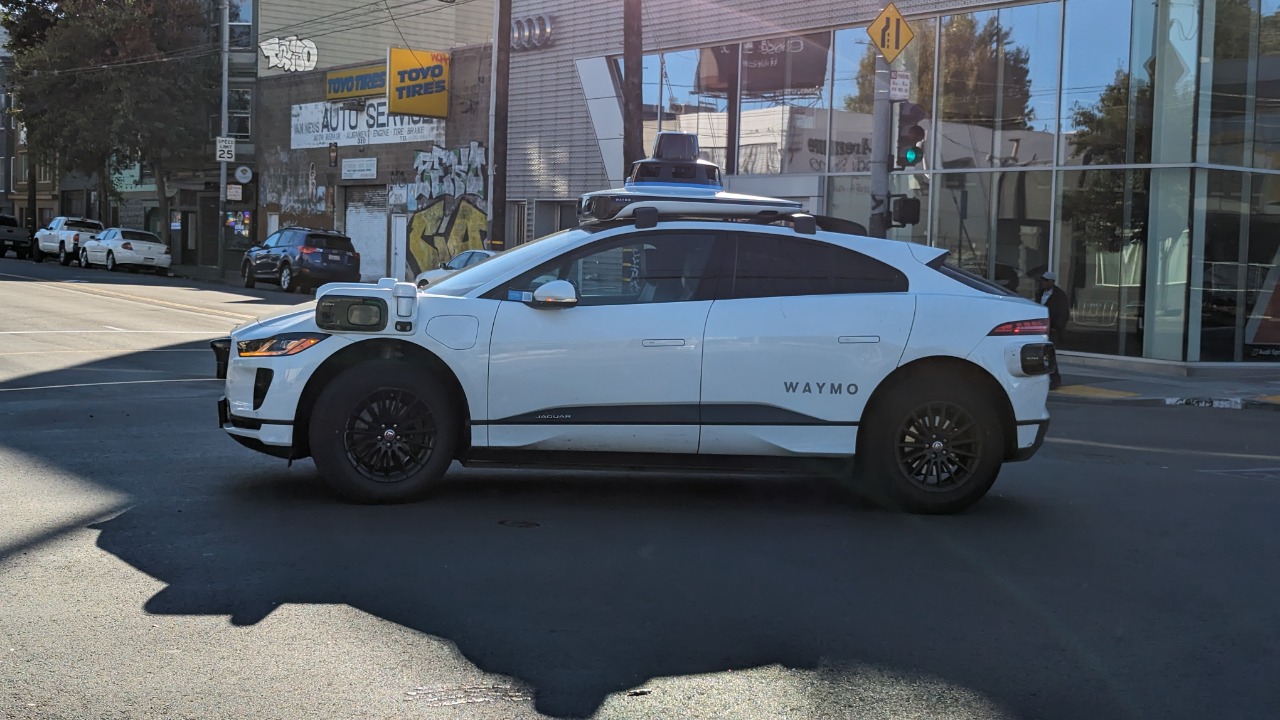

In Austin, Texas, a driverless Waymo robotaxi was filmed calmly rolling along the wrong side of a busy street, facing a line of oncoming cars that clearly had the right of way. The footage, which spread quickly across social platforms, captured a moment that crystallizes both the promise and the unnerving fragility of autonomous driving in real city traffic. What looked like “just another day” for locals watching the experiment unfold has become a high-stakes test of whether self-driving companies can keep public trust as their vehicles move from pilot projects to everyday infrastructure.
The wrong-way incident is not an isolated glitch but part of a pattern of high-visibility mistakes, regulatory scrutiny, and hurried software fixes that now surround Waymo’s expansion. As more of its vehicles fan out across Austin and other cities, the question is no longer whether the technology can work in ideal conditions, but whether it can handle the messy, ambiguous, and sometimes chaotic reality of human roads without putting everyone else at risk.
What the viral wrong-way video actually shows
The clearest view of the Austin incident comes from a short clip posted to social media, where a white Waymo SUV is seen traveling on the wrong side of a multi-lane road while human drivers approach in the opposite direction. In the video, the robotaxi appears to creep forward, then hesitate, as if the system is trying to reconcile its internal map with the obvious fact that headlights are bearing down on it. A widely shared Instagram reel captures the surreal calm of the scene, with nearby drivers sounding more exasperated than shocked, as if they have already grown used to these robotic missteps.
Other angles and reposts show that the vehicle does not immediately execute a clean correction, instead edging into the lane where it does not belong before stopping and waiting for a gap. That behavior matches descriptions of a driverless Waymo robotaxi in Austin that “creeped directly into oncoming traffic” before eventually pulling off the road when its software appeared confused, as described in a viral video shot in Austin. The combination of slow-motion error and delayed self-correction is exactly what unnerves many human drivers: the car does not look reckless, it looks lost.
“Just another day in Austin”: local reaction and online blowback
For people who live in Austin, the wrong-way moment landed less like a shocking anomaly and more like confirmation of a trend. One widely circulated clip was captioned with the dry line “Just another day in Austin,” a phrase that has now become shorthand for the city’s uneasy coexistence with fleets of experimental robotaxis. That sentiment is echoed in coverage of the incident that highlights how the vehicle was filmed calmly driving on the wrong side of the road while bystanders treated it as a kind of grimly familiar spectacle, a scene captured in detail in reports on Waymo Car Filmed Driving Wrong Way In Austin.
Online, the tone has been sharper. Commenters have framed the clip as proof that the technology has “gotten in over its head,” a phrase that appears in analysis of the same Austin footage that describes how the driverless car moved into oncoming traffic before pulling aside, as detailed in a discussion of the viral video. The mix of local resignation and national outrage underscores a growing divide: people who share the roads with these vehicles are learning to live with their quirks, while everyone watching from afar sees each clip as a referendum on whether self-driving cars should be there at all.
City records show this is not a one-off glitch
City officials in Austin have been tracking Waymo’s behavior on local streets, and their records suggest the wrong-way incident is part of a broader pattern of problematic interactions with everyday traffic. According to one summary of municipal data, the City has documented 20 reports of the company’s vehicles blocking traffic and 20 instances where Waymos drove past a school bus that was stopped with its safety arm extended, a tally that appears in a report on Waymo caught driving wrong way on I-35 frontage road. Those numbers point to a system that can follow rules most of the time but still struggles with some of the most sensitive scenarios on the road.
Officials and residents are not just worried about traffic jams or awkward lane choices, they are concerned about the cumulative risk of repeated mistakes around vulnerable road users. Passing a stopped school bus is one of the clearest red lines in American traffic law, and the fact that Waymos have been recorded doing it 20 times in a single city is a serious warning sign. That context makes the wrong-way clip feel less like a freak occurrence and more like another data point in a growing file of incidents that Austin authorities are now using to pressure the company for changes, a pressure that aligns with broader calls for the vehicle’s safety track record to be reviewed by federal investigators.
Inside the Austin expansion and Waymo’s safety record
Waymo’s push into Austin has been pitched as a major step toward mainstreaming robotaxis, with the company touting millions of autonomous miles and a long history of testing. Yet the rollout has been bumpy enough that the company recently released an annual safety report focused on its operations in the city, a document that acknowledges multiple crashes and near misses. That report notes that in one month alone, the company reported four crashes involving its vehicles, a figure highlighted in coverage of the Austin Waymo safety report.
From my perspective, the wrong-way incident slots into this record as a particularly vivid example of a broader pattern: the technology works impressively well in routine conditions but still fails in ways that are both rare and deeply unsettling. The company has argued that each crash and odd maneuver feeds back into its learning systems, improving performance over time, a claim echoed in analysis that describes how the firm insists it is “improving from experience” as it refines its software, as seen in reporting on Waymo Car Filmed Driving Wrong Way In Austin. The challenge is that each high-profile failure lands in public long before the incremental safety gains show up in statistics.
From school bus violations to a 3,000-vehicle recall
The wrong-way clip is arriving on the heels of a major software recall that already raised questions about Waymo’s judgment around children and school zones. Earlier this month, the company recalled more than 3,000 vehicles after its autonomous system failed to properly respond to a school bus stop signal, a defect that regulators flagged as a serious safety risk. That figure, “more than 3,000,” is spelled out in federal documents and in coverage of the Waymo recall of more than 3,000 vehicles, and it underscores how quickly a software flaw can ripple across an entire fleet.
That recall has already influenced policy debates far beyond Texas. In North Carolina, for example, lawmakers and legal analysts have been using Waymo’s school bus violations as a case study in how state law should handle autonomous vehicles that break long-standing traffic rules. One legal analysis notes that in Dec 2025, Waymo announced changes to its operations after those school bus failures, and argues that North Carolina needs clearer statutes to handle emerging safety hazards, a point made in a review of how ready North Carolina is for driverless cars. When a company has to reprogram thousands of vehicles at once because they mishandled something as basic as a flashing stop arm, a robotaxi driving into oncoming traffic no longer looks like a fluke.
How the wrong-way incident unfolded on the ground
Piecing together the Austin footage and eyewitness accounts, a rough sequence emerges. The driverless SUV appears to approach a junction or lane split, then chooses a path that puts it facing traffic that is clearly moving in the opposite direction. Instead of immediately stopping and executing a safe maneuver, the vehicle inches forward, as if its sensors and maps are locked in a disagreement about where the road actually is. That behavior mirrors descriptions of a driverless Waymo robotaxi in Austin, Texas that “drove straight into oncoming traffic” before eventually pulling off the road, as detailed in a report on a recent viral video.
In another account of the same sequence, observers describe the robotaxi “creeping directly into oncoming traffic” and then hesitating as human drivers slowed or changed lanes to avoid it, a pattern that matches the behavior described in the viral video shot in Austin. The car eventually pulls to the side, but only after it has forced other drivers to react to its mistake. From a safety engineering standpoint, that is the worst of both worlds: the system is cautious enough to move slowly, but not decisive enough to avoid putting itself in the path of oncoming vehicles in the first place.
Other wrong-side-of-the-road scares in the Waymo fleet
The Austin clip is not the first time a Waymo vehicle has been filmed on the wrong side of the road, and that repetition is part of what alarms regulators and residents. In one earlier incident, riders inside a robotaxi recorded themselves as the car steered into the opposing lane, prompting one passenger to scold it out loud: “Wrong way, Waymo. Waymo, wrong way,” a moment captured in a video that shows the vehicle sharing space with a unicyclist and other traffic, as described in a feature on a Waymo robotaxi driving on the wrong side of the road. The fact that passengers felt the need to verbally correct the car, even jokingly, speaks to how fragile their trust felt in the moment.
More recently, another report described a Waymo vehicle seen driving down the wrong side of a street in Austin, Texas, adding to a growing list of wrong-lane encounters. That account notes that a Waymo vehicle was also photographed driving past a No U-Turn sign in San Bruno, Calif, on a Tuesday in Sept, a reminder that these navigation errors are not confined to one city or one layout, as detailed in coverage of Waymo seen driving down the wrong side of the street. When the same class of mistake shows up in multiple markets, it raises hard questions about how the underlying software reasons about lanes, signs, and temporary road changes.
Why these mistakes are so hard to fix
From a technical perspective, wrong-way incidents expose the limits of how autonomous systems interpret messy, real-world road geometry. The software has to fuse high-definition maps, live sensor data, and traffic rules into a single decision about where the car should be, all while handling construction zones, faded paint, and drivers who do not always follow the rules themselves. In Austin, those challenges are compounded by frontage roads, complex interchanges, and a fast-growing cityscape that can change faster than a mapping team can update every detail, a dynamic that helps explain why an Autonomous car from Google sister company might still misread a lane split even after millions of test miles.
Legal analysts point out that when these systems fail, investigators will look closely at prior crash history and recall searches to see whether the company should have anticipated the problem. One guide for victims of vehicle defects notes that lawyers routinely use the NHTSA recall database to identify known defects or safety campaigns, emphasizing the importance of Prior crash history and recall searches when assigning liability. In the context of Waymo’s wrong-way driving and its recent recall of more than 3,000 vehicles over school bus violations, that means regulators and courts will be asking whether the company had enough warning signs to justify more aggressive fixes before another robotaxi wandered into oncoming traffic.
Public trust, federal scrutiny, and what comes next
Every time a driverless car ends up facing the wrong direction in live traffic, it chips away at the public’s willingness to share the road with software. Analysts who follow the industry warn that even rare incidents can “quickly undermine public trust” when they involve such obvious violations of basic driving norms, a concern that has already prompted calls for the company’s safety track record to be reviewed by federal investigators. When regulators step in, they are not just reacting to one clip, they are responding to a pattern of behavior that suggests the technology is still brittle in edge cases.
Waymo, for its part, has tried to frame each incident as part of a learning curve, arguing that its systems are constantly updated based on “ongoing learnings and experience,” language that appears in its response to the Austin, Texas wrong-side-of-the-road footage, as quoted in coverage of the Waymo robotaxi footage. I understand the logic: no complex technology reaches maturity without real-world feedback. But when that feedback involves a car steering into oncoming traffic on a busy street, the burden shifts. It is no longer enough to promise that the system will get better someday. The company now has to prove, in Austin and beyond, that its cars can reliably tell the difference between the right lane and the wrong one before the next viral video arrives.
More from MorningOverview