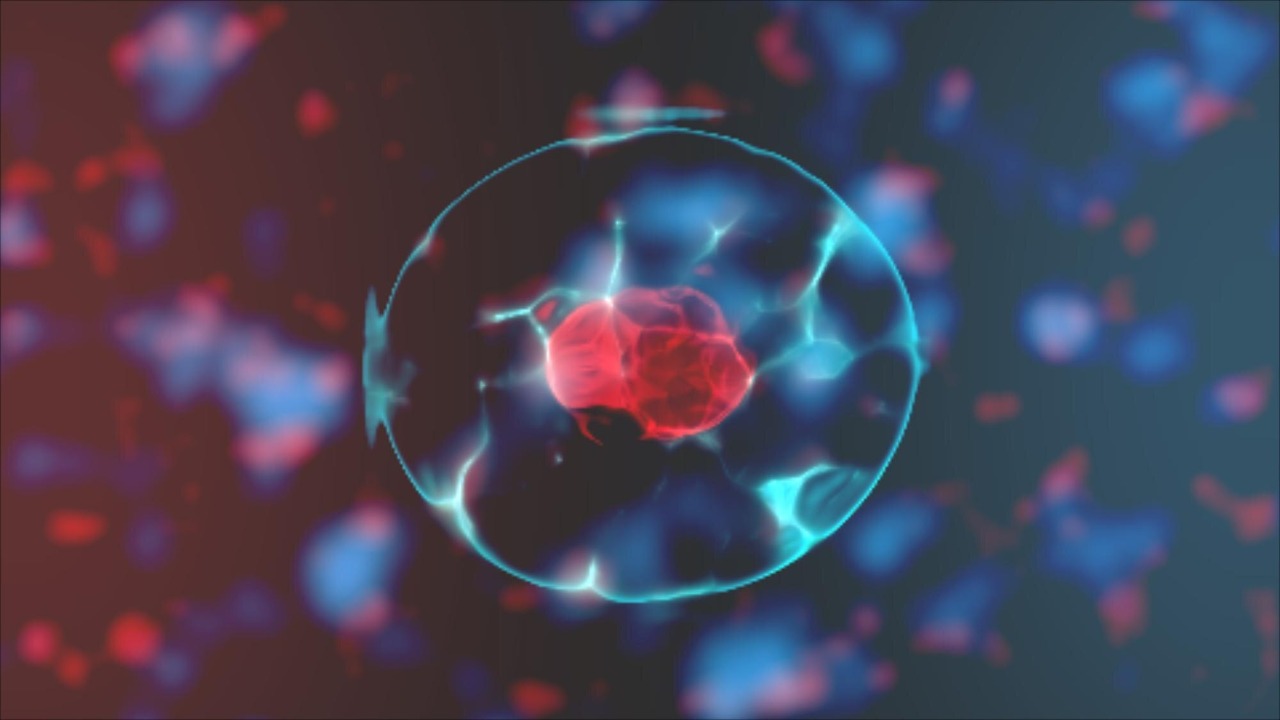

Cancer imaging is entering a phase where malignant cells no longer hide in murky grayscale but flare into view with surgical precision. Across operating rooms, scanners, and even blood tests, researchers are building systems that make tumors stand out on cue, promising earlier detection and more targeted treatment with fewer side effects.
Instead of relying only on broad anatomical pictures, clinicians are beginning to combine ultra-sensitive sensors, smart contrast agents, and quantum-inspired physics to see cancer at the level of single cells and molecular fingerprints. The result is a new generation of tools that do not just show where a mass sits, but reveal how it behaves and how best to attack it.
From grainy scans to glowing targets
For decades, medical imaging has been defined by structural snapshots, from X-rays to CT and MRI, that show where tissue looks abnormal but often struggle to distinguish aggressive cancer from harmless change. As researchers have pointed out in work on light transport in the body, Introduction One of the greatest advances in recent medical history has been the rapid evolution of imaging techniques that make diagnosis more accurate, facile, and quick, yet traditional systems still lean heavily on anatomy rather than biology. That is now changing as engineers design contrast agents and detectors that respond to the chemistry of cancer cells, not just their shape.
Three-dimensional visualization has already reshaped how surgeons and interventional radiologists navigate complex anatomy, and it is laying the groundwork for this more functional era. By creating a three-dimensional representation of the body, Imaging allows doctors to visualize tumors in relation to nerves, vessels, and organs and to navigate complex anatomical regions with greater precision. The next leap is to overlay those 3D roadmaps with molecular beacons that light up malignant tissue in real time, turning once-grainy scans into dynamic maps of cancer activity.
Hybrid scanners that fuse anatomy and function
One of the clearest signs of this shift is the rise of hybrid imaging systems that combine multiple types of information in a single scan. At UC Davis, researchers have described a New hybrid platform that aims to transform detection of cancer and other diseases by capturing both structural and functional data at once. Instead of forcing clinicians to mentally fuse separate CT, MRI, and nuclear images, these systems co-register them automatically so suspicious regions can be evaluated with far greater confidence.
The project has drawn support from The National Institutes of Hea and related federal programs, which see hybrid scanners as a way to push beyond the limits of conventional radiology. In SACRAMENTO, The National Institutes of Health (NIH) awarded the UC Davis Department of Radiology a National Instit grant to advance photon-counting and spectral energy imaging that can separate materials based on how they interact with X-rays. By tuning scanners to the subtle signatures of contrast agents and tissue composition, clinicians can highlight cancer-rich regions while sparing patients from unnecessary biopsies and repeat scans.
Nanoprobes that make tumors glow in the operating room
Imaging breakthroughs are not confined to big machines in radiology suites; they are also arriving as injectable agents that guide surgeons in real time. In one striking example, a real-time surgical imaging agent, Dubbed the fluorescent nanoprobe, has been licensed by OncoNano Medicine, Inc and is designed to make cancerous tissue fluoresce only when it encounters the acidic microenvironment typical of tumors. Instead of staining everything it touches, the probe remains dark in normal tissue and lights up selectively where malignant cells lurk, giving surgeons a glowing outline of what to remove.
That kind of precision is especially powerful when paired with robotic platforms that already excel at fine motor control. Surgeons using systems such as the da Vinci robot can rely on the fluorescent nanoprobe to highlight residual disease at the margins of a resection, reducing the odds that microscopic cancer is left behind. By turning the tumor’s own chemistry into a visual cue, this approach narrows the gap between what preoperative scans predict and what the surgeon actually sees under the lights.
MRI and PET tracers that sharpen the signal
Magnetic resonance imaging has long been prized for its soft-tissue detail, but standard contrast agents often blur the line between benign and malignant change. In a large collaborative study, researchers working with medical experts at the Lunenfeld and Tanenbaum Researc institutes reported an MRI innovation that makes cancerous tissue light up and easier to see by exploiting differences in how tumors handle contrast. By tailoring the physics of the scan to those differences, they were able to boost the visibility of malignant regions without a corresponding rise in background noise.
Positron emission tomography is undergoing a similar reinvention as chemists design tracers that bind more specifically to cancer targets and stay stable long enough to be useful. At Virginia Tech, work highlighted by More stories from the College of Science has focused on PET tracers that overcome the short half-life of traditional labels, which can decay in about 20 minutes and limit their use. In parallel, chemists have emphasized how Trifluoromethyl groups are widely used in pharmaceutical design because they can improve drug stability, potency, and how molecules distribute in the body, and the same chemistry is now being harnessed to build PET tracers that can image important targets that remain difficult to detect.
Ultra-sensitive sensors that see single cancer cells
While better tracers and contrast agents help tumors stand out, the detectors that capture their signals are also undergoing a quiet revolution. At Northeastern University, engineers have described Breakthrough research that revolutionizes imaging at the smallest scales by using Sensor technology to detect nanoscale signals that would previously have been lost in the noise. By shrinking and refining the sensor architecture, they can pick up faint optical or electrical cues from tiny clusters of cells or even individual particles.
That same philosophy underpins a separate line of work in which an ECE Associate Professor, Cristian Cassella, and colleagues reported At the heart of every camera is a sensor, and they have discovered a way to detect single cancer cells by scaling down the sensor and optimizing how it collects light. By engineering the device to register the faintest possible signal from tagged cells, they move cancer imaging closer to a world where a handful of malignant cells in a blood sample or tissue smear can be flagged long before a tumor forms a visible mass.
Optical systems that make biopsies smarter
One of the most striking demonstrations of “on cue” illumination comes from optical systems that combine smart nanoparticles with advanced cameras. In work highlighted under the banner Cancer Cells Light Up With a Breakthrough Imaging System, researchers describe an ultra-sensitive platform that can make cancer cells glow against a dark background, guiding clinicians to the areas most likely to contain tumor tissue. Instead of sampling blindly across a suspicious region, pathologists can focus their biopsies where the optical signal is strongest, improving diagnostic yield.
The key lies in how the system uses surface-enhanced Raman scattering, or SERS, nanoparticles that bind to markers on tumor cells and then emit a distinctive spectral fingerprint when illuminated. In detailed experiments, scientists reported Breakthrough Imaging System performance that could distinguish tumor-rich from normal tissue, and they validated it by Testing tumor targeting and tissue contrast across samples. A companion analysis of Testing with SERS nanoparticles showed how targeting a surface protein found on many tumor cells can turn a previously invisible lesion into a bright, quantifiable signal.
Blood-based “imaging” and personalized monitoring
Not all illumination happens inside a scanner or under a surgical scope; some of the most sensitive cancer detection now takes place in a test tube. Liquid biopsy platforms that track tumor DNA in the bloodstream are beginning to function like a molecular imaging system, revealing where disease is active even when scans look clean. One company has described Utilizing a personalized testing approach that tracks up to 1,800 tumor-specific variants unique to each patient’s tumor, turning a simple blood draw into a detailed map of cancer’s genetic footprint.
By following those 1,800 markers over time, clinicians can see whether immunotherapy is shrinking a tumor, driving it into dormancy, or failing to control it, often weeks or months before changes appear on CT or MRI. In that sense, liquid biopsy becomes a kind of temporal imaging, capturing the ebb and flow of disease in near real time and allowing oncologists to adjust treatment before resistance takes hold. It is not a replacement for anatomical scans, but a complementary lens that makes the invisible visible at the molecular level.
Real-world stories of early detection and “perfect timing”
For patients, the promise of these technologies is not abstract; it shows up as earlier diagnoses and less invasive care. In one case study, a pulmonologist at After Southern Ocean Medical Center used a new imaging approach to spot tiny, almost invisible changes in lung nodules that would have been easy to overlook. The patient later described the experience as Perfect Timing, because the technology lit up cancer cells for early-stage treatment before they had a chance to spread.
Stories like this underscore why clinicians are so eager for tools that can highlight malignancy at its earliest, most treatable stages. When a scan or endoscopic view can differentiate between scar tissue and active tumor, or when a fluorescent agent reveals a small focus of disease that would otherwise blend into healthy tissue, the entire trajectory of care can change. Instead of waiting for a mass to grow large enough to be obvious, doctors can intervene when surgery is simpler, radiation fields are smaller, and systemic therapies can be more precisely targeted.
Quantum, head models, and the next frontier of light
Behind the scenes, some of the most ambitious work in cancer imaging is happening at the intersection of physics and computation. In the United Kingdom, policymakers and scientists have highlighted how quantum technologies could reshape non-invasive diagnostics, including cancer detection. A recent report noted that The report highlights advancements such as wearable brain scanners and non-invasive cancer detection using quantum entanglement, with a 2030 target to make healthcare more efficient and less invasive. If those systems mature, they could allow clinicians to probe deep tissues with unprecedented sensitivity, using quantum correlations to extract more information from fewer photons.
At the same time, computational models of how light moves through the body are becoming essential to designing the next generation of optical probes and scanners. Work on technique development for modeling time resolved light propagation inside a realistic human head model shows how detailed simulations can guide the placement of sensors and the choice of wavelengths to maximize signal from deep structures. As those models grow more sophisticated, they will help engineers tune imaging systems so that when a cancer cell lights up, the signal reaches the detector with enough clarity to inform real-world decisions.
More from MorningOverview