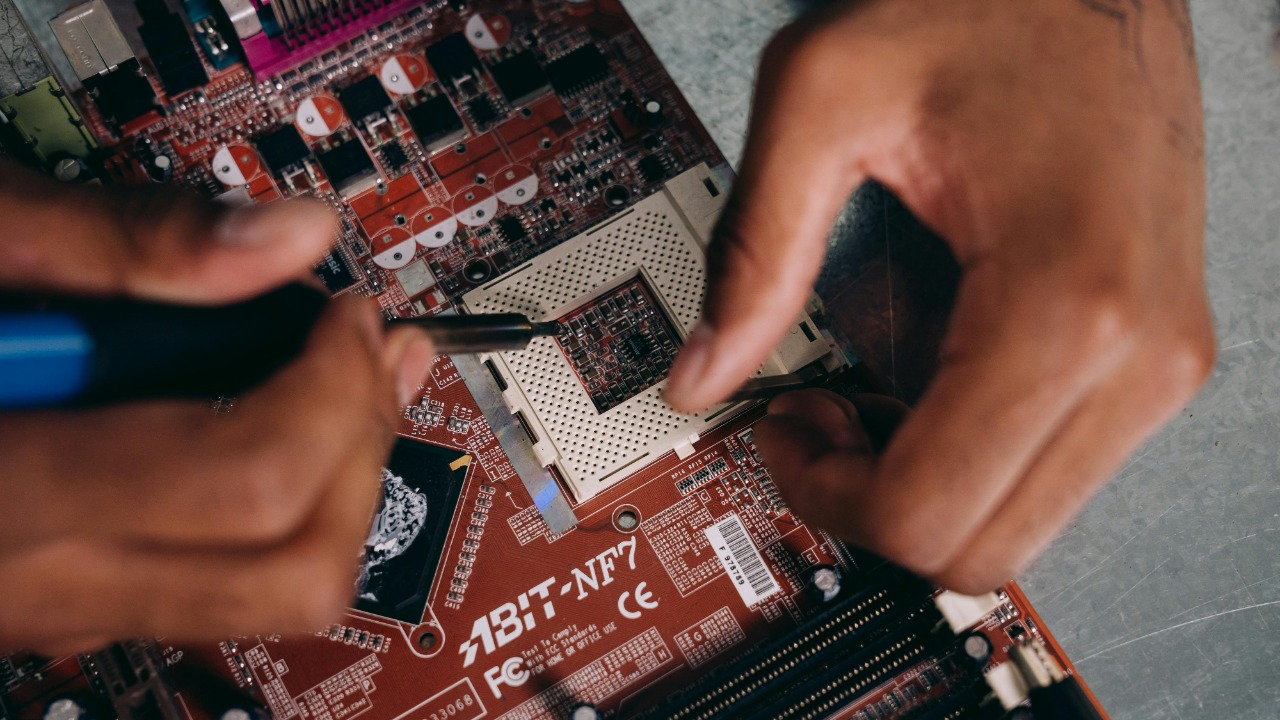

Memory prices are grabbing headlines, but the more consequential story for the next decade of computing is unfolding one layer deeper in the supply chain. The specialized tools that etch, deposit, and test silicon are on track to become dramatically more expensive, reshaping who can afford to build cutting edge chips at all. If that happens, the cost shock will not stop at RAM modules, it will ripple into processors, smartphones, AI servers, and every industry that depends on them.
Instead of a short term blip, the data points to a structural shift in how much it costs to manufacture advanced semiconductors, from wafer fab equipment to packaging lines. As I follow the numbers and policy moves piling up, it looks less like a passing cycle and more like a new baseline where chipmaking tools themselves become a strategic bottleneck.
Equipment spending is racing toward record territory
The clearest signal that chipmaking tools are entering a new price era is the sheer scale of projected spending on them. Industry forecasts now expect Sales of semiconductor production tools to reach USD 156 billion by 2027, covering everything from wafer fab equipment (WFE) to test, assembly, and packaging systems. That figure reflects not just more machines, but more complex, higher ticket systems that are required to keep shrinking transistors and stacking memory.
Behind that headline number sits a geographic arms race. China, Taiwan, and Korea are leading the intense demand for these tools, each pouring capital into new fabs and capacity expansions to secure their position in logic, foundry, and memory. As Dec projections show, WFE remains the dominant category within that USD 156 billion total, underscoring how much of the industry’s future cost structure is now tied up in the front end of the line where wafers are processed rather than in the chips themselves.
WFE and DRAM gear are getting pricier, not just more plentiful
Within that broader surge, wafer fab equipment is pulling ahead as the most critical and expensive slice of the market. Recent forecasts indicate that WFE sales for foundry and logic applications are expected to show robust 9.8% year over year growth to USD 66.6 billion, driven by both leading and mainstream layers. That kind of growth in a mature, capital intensive segment is a sign that each new process node is demanding more tool spending per wafer, not less.
Memory equipment is on a similar trajectory. Dec projections show that DRAM equipment sales are projected to rise 15.4% to $22.5 billion in 2025, then continue expanding in 2026 and 2027 as manufacturers push higher layer counts and capacity additions. When DRAM makers are forced to spend that much more on deposition, etch, and metrology gear just to keep up with demand, the cost pressure inevitably feeds into the price of every RAM stick and server DIMM that leaves the factory.
AI demand is supercharging tool complexity and cost
The AI boom is not only consuming chips, it is reshaping the tools needed to build them. As hyperscalers race to deploy larger language models and more capable accelerators, equipment makers are being pushed to deliver new generations of wafer fab systems that can handle advanced logic and memory structures. Industry analysis points to an AI driven Front end rebound in the wafer fab equipment segment, which covers logic and foundry demand for the next gate all around generation.
Those gate all around transistors, along with 3D NAND and high bandwidth memory stacks, require more lithography steps, more precise etch tools, and more sophisticated inspection systems. Each incremental layer of complexity adds cost to the toolset, and AI centric chips tend to sit at the very edge of what current equipment can handle. As a result, the AI wave is not just lifting unit volumes, it is locking in a higher baseline for the capital intensity of every advanced fab that wants to stay in the game.
RAM is already in crisis, and tools are the next choke point
Consumers are already feeling the first order effects of this shift through memory prices. DRAM prices have surged sharply this year as demand outstrips supply, with one analysis noting that DRAM prices have surged enough to raise the bill of materials for low end smartphones priced below $200 and push up the cost of producing a single smartphone. That squeeze is already showing up in retail guidance that handset prices are likely to rise in 2026 as AI fueled chip shortages bite.
Behind those price hikes is a deeper structural shortage. Reporting on the 2025 memory crunch notes that DRAM prices skyrocket 171% year over year, with server grade RDIMM memory and HBM being the main attractions for hardware makers despite the hikes as shortage takes hold. When DRAM prices skyrocket 171% year over year, it is a sign that capacity and tooling are badly out of sync with demand, and that the cost of the equipment needed to expand that capacity is becoming a central constraint.
HBM and diverted wafer capacity are reshaping the memory market
The most aggressive memory buyers are not PC enthusiasts, they are AI data center operators hungry for high bandwidth memory. As AI accelerators pivot to HBM stacks, manufacturers are diverting wafer capacity away from traditional DIMMs and consumer RAM. Recent analysis of the memory landscape notes that Surging prices, diverted wafer capacity, and multi year delays in relief are pushing memory out of reach for consumers.
That shift is intensifying the need for more advanced packaging and test equipment, since HBM relies on complex 2.5D and 3D integration rather than simple soldered modules. Each HBM stack requires precise through silicon vias, interposers, and thermal management, all of which depend on specialized tools that are more expensive than the gear used for conventional RAM. As more wafer starts are committed to HBM, the capital burden of those tools is spread over a narrower set of high end products, reinforcing the upward pressure on both equipment and memory prices.
Tariffs are amplifying the cost surge for U.S. fabs
Policy choices are adding another layer of cost on top of the technology driven increases. Under President Donald Trump, new tariffs on chipmaking tools are poised to raise the price of importing critical equipment into the United States. One detailed assessment warns that Rising Costs Across Equipment Categories will follow, with Tariffs triggering a cost escalation of 20%–30% on key systems like lithography, deposition, and etch tools.
The impact on chipmakers operating or building fabs in the U.S. is direct and substantial. As a result, companies like Intel, GlobalFoundries, Samsung Foundry, and TSMC will have to pay at least 20% more for chipmaking tools, making processors made in the U.S. more expensive and less competitive on the global market. That extra 20% or more on multi million dollar tools compounds across an entire fab build, and it will eventually be reflected in the price of U.S. made CPUs, GPUs, and memory products.
Tool inflation will flow into chips, phones, and cloud bills
When the cost of the machines that make chips rises, the effect does not stay confined to balance sheets in Hsinchu or Arizona. Foundries and IDMs pass those higher capital costs into wafer pricing, which then shows up in the quotes that chip designers receive for their next generation processors. One recent briefing on foundry pricing notes that Key Points include TSMC planning a 10% global price hike for its advanced 4 nanometer chips, with up to 30% increases for U.S. production where costs are higher.
Those higher wafer prices cascade into finished products. Smartphone makers, for example, are already warning that AI capable models will cost more as memory and processor quotes rise. Reporting on the handset market explains that smartphone prices to rise in 2026 are tied directly to AI fueled chip shortages and the higher cost of producing a single smartphone. The same logic applies to cloud providers, who will face steeper bills for AI accelerators and memory heavy servers and will be tempted to recoup those costs through higher subscription and usage fees.
Inside the RAM shortage: how suppliers are reacting
Memory makers are not standing still in the face of surging demand and tool costs, but their strategies underscore how constrained the system has become. Analysis of the 2025 RAM crunch notes that Each major supplier has adopted a different approach: Samsung Electronics (South Korea), Traditionally the largest memory maker, is prioritizing high margin server and HBM products, while rivals juggle between PC, mobile, and data center segments. That triage reflects a world where there is not enough capacity or equipment to satisfy every market at once.
As Dec reporting on the RAM shortage 2025 makes clear, the combination of AI demand and limited tool availability is forcing manufacturers to ration their most advanced lines. When Samsung Electronics in South Korea, Traditionally the dominant player, chooses to steer wafers toward AI centric products, it is effectively betting that consumers will tolerate higher prices or delayed upgrades for mainstream PCs and phones. That bet only makes sense in a context where expanding capacity quickly is constrained by the cost and lead times of the necessary equipment.
Experts warn the tools themselves are on the verge of a cost explosion
Industry veterans are increasingly explicit that the next big price shock will come from the tools, not just the chips they produce. Recent analysis framed the situation bluntly, noting that It’s not just RAM getting more expensive the tools to make chips are set to explode in cost too, experts warn. That warning reflects a convergence of factors: AI driven complexity, geopolitical tariffs, export controls, and the sheer engineering challenge of pushing lithography and materials science further.
As Dec commentary in that report suggests, the industry is approaching a point where only a handful of governments and corporations can afford the full stack of leading edge tools. If the cost of a single EUV scanner or advanced etch cluster rises sharply, the barrier to entry for new fabs will climb with it, concentrating production in fewer hands. For consumers and enterprises, that concentration translates into less pricing power and more vulnerability to supply shocks, whether they originate in a trade dispute or a natural disaster near a key supplier.
Why this matters far beyond the chip industry
The stakes of tool inflation extend well beyond semiconductor balance sheets. Every sector that depends on cheap, abundant computing power, from autonomous vehicles to generative AI startups, is built on the assumption that each new hardware generation will deliver more performance per dollar. If the cost of WFE, DRAM equipment, and advanced packaging keeps climbing, that assumption starts to break, and business models that rely on ever cheaper compute will need to be rewritten.
For policymakers, the combination of Tariffs, Rising Costs Across Equipment Categories, and concentrated tool supply chains raises hard questions about industrial strategy. If the United States and its allies want resilient access to advanced chips, they will need to grapple with the reality that the most critical chokepoints now sit in a handful of tool vendors and the fabs that can afford them. For consumers, the near term signal will be higher prices on everything from gaming PCs to AI powered smartphones, but the deeper story is that the era of effortless, invisible progress in silicon economics may be ending, replaced by a world where the cost of the machines behind the chips shapes what is possible on every screen.
More from MorningOverview