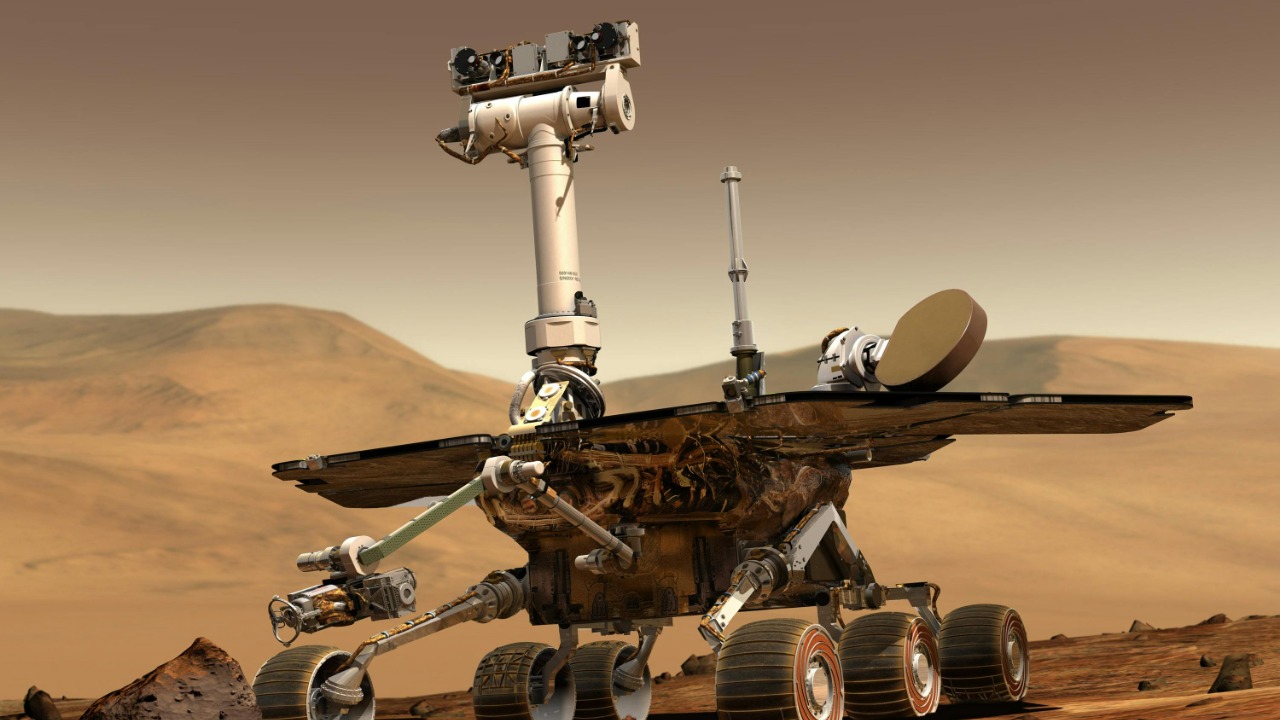

NASA is about to lock in a verdict on how long its Perseverance rover can keep working on Mars, and the answer will shape the next decade of planetary exploration. Engineers have spent the past year stress testing hardware, reviewing data and weighing risk, all to decide whether this six-wheeled robot can safely push far beyond its original mission and keep driving for miles across Jezero Crater.
The stakes are unusually high: Perseverance is not only scouting for signs of ancient life, it is also caching the first samples that could someday be flown back to Earth, and its health will determine how ambitious that campaign can be. As the certification decision nears, the picture that emerges is of a machine in remarkably strong condition, but one whose future still depends on careful analysis of every motor, wheel and instrument.
Perseverance’s health check: a rover in “excellent shape”
The central question facing mission managers is not whether Perseverance is working today, but whether it can keep operating safely for years in one of the harshest environments in the Solar System. I see the current review as a kind of planetary MOT test, a comprehensive inspection that looks at everything from wheel wear to power margins to the performance of science instruments. Engineers have been poring over telemetry to confirm that the rover’s core systems, from its chassis to its robotic arm, are aging slowly enough to justify a long extension.
So far, the verdict is strikingly positive. Officials have described Perseverance as being in “excellent shape,” with Perseverance reporting that all the systems onboard are operational and performing very, very well, and that All the instruments are functioning as designed. That level of health after nearly five years on Mars is unusual for a rover that has already driven almost 25 miles and drilled dozens of rock cores, and it is the foundation for the argument that the mission can safely continue into the 2030s.
How JPL stress tested Perseverance for years ahead
Behind the scenes, the most consequential work has been happening not on Mars but in Southern California, where engineers have been recreating the rover’s life in slow motion. I view this as a kind of parallel universe for Perseverance, with hardware twins and digital models pushed through simulated Martian days to see what might fail first. The goal is to understand not just whether the rover works now, but how its moving parts will behave after thousands more hours of driving, drilling and arm motions.
NASA’s Jet Propulsion Laboratory in Southern California, which built Perseverance and leads the mission, has continued to refine this picture through extensive ground testing, and NASA’s Jet Propulsion Laboratory in Southern California has been central to that effort. Earlier this year, JPL certified that the rotary actuators that turn the rover’s wheels can perform optimally for at least several more years, a key result that came after a focused campaign of tests on flight-like hardware, and This past summer, JPL certified that those actuators could keep the rover rolling well into the next decade.
Certified to keep rolling until at least 2031
The emerging consensus from these tests is that Perseverance is not just surviving, it is built to last. Mission planners are now working with a formal expectation that the rover can continue to operate on Mars until at least 2031, a horizon that would more than double its original prime mission. From my perspective, that kind of longevity transforms Perseverance from a short campaign into a sustained observatory, capable of tracking seasonal changes, long-term erosion and even subtle shifts in the Martian atmosphere over more than a decade.
Technical analyses of the rover’s mechanical and electrical systems support this extended timeline, with detailed studies concluding that Perseverance Can Continue To Operate On Mars Until At Least 2031 if current trends hold. That projection has been echoed in broader discussions of the origin and evolution of life, where scientists have highlighted that Perseverance Can Continue To Operate On Mars Until At Least 2031 as a crucial factor in planning future biosignature searches, and those expectations are reflected in Perseverance Can Continue To Operate On Mars Until At Least 2031 discussions that link rover longevity directly to astrobiology goals.
From “ready to roll” to record-breaking drives
Longevity on paper only matters if the rover can keep moving, and Perseverance has been proving that on the ground with a series of increasingly ambitious drives. I see its mobility system as the mission’s beating heart, the capability that turns a single landing site into a broad geologic survey. The rover’s autonomous navigation has matured to the point where it can pick its way through boulder fields and sand traps with minimal human intervention, dramatically increasing the distance it can cover in a single Martian day.
NASA has already highlighted that Perseverance Mars Rover Ready to Roll for Miles in Years Ahead, underscoring that the rover is structurally prepared for long-distance traverses, and that confidence is captured in the phrase NASA’s Perseverance Mars Rover Ready to Roll for Miles in Years Ahead. On the surface, new video from Sol 1,540 has showcased how FPGA-accelerated vision processing and upgraded autonomy enabled FPGA powered Perseverance to carry out a record-breaking drive while safely avoiding pits and ledges, a vivid demonstration that the rover’s wheels and software are ready for the marathon ahead.
Chasing a planetary mileage record
With its mobility system certified and its actuators cleared for years of service, Perseverance is now within striking distance of a more symbolic milestone: the record for the most miles driven on another world. I find that pursuit revealing, not because records matter in themselves, but because they reflect how aggressively the team is willing to use the rover. To chase that mark, engineers have to be confident enough in their hardware to prioritize science targets that lie far from the landing site, even if that means threading through more hazardous terrain.
Mission scientists have acknowledged that Perseverance could break the record for miles driven on another planet, and that uncertainty about the exact end date has not altered Perseverance’s near-term science plans, with Lee explaining that the team is still planning for the rover to be operating through at least 2031, a strategy laid out in Perseverance coverage that highlights Lee’s comments. That mindset, treating the rover as a long-haul explorer rather than a fragile asset, is a key part of why the mission team is comfortable planning multi-year traverses across Jezero Crater and beyond.
Why Jezero Crater still matters after five years
Even as the engineering team focuses on hardware lifetimes, the science case for keeping Perseverance running has only grown stronger. Jezero Crater remains one of the most promising places on Mars to search for signs of ancient microbial life, thanks to its preserved river delta and layered sediments. I see the rover’s extended mission as a chance to move from reconnaissance to deep context, stitching together a detailed geologic story that spans the crater floor, the delta and the surrounding highlands.
Recent analyses of the Margin unit, including Geologic context of the Margin unit with Color indicators of different rock types, have shown that the area holds a complex record of water activity that Perseverance is uniquely positioned to decode, as described in work labeled Geologic and Margin with detailed Color mapping. The Perseverance rover, in top condition, is now poised for years of exploration across Mars’ Jezero Crater and new sample collection campaigns, with mission planners already talking about a timeline that stretches out beyond 2031 in The Perseverance coverage that emphasizes Mars and Jezero Crater and the rover’s readiness for long-distance work.
Sample caching and the long game of Mars return
Perseverance’s longevity is not just about how far it can drive, it is about how many scientifically rich rock cores it can collect and cache for a future mission to retrieve. I see each new sample as a bet on the future, a carefully chosen cylinder of rock that might one day sit in a clean room on Earth, revealing chemical traces of ancient life or the history of Martian water. The longer the rover lasts, the more diverse that library of samples can become, spanning different layers, environments and ages.
Mission planners have already mapped out how those samples could be brought back, with a daily updated map showing Perseverance’s location, its landing site and the planned route for a future retrieval campaign, as described in a Mars mission overview that notes how NASA tracks Perseverance. On the ground, the rover route and where it actually gets its samples have been made available in detail, with mission scientists emphasizing how Perseverance’s discoveries at sites like the “Silver Mountain” rock sample could end up being some of the most important of the entire mission, as highlighted in coverage of how Perseverance is unlocking Mars’ ancient past.
What the latest science says about ancient life
All of this engineering work would matter less if the science case were fading, but the opposite is happening. Over the past year, Perseverance’s instruments have delivered some of the most intriguing hints yet that Jezero once hosted habitable environments, including rocks that formed in the presence of water and contain organic molecules. I see the current review of the rover’s future as inseparable from a parallel scientific reckoning, in which outside experts have been asked to judge whether the mission is on the right track in its search for biosignatures.
Now, after a rigorous, yearlong peer-review process, outside scientists have scrutinized the Mars 2020 team’s data and analyses and concluded that the mission’s interpretations of potential biosignatures are scientifically grounded, a result summarized in a special Now Mars report. Earlier, a NASA briefing on some exciting news from one of its Mars missions laid out how new findings from Perseverance’s instruments could point to environments that were once capable of supporting microbial life, with the Sep NASA Mars event underscoring how seriously the agency is taking the possibility that the rover may have already found the right kinds of rocks.
Inside the instruments that keep delivering
Perseverance’s ability to keep doing frontier science into the 2030s depends on more than wheels and actuators, it hinges on the health of its cameras, spectrometers and lasers. I think of the rover as a rolling laboratory, and like any lab, its value comes from the instruments that can still be calibrated and trusted years after launch. The mission team has been tracking each subsystem’s performance, looking for drifts, dead pixels or declining laser power that might limit future observations.
One of the key tools in that arsenal is the SuperCam instrument, which combines a laser, camera and spectrometers to analyze rock chemistry from a distance, and earlier mission updates featured Raquel Villanueva thanking Hemani for explaining how SuperCam was returning high quality data and images, with viewers encouraged to follow Raquel Villanueva, Thank Hemani and accounts like NASAJPL and NASA for the latest images being sent back by the rover. More recently, reports have emphasized that, even after five years on Mars, the rover is still returning spectacular data, with one account noting that After 5 Years on Mars, NASA’s Perseverance Rover Just Found Something Incredible On The Red Planet and that the rover is in excellent shape, a perspective captured in coverage titled After Years on Mars, NASA, Perseverance Rover Just Found Something Incredible On The Red Planet.
New campaigns, new terrain and the risk calculus
With the rover’s health and science case both strong, mission planners are not standing still. The next phase of exploration will send Perseverance into new terrain, including regions with more complex topography and potentially higher scientific payoff. I see this as the moment when the team has to balance ambition against prudence, deciding how close to hazards they are willing to drive and how much wear they are willing to accept on wheels and actuators in exchange for better samples.
On December 17, 2025, NASA’s Perseverance Mars rover prepares for new sample collection at Lac de Charmes, with mission updates detailing how the Rover status and mobility certification support plans to navigate carefully mapped keep-in and keep-out zones as Perseverance has gone around Mars for almost five years, a strategy outlined in Rover coverage that emphasizes Perseverance and Mars for context. At the same time, NASA’s ongoing testing and management of the Perseverance Mars rover has confirmed it should be able to continue its journey for many more years and miles, with engineers using that confidence to justify more ambitious routes, as described in analyses of how NASA’s work has effectively certified Perseverance Mars for extended operations.
Why the upcoming decision still matters
Given all this optimism, it might be tempting to see the upcoming certification decision as a formality, but it is more consequential than that. I view it as the moment when NASA formally commits to a long-term strategy for Perseverance, one that will influence budgets, staffing and even the design of future Mars missions. A green light for operations through at least 2031 would signal that the agency is ready to treat the rover as a central pillar of its Mars program for the rest of the decade.
That decision is grounded in hard data, including the summer tests where JPL certified that the rotary actuators that turn the rover’s wheels can perform optimally for at least several more years, results that were also highlighted in reports noting that JPL expects the rover to operate until at least 2031. Those same reports emphasize that these tests show the rover is ready to keep searching for the fingerprint of past microbial life, a reminder that the decision about how long Perseverance can keep going on Mars is ultimately a decision about how far we are willing to push in the search for life beyond Earth.
More from MorningOverview