
The sudden silence of a veteran Mars spacecraft has turned a routine comet flyby into one of the most intriguing space mysteries of the year. After tracking a rare interstellar object near the Red Planet, a key NASA orbiter suffered a communications glitch that has left engineers scrambling for answers and fueled a new round of speculation about what, exactly, is passing through our solar system. I want to unpack what we actually know, what remains unverified based on available sources, and why this incident matters for the future of planetary exploration.
At the center of the story is a convergence of two high stakes narratives: the fragile health of aging hardware circling Mars and the arrival of a cosmic visitor that does not belong to our Sun. The timing of the glitch, coming just after the spacecraft turned its instruments toward the interstellar object, has raised eyebrows among scientists and skywatchers alike, even as mission teams stress that space probes can and do fail for mundane reasons.
The moment contact with MAVEN was lost
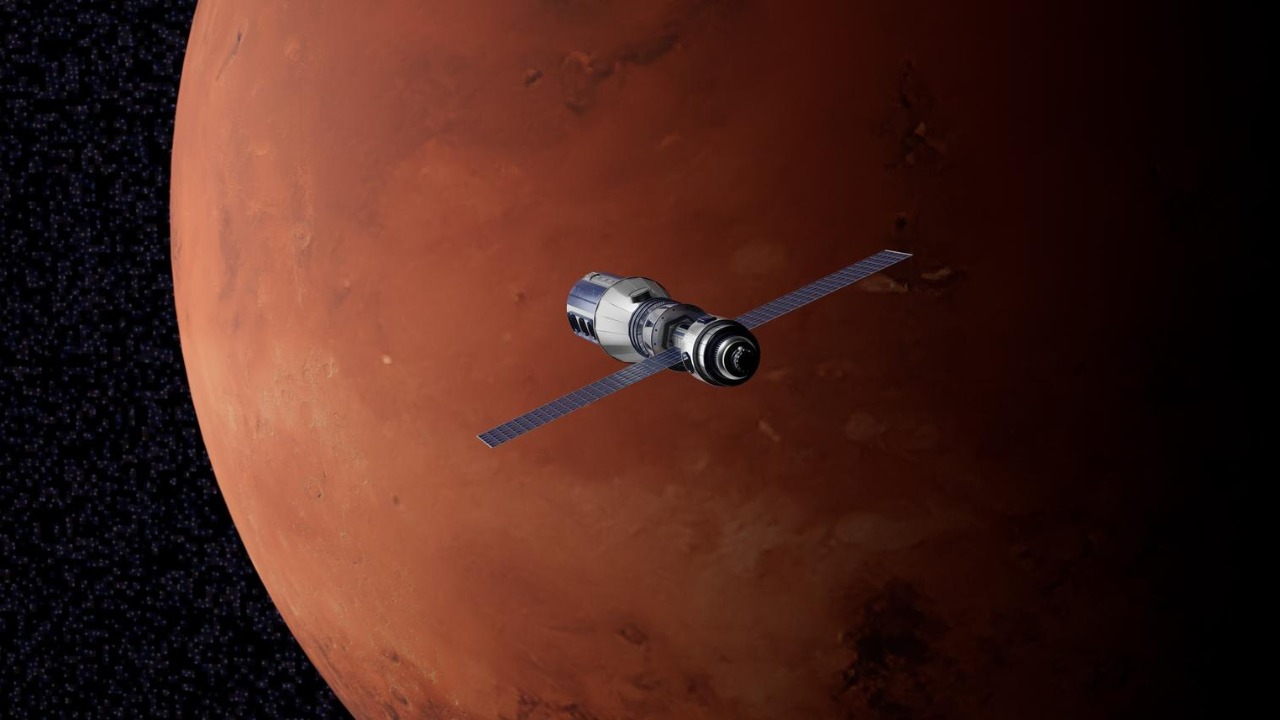
NASA’s Mars Atmosphere and Volatile EvolutioN orbiter, better known as MAVEN, had been a workhorse for atmospheric science when it suddenly stopped talking to Earth. According to mission updates, ground controllers on Earth experienced a loss of signal as the spacecraft slipped behind Mars, an anomaly that unfolded in early Dec while the orbiter was following a well rehearsed path around the planet. The agency has described the event as an unexpected break in communications with a spacecraft that had been operating normally, with the loss of contact occurring as the spacecraft orbited behind Mars and then failed to reappear on schedule, a sequence detailed in reports on the loss of signal.
In the days that followed, NASA confirmed that the Mars Atmosphere and Volatile mission was no longer communicating with Earth at all, describing the situation as an “anomaly” that cut MAVEN off from the Deep Space Network. The spacecraft had been relaying crucial data on the Red Planet’s upper atmosphere, and its sudden silence after years of steady performance has raised concerns about whether a hardware failure, software glitch, or some unexpected environmental factor near Mars is to blame, a scenario laid out in detail in coverage of how MAVEN is no longer communicating.
A close look at 3I/ATLAS just before the glitch
What makes this outage more than a routine spacecraft failure is what MAVEN was doing shortly before it went dark. Mission teams had turned the orbiter’s instruments toward a newly arrived interstellar comet, designated 3I/ATLAS, capturing a rare view of a visitor from beyond the solar system as it swept past Mars. Video explainers describe how MAVEN successfully imaged the object and then, only days later, fell silent, with one breakdown noting that NASA’s MAVEN spacecraft has been quiet since early Dec after taking an image of the interstellar comet, a sequence that has been highlighted in discussions of how MAVEN has been silent since imaging the object.
Another analysis of the timeline underscores that while space probes can malfunction at any time, the proximity of the anomaly to MAVEN’s close encounter with 3I/ATLAS is hard to ignore. In that account, days before the failure, Maven had pivoted its sensors toward the comet to gather data, then suffered its communications breakdown soon after, a juxtaposition that has fueled speculation even as engineers caution against reading too much into the coincidence, a framing captured in commentary on how Maven turned its instruments toward the interstellar object shortly before the anomaly.
NASA’s tight grip on new interstellar data
The arrival of 3I/ATLAS has not only stressed spacecraft like MAVEN, it has also tested NASA’s information playbook. Earlier in the object’s approach, observers noticed that the agency appeared to restrict access to some live feeds and imagery as the comet passed near Mars, prompting questions about how much of the raw data would be shared in real time. One widely discussed incident involved a locked down broadcast described as “NASA Locks Down Feed After 3I/ATLAS Sends Signal Near Mars,” in which a new image of the object and a puzzling signal reportedly led to a sudden cutoff of public visuals, a moment that has been dissected in videos about how NASA locks down feed after ATLAS sends a signal near Mars that scientists cannot fully explain.
Separate reporting has noted that NASA is also holding back some of the most detailed images of the interstellar object itself. Apart from being only the third confirmed interstellar object passing through the solar system, 3I/ATLAS has shown unusual behavior that has scientists eager to study it closely, yet the agency has not released every frame it has collected. Analysts have pointed out that, apart from its rarity, the comet’s oddities may be driving a more cautious release strategy, with one account emphasizing that Apart from being only the third such object, its full nature remains to be seen.
Why 3I/ATLAS is such a big deal
To understand why the MAVEN glitch is drawing so much attention, it helps to grasp just how rare 3I/ATLAS really is. Astronomers have identified this cosmic interloper as 3I/ATLAS, making it only the third confirmed object from outside the solar system to be tracked in detail, after the enigmatic ‘Oumuamua in 2017 and comet 2I/Borisov in 2019. That status alone makes every observation precious, and it is why specialists have been so intent on following the comet’s path as it hurtles through the inner system, a context laid out in coverage of how Astronomers have identified the object as 3I/ATLAS.
Other analyses place 3I/ATLAS in the still short catalog of known interstellar visitors. Until this year, the only other interstellar object seen in the solar system was 2I/Borisov, a comet discovered in 201, a milestone that suddenly expanded the count of known interstellar bodies passing through the solar system to three. That jump from zero to a small but growing sample has transformed how researchers think about the frequency of such encounters and the opportunities they present, a shift described in discussions that note how Until this year, the only other interstellar object seen was Borisov.
Strange colors, stranger theories
Part of what has captivated scientists about 3I/ATLAS is not just its trajectory but its changing appearance. Observers have documented the comet shifting from a deep red hue to a vivid green as it approaches the Sun, a transformation that hints at complex chemistry in its coma and tail. One detailed visual analysis notes that, After all, no one wants people to get wiped out like the dinosaurs 66 m years ago, and Scientists suspect this scorched traveler’s color change reflects different gases being energized at different distances from the Sun, a vivid description embedded in coverage of how After all, no one wants a repeat of that extinction while Scientists watch the comet shift from red to green.
Alongside the chemistry, 3I/ATLAS has reignited a debate about whether some interstellar objects could be artificial. A controversial paper has suggested that the comet might be “possibly hostile alien tech in disguise,” a phrase that has drawn both criticism and curiosity. The study’s most notable author is Avi Loeb, an astronomer at Harvard University who is renowned for linking extraterrestrial objects to intelligent aliens, and his involvement has ensured that the idea, however speculative, will be widely discussed, as outlined in reporting that notes how Avi Loeb, an astronomer at Harvard University, has again raised the possibility of alien technology.
From ‘Oumuamua to ATLAS: a growing pattern
The speculation around 3I/ATLAS does not exist in a vacuum. It builds on years of debate over ‘Oumuamua, the first known interstellar visitor, which behaved so oddly that some researchers wondered if it might be an artificial probe. Among the most prominent voices in that discussion was Avi Loeb, who, as an astronomer at Harvard University, first proposed that Oumuamua might be an alien probe and has continued to argue that unusual trajectories and non gravitational accelerations deserve serious scrutiny. That history is recounted in analyses that describe how Avi Loeb, an astronomer at Harvard University, has repeatedly linked such objects to the possibility of alien probes.
With 3I/ATLAS, that pattern has resurfaced, now layered on top of a live spacecraft anomaly at Mars. While there is no verified evidence that the interstellar comet has anything to do with MAVEN’s silence, the coincidence has energized those who see a broader narrative connecting ‘Oumuamua, 2I/Borisov, and the latest visitor. For planetary scientists, the more grounded takeaway is that each new interstellar object offers a rare chance to test models of how material from other star systems behaves when it plunges through our own, and that losing a key orbiter at such a moment is a scientific setback regardless of the cause.
What MAVEN’s loss means for Mars science
Even if MAVEN’s anomaly proves to be a mundane failure, the impact on Mars research is significant. The orbiter has been central to understanding how the planet’s once thicker atmosphere was stripped away over time, a process that left the surface cold and dry. Earlier missions have shown that Mars’ atmosphere used to be much denser and more hospitable, but is now largely gone, a transformation that has raised hard questions about the long term prospects for life there, a theme explored in reporting that notes how But the scientists will continue to search for signs of key molecules even as NASA officials temper expectations about life.
Other Mars assets underscore what is at stake when an orbiter goes offline. Though the incredible sight was caught on camera, NASA is still keeping Perseverance on its main mission to collect rock samples and look for any signs of life, a reminder that each spacecraft has a tightly defined role in the broader exploration architecture. MAVEN’s unique vantage point in the upper atmosphere cannot be easily replaced by rovers like Perseverance or by other orbiters focused on imaging the surface, a division of labor highlighted in coverage that notes how Though the Perseverance rover can capture stunning views, NASA keeps it focused on sampling and biosignatures.
Lessons from past Mars mission failures
The MAVEN anomaly also revives memories of earlier Mars mishaps that reshaped how NASA manages risk. One of the most infamous was the loss of the Mars Climate Orbiter, which burned up in the Martian atmosphere after a unit conversion error caused its trajectory calculations to be off by a fatal margin. The failure board later concluded that the spacecraft was lost because one team used imperial units while another used metric, a mismatch that went undetected until it was too late, a cautionary tale detailed in technical retrospectives on how the Mars Climate Orbiter was doomed by a metric error.
Compared with that clear cut software and process failure, MAVEN’s silence is, so far, a mystery. There is no public evidence of a similar calculation mistake, and the spacecraft had been operating in a stable orbit for years before the anomaly. That history suggests the problem is more likely tied to aging hardware, radiation effects, or an unforeseen interaction with the Martian environment, though the specific trigger remains unverified based on available sources. For engineers, the priority now is to re establish contact and, if possible, download diagnostic data that could reveal whether the glitch is recoverable or marks the end of the mission.
Other Mars orbiters watching the same visitor
MAVEN was not the only spacecraft near Mars with a front row seat to 3I/ATLAS. A University of Arizona led team used a space probe above Mars to catch the rare interstellar comet on camera, watching as a cloud of dust rolled out from the object and was captured by instruments onboard NASA’s Mars Reconnaissance Orbiter. That effort showed how existing hardware in Martian orbit can be repurposed to study passing phenomena, and it underscored the value of having multiple platforms in place when a once in a generation object like this sweeps by, as described in reports on how a U of A team uses a probe above Mars to image the comet.
The fact that Mars Reconnaissance Orbiter and other assets remain healthy provides some reassurance that whatever affected MAVEN is not an obvious, system wide hazard in Martian orbit. It also means that, even if MAVEN cannot be recovered, scientists will still have some data on 3I/ATLAS from other instruments. Still, MAVEN’s specialized focus on the upper atmosphere and solar wind interactions would have made it a uniquely powerful tool for studying how an interstellar object’s outgassing and dust interact with Mars’ tenuous air, a missed opportunity that will sting if the spacecraft remains silent.
Separating signal from noise in a cosmic coincidence
For now, the overlap between MAVEN’s failure and 3I/ATLAS’s flyby remains just that, an overlap. There is no confirmed mechanism by which the comet, whether natural or artificial, could have disabled the orbiter, and mission teams have not presented any evidence of an external attack or anomalous field. The more likely explanation is that a long lived spacecraft suffered a fault at an unfortunate moment, even if the timing invites more exotic theories from those already primed by debates over ‘Oumuamua and the possibility of alien probes.
At the same time, the episode highlights how quickly public narratives can shift when rare events collide. A single interstellar comet, only the third of its kind ever observed, has arrived just as a flagship Mars mission falters and NASA tightens its grip on some of the most intriguing data. In that environment, it is understandable that people reach for dramatic explanations. The challenge for scientists, engineers, and communicators is to keep the focus on verifiable facts, to be transparent about what is known and what is not, and to treat every glitch and every interstellar visitor as a chance to learn more about both our machines and the universe they explore.
More from MorningOverview