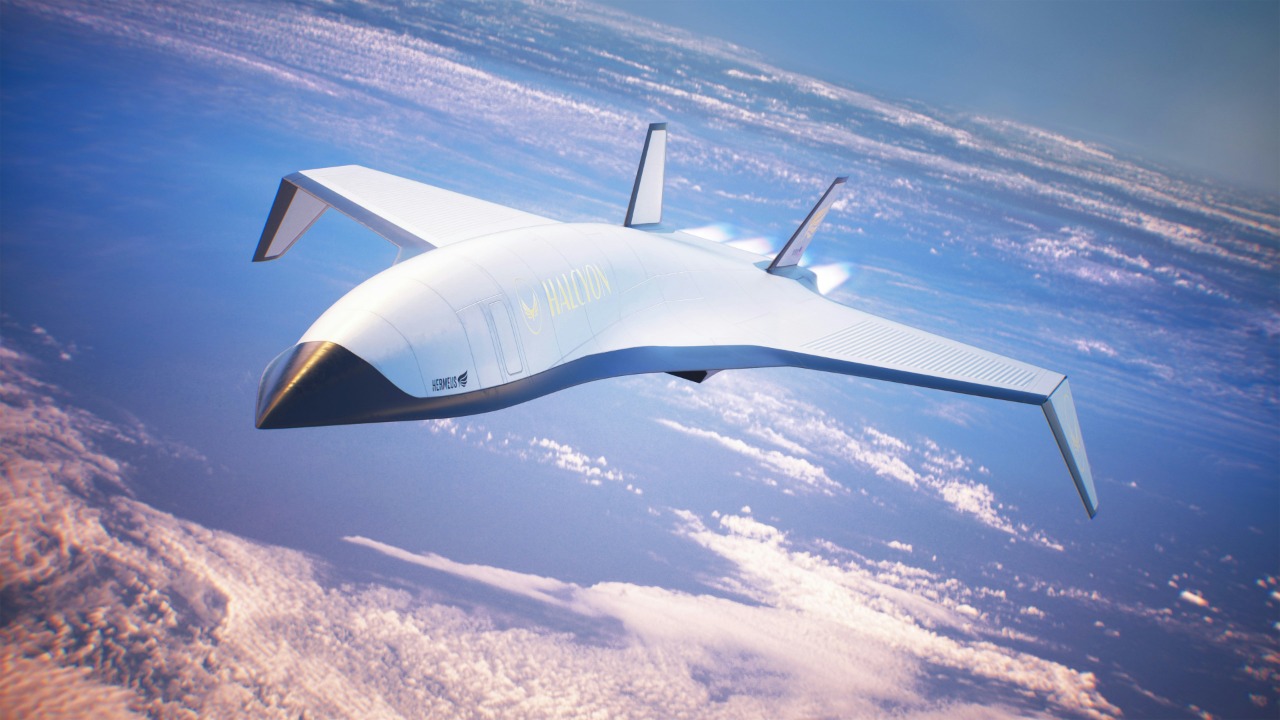

Hypersonic flight has long been a military obsession, but the idea of a sitting United States president crossing oceans at more than five times the speed of sound would push that technology into the center of global politics. A hypersonic presidential aircraft would not just shrink travel times, it would reshape how power is projected, how crises are managed, and how rivals respond.
As the United States accelerates work on experimental aircraft capable of Mach 5 and beyond, the prospect of a “Hypersonic President” is moving from science fiction toward planning reality. The stakes reach far beyond prestige: the same technologies that could carry the commander in chief across the world in a couple of hours are also driving a new arms race, raising climate questions, and promising to rewrite the economics of long‑haul aviation.
From Air Force One to a Hypersonic President
The current Air Force One is already a flying command center, but a future hypersonic successor would redefine what it means for the presidency to be mobile. In concept videos and early planning, a “Hypersonic President” aircraft is portrayed as a sleek vehicle that could sprint across continents in the time it takes to watch a movie, turning the president into a near‑instant presence in any theater of crisis or diplomacy. The idea is not just about speed for its own sake, it is about compressing decision cycles so that the White House can respond to global events almost in real time.
That vision is closely tied to work by Hermeus, a startup that has been highlighted in coverage of what a future Hypersonic President Plane Could Mean for the World. In that reporting, Hermeus is described as being backed by the U.S. Air Force’s Presidential and Executive Airlift Directorate, a detail that signals this is not a speculative side project but a concept being taken seriously inside the system that manages Air Force One. The very fact that the Air Force is willing to associate the presidential mission with hypersonic research shows how central this technology has become to the future of American statecraft.
Hermeus, The Air Force, and the testbed for presidential speed
To understand how a hypersonic presidential plane might actually be built, it helps to look at the test programs already under way. The Air Force has committed to flight testing a first‑of‑its‑kind hypersonic autonomous aircraft, using it as a platform to learn how to manage extreme speeds, temperatures, and control systems. That unmanned testbed is a crucial stepping stone, because any aircraft that carries the president will need to be proven safe and reliable in the harshest possible conditions before it ever flies a head of state.
In Washington, officials have described how The Air Force will flight test this autonomous hypersonic aircraft under a contract with Atlanta‑based Hermeus. That program, which focuses on an unmanned vehicle sometimes referred to as a hypersonic Quarterhorse, is designed to validate propulsion concepts and high‑speed aerodynamics that could later migrate into crewed platforms. When Hermeus appears again in discussions of a Hypersonic President aircraft, it is this technical lineage that gives the idea credibility: the same company experimenting with unmanned hypersonic systems is being positioned as a potential partner for the next generation of presidential transport.
Hypersonic travel basics: Mach 5, Quarterhorse, and the edge of space
Hypersonic flight is generally defined as speeds of Mach 5 or higher, where airflows around the vehicle behave very differently from conventional jet travel. At these velocities, friction with the atmosphere can drive skin temperatures above 3,000°F, forcing engineers to rethink materials, cooling, and engine design. A hypersonic passenger jet, let alone a presidential aircraft, must survive these conditions for sustained periods while keeping passengers safe and systems stable.
Technical analyses of Hypersonic travel describe how a hypersonic passenger jet would need to manage temperatures exceeding 3,000°F and operate at speeds that push close to the edge of space. Earlier work on American and Chinese concepts has suggested aircraft could be flying at around 4,000 miles per hour by 2030, a regime where traditional air and missile defenses risk becoming obsolete. In that context, a presidential aircraft operating at Mach 5 or beyond would not just be fast, it would be operating in a part of the flight envelope that today is mostly the domain of experimental vehicles and weapons.
American and Chinese ambitions, and the new prestige race
Any move by the United States to field a hypersonic presidential aircraft would land in the middle of a broader competition in high‑speed flight. American and Chinese defense giants are already racing to reach the edge of space with hypersonic aircraft that can cruise at thousands of miles per hour. These projects are framed as ways to outpace existing defenses and to secure strategic advantage, but they also carry a powerful prestige element, signaling technological leadership to domestic and international audiences.
Reporting on how American and Chinese aircraft could be flying 4,000 miles per hour by 2030 underscores how both countries see hypersonic platforms as tools that could render current air and missile defenses obsolete. If the United States were to place its president on such an aircraft, it would effectively turn the head of state into a living demonstration of that technology. That would likely spur rivals to showcase their own hypersonic capabilities, potentially including leadership transport, and could deepen the symbolic arms race around who can move fastest across the globe.
From weapons to White House: the security paradox
The same physics that make hypersonic aircraft attractive for presidential travel also underpin a new generation of weapons that are extremely hard to stop. Hypersonic cruise missiles and glide vehicles can maneuver at high speed, compressing warning times and complicating interception. Analysts have warned that from the moment a hypersonic weapon is launched, “You may have six minutes from the time its launched until the time it strikes,” a window that leaves very little room for deliberation or error.
Coverage of Hypersonic weapons has emphasized that the United States cannot yet reliably defend against such systems, even as it develops its own. That creates a paradox for a hypersonic presidential aircraft. On one hand, traveling at hypersonic speed could make the president harder to target with conventional weapons and could allow rapid escape from danger zones. On the other, the aircraft would be operating in a battlespace increasingly populated by hypersonic missiles, where misidentification or escalation risks are higher and where defensive systems are still catching up.
Economic stakes: trillions in growth and a new aviation market
Beyond security, the economic implications of hypersonic presidential travel are enormous. If the United States commits to building and operating such an aircraft, it will effectively underwrite a new industrial ecosystem of engines, materials, and control systems that can later spill into commercial markets. That investment could accelerate the arrival of hypersonic passenger services, turning what begins as a government program into a catalyst for a broader transformation of long‑haul aviation.
Analysts who track federal spending on high‑speed flight have argued that large‑scale investment in hypersonic technology could bring trillion‑dollar economic growth as new markets open and supply chains expand. A presidential aircraft program would sit at the apex of that spending, just as Air Force One helped drive advances in wide‑body jets and secure communications. If hypersonic systems mature under the banner of the presidency, airlines, business jet makers, and even cargo operators will be watching closely for technologies they can adapt, from advanced thermal protection to efficient combined‑cycle engines.
What hypersonic speed would do to diplomacy and crisis response
For global diplomacy, the most obvious impact of a hypersonic presidential aircraft is time. At Mach 5, a flight from New York City to London could be cut to roughly two hours, compared with the seven or eight hours typical of current subsonic jets. That kind of speed would allow the president to attend summits, visit disaster zones, or meet allies on short notice, turning what are now multi‑day trips into same‑day engagements and changing the rhythm of international politics.
Concepts similar to Boeing’s planned hypersonic airliner, which has been described as capable of flying from New York City to London in about two hours at Mach 5, illustrate how radically travel times could shrink. Applied to the presidency, that means a leader could leave Washington in the morning, hold face‑to‑face talks in Europe, Africa, or the Middle East, and be back in the Situation Room before the end of the day. In crises, that responsiveness could be stabilizing, giving the United States more options to show up physically rather than relying on video calls or proxies. It could also raise expectations among allies and domestic audiences that the president will be everywhere at once, intensifying the pressure to intervene.
Climate costs and the supersonic warning
Speed, however, comes with a climate price. Experience with supersonic concepts has already shown that faster aircraft tend to burn more fuel per passenger and operate at altitudes where their emissions have outsized warming effects. Experts who study the return of supersonic flight have warned that even a relatively small fleet of high‑speed jets could significantly increase aviation’s climate footprint, especially if they rely on traditional fossil‑based fuels.
One analyst, reflecting on the climate impact of supersonic travel, noted that One expert raised concerns about adding another source of emissions to the already urgent crisis that is climate change. A hypersonic presidential aircraft would be a single plane, but it would set a powerful precedent. If the United States normalizes hypersonic travel at the very top of government, it becomes harder to argue against commercial fleets that want to offer similar speeds to business travelers. That makes the fuel choices, efficiency targets, and regulatory framework around any Hypersonic President aircraft central to the broader debate over whether high‑speed flight can be reconciled with climate goals.
Research breakthroughs and the path to routine hypersonic flight
Technically, the leap from experimental hypersonic vehicles to a reliable presidential aircraft depends on solving a series of hard problems in aerodynamics and materials. Researchers are working to tame the turbulent airflows that buffet vehicles at Mach 5 and above, seeking ways to keep them stable without adding too much weight or complexity. They are also testing new thermal protection systems that can withstand repeated heating cycles without degrading, a prerequisite for any aircraft that is expected to fly often rather than as a one‑off demonstrator.
Recent work described as a Hypersonic breakthrough has focused on how turbulence behaves at high speeds, with the goal of making hypersonic flight as routine as today’s long‑haul travel. Scientists involved in that research argue that understanding and controlling turbulence could one day make long‑distance trips as quick as a short movie, a phrase that echoes the vision of a president crossing oceans in under three hours. If those breakthroughs hold, they will feed directly into the design of any future Hypersonic President aircraft, determining how smooth, safe, and efficient such flights can be.
Military hypersonics, MOJAVE tests, and the arms race backdrop
Behind the civilian and presidential narratives sits a more sobering reality: hypersonic technology is already at the heart of a three‑way arms race. The United States, Russia and China are each testing hypersonic missiles and aircraft, often in remote locations where new engines and airframes can be pushed to their limits. These programs are framed as essential to maintaining deterrence, but they also risk destabilizing existing security arrangements by shortening warning times and blurring the line between conventional and nuclear systems.
Reporting from MOJAVE, Calif has described how the U.S., Russia and China are in the middle of a hypersonic arms race, with American companies developing new technology to shift the balance of power at five times the speed of sound. In parallel, discussions of The Future of US and Allied Hypersonic Missile Programs have traced how, since World War I, advances in speed and range have repeatedly reshaped military strategy. A hypersonic presidential aircraft would sit squarely in this context, signaling that the same technologies used for weapons are now trusted enough to carry the commander in chief, and potentially making the aircraft itself a symbol in the broader contest over hypersonic dominance.
Quarterhorse, Hermes, and the blurred line between military and civilian use
One of the most striking aspects of current hypersonic work is how easily platforms and technologies cross between military and civilian roles. The unmanned Quarterhorse concept, for example, is often discussed as both a testbed for future passenger aircraft and a potential asset for defense missions. That dual‑use character is even more pronounced when the mission involves the president, who is simultaneously a political leader and the commander of the armed forces.
Video coverage of a US Military’s hypersonic jet describes how more features in hypersonic speed are being developed as Hermes has set out to complete this mission with the Quarterhorse, an unmanned hypersonic platform. In parallel, separate reporting on What a Hypersonic President aircraft might look like shows how quickly those military testbeds are being reimagined as executive transports. The result is a blurred boundary where the same engines, materials, and control algorithms could power both a missile and the president’s plane, raising questions about how other countries will interpret the deployment of such a vehicle in contested airspace.
How close is the world to routine hypersonic leadership travel?
Measured against the long history of aviation, the leap to a hypersonic presidential aircraft is dramatic but not implausible. Earlier generations watched the transition from propeller‑driven transports to jet‑powered Air Force One, and then to wide‑body aircraft with secure communications suites that effectively turned the plane into a flying White House. Hypersonic technology represents the next step in that progression, one that compresses distance so aggressively that geography itself starts to feel less like a constraint on presidential movement.
Analysts who track the pace of innovation argue that Today we are closer than ever to achieving commercial hypersonic travel, with multiple programs converging on Mach 5 flight. When combined with the Air Force’s direct backing of Hermeus and the explicit linkage to presidential and executive airlift, that suggests the first hypersonic aircraft to carry national leaders may not be far behind the first commercial prototypes. The exact timeline remains Unverified based on available sources, but the direction of travel is clear: as hypersonic research moves from the lab to the runway, the question is less whether a Hypersonic President aircraft will be technically feasible, and more how its arrival will reshape global expectations about speed, security, and the reach of political power.
More from MorningOverview