
For nearly a century, some of the strangest questions in physics have revolved around how quantum objects move, interact and share information in ways that defy everyday intuition. Now a cluster of breakthroughs has finally cracked several of those long standing riddles, from the behavior of damped quantum systems to the limits of entanglement and the dual nature of light and matter. Together they mark a turning point, shifting quantum theory from a patchwork of paradoxes into a more unified and practical toolkit for technology.
Instead of one isolated result, researchers have quietly assembled a suite of solutions that close puzzles that are 20, 40, 50 and even 90 years old, and in doing so they have redrawn the roadmap for quantum computing, communications and precision measurement. I see a pattern emerging: the field is moving from asking whether quantum weirdness is real to asking exactly how far it can be pushed and engineered.
From century-old curiosity to working quantum “dams”
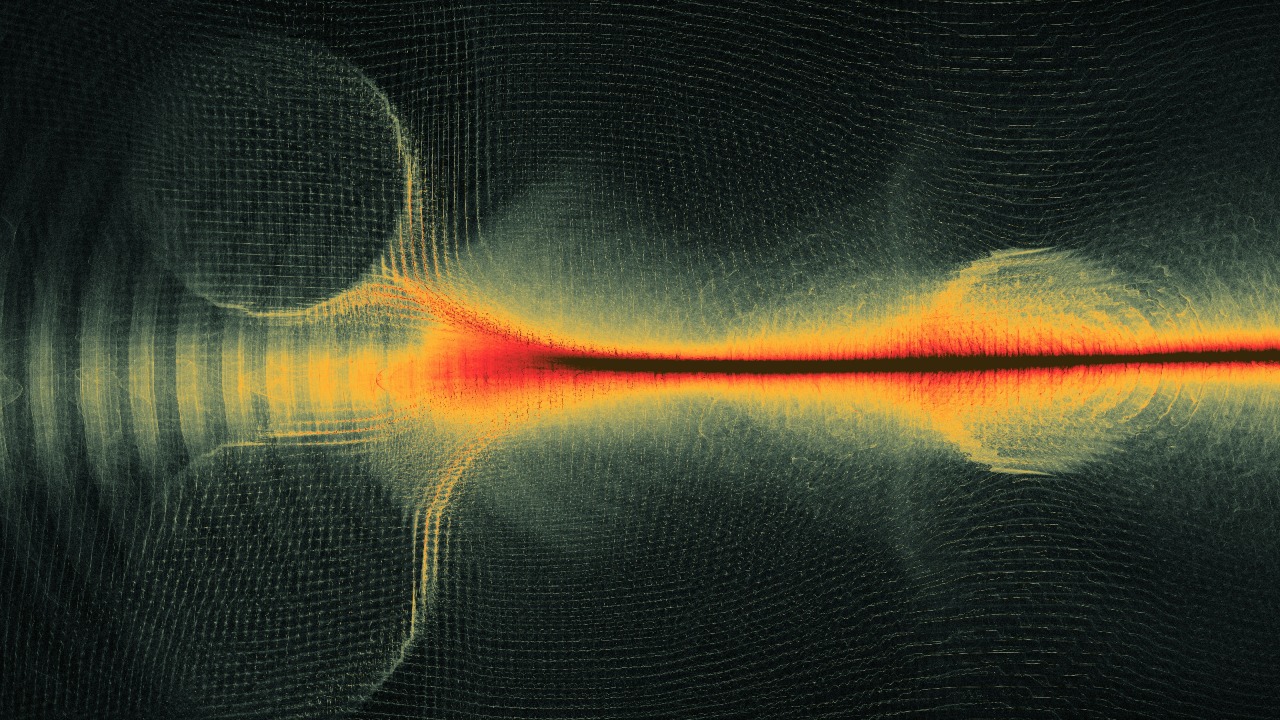
The most dramatic shift comes from work that finally tames a problem that has haunted theorists since the early days of quantum mechanics, how to describe systems that lose energy to their surroundings without breaking the rules of the microscopic world. Classical physics has long handled this with simple pictures like a ball rolling through a dam or a pendulum slowed by friction, but translating that intuition into quantum language resisted clean solutions for decades. A Vermont research team has now built a quantum version of the dam, turning a 90-year-old puzzle into a concrete device that channels energy loss in a controllable way.
In practical terms, that means engineers can start to treat dissipation not as an enemy that destroys fragile quantum states but as a design parameter that can be shaped and exploited. The group’s work on a 90-year-old problem shows that even deeply entrenched theoretical headaches can yield once they are reframed as questions about real hardware, in this case a carefully engineered structure that mimics how water flows through a dam while still obeying the probabilistic rules of quantum motion.
The Vermont breakthrough and the “damped” quantum world
What makes the Vermont result so striking is that it tackles the specific issue of damping, the way motion gradually dies out, which is central to everything from car suspensions to seismology. In the quantum regime, damping has been notoriously hard to reconcile with the reversible equations that usually govern microscopic particles, leading to a long running tension between neat theory and messy reality. By constructing a system that behaves like a dam at the quantum level, the Vermont team has effectively written a new chapter in how we connect the smooth curves of Newton’s laws with the discrete jumps of quantum transitions.
The researchers explicitly frame their solution as a bridge between the familiar world of classical mechanics and the counterintuitive behavior of atoms and photons, showing that the same mathematical structure can describe both if it is handled with enough care. Their work on a damped quantum system ties the flow of energy through the damlike device directly to the equations that underlie Newton’s laws of motion, which is why it feels like more than a niche technical fix. It is a rare example of a result that cleans up a conceptual mess while also pointing straight at new kinds of quantum hardware.
Why a “90-Year-Old” puzzle matters beyond the lab
It is tempting to treat a 90-year-old theoretical puzzle as a historical curiosity, but the Vermont work shows how old questions can suddenly become urgent once technology catches up. Quantum computers, sensors and communication links all struggle with the same basic problem, how to keep delicate quantum states alive long enough to do something useful before the environment scrambles them. A framework that treats loss and noise as something that can be sculpted, rather than merely suppressed, opens the door to devices that are robust by design instead of fragile prototypes wrapped in layers of protection.
The cultural impact inside physics is just as important as the technical payoff. For almost a century, physicists have wrestled with how to describe dissipation without giving up the core principles that make quantum theory so successful, and the sense that a 90-Year-Old quantum puzzle is “finally solved” has energized a community that is already racing to turn abstract equations into working machines. When a problem that has loomed this large for this long yields, it changes how researchers think about the next set of supposedly intractable questions.
Entanglement’s reach: the 40-Year code cracked
While the Vermont team was reshaping how we think about damping, another group was quietly closing a different long running gap in our understanding, the true reach of quantum entanglement. For roughly four decades, theorists have debated how far correlations between entangled particles can stretch and what patterns they can take before they run into fundamental limits. Earlier this year, researchers finally pinned down a key piece of that puzzle, turning a 40-Year theoretical question into a concrete set of rules that engineers can use when they design entangled networks.
The new work shows that entanglement is both more flexible and more constrained than earlier back-of-the-envelope arguments suggested, which is exactly the kind of clarity that practical quantum technologies need. By treating the problem as a “code” that could be cracked rather than a vague philosophical issue, the team behind Cracking the Quantum Code translated a 40-Year entanglement mystery into a set of mathematical conditions that specify when distant particles can share informationlike correlations and when they cannot.
Rewriting the limits of entanglement networks
Those conditions matter because they define the playing field for quantum communication and distributed computing. If entanglement can be arranged in more intricate patterns than previously thought, then networks of quantum devices can be more complex, resilient and capable, but only if designers know exactly where the boundaries lie. The new results effectively redraw the map of what is possible, showing that some configurations once dismissed as unrealistic are in fact allowed, while others that looked plausible on paper are ruled out by deeper constraints.
In their technical description, the researchers emphasize that they have resolved a long-standing puzzle in quantum physics about the reach of entanglement, a problem that had lingered for decades because it sat at the intersection of information theory and fundamental physics. Their analysis of a long-standing puzzle about how far entanglement can extend gives experimentalists a checklist for building real world systems, from satellite links that share quantum keys to chip-scale devices that coordinate qubits across a processor.
Purity, noise and the 20-year entanglement puzzle
Even with the reach of entanglement better understood, another nagging question has limited how useful those correlations can be in practice, how “pure” the entangled state remains once it is created and passed through imperfect hardware. For roughly two decades, theorists have tried to pin down the relationship between the idealized, perfectly entangled pairs that appear in textbooks and the messy, noisy states that emerge from real devices. That 20-year puzzle has now been solved, giving researchers a sharper handle on how much useful quantum information survives in the presence of unavoidable imperfections.
The new analysis revisits a two-decade-old problem with fresh mathematical tools, connecting the purity of entanglement to quantities that can actually be measured and optimized in the lab. By treating the issue as a “quantum code” problem, the team behind Quantum Code Cracked showed how Scientists can diagnose and correct specific patterns of noise that degrade entanglement purity. That shift from abstract worry to actionable metrics is what turns a 20-year theoretical knot into a practical design rule for quantum repeaters, error corrected qubits and secure communication channels.
Statistics, Bell tests and the baffling entanglement puzzle
Alongside these code-like breakthroughs, another group has finally settled a more conceptual but equally consequential question, whether the statistical patterns seen in entanglement experiments can be explained by any hidden classical mechanism. For decades, Bell tests have shown that entangled particles violate inequalities that any local classical theory must obey, but critics have occasionally pointed to loopholes in how the data are collected and analyzed. A new analysis closes those gaps, showing that the observed statistics really do require quantum explanations and cannot be massaged into a classical story.
The work confirms that the strange correlations at the heart of quantum theory are not artifacts of clever experimental design but genuine features of nature that resist any classical reinterpretation. By tightening the link between theory and data, the researchers behind this baffling quantum statistics puzzle have reinforced the idea that entanglement is a resource unlike any classical correlation. That clarity matters for advanced technologies that rely on those correlations, from quantum key distribution that detects eavesdroppers by monitoring statistical patterns to distributed sensors that use entanglement to beat classical limits on precision.
Wave, particle, or both: resolving a 50-year identity crisis
Not all of the recent progress has focused on entanglement. Another long running puzzle has revolved around the dual nature of quantum objects, which behave like waves in some experiments and like particles in others. For roughly half a century, physicists have debated whether this “wave particle duality” is a fundamental mystery or simply a reflection of how we choose to measure things. New work has finally stitched those perspectives together, showing that the apparent contradiction can be resolved within a single mathematical framework that treats wave and particle aspects as two sides of the same coin.
The researchers behind this advance have effectively joined wave functions with particlelike behavior in a way that preserves the predictive power of both pictures without forcing a choice between them. Their analysis of a 50-year-old quantum puzzle clarifies how interference patterns and discrete detection events emerge from the same underlying description, which is why it feels like the end of a 50-year identity crisis. For working physicists, that means fewer philosophical detours and a cleaner set of tools for designing experiments that exploit both aspects at once, such as interferometers that guide single photons through complex circuits.
Light’s hidden push and the spin-momentum twist
Even the behavior of light itself has not escaped this wave of puzzle solving. One particularly counterintuitive question has nagged at researchers for decades, how a laser beam transfers momentum when it passes from one medium to another. Intuition suggests that light should push harder in air than in water, but careful experiments and theory have hinted at a more subtle story in which the internal structure of the light field, including its spin, plays a crucial role. Recent work has sharpened that picture, showing that the spin of light can unlock extra momentum in ways that challenge everyday expectations.
The key insight is that the angular momentum carried by the light’s polarization can couple to its linear momentum when it enters a new medium, effectively redirecting and amplifying the push it exerts. This “spin unlocks momentum” idea, highlighted in a discussion of a century-old light puzzle, reframes how we think about optical forces in everything from optical tweezers that trap microscopic particles to laser driven propulsion concepts. It also underscores a broader theme running through the recent breakthroughs, that quantum properties once treated as abstract curiosities, like spin and phase, can have very concrete mechanical consequences.
From Strange & Offbeat to strategic technology
One of the more revealing details in this wave of results is how they are being framed, not as esoteric puzzles for specialists but as milestones with clear technological stakes. The Vermont work on the 90-year-old damlike system, for example, was highlighted in a Strange & Offbeat feature that still emphasized its potential to reshape how we design quantum devices. The fact that a team in Vermont could turn a question that once lived entirely in blackboard equations into a working quantum dam speaks to how far the field has come in blending theory with engineering.
That same shift is visible in the way entanglement results are being discussed, with phrases like “code cracked” and “puzzle solved” signaling that these are not incremental tweaks but decisive steps that close long open chapters. When a long-standing puzzle about entanglement’s reach or a two-decade-old question about purity is resolved, it immediately feeds into roadmaps for quantum networks, error correction schemes and sensing platforms. What once read like Strange & Offbeat curiosities are now treated as strategic advances in a global race to harness quantum effects.
A new phase for quantum theory: from paradox to playbook
Stepping back, what ties these disparate breakthroughs together is a shift in attitude. For much of the twentieth century, quantum puzzles were framed as paradoxes that exposed the limits of human intuition, from Schrödinger’s cat to wave particle duality. The recent solutions to 20, 40, 50 and 90-year-old problems suggest that the field has entered a new phase, one in which those paradoxes are systematically converted into design principles. Instead of asking whether quantum mechanics makes sense, researchers are asking how to turn its strangest features into reliable tools.
That does not mean the mysteries are gone, only that they are being repackaged into a playbook that engineers, computer scientists and materials researchers can use without constantly revisiting foundational debates. The Vermont quantum dam, the clarified reach and purity of entanglement, the resolved wave particle puzzle and the spin driven twist in light’s momentum all point in the same direction, toward a future in which quantum theory feels less like a collection of riddles and more like a mature framework for building technology. As more of these long running questions fall, the phrase “decades-old quantum puzzle” may start to sound less like a warning and more like an invitation to imagine what comes next.
More from MorningOverview