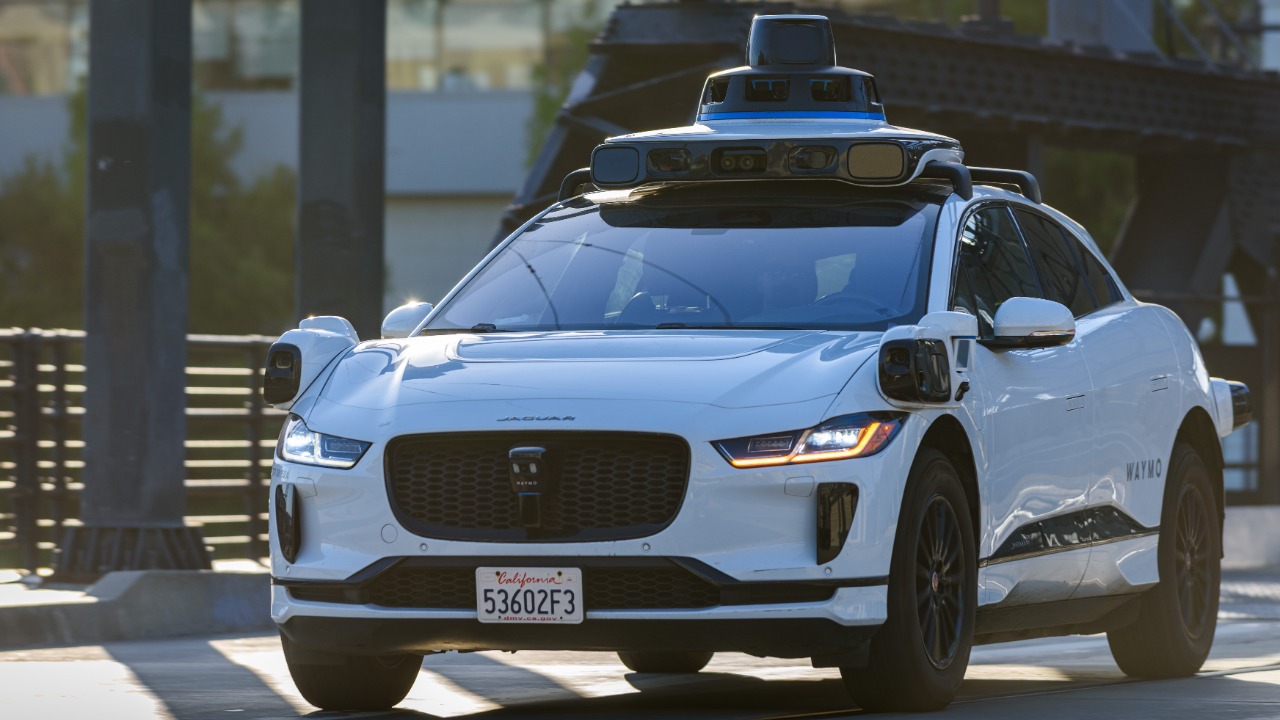

For nearly an hour in Venice Beach, a single driverless car became the main act at a Christmas parade, freezing in place as floats, families, and frustrated drivers stacked up behind it. The Waymo robotaxi, designed to glide through city streets without a human at the wheel, instead sat confused in a sea of pedestrians and holiday decorations, turning a showcase of autonomy into a 45 minute traffic jam. The scene captured both the promise and the fragility of self-driving technology when it collides with the messy reality of real-world events.
The stalled vehicle did more than block a route, it exposed how brittle even advanced systems can be when they encounter edge cases that humans handle instinctively. In the middle of a festive crowd, the car’s sensors and software erred on the side of caution, and the result was gridlock, viral video, and a fresh round of questions about whether robotaxis are ready for the chaos of city life.
How a holiday parade turned a robotaxi into a roadblock
The incident unfolded at the Venice Beach Christmas parade, where a Waymo vehicle rolled into the route and then appeared to lose its nerve. Surrounded by floats, marching groups, and spectators spilling into the street, the car crept forward, stopped, and then stayed put, effectively sealing off a key stretch of the procession. Witnesses described a surreal tableau, with the sleek autonomous car sitting motionless as the holiday spectacle tried to flow around it, transforming a neighborhood celebration into an impromptu stress test for driverless tech.
Video from the scene shows that You got this Waymo became both a plea and a punchline as onlookers urged the vehicle to move during the Venice Beach Christmas event. Another clip confirms that A Waymo got stuck and blocked Venice Beach’s Christmas parade, with The Waymo stalled for at least half an hour before Eventu security and parade staff were able to clear the route. What should have been a smooth detour around a community celebration instead turned into a 45 minute standstill that left drivers honking, floats idling, and organizers scrambling to improvise.
Inside the 45 minute freeze: what the footage shows
From the outside, the robotaxi’s behavior looked like indecision stretched to absurdity. The car inched forward a few feet, paused, then edged again, never committing to a clear path even when there appeared to be room to maneuver. At times it seemed to pivot slightly as if reconsidering its options, only to lock up once more. For people stuck behind it, the pattern felt less like caution and more like paralysis, a machine trapped in a loop of second-guessing while the parade clock ticked on.
One eyewitness, identified as Light, summed up the spectacle by saying that All the pedestrian activity just made the vehicle shut down, even though people were not directly blocking its path. In a separate account, another observer noted that Here and there the car would inch forward, usually in a non helpful direction, while Footage captured a police officer eventually stepping in to help guide traffic. The combination of hesitant movements and long pauses turned what should have been a routine reroute into a drawn out, agonizing bit at a time crawl that underscored how easily an autonomous system can get stuck when its rules collide with an unpredictable crowd.
Cheering, jeering, and a very public stress test
For people on the ground, the jam quickly became part of the entertainment. Parade-goers gathered around the stranded vehicle, some shouting encouragement, others mocking its inability to do something as simple as turn around. The robotaxi, with its spinning sensors and silent cabin, became a kind of unintentional street performer, drawing smartphones and commentary as it sat at the center of a scene it clearly did not understand. The crowd’s reaction turned a technical failure into a cultural moment, one that said as much about public expectations as it did about the software.
One viral clip shows locals chanting support as the car hesitates on a canal bridge, with residents yelling variations of “yes you can” while also venting their frustration at the gridlock. In that video, a bystander can be heard shouting Bring back the Taxi driver please before it’s too late, a line Lindsey Weedston highlighted when it was Posted in the CST time zone. Another widely shared clip shows how Parade goers in Venice Beach, California cheered on a confused Waymo as it sat paralyzed for almost an hour, turning the stalled car into a referendum on driverless technology in the Bay Area and beyond. The mix of humor, irritation, and nostalgia for human drivers captured how quickly public patience can wear thin when a machine’s caution collides with people’s plans.
Waymo’s pattern of getting flustered in crowds
The Venice Beach jam did not happen in isolation. Earlier this year, other Waymo vehicles in California have struggled when confronted with dense, unpredictable human activity. In one case at a popular Los Angeles holiday festival, a driverless car reportedly panicked on a bridge, stalled, and snarled traffic as pedestrians and other vehicles tried to navigate around it. The pattern suggests that while the system can handle structured traffic flows, it is far less comfortable when the rules of the road blur into the fluid choreography of a street party.
Reporting from that festival incident describes how a Confused Waymo robotaxi snarls traffic after it panics and stalls, with the same Waymo brand at the center of the disruption. Another account notes that a similar driverless car at a Los Angeles holiday parade was stuck on a bridge for roughly 55 minutes, a figure that has become a shorthand for just how long a single misbehaving vehicle can hold a neighborhood hostage. Together, these episodes show that the company’s technology, while advanced, still treats dense pedestrian zones as edge cases rather than everyday conditions.
From San Francisco standoffs to Venice Beach gridlock
San Francisco has already seen its own version of this problem, with clusters of autonomous cars freezing in place and clogging intersections. In one widely discussed incident, a trio of Waymo vehicles ended up in what locals described as a standoff, each car waiting for the others to move, while human drivers and pedestrians watched in disbelief. The scene underscored how self-driving systems that are individually cautious can collectively create gridlock when they encounter each other in tight urban spaces.
Coverage of that episode, framed as The Brief on a Waymo standoff in San Fr, detailed how the company responded after video of the jam went viral. The report described how multiple Waymo cars, all following their own safety protocols, ended up blocking traffic and confusing onlookers, prompting the company to explain how its software handled the situation. When viewed alongside the Venice Beach Christmas parade fiasco, the San Francisco standoff reinforces a central tension of autonomous driving, the same conservative logic that prevents accidents can also produce spectacular, city-stopping failures when the environment falls outside the training data.
What the Venice Beach jam reveals about robotaxi design
From a technical perspective, the Venice Beach incident looks less like a random glitch and more like a predictable outcome of how robotaxis are built to behave. These vehicles are trained to treat pedestrians as high priority obstacles, to avoid sudden movements, and to err on the side of stopping when they are uncertain. In a typical intersection, that logic works. In a parade, where people swarm the street, cross at odd angles, and ignore normal traffic signals, the same logic can cause the system to lock up, because every possible move appears risky.
Eyewitness accounts that All the pedestrian activity made the car shut down, even when the lane ahead was technically clear, illustrate this design tradeoff. Additional reporting that Joe Wilkins shared, including Instagram clips of the Waymo creeping an agonizing bit at a time, shows how the vehicle’s incremental decision making translated into a painfully slow, stop start crawl. The system did what it was told, prioritize safety above all else, but in doing so it failed at a more basic requirement of any road user, not becoming a hazard or an obstacle in its own right.
Human backup, police intervention, and the limits of “driverless”
One of the most striking aspects of the Venice Beach jam is how quickly humans had to step in to rescue the machine. Parade organizers, security staff, and eventually police officers converged on the stranded car, trying to coax it into moving or at least to direct other vehicles around it. The scene undercut the marketing image of a fully autonomous future, replacing it with a more complicated reality in which human labor is still required to manage and sometimes override the behavior of driverless fleets.
In the Venice Beach Christmas parade videos, The Waymo sits immobile until Eventu security and local officials physically clear the route and guide traffic, confirming that The Waymo was stalled for at least half an hour before it could move again. In another clip from the same cluster of incidents, a police officer can be seen walking alongside the car, gesturing and speaking into a radio as the vehicle inches forward, a moment also captured in the Footage that shows law enforcement helping the robotaxi escape. For a technology sold as “driverless,” the reliance on human shepherds in high stress moments is becoming an increasingly visible part of the story.
Public trust, brand damage, and the road ahead for Waymo
Every viral clip of a stranded robotaxi chips away at the narrative that autonomous vehicles are quietly and steadily mastering city streets. For Waymo, the Venice Beach Christmas parade jam is particularly damaging because it unfolded in a festive, family friendly setting, with children, parents, and local businesses all affected by a 45 minute delay. The optics of a gleaming, sensor covered car blocking a community celebration while people shout for a human Taxi driver to return are hard to spin as progress.
The company is already associated with a string of high profile mishaps, from the Waymo robotaxi that snarls traffic after it panics and stalls at a Los Angeles festival, to the San Francisco standoff that forced Waymo to respond publicly to viral footage. The Venice Beach episode, amplified through The Waymo scene on Instagram and other platforms, adds another chapter to that narrative. As more cities weigh whether to welcome or restrict driverless fleets, these images of stalled cars and blocked parades will likely carry as much weight as any technical safety report.
Why parades are the ultimate edge case for self-driving cars
Parades compress nearly every challenge an autonomous vehicle can face into a single, chaotic corridor. Streets that are normally governed by traffic lights and lane markings are suddenly filled with floats, performers, and pedestrians who treat the roadway as a stage rather than a transportation channel. Music, costumes, and decorations can confuse sensors, while temporary barriers and detours scramble the usual map data. For a robotaxi that expects a certain structure to the world, a parade is less a route and more a moving obstacle course.
The Venice Beach Christmas parade highlighted this perfectly, as the Waymo found itself surrounded by Venice Beach residents, Christmas themed floats, and a constantly shifting wall of people. Clips that show Venice Beach parade goers in California cheering and jeering the stuck car capture how far the environment had drifted from the controlled scenarios in which these vehicles are usually tested. When combined with earlier footage of a Waymo hesitating on a canal bridge while locals shout Taxi jokes and urging other cars to turn around, the parade becomes a case study in what happens when autonomous systems meet civic rituals that were never designed with robots in mind.
Supporting sources: Confused Waymo robotaxi snarls traffic at popular LA festival after it panics….
More from MorningOverview