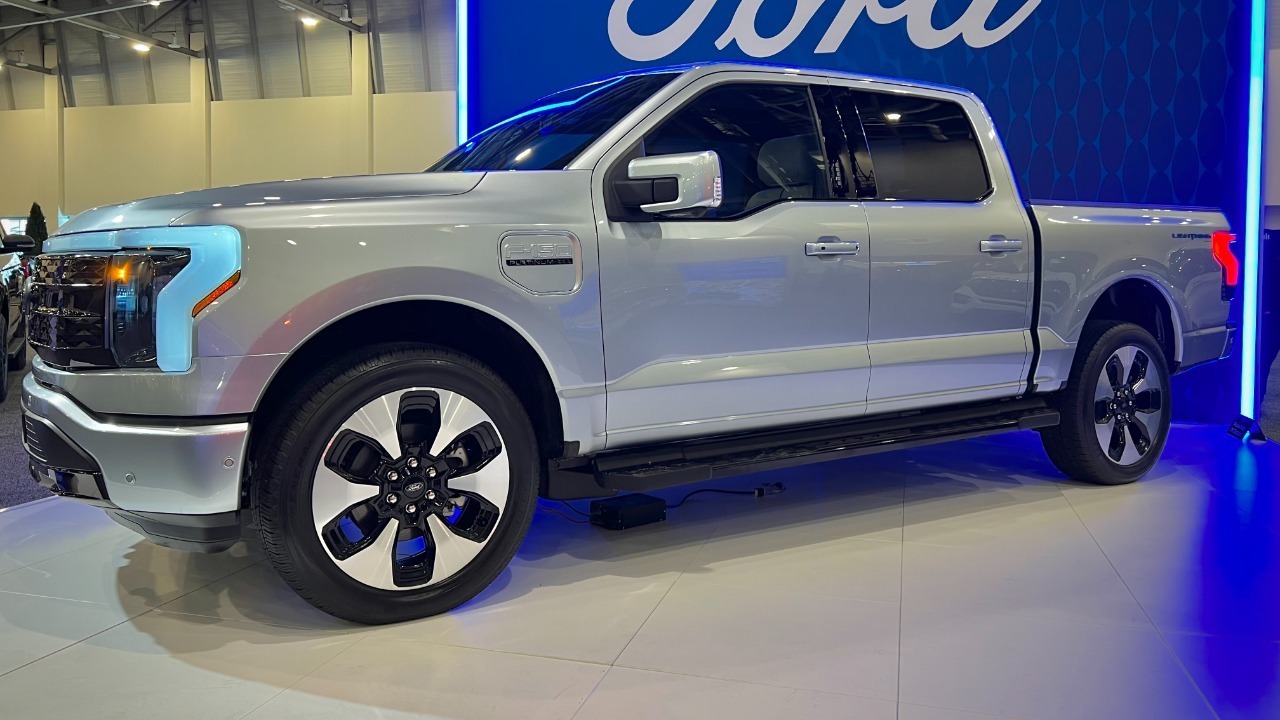

Ford is no longer treating batteries as just a component for electric pickups and crossovers, but as a standalone business built around the surging power needs of data centers and the grid. The company is redirecting billions of dollars and entire factories toward stationary storage, targeting more than 20 GWh of annual capacity and signaling a sharp break from its earlier all-in EV strategy.
I see this as a pivotal moment not only for Ford but for how legacy automakers position themselves in an economy increasingly defined by artificial intelligence, cloud computing, and a stressed power grid that needs vast new reservoirs of flexible energy storage.
Ford’s $2 billion bet on energy storage scale
The centerpiece of Ford’s pivot is a plan to invest approximately $2 billion over the next two years to convert and expand its current battery manufacturing capacity into a dedicated energy storage business. The company has framed this as an Energy Storage Ambition that will expand annual capacity to over 20 GWh, a scale that moves Ford from dabbling in stationary batteries to competing with established grid-storage players.
In practical terms, that $2 billion is not just fresh capital, it is a reallocation of existing EV-focused infrastructure into a new line of business that Ford expects will extend beyond commercial clientele and into broader power markets. The company has said that Ford stated that it will use this investment to convert and expand its current battery plants, underscoring that this is a structural shift in how it deploys its manufacturing base rather than a side project layered on top of the EV program.
From EV-first to “Battery Energy Storage System Business”
Ford’s leadership has been explicit that it is Launching a Battery Energy Storage System Business, treating stationary batteries as a core pillar alongside trucks, hybrids, and more affordable EVs. Instead of chasing every segment of the passenger EV market, Ford is narrowing its automotive ambitions while elevating batteries as a product in their own right, designed for data centers, utilities, and large commercial customers.
That shift is reflected in how Ford talks about its manufacturing roadmap, with the company outlining plans to leverage more than a century of industrial expertise to build modular storage systems that can be deployed at scale. It has tied this to a goal of reaching up to 20 GWh annually by late 2027, a figure that appears in its own messaging about how it will GWh annually by late 2027 as it repurposes EV battery lines into grid and data center storage products.
Repurposing Kentucky and Michigan plants for data center batteries
The operational heart of Ford’s strategy lies in its decision to repurpose underutilized EV battery capacity in Kentucky and Michigan into factories that build large-scale storage units. Reporting describes how Ford is repurposing its Kentucky battery plant to produce advanced systems tailored to the needs of data centers and the grid, rather than continuing to chase slower-than-expected demand for certain electric models.
To support the growth of its battery storage business to meet demand, Ford will leverage plants in Kentucky and Michig, using existing facilities, workforces, and supply chains as the backbone of its new product line. I see this as a classic industrial pivot: instead of writing off EV-focused investments as sunk costs, Ford is retooling them to chase a different kind of electrification demand, one driven by server racks and transmission lines rather than driveways.
Data centers as the new anchor customer
The most striking part of Ford’s messaging is how directly it links its battery strategy to the power needs of data centers, especially those supporting artificial intelligence and cloud computing. The company has said that it is switching some battery focus from cars to data centers, with plans for huge 20 GWh capacity aimed at serving facilities that increasingly need on-site storage to manage grid constraints and rising electricity costs, a shift captured in reports that Ford is switching some battery focus from vehicles to server farms.
In practice, that means Ford is designing battery systems not just for peak shaving or backup power, but for continuous integration with data center operations, where uptime is non-negotiable and power usage is measured in megawatts. The company’s own framing of its Battery Energy Storage System Business suggests it sees these installations as anchor customers that can justify large, repeat orders, rather than a patchwork of smaller commercial deals, and that is why I view the 20 GWh target as a baseline for a market that could grow much larger as AI workloads expand.
Grid-scale ambitions and the 20 GWh target
Ford’s 20 GWh goal is not just a headline number, it is tied to a specific manufacturing ramp that starts with an initial grid-scale battery plant expected to come online within about 18 months. The company has indicated that this revamped site will produce grid-scale systems as part of a broader plan to invest about $2 billion over the next two years to scale operations, with one analysis noting that The company expects to invest that sum specifically to build out its energy storage footprint.
Ford has also said it expected to bring initial capacity at the grid-scale battery plant within 18 months, reaching 20 GWh annually as it ramps production, a timeline that appears in reporting that Ford said it expected to hit that output as part of a broader pivot away from certain EV models. I read that as an aggressive but plausible schedule, given Ford’s existing battery lines and its decision to prioritize stationary products over some of its more capital-intensive vehicle programs.
What Ford is walking away from in EVs
Ford’s storage push is inseparable from what it is choosing to scale back on the automotive side. The company has already scrapped or paused parts of its EV roadmap, including high-profile projects like the F-150 Lightning expansion, in order to redirect resources into grid-scale storage manufacturing. Reports describe how Ford is repurposing underutilized electric vehicle battery capacity and pivoting toward “higher-return opportunities,” with one account noting that Image of Ford’s new strategy involves a joint venture disposition agreement that clears the way for this shift.
At the same time, Ford is not abandoning electrification altogether, instead it is emphasizing hybrids, extended-range electric vehicles, and lower-cost models built on its new Universal EV Platform while treating pure battery-electric volume as a more selective play. Its own communications about reinvesting in trucks, hybrids, affordable EVs, and battery storage make clear that the company sees more predictable returns in these segments than in a crowded EV market where price wars and high interest rates have squeezed margins, which is why I view the storage business as a financial hedge as much as a technological bet.
Jobs, layoffs, and the human cost of the pivot
Behind the strategic narrative is a stark labor story, especially in Kentucky, where Ford is laying off 1,600 EV battery workers as part of the transition. The company has said it will invest $2 billion to make batteries for the changing U.S. power grid, leveraging more than a century of manufacturing expertise and licensed advanced battery technology, but that does not erase the immediate impact on employees at the affected sites, a reality captured in reports that Leveraging that expertise comes alongside layoffs driven by high costs and regulatory changes.
I see this as a reminder that industrial pivots, even when they point toward growth sectors like data center infrastructure, often involve painful transitions for workers whose skills and locations do not perfectly match the new business model. Ford has framed the move as necessary to respond to high costs and shifting regulations, but the question now is how many of those 1,600 workers can be retrained or rehired into the new storage operations, and how quickly the promised 20 GWh of capacity translates into stable, long-term jobs rather than a one-time restructuring.
How Ford’s storage play fits into the wider energy landscape
Ford’s move into grid and data center storage is not happening in a vacuum, it is part of a broader scramble to build out battery capacity that can support a power system under strain from electrification, renewables, and AI-driven demand. The company’s plan to convert EV battery plants to make battery storage for data centers and the grid aligns with a wave of investment in large-scale storage projects, with one report noting that Ford pivots from EVs to battery storage for data centers and plans to bring its Kentucky site online as a key node in that ecosystem.
At the same time, Ford is positioning itself as a supplier not just to utilities but to hyperscale data center operators that are increasingly looking for integrated energy solutions, from on-site storage to microgrids. That is where I think Ford’s scale and automotive-grade manufacturing discipline could become a competitive advantage, allowing it to deliver standardized, modular systems at volumes that match the needs of cloud providers, especially as AI clusters proliferate in regions where the grid is already constrained.
Why this pivot matters for legacy automakers
For other legacy automakers, Ford’s strategy raises a blunt question: are batteries a means to sell more cars, or a business line that can stand on its own in the age of AI and grid modernization? By committing to over 20 GWh of annual capacity for stationary storage and explicitly targeting data centers and the power grid, Ford is signaling that it sees more durable margins in selling energy infrastructure than in chasing every EV niche, a stance that could influence how peers allocate their own battery investments.
There is also a geographic and political dimension to this shift, as Ford’s repurposed plants sit in regions where industrial jobs and energy policy are deeply intertwined. The company’s decision to anchor its storage business in places like Kentucky and Michigan, while also tying it to the needs of data centers that may be located in entirely different states, underscores how the next phase of electrification will blur the lines between automotive, tech, and utility sectors, a dynamic that is already visible in the way data center clusters are reshaping local power debates in areas such as the place linked to Ford’s evolving industrial footprint.
More from MorningOverview