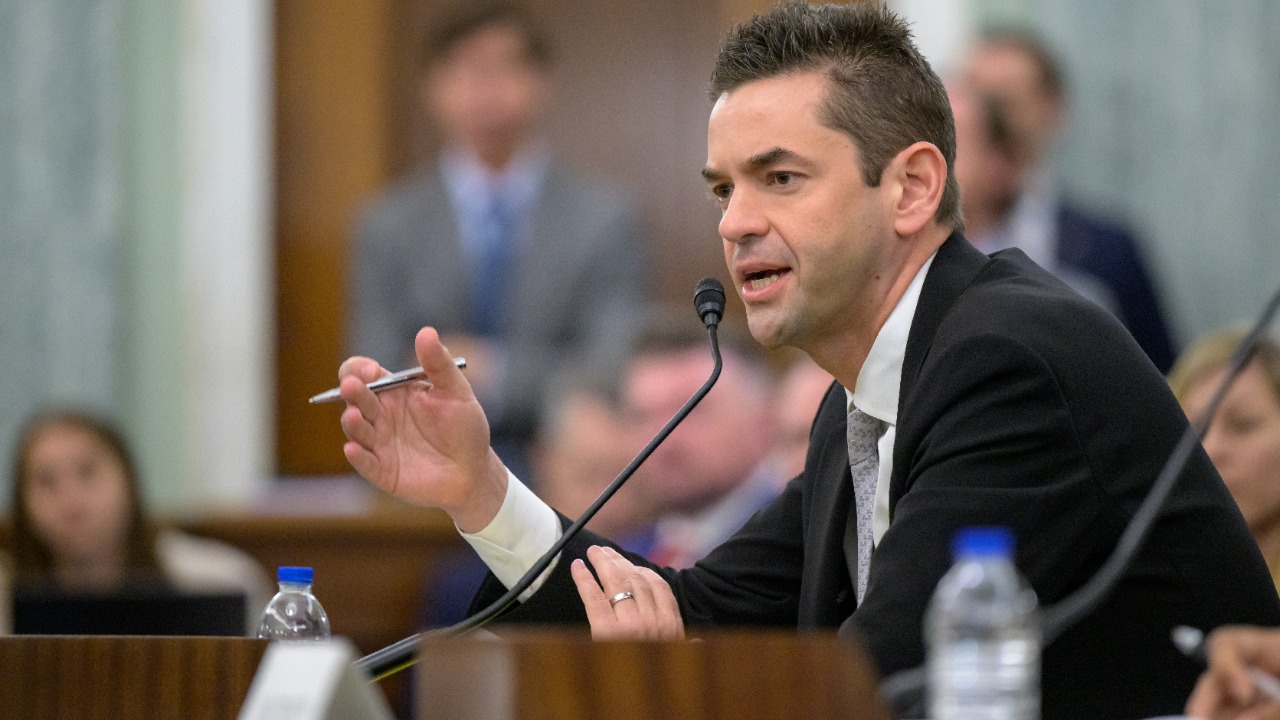

The Senate’s decision to confirm billionaire entrepreneur and private astronaut Jared Isaacman to lead NASA marks a decisive turn in how the United States intends to run its civil space program. Instead of a career bureaucrat or academic, the agency will now be led by a dealmaker steeped in commercial spaceflight and high-risk aviation, at a moment when competition with China and the role of private companies are reshaping the space race.
His confirmation caps a turbulent nomination saga that exposed tensions between President Donald Trump’s White House, Elon Musk’s influence over space policy, and lawmakers wary of ceding too much power to industry. With the oath now administered and the politics temporarily settled, the real test will be whether Isaacman can translate his private-sector instincts into sustainable public leadership for NASA.
The Senate’s vote and what it signals
The Senate’s roll call on Jared Isaacman’s nomination did more than fill a vacancy at the top of NASA, it signaled bipartisan acceptance that the agency’s future is inseparable from commercial space. The official Roll Call Vote in the 119th Congress, 1st Session, recorded the “Question, On the Nomination” of Jared Isaacman of Pennsylvania to be administrator of the National Aeronautics and Space Administration, confirming him after months of political maneuvering. That outcome, following a contentious committee process, underscored that even skeptical senators ultimately accepted a leader whose career has been built around partnering with, and sometimes challenging, the federal government rather than serving inside it.
Coverage of the confirmation stressed that the Senate was not simply rubber-stamping a routine appointment but endorsing a billionaire and private astronaut to run NASA at a time when the agency is deeply intertwined with commercial launch providers. Reports highlighted that Jared Isaacman, described as a “Billionaire and” entrepreneur, will now be responsible for steering NASA’s science missions, human spaceflight, and technology portfolio while also managing complex relationships with companies that have made him a customer, partner, and competitor. In that sense, the vote was as much a referendum on the commercial turn in U.S. space policy as it was on Isaacman himself.
From payments and fighter jets to the space agency’s top job
Isaacman’s path to NASA’s top office runs through the credit card terminal and the cockpit rather than the traditional pipeline of academia or government service. He is the founder and chairman of Shift4 Payments, a major payment processor that grew from a teenage startup into a publicly traded company, and he also created Draken International, a firm that provides adversary air support and tactical aviation training to the U.S. military and allied forces. Those dual roles, detailed in biographical profiles of Jared Isaacman, show a leader comfortable operating in highly regulated, safety-critical environments where government contracts and private capital intersect.
His corporate track record is central to how supporters frame his suitability for NASA. At Shift4 Payments, Isaacman built a platform that processes transactions for restaurants, hotels, and stadiums, while Draken International assembled fleets of fighter jets to simulate adversaries for U.S. pilots. That combination of financial technology and defense aviation experience gives him an unusual vantage point on risk management, procurement, and long-term capital investment, all of which are core to NASA’s multibillion-dollar programs. Backers argue that someone who has already navigated Federal Aviation Administration rules, Pentagon contracting, and Wall Street scrutiny is well positioned to manage the agency’s sprawling portfolio.
Private astronaut and Musk ally at the helm
What truly sets Isaacman apart from past NASA leaders is that he has already flown to orbit as a private astronaut and positioned himself as a close ally of Elon Musk. He has bankrolled and commanded commercial missions on SpaceX vehicles, using his own wealth to buy crewed flights and then turning them into high-profile campaigns for science and philanthropy. Reporting on his confirmation repeatedly describes him as a billionaire entrepreneur and astronaut, with one account noting that the Senate confirmed “billionaire, Musk ally Jared Isaacman” as NASA chief, underscoring how closely his public identity is tied to the SpaceX founder.
That relationship is both an asset and a liability. On one hand, Isaacman’s familiarity with SpaceX hardware and operations could help NASA manage its most important commercial partner more effectively, especially on programs like crew transport and lunar landers. On the other, his status as a Musk ally has already raised questions about whether he can impartially oversee contracts and safety decisions involving the company. One detailed account of the confirmation framed him as a “billionaire and astronaut” whose ties to Musk were central to the political drama that nearly derailed his nomination, a reminder that his personal brand is inseparable from the commercial space ecosystem he will now regulate and rely on.
A nomination withdrawn, then revived after a Musk feud
Isaacman’s arrival at NASA Headquarters was anything but straightforward. He was first tapped for the job earlier in President Trump’s term, only to see that nomination abruptly withdrawn after the White House clashed with Elon Musk over policy and influence. One account of the saga notes that Isaacman was initially nominated for the role, but President Trump pulled back the choice months later, then reversed course and renominated him after the feud cooled and political calculations shifted. That back and forth turned what might have been a routine appointment into a test of loyalty and leverage among some of the most powerful figures in space policy.
Other reporting fills in the political texture, describing how Trump picked Isaacman last year but withdrew the nomination in May after feuding with Musk over the administration’s plans for NASA and commercial launch contracts. A detailed account of the do-over vote explains that the Trump decision to revive Isaacman’s candidacy came only after the White House recalibrated its relationship with Musk and sought to reassert control over NASA’s direction. Another account notes that the The New York Times reported Trump’s initial withdrawal came after he discovered Isaacman had donated to Democratic candidates, a detail that added partisan edge to an already fraught nomination. Together, those reports show how Isaacman’s confirmation became entangled in personal rivalries and campaign politics long before the Senate cast its final votes.
The confirmation ceremony and NASA’s official welcome
Once the Senate acted, the White House moved quickly to formalize Isaacman’s role and present him as the legitimate steward of the agency. NASA’s own account of the transition describes how Jared Isaacman, nominated by President Donald Trump, took the oath of office as the 15th administrator during a ceremony at the Eisenhower Executive Office Building in Washin, near NASA Headquarters. The agency’s welcome message framed the moment as a fresh chapter for NASA, emphasizing continuity of mission even as it highlighted the unconventional background of its new leader. By staging the event in a prominent executive venue, the administration signaled that space policy remains a core national priority rather than a niche technical portfolio.
The official statement also underscored Isaacman’s responsibility for communicating NASA’s goals to the public and to Congress. In its description of the ceremony, NASA invited readers to learn more about NASA Headquarters and the agency’s mission, tying Isaacman’s swearing-in directly to broader outreach about exploration, science, and aeronautics. That framing matters, because it positions the new administrator not only as an internal manager but as the public face of U.S. space ambitions at a time when Artemis lunar missions, Mars planning, and Earth science budgets are all under intense scrutiny.
Why Isaacman’s business record matters for NASA’s future
Isaacman’s supporters in and out of government argue that his entrepreneurial record is not just a résumé line but a blueprint for how he will run NASA. At Shift4 Payments he scaled a complex, transaction-heavy business that must operate with near-perfect reliability, while at Draken International he built a company that flies aging fighter jets in demanding training environments without compromising safety. Those experiences, detailed in profiles of Draken International, suggest a leader who is comfortable balancing innovation with risk controls, a skill set that NASA badly needs as it leans on commercial partners for crewed flights and lunar infrastructure.
Analysts who welcomed his confirmation point out that NASA’s biggest challenges are no longer purely technical but managerial and financial. The agency must juggle fixed-price contracts, cost-plus legacy programs, and international partnerships while keeping Congress on board. In that context, Isaacman’s experience negotiating with banks, investors, and the Pentagon could help him push for more disciplined project management and clearer performance metrics. His stewardship of Shift4 through rapid growth and market volatility is likely to shape how he approaches NASA’s sprawling contractor base, from launch providers to small satellite firms, and how he evaluates whether programs are delivering value for taxpayers.
Controversies, conflicts, and the Musk question
Even as the Senate confirmed him, Isaacman’s nomination remained “not without controversy,” as one detailed account of the vote put it. Critics raised concerns about his financial ties, his political donations, and his close relationship with Elon Musk, arguing that these factors could complicate his ability to act as an independent regulator and steward of public funds. A report on the Senate debate described how some lawmakers pressed Isaacman on whether his status as a private astronaut and CEO would color his decisions on safety and procurement, with one summary noting that Isaacman, a private astronaut and CEO, faced pointed questions about conflicts of interest.
International coverage of the confirmation sharpened those concerns by highlighting his alignment with Musk and his aggressive vision for commercial competition. One analysis noted that the US Senate approved Isaacman after what it described as a thorough review of his prior associations, emphasizing that the billionaire entrepreneur sees bringing in more private sector competition as key to competing in the space race. That account stressed that the US Senate had to weigh not just his business success but also the optics of putting a Musk ally in charge of an agency that relies heavily on SpaceX. Another report on the do-over vote described how the Senate confirmation unfolded “in do-over after Musk feud,” underscoring how central that relationship has been to the entire process.
The tug-of-war over NASA’s direction
Behind the procedural drama lies a deeper struggle over what NASA should be in the 2020s: a traditional government agency that owns and operates its own hardware, or a systems integrator that buys services from companies like SpaceX, Blue Origin, and Boeing. Reporting on Isaacman’s confirmation repeatedly frames it as the culmination of a “monthslong tug-of-war” over the agency’s future, with one account noting that CNN described his path to the job in exactly those terms. Lawmakers who ultimately backed him did so on the assumption that he would accelerate commercial partnerships while still protecting NASA’s scientific and exploration missions from being hollowed out.
Other detailed accounts of the confirmation emphasize how the fight over Isaacman became a proxy for broader debates about budgets and priorities. One report explained that Isaacman was first nominated for the role a year ago, but Isaacman saw his nomination withdrawn as the White House and Congress sparred over the agency’s future budget and priorities, only to be reinstated once those negotiations shifted. Another account of the final vote stressed that the Senate confirmed Jared Isaacman as 15th NASA Administrator after a sequence of events that included a high-profile dispute with Musk and a reassessment of how much influence commercial partners should wield. In that context, Isaacman’s confirmation is less an endpoint than a starting gun for a new phase of policy battles over how NASA balances exploration, science, and industry.
What Isaacman’s leadership could mean for NASA’s next decade
With the oath taken and the politics, for now, settled, the question becomes how Isaacman will translate his background into concrete decisions. His public statements and the reporting around his confirmation suggest he will push for more competition in launch and space services, tighter cost controls on major programs, and a more aggressive posture in the emerging space race with China. One analysis of his views noted that the billionaire entrepreneur sees bringing in more private sector competition as key to competing in the space race, a stance that aligns with the administration’s broader emphasis on commercial partnerships. That perspective, highlighted in coverage of the billionaire entrepreneur, suggests NASA under Isaacman will lean even harder into buying services rather than owning hardware wherever possible.
At the same time, Isaacman will have to manage internal morale and external oversight in an agency where many scientists and engineers worry that commercialization could erode NASA’s unique culture and long-term research agenda. The official welcome from NASA emphasized continuity of mission, a reminder that the agency’s statutory responsibilities for exploration, science, and aeronautics do not change with any one administrator. How Isaacman balances those obligations with his instinct to move fast and partner aggressively with industry will define not only his tenure but also the trajectory of American space leadership in the decade ahead.
Supporting sources: Jared Isaacman Confirmed as NASA Administrator.
More from MorningOverview