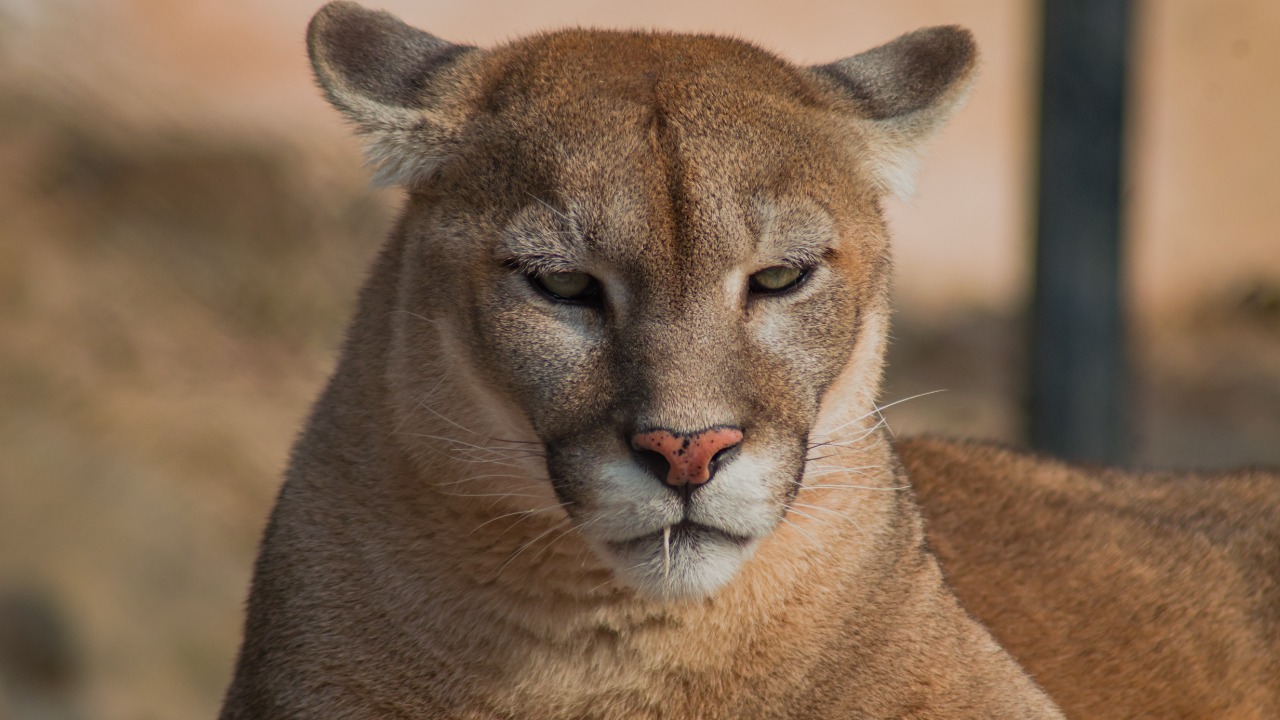

Pumas in southern Patagonia have discovered an unexpected new food source in the dense colonies of Magellanic penguins, and the shift is rewriting what scientists thought they knew about big cat behavior. As these apex predators gorge on seabirds, their movements, social lives, and even their risk of conflict with people are changing in ways that ripple across the landscape. The result is a rare, real-time glimpse of evolution’s improvisation, as a familiar carnivore starts to act in unfamiliar ways.
How penguins became puma prey
The story begins with a conservation success that set the stage for an ecological surprise. After decades of persecution, puma numbers in parts of Patagonia have rebounded, and the cats are once again the dominant terrestrial hunters in coastal steppe and shrublands. At the same time, large colonies of Magellanic penguins have expanded inland from the surf, creating dense clusters of medium sized birds that are easy to find and, for a powerful cat, relatively easy to kill. Researchers tracking these recovering predators found that some of the Rebounding puma populations in Patagonia are now hunting Magellanic penguins, turning a marine bird into a key part of a land carnivore’s diet.
For pumas, which already have a reputation for flexibility, the new menu item fits a broader pattern. These cats are known as generalists that can live on everything from guanacos to smaller mammals, and one study framed their adaptability with the blunt observation that “they can eat almost anything.” In coastal Argentina, that adaptability now includes seabirds that nest in burrows or shallow scrapes, often in open terrain with limited cover. Field teams watching the colonies and analyzing carcasses have documented pumas dragging penguin bodies away from nesting areas and caching them, confirming that the cats are not scavenging but actively hunting the birds as a regular part of their foraging strategy.
The strange new behavior scientists are seeing
Once pumas started exploiting penguin colonies, their behavior shifted in ways that surprised even veteran carnivore biologists. Instead of the wide ranging, mostly solitary movements that define classic puma ecology, some individuals began concentrating their activity around the bird colonies for long stretches of the breeding season. A detailed tracking project reported that Nine of the pumas they tracked hunted penguins, while five did not, creating two distinct behavioral types within the same population. The penguin hunters showed a much larger variation in their daily movements and repeatedly returned to within a few kilometers of the colony, as if tethered to this seasonal buffet.
That new pattern has knock on effects. Because multiple pumas were using the same penguin rich areas, they overlapped more often than usual, sometimes feeding at different times from the same clusters of carcasses. For a species that typically avoids direct contact with its own kind, this shared use of a concentrated food source looks almost like a loose, temporary social system. Researchers following the cats have described them lingering near one another’s kills and tolerating proximity that would be rare when they are hunting more dispersed prey, a shift that hints at how a single abundant resource can soften territorial boundaries and alter the social calculus of a solitary predator.
From solitary stalkers to uneasy neighbors
In classic puma country, each adult carves out a large territory, and encounters with other adults are relatively rare and often tense. The penguin colonies have scrambled that script. With hundreds or thousands of birds packed into a small area, the cost of sharing space drops, and the benefit of defending a patch of ground becomes less clear. Biologists monitoring the coastal steppe have watched pumas move in and out of the colonies on overlapping paths, sometimes within hours of one another, and leave behind clusters of partially eaten carcasses that suggest serial feeding by different individuals. The result is a kind of uneasy neighborhood, where cats that would normally keep their distance now tolerate a degree of overlap because the food is simply too abundant to monopolize.
This shift is not just about geography, it is about social rules. When pumas feed on guanacos or other large mammals, kills are scattered and defending them can pay off. Around penguin colonies, the birds are so numerous that defending one carcass makes less sense than simply killing another. That abundance appears to reduce aggression and may even encourage more fluid movement patterns, as individuals trade strict territoriality for opportunistic foraging. Researchers have linked these changes in social interactions to the new hunting behavior, noting that the Pumas hunting Magellanic penguins in Argentina are reshaping their movements and social contacts by quickly expanding their use of the coastal landscape.
Seasonal feasts and lean times
The penguin bonanza is not available year round, and that seasonality is central to understanding how deeply it is changing puma lives. Magellanic penguins come ashore to breed and molt, filling the colonies for part of the year and then disappearing back to sea. During those months on land, the birds provide a dense, predictable food source that can support multiple adult cats and their kittens. When the penguins leave, the buffet vanishes almost overnight, and the same pumas must revert to a more traditional menu. Researchers tracking this cycle have found that In the parts of the year when penguins are not present, the pumas revert to one of their historical sources of prey, particularly guanacos, and resume the long distance movements associated with hunting large, wary herbivores.
This boom and bust rhythm forces the cats to juggle two very different hunting strategies. During the penguin season, they can afford to stay close to the colonies, conserve energy, and feed frequently on relatively small carcasses. Outside that window, they must roam widely, stalk over long distances, and accept longer gaps between kills. The contrast may influence everything from reproductive timing to kitten survival, since mothers that can exploit penguins have a more reliable food supply during the breeding season. It also raises questions about how quickly pumas can switch between these modes, and whether individuals that specialize in penguins pay a cost in their ability to hunt guanacos when the seabirds are gone.
Penguin colonies as ecological game changers
From an ecosystem perspective, the arrival of penguin eating pumas is more than a quirky behavioral twist, it is a structural change in how energy moves between land and sea. Magellanic penguins feed offshore on fish and squid, then bring that marine energy back to land in the form of their bodies, eggs, and guano. When pumas tap into that resource, they effectively plug a top terrestrial predator into a marine food web, creating a new pathway for nutrients and altering who benefits from penguin mortality. Scientists studying this phenomenon have described how penguin eating pumas upend predator norms, because the birds have created a novel prey for the top terrestrial predator and shifted the balance of power among scavengers and mesocarnivores that once had the colonies largely to themselves.
That new link between ocean and steppe has cascading effects. Carcasses left by pumas become food for foxes, birds of prey, and invertebrates, concentrating nutrients in and around the colonies. At the same time, heavy predation could influence penguin behavior and breeding success, potentially changing how the birds use their nesting habitat or how far inland they venture. The presence of a large predator may also deter other species that once exploited the colonies, reshuffling the local community. In this sense, the pumas are not just adding penguins to their diet, they are reorganizing a coastal ecosystem that had evolved without regular pressure from a big cat.
Lessons from Jane Goodall and other animal innovators
To make sense of such rapid behavioral change, many scientists look to classic examples of animal innovation, and one name surfaces repeatedly. Jane Goodall’s original tale of chimpanzees using tools and hunting in coordinated groups still astonishes because it showed how flexible and inventive a wild species can be. In Patagonia, the pumas are offering a feline version of that story, revealing that large carnivores can also adjust their tactics and social patterns when a new opportunity appears. One detailed account of the coastal cats notes that Jane Goodall’s original tale of chimpanzees still astonishes today. Penguin eating pumas, it turns out, behave quite differently, underscoring how quickly behavior can diverge when animals confront novel resources. These parallels matter because they challenge the idea that big predators are locked into rigid behavioral scripts. Instead, the pumas of Patagonia look more like problem solvers, capable of experimenting with new prey and adjusting their social boundaries when the payoff is high. That flexibility has implications for conservation planning, since it suggests that restoring or protecting one species can have unexpected effects on another. It also hints at how carnivores might respond to climate driven shifts in prey distributions, by tracking new food sources and reinventing their daily routines in ways that are hard to predict from historical data alone.
Why some pumas eat penguins and others do not
One of the most intriguing findings from the tracking work is that not every puma that lives near a penguin colony takes advantage of it. In the monitored population, nine individuals became regular penguin hunters while five did not, even though they had access to the same landscape. That split raises questions about learning, personality, and risk tolerance. It is possible that some cats discovered the colonies by chance and then developed a habit, while others stuck with familiar prey. Social transmission may also play a role, with mothers that hunt penguins passing the behavior to their kittens, creating family lines of specialists alongside more traditional generalists.
The difference shows up not only in diet but in movement patterns. The penguin hunters showed greater variation in their daily ranges and spent more time within a few kilometers of the colonies, while non hunters maintained more typical, dispersed routes. This divergence suggests that the decision to exploit penguins is not a trivial add on but a commitment to a different way of using space and time. It also complicates predictions about future impacts on penguin populations, since the pressure they face depends on how many pumas adopt the new strategy and how consistently they use it from year to year.
Human conflict and conservation trade offs
As pumas expand their use of coastal habitats, their interactions with people are also shifting. In some parts of Patagonia, ranchers have long viewed pumas as threats to sheep and goats, and lethal control has been a persistent source of conflict. The discovery that coastal cats are feeding heavily on penguins introduces a new wrinkle. On one hand, a reliable wild prey source could reduce pressure on livestock if pumas spend more time near colonies and less time near pastures. On the other hand, the same movement into new areas could bring them closer to tourist sites, research stations, or coastal infrastructure, creating fresh points of friction.
Conservation groups working in the region have framed the penguin puma dynamic as both an opportunity and a warning. The opportunity lies in showcasing a dramatic, charismatic interaction that can draw attention to the broader restoration of Patagonia’s ecosystems, including the recovery of apex predators and seabird colonies. The warning is that such rapid behavioral change can outpace management plans that were written with older assumptions about where pumas live and what they eat. As one synthesis of the new research put it, pumas in Patagonia started feasting on penguins and now their strange behavior has surprising knock on effects, a reminder that conservation successes can generate complex, sometimes uncomfortable surprises.
What this experiment in real time evolution tells us
Watching pumas learn to hunt penguins is like watching a natural experiment unfold in real time. A recovering predator meets a dense, naive prey, and within a short span, its movements, social life, and ecological role begin to shift. The cats that embrace the new resource behave differently from their neighbors, and the entire coastal food web adjusts around them. For scientists, this is a rare chance to document how quickly behavior can change when conditions allow, and to test ideas about innovation, specialization, and the feedbacks between predators and prey.
For the rest of us, the story is a reminder that wild systems are not static. The same forces that once pushed pumas to the brink in parts of Patagonia are now, through careful protection and rewilding, giving them room to experiment. As they do, they reveal both the resilience and the unpredictability of nature. The penguins, for their part, have inadvertently invited a powerful new neighbor into their colonies, and the long term outcome of that relationship remains uncertain. What is clear is that the cats are not simply returning to an old pattern, they are inventing a new one, and in the process, they are teaching us how quickly the rules of the wild can change when opportunity appears on the horizon in the form of thousands of waddling birds.
More from MorningOverview