
The latest climate projections are no longer just abstract warnings about rising seas or hotter summers, they are starting to map out a distant but brutally specific endgame for complex life. Using a new generation of planetary models, scientists have fed a supercomputer with the physics of continents, oceans, atmosphere and stars, and the result is a stark scenario in which extreme heat, a changing Sun and a reshaped world combine into a “triple whammy” that strips Earth of its habitability. The forecast sits far beyond any human planning horizon, yet it sharpens the stakes of decisions being made right now about fossil fuels, land use and the pace of warming.
In that simulated future, Earth does not explode or collide with anything, it simply becomes too hot and airless for mammals like us to survive. The same models that track today’s carbon dioxide curve into the next few decades have been stretched across hundreds of millions of years, and they suggest that the planet’s long-term trajectory is toward a world where average land temperatures push into lethal territory and oxygen levels crash. I see this not as a reason for fatalism, but as a reminder that the physics of climate are unforgiving, and that the window in which our species can shape its own fate is narrower than we like to imagine.
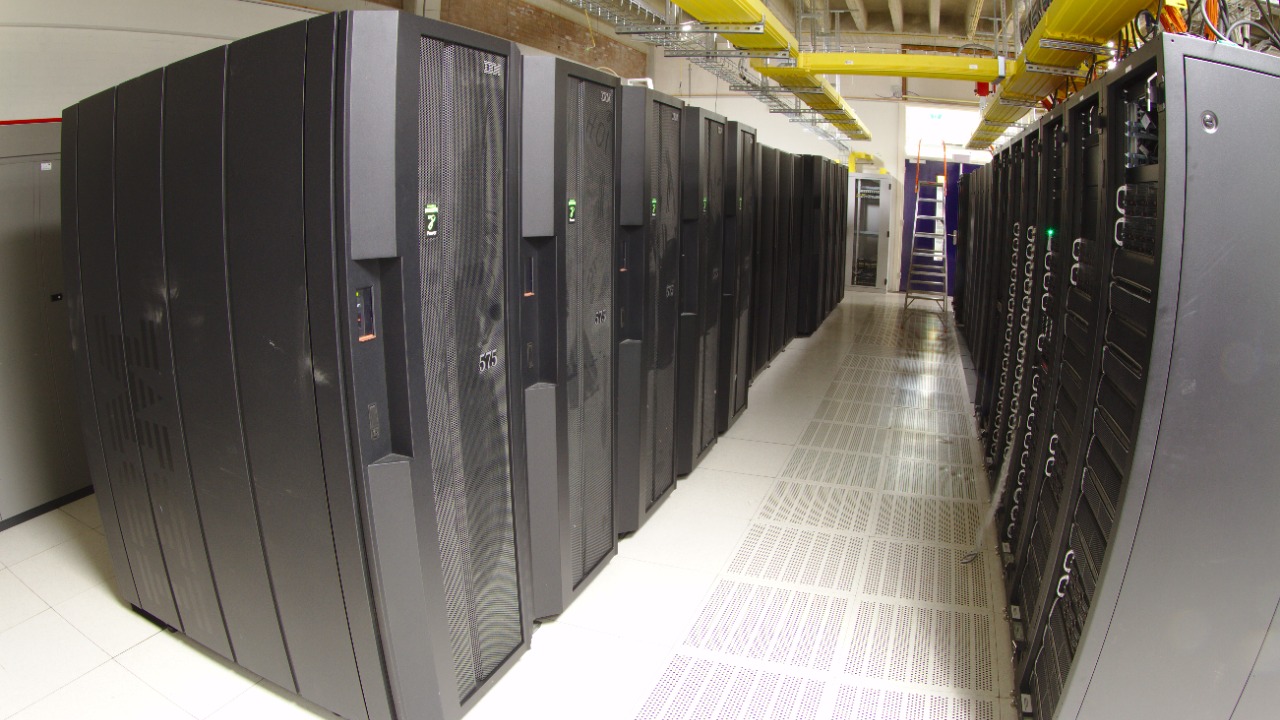
The supercomputer that mapped humanity’s distant deadline
The most striking element of the new research is the way a single simulation can stitch together processes that usually sit in separate scientific silos. In the work highlighted by reports on Supercomputer Predicts the Year Humanity Will Go Extinct, researchers used a high resolution climate and tectonic model to project how shifting continents, changing ocean circulation and a brightening Sun will interact with greenhouse gases. The result is not a single doomsday date carved in stone, but a narrow band of time in which conditions for large mammals collapse. By running thousands of iterations, the simulation converged on a future where land temperatures in many regions sit between 40 and 50 degrees Celsius for long stretches, a range that pushes human and mammalian physiology beyond its limits.
What makes this approach different from familiar climate projections is its timescale. Instead of stopping at 2100, the model runs forward until the continents merge into a new supercontinent and the Sun’s output has ticked upward. The work described in the analysis of Supercomputer Predicts When Humanity Will Go Extinct emphasizes that this is not a simple extrapolation of current warming trends, but a full planetary evolution scenario. I read that as a crucial distinction, because it shows that even if human emissions stopped tomorrow, the physics of plate tectonics and stellar evolution would still push Earth toward a hotter, harsher state in the very long term.
Inside the “triple whammy” that cooks a future Earth
The phrase “triple whammy” is not a piece of marketing, it is a literal description of three converging heat engines. First, atmospheric carbon dioxide remains elevated, trapping more outgoing infrared radiation and raising baseline temperatures. Second, the Sun slowly brightens as it ages, increasing the amount of energy hitting the top of the atmosphere. Third, the continents eventually collide into a single landmass, a mega continent that disrupts ocean currents and reduces the planet’s ability to move heat around. Reporting on this scenario notes that this combination of CO2, solar output and geography could make Earth uninhabitable for mammals in roughly 250 million years, once that new supercontinent has formed.
In practical terms, the mega continent matters because it concentrates land far from the moderating influence of oceans. Vast interior regions would swing to temperature extremes, with little moisture and limited cloud cover to blunt the Sun’s intensity. The same research that describes this “triple whammy” also points out that the new land configuration would likely reduce the efficiency of the carbon cycle, trapping more heat in the atmosphere. When I look at that picture, I see a planet that is still physically Earth, with familiar gravity and day length, but functionally alien to any mammal that evolved in the relatively mild climates of the last few million years.
Why mammals, including humans, are so vulnerable to extreme heat
One of the most sobering threads running through the supercomputer work is how little thermal headroom mammals actually have. Our bodies are excellent at shedding heat in environments that are slightly warmer than our core temperature, but they fail quickly once ambient conditions cross a critical threshold. Research summarized in the analysis of New research reveals extreme heat likely to wipe out humans and mammals explains that mammals have evolved to tolerate much lower cold temperatures by burning energy and using insulation, but their capacity to withstand higher temperatures is sharply limited. Once wet bulb temperatures, which combine heat and humidity, rise above about 35 degrees Celsius, even a healthy human in the shade cannot cool down fast enough to survive for long.
The same work notes that as the atmosphere warms, it can hold more water vapor, which is itself a greenhouse gas that further amplifies heating. That feedback loop means that once a certain threshold is crossed, large parts of the planet could experience conditions that are not just uncomfortable but physiologically unsurvivable for mammals. I find it telling that the models do not need to assume exotic new physics or sudden catastrophes to reach this point, they simply extend known relationships between temperature, humidity and radiation into a future where the background climate has shifted upward by several degrees.
Scientists’ “triple whammy extinction” timeline
When scientists talk about a “triple whammy extinction” in this context, they are not describing a single asteroid strike or volcanic outburst, but a drawn out squeeze on habitability. Reporting that highlights how Scientists forewarn timing of triple whammy extinction explains that the projected land temperatures between 40 and 50 degrees Celsius would become the norm across the supercontinent’s interior. In that environment, even advanced technology would struggle to keep up with the cooling demands for billions of people, and outdoor labor or agriculture would be nearly impossible without heavy protection.
The same analysis notes that this is not just about daytime peaks, but about nights that never cool enough for bodies or ecosystems to recover. Over thousands of years, that relentless heat would push species ranges toward the poles and into shrinking refuges, until there is simply nowhere left to go. I read that as a slow motion extinction, one where the last pockets of habitable climate wink out not with a bang but with a final, suffocating heatwave.
From extreme heat to a breathless planet
Heat is only part of the story. The supercomputer projections also point to a future in which Earth’s atmosphere gradually loses oxygen, turning the planet into a place where complex aerobic life cannot breathe. Work described in the analysis of A Breathless future: Supercomputer predicts when Earth will lose oxygen notes that while mammals have evolved to tolerate lower cold temperatures, their dependence on oxygen is non negotiable. As the Sun brightens and the chemistry of the atmosphere shifts, the balance between oxygen production and destruction could tip, leading to a slow decline in breathable air that occurs far in the future but is no less decisive than any heatwave.
In that scenario, even if some mammals could find cooler microclimates, they would face an atmosphere that no longer supports their metabolism. The models suggest that microbial life and some hardy plants might persist in niches, but large animals that rely on high oxygen levels would vanish. For me, that is a reminder that climate is not just about temperature charts, it is about the fundamental composition of the air that every breath depends on.
Other cosmic and geological threats on the horizon
Although the “triple whammy” of heat, Sun and supercontinent dominates the long term forecast, it is not the only existential threat in the scientific literature. Reporting on how Scientists predict a triple whammy extinction event on Earth describes a separate scenario in which a white dwarf star is transforming into a giant and could eventually affect planetary systems, while Earth itself faces the prospect of massive volcanic eruptions far into the future. Those eruptions would inject huge amounts of gases and particles into the atmosphere, disrupting climate and potentially triggering additional extinction pulses.
Set alongside the supercomputer’s climate projections, these cosmic and geological risks paint a picture of a planet that is ultimately finite in its capacity to host complex life. The details differ, but the common thread is that Earth’s habitability is not a permanent guarantee, it is a temporary alignment of stellar output, atmospheric chemistry and geological activity. I see that as both a humbling and galvanizing insight, because it underscores how unusual our current window of stability really is.
What this far future means for the climate choices we face now
It would be easy to dismiss a 250 million year forecast as irrelevant to a world struggling with next quarter’s energy prices or the next election cycle. Yet the same physics that drive the distant “triple whammy” are already visible in today’s heatwaves, droughts and storms. The research that projects extreme heat likely to wipe out humans and mammals in the distant future is built on the same equations that explain why a city like Phoenix now endures weeks of temperatures above 43 degrees Celsius, or why marine heatwaves are bleaching coral reefs. When I connect those dots, I see the supercomputer’s distant warning as a magnified version of the pressures we are already starting to feel.
There is also a psychological dimension. Knowing that Earth’s habitability has an expiration date, even if it is unimaginably far away, can either feed nihilism or sharpen our sense of responsibility. I lean toward the latter. We cannot control the Sun’s evolution or the drift of continents, but we can control how quickly we push the climate toward dangerous thresholds in the next few centuries. The same models that simulate a mega continent can also show how aggressive cuts in carbon dioxide today would reduce the risk of crossing tipping points that make parts of the planet unlivable within our grandchildren’s lifetimes.
How to read extinction forecasts without giving in to despair
Apocalyptic imagery is a powerful storytelling tool, and the phrase “AI Generated Image Of Apocalypse” that appears alongside some coverage of these studies captures how easily the mind jumps from data to dystopia. Yet the scientists behind the supercomputer simulations are not fortune tellers, they are mapping plausible boundaries for what physics allows. The work that describes how Scientists have forewarned of land temperatures between 40 and 50 degrees Celsius in the far future is careful to frame those numbers as part of a range, not a fixed script. I think it is important to hold that nuance, because it keeps space open for agency rather than resignation.
At the same time, brushing off these projections as “too far away to matter” would be a mistake. The fact that Earth’s climate system can, under certain conditions, sustain such extreme heat should sharpen our appreciation for the relatively narrow band of temperatures in which our societies and infrastructures were built. Reading extinction forecasts responsibly means using them as a backdrop for present day choices, not as a prophecy that excuses inaction. The triple whammy may be a distant convergence, but the first gusts of that future are already in the air we are heating now.
More from MorningOverview