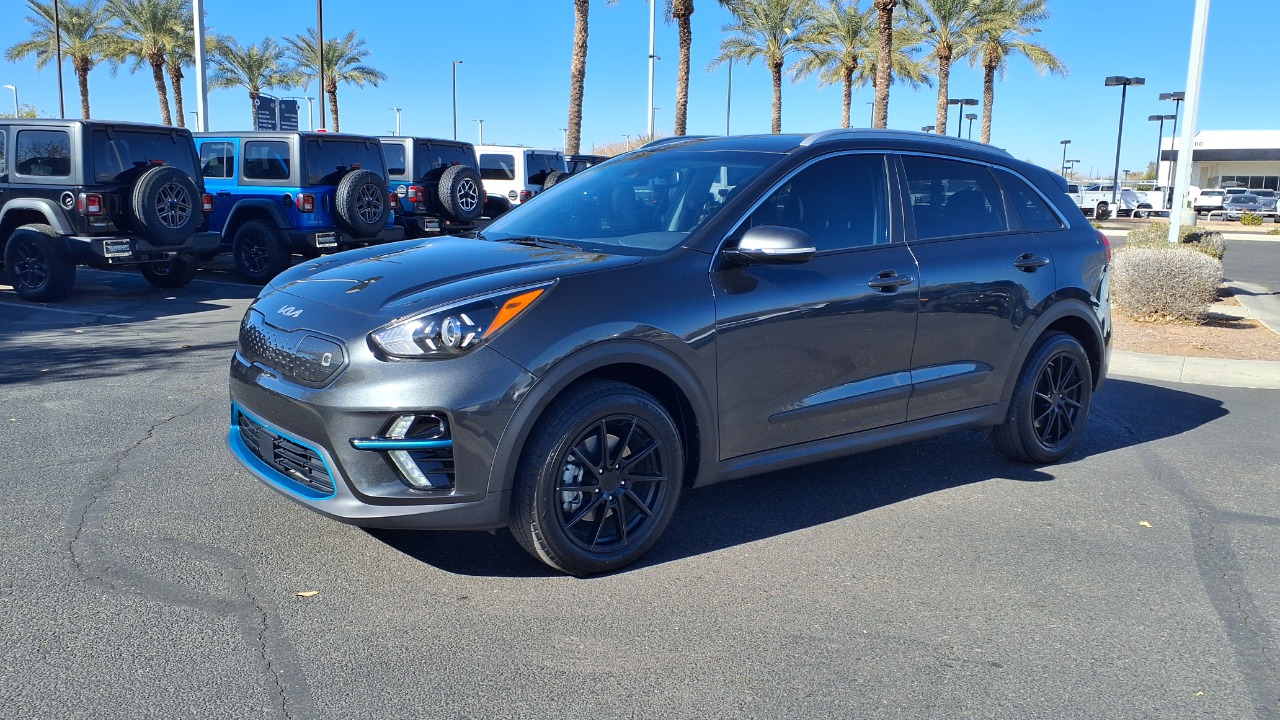

Kia is leaning hard into price cuts to keep its electric vehicles moving, and the result is unusually deep savings for shoppers. Across the EV6, EV9, and Kia Niro EV, the company is still dangling more than $10,000 off sticker prices in a bid to offset the loss of federal tax incentives and stubborn buyer hesitation. For drivers who have been waiting for a better deal on a battery-powered SUV or crossover, this is one of the most aggressive discount waves in the current EV market.
Kia’s five-figure EV discounts, explained
The headline number is simple: Kia is still putting more than $10,000 on the hood of its electric models, a figure that would have sounded unthinkable when early EVs were supply constrained. I see this as a clear signal that the brand is prioritizing volume and showroom traffic over short term margins, especially as the broader market digests higher interest rates and a cooling appetite for premium-priced electrics. The discounts apply across the lineup, from the 2025 Kia EV6 to the 2026 Kia EV9, which means shoppers are not limited to outgoing or slow-selling trims.
What makes these cuts stand out is that they are not limited to obscure configurations or fleet-only deals. Reporting on Kia’s current offers describes broad “customer cash” and bonus cash that stack into that $10,000-plus territory, effectively resetting transaction prices for mainstream buyers rather than just a handful of bargain hunters. When a mainstream brand like Kia leans into five-figure incentives on multiple EV nameplates at once, it reshapes the competitive landscape for rivals that are still trying to hold the line on pricing.
How the end of federal credits set the stage
The backdrop to Kia’s strategy is the disappearance of the federal government’s $7,500 electric vehicle tax credit for many models, a shift that suddenly made EVs feel more expensive even if sticker prices did not change. With that support gone, automakers had a choice: accept slower sales or step in with their own money to keep monthly payments in check. Kia chose the latter, effectively recreating the lost incentive by offering its own $10,000 EV discount to match and even exceed the vanished $7,500 benefit.
From my perspective, that move acknowledges a simple reality: buyers had anchored on the idea that an electric car “should” come with a $7,500 break, and losing it overnight risked freezing demand. By stepping in with its own cash, Kia is trying to smooth that shock and keep EVs in the same psychological price band as before. It is a costly strategy, but it buys time while the company scales production, refines its lineup, and waits for battery costs to fall further.
Who needs a tax credit when Kia cuts prices itself?
Kia has not been shy about framing its discounts as a direct replacement for federal help, effectively telling shoppers that they do not need a $7,500 tax credit when the company is slashing EV prices by $10,000 at the dealership level. The message is especially pointed for the Kia Niro EV, EV6, and EV9, which are all being advertised with $7,500 to $10,000 cuts that bring their effective prices down to levels more in line with well-equipped gasoline crossovers. I read that as a deliberate attempt to neutralize one of the biggest talking points against EVs, which is that they cost significantly more upfront than comparable internal combustion models.
For shoppers, the practical effect is that the Kia Niro EV and its siblings suddenly look less like niche tech products and more like mainstream family vehicles with a compelling value story. When a Kia Niro EV can be advertised with a $10,000 reduction and additional lease cash that pushes total savings even higher, the barrier to entry for first-time EV buyers drops sharply. That kind of repositioning is crucial if Kia wants its electric lineup to appeal beyond early adopters and into the heart of the crossover market.
New Year deals and deeper cuts across the lineup
The current wave of incentives is not a short weekend promotion but a structured campaign that stretches across the first quarter, framed as The New Year EV deals that run from December 17, 2025, to March 31, 2026. In practice, that gives shoppers a long window to cross-shop, test drive, and negotiate without the usual end-of-month pressure that often defines car buying. I see that extended timing as another sign that Kia is treating these discounts as a strategic reset rather than a quick clearance sale.
Within that campaign, the company is layering in perks beyond simple price cuts, including two years of free service on its electric models, which helps ease concerns about maintenance costs and unfamiliar technology. The structure of The New Year offers, as described in reporting on The New Year EV deals, suggests that Kia is trying to build a full ownership value proposition rather than relying solely on a big number on the windshield. For buyers who are on the fence, bundled service and a clear timeline can be the nudge that turns curiosity into a signed contract.
EV6, Niro EV, and EV9: how the discounts stack up
Digging into the details, the 2025 Kia EV6 and Niro EV are being positioned as the most aggressively discounted models, with up to $11,000 in customer cash available in some configurations. That figure pushes the effective transaction price of these crossovers into territory that overlaps with popular gasoline models, which is exactly where Kia needs them to be if it wants to win over budget-conscious families. The larger EV9, meanwhile, is listed with substantial but slightly smaller incentives, reflecting its higher base price and flagship status in the lineup.
From a shopper’s standpoint, the sweet spot may well be the Niro EV, which combines a compact footprint with the full weight of Kia’s discount strategy. When reporting notes that the 2025 Kia EV6 and Niro EV are available with up to $11,000 in customer cash, it underscores just how far Kia is willing to go to make these models pencil out for mainstream buyers. The EV9 still benefits from four-figure discounts that meaningfully trim its price, but the smaller crossovers are where the most dramatic percentage cuts show up.
Why five-figure discounts still are not enough for some buyers
Even with $10,000 sliced off the top, Kia has discovered that price alone cannot solve every barrier to EV adoption. Reporting on the company’s recent sales performance notes that Kia Slashed $10,000 Off Its EVs and Buyers Still Walked Away, a stark reminder that concerns about charging infrastructure, range, and long term battery health remain powerful deterrents. I read that as evidence that the early adopter phase is over, and the next wave of buyers needs more than a bargain to be convinced.
The phrase Kia Slashed $10,000 Off Its EVs. Buyers Still Walked Away captures the tension perfectly: the company is on track to set another all-time sales record overall, yet its electric models are not keeping pace with that broader success. According to detailed coverage of how Kia Slashed $10,000 Off Its EVs. Buyers Still Walked Away, the company is offering discounts that match or exceed what shoppers would have received when the federal credit was still in play, yet some customers still default to gasoline or hybrid options. That gap between financial logic and emotional comfort is where Kia and its rivals will have to focus next.
How Kia’s offers fit into a post-credit EV market
Zooming out, Kia’s strategy sits within a broader shift in the EV market as government support recedes and automakers are forced to compete on their own. Consumer advocates now point out that Federal tax credits have expired, but it is still a strong moment to buy an electric vehicle because manufacturers are stepping in with their own incentives and deals on fuel efficient cars and SUVs. In other words, the value is still there, it has just moved from the tax return to the dealer’s worksheet.
From my vantage point, that transition is healthy in the long run because it pushes brands to sharpen their pricing, improve product quality, and offer tangible perks like free maintenance or home charger support. The key is that shoppers understand where the savings are coming from and how to capture them. Guidance that highlights how Federal tax credits have expired, but automakers are filling the gap, helps frame Kia’s $10,000-plus discounts as part of a larger pattern rather than a one-off anomaly.
Financing, APR deals, and stacking the savings
Price cuts are only one side of the affordability equation; the cost of borrowing can make or break a deal, especially on higher priced EVs. Kia is also leaning on promotional financing, with offers such as 2.49% APR for 48 m on select models and ranges from 2.49 to 6.75% APR across different terms and vehicles. For buyers who qualify, pairing a low interest rate with a five-figure discount can bring monthly payments down to levels that rival or undercut comparable gasoline SUVs.
In the EV space, where sticker prices are still higher than many shoppers are used to, these financing tools are crucial. When current incentive sheets show 0% APR for 60 m on some vehicles and special rates on a new 2026 Carnival and the 2026 EV9, it signals that Kia is willing to use every lever at its disposal to close the gap between aspiration and affordability. For shoppers comparing offers, it is worth looking closely at how APR, term length, and cash discounts interact, because the combination can be more powerful than any single headline figure.
What these deals mean for shoppers and the EV market
For individual buyers, Kia’s current approach effectively compresses the price premium that has long separated EVs from their gasoline counterparts. A shopper who might have written off an EV6 or Kia Niro EV as “too expensive” a year ago can now run the numbers again and find that, with $10,000 in discounts and favorable APR, the monthly payment looks surprisingly familiar. That shift does not erase concerns about charging or road trip logistics, but it removes one of the biggest practical obstacles to going electric.
At the market level, I see Kia’s strategy as a stress test for how far price can move the needle in a maturing EV segment. If five-figure discounts and extended New Year deals succeed in pulling more mainstream buyers into the fold, other automakers will face pressure to match or exceed those offers, potentially triggering a broader reset in EV pricing. If, on the other hand, Kia Slashed $10,000 Off Its EVs and Buyers Still Walked Away remains the dominant narrative, it will be a sign that the next phase of EV adoption will require more than aggressive discounts, from denser charging networks to clearer communication about long term ownership costs.
More from MorningOverview