
Rivian is quietly redrawing the map for automated driving, and the most important line it is drawing is made of laser light. By baking lidar into its next generation of electric vehicles and autonomy hardware, the company is not just chasing a technical edge, it is making a safety argument that regulators will eventually struggle to ignore. If self-driving cars are going to share roads with human drivers in all weather and lighting conditions, the case Rivian is building suggests lidar should not be optional.
The company’s latest vehicles, chips, and software show how far the technology has moved from exotic prototype gear to something that can be integrated, priced, and scaled like any other safety system. I see a clear throughline in Rivian’s strategy: treat lidar as a foundational sensor, not a luxury add-on, and design the rest of the autonomy stack around that choice. That approach, backed by its executives’ public comments and the hardware now shipping, is why the lidar debate is shifting from “if” to “when” for mainstream self-driving regulation.
Rivian’s lidar-first turn, explained
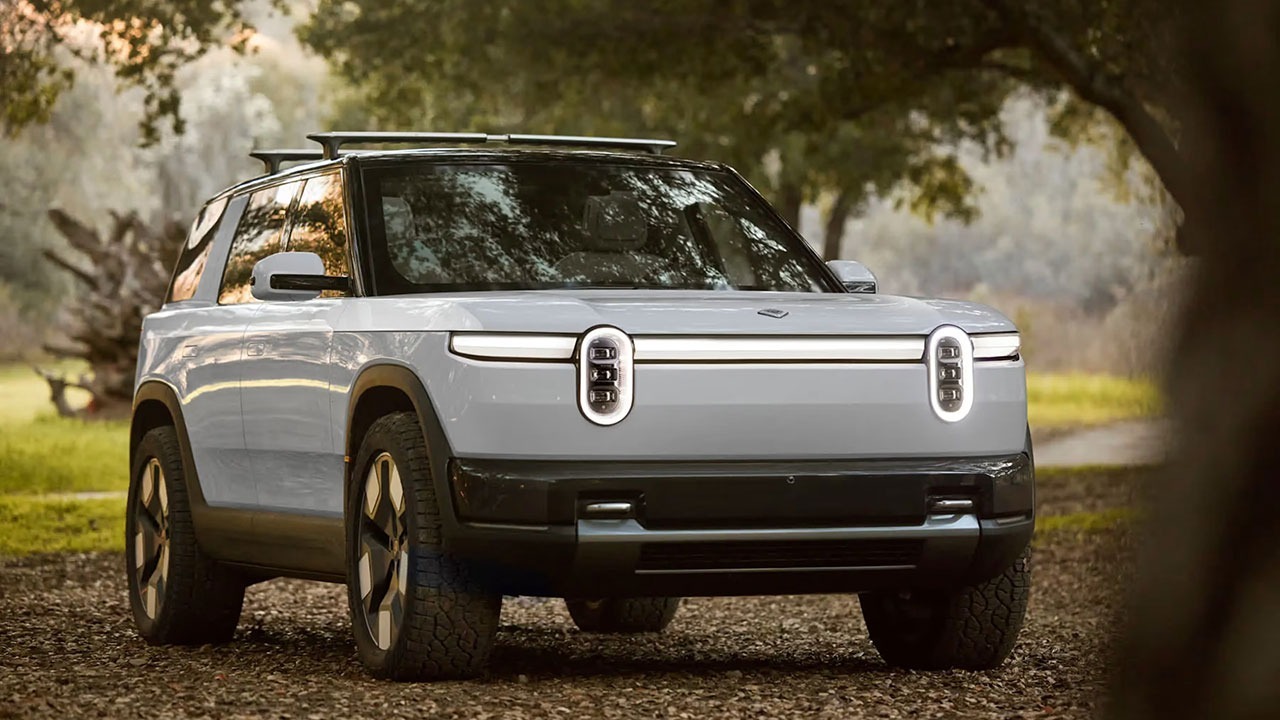
Rivian is not dabbling in lidar, it is reorganizing its autonomy roadmap around it. The company’s upcoming R2 and updated R1 models are built around an integrated lidar system that sits alongside cameras and radar, rather than relying on cameras alone. Instead of treating lidar as an optional sensor bolted on for premium trims, Rivian is positioning it as a core part of the perception stack that lets the vehicle understand distance, shape, and motion with far more precision than vision-only systems can reliably deliver in the real world, especially at highway speeds.
That shift is visible in the way Rivian’s next-generation hardware is described as a complete autonomy package, not a piecemeal upgrade. The R2 is set to arrive with a new sensor suite and autonomy platform that includes this integrated lidar, a move that Rivian itself frames as a major leap in capability compared with earlier camera-centric setups. The company’s own framing of the R2 as a step change in self-driving performance, supported by an integrated lidar system that works in concert with cameras and radar, underscores how central the technology has become to its strategy for long stretches of automated driving on real roads, not just controlled demos, as detailed in its upcoming R2 autonomy hardware.
Why cameras alone keep failing the real-world test
The core of the lidar debate is not about ideology, it is about physics. Cameras are powerful tools for recognizing lane markings, traffic lights, and signs, and they are essential for reading the visual cues human drivers rely on. But cameras are passive sensors that depend on ambient light and clear sightlines, and they struggle when glare, darkness, fog, or heavy rain degrade the image. Radar can help with distance and speed, yet it lacks the fine-grained spatial resolution needed to distinguish a plastic bag from a cyclist or a stalled vehicle from a shadow. Lidar, by contrast, actively measures distance using pulses of laser light, building a 3D map of the environment that is far less sensitive to lighting conditions.
That difference becomes painfully clear in poor weather or low-visibility scenarios. A recent video circulating among autonomy watchers shows how a lidar-equipped vehicle can “see” obstacles and road edges that are effectively invisible to cameras and radar when conditions deteriorate. The clip underscores a simple point: Cameras can help a car see the world just fine when the sun is out and the road is dry, but when conditions get bad, lidar is the sensor that keeps the vehicle grounded in reality. It is exactly the kind of real-world example that explains why a growing number of engineers and safety advocates argue that lidar is necessary for self-driving systems that are supposed to work in all conditions, a point vividly illustrated in a video showing Cameras and lidar side by side.
Rivian’s leadership is openly rejecting camera-only autonomy
Rivian’s executives are not hedging their bets in public. Chief executive RJ Scaringe has been explicit that lidar is not a nice-to-have but a requirement for the level of autonomy the company is targeting. In a recent discussion of the company’s strategy, he contrasted Rivian’s approach with rivals that are betting on Cameras Alone, arguing that lidar remains Still Key for Autonomy even as the cost of the hardware has fallen. Once, lidar units cost thousands of dollars and were confined to research vehicles; now, Scaringe notes, the price has dropped to a few hundred dollars per sensor, which fundamentally changes the economics of putting them into consumer vehicles at scale.
That public stance is especially pointed because it implicitly challenges the Tesla Bets on a camera-only path. While Tesla continues to argue that vision systems, backed by neural networks and massive data, can eventually match or exceed human perception, Rivian is aligning itself with a more conservative, sensor-rich philosophy that prioritizes redundancy and physical measurement. By stating plainly that lidar is Still Key for Autonomy and highlighting how Once prohibitively expensive hardware has become affordable enough to integrate widely, Scaringe is drawing a line between Rivian’s safety-first posture and the camera-only gamble, a distinction he laid out in detail in a recent interview captured in the piece titled Rivian CEO Says.
Inside Rivian’s new chips and autonomy brain
Hardware sensors are only as good as the computing platform that fuses their data, and Rivian is building that brain in-house. The company has developed its own artificial intelligence computer chip to power its autonomy stack, a move that gives it tighter control over performance, energy use, and long-term costs. That chip sits at the heart of what Rivian executives are calling the Rivian Autonomy Processor, or RAP1, a custom platform designed to handle the firehose of data from cameras, radar, and lidar while still fitting into the thermal and power constraints of a consumer EV.
RAP1 is not just about raw compute; it is about how that compute is applied to the messy edge cases that make self-driving hard. Execs describe the processor as a tool for tackling the “long tail” of rare but critical problem scenarios, from odd road geometry to unpredictable human behavior. By pairing a bespoke AI chip with a sensor suite that includes lidar, Rivian is trying to ensure that its vehicles can not only recognize common patterns but also adapt to unusual ones without losing track of their surroundings. That ambition was laid out when Execs unveiled the Rivian Autonomy Processor as “a custom” platform built specifically for autonomy, a milestone detailed in coverage of the company’s new large driving model and its bid to join the robotaxi race, where Execs introduced RAP1.
Universal Hands-Free and the path to higher automation
Rivian’s lidar strategy is not theoretical; it is already shaping features that drivers will use. A near-term software update is set to introduce what the company calls Universal Hands-Free driving, a system that allows hands-free operation on a wide network of roads rather than limiting it to a small set of pre-mapped highways. That kind of broad coverage depends on a robust perception stack that can handle varied lane markings, signage, and traffic patterns, which is where lidar’s precise depth mapping becomes a critical safety backstop when camera confidence drops.
The company frames Universal Hands-Free as a step toward higher levels of automation, not a final destination. By combining lidar, radar, and cameras with its new autonomy chips, Rivian is building a system that can gradually take on more of the driving task while still keeping a human in the loop for now. The presence of lidar in that mix is what allows the system to maintain a reliable understanding of the environment even when visibility is compromised or road conditions are inconsistent, a capability Rivian highlights as it rolls out Universal Hands-Free in a software update that pushes its vehicles toward higher levels of automation, as described in its announcement of Universal Hands Free.
How Rivian’s autonomy team frames lidar as a “no-brainer”
Inside Rivian, the people building the autonomy stack talk about lidar in strikingly blunt terms. The company’s autonomy chief has described lidar as “very affordable” and a “no-brainer” decision when weighed against the safety and capability it unlocks. That framing reflects a view that the cost curve has bent far enough that the marginal expense of adding lidar is small compared with the potential cost of perception failures in complex traffic or bad weather. In other words, the internal calculus is that not using lidar is the riskier bet.
That same autonomy leader has also emphasized that lidar complements, rather than replaces, other sensors like radar. By combining lidar’s precise 3D mapping with radar’s robustness in rain and snow and the semantic richness of camera images, Rivian is building a layered perception system that can cross-check its own understanding of the world. The fact that the autonomy chief is willing to call lidar “very affordable” and a “no-brainer” in public, while explicitly comparing it to a radar, signals a high degree of confidence that the technology is ready for mass deployment, a stance laid out in an interview where Rivian’s autonomy chief spelled out the economics.
Gen 2 hardware, R2 timing, and clearing up confusion
As Rivian’s plans have come into focus, some early fans and reservation holders have been confused about which vehicles get which sensors and when. The company has clarified that Rivian will launch R2 in early 2026 with Gen 2 autonomy hardware, and that this is the same autonomy stack currently shipping on its latest R1 vehicles. That means the integrated lidar system and associated compute platform are not being held back for a future, more expensive model; they are part of the mainstream product roadmap that will define Rivian’s lineup for the next several years.
That clarification matters because it shows Rivian is not treating lidar as a short-lived experiment or a limited pilot. By standardizing on Gen 2 autonomy hardware that includes lidar across both R1 and R2, the company is signaling that this sensor configuration is its baseline for the foreseeable future. It also helps explain why Rivian is investing in its own AI chips and autonomy processors: the company expects to support and upgrade this hardware stack over time, rather than swapping it out every model year. The details of that rollout, including the timing for R2 and the shared Gen 2 autonomy hardware between models, were laid out in a technical explainer aimed at clearing up the confusion around Rivian and Gen 2 lidar.
Building the stack in-house: AI chips, sensors, and robotaxi ambitions
Rivian’s lidar push is intertwined with a broader decision to own more of its autonomy stack. The company has developed its own artificial intelligence computer chip and is pairing it with lidar sensors on its upcoming R2 SUV models as it eyes participation in the robotaxi race. That combination of in-house compute and a rich sensor suite gives Rivian more control over latency, redundancy, and long-term software updates than it would have if it were relying entirely on off-the-shelf hardware. It also positions the company to tailor its algorithms specifically to the characteristics of its chosen sensors, including lidar’s dense point clouds.
The decision to integrate lidar into the R2 SUV while simultaneously unveiling a custom AI chip suggests Rivian sees autonomy as a core differentiator, not a bolt-on feature. By aligning its hardware roadmap with potential robotaxi applications, the company is effectively designing its consumer vehicles to be capable of fleet service in the future, even if regulatory and business models are still evolving. The fact that Rivian developed its own artificial intelligence computer chip and said it will add lidar sensors to upcoming R2 SUV models at a dedicated autonomy event in Palo Alto underscores how central this strategy has become, as detailed in coverage of how Rivian developed its own SUV sensor stack.
The community debate: engineers, enthusiasts, and lidar’s role
Outside Rivian’s official channels, the lidar conversation is playing out among engineers and early adopters who have followed the company for years. On enthusiast forums, a Well Known Member with the First Name Michael Joined Feb 26, 2019 has been dissecting RJ Scaringe’s recent interviews about lidar and autonomy. In one widely shared thread, that user, who has started 59 Threads, posted 108 Messages, and accumulated a Reaction score of 484, walks through Scaringe’s explanation of why lidar is essential for handling edge cases that cameras and radar alone might miss, such as complex urban intersections or unusual obstacles.
These community discussions matter because they translate executive-level strategy into the language of owners and prospective buyers. When technically literate fans echo Scaringe’s argument that lidar provides a safety margin that vision-only systems cannot match, it reinforces the idea that lidar is not just a marketing bullet point but a practical requirement for the kind of autonomy Rivian is promising. The detailed breakdowns on Rivian-focused forums, including the thread where a Well Known Member named Michael parses Scaringe’s comments about lidar and asks pointed questions like whether he would “jump off of a building,” show how deeply the lidar debate has penetrated the enthusiast base, as seen in the discussion titled Well Known Member analysis.
Rivian’s explicit break with Tesla’s camera-only philosophy
Perhaps the clearest sign that lidar is moving from optional to essential is the way Rivian is willing to publicly distance itself from Tesla’s approach. A Rivian spokesperson has said outright that lidar is necessary and that a camera-only system is not good enough for the level of safety and reliability the company is targeting. That is a rare instance of one automaker directly challenging another’s core autonomy philosophy, and it reflects a growing divide between companies that prioritize sensor redundancy and those that lean heavily on software to compensate for limited hardware inputs.
By stating that lidar is necessary and that cameras alone are not sufficient, Rivian is effectively arguing for a higher baseline of perception capability that could eventually influence regulators and safety standards. If one major automaker can show that lidar-equipped vehicles handle adverse conditions and edge cases more safely than camera-only competitors, it will become harder for regulators to justify allowing the latter to operate at the same level of automation on public roads. The spokesperson’s comments, delivered in an exclusive conversation that framed lidar as essential and Tesla’s cameras as not enough, were reported in detail in a piece where Rivian told The Drive exactly how it sees the trade-offs.
Cost, safety, and why regulators will eventually have to pick a side
The last remaining argument against lidar has always been cost, but that objection is eroding quickly. As RJ Scaringe and Rivian’s autonomy chief have both pointed out, lidar units that Once cost thousands of dollars now come in at a few hundred dollars per sensor, a price point that fits within the bill of materials for a modern EV packed with advanced driver assistance features. When executives describe lidar as “very affordable” and a “no-brainer,” they are signaling that the cost-benefit analysis has tipped decisively in favor of including it, especially when weighed against the potential liability of high-profile crashes involving perception failures.
From a regulatory perspective, that shift in economics changes the conversation. If lidar can be integrated into vehicles like the R2 and R1 at scale, and if those vehicles demonstrate measurably better performance in poor weather, complex traffic, and rare edge cases, it will be increasingly difficult for safety agencies to treat lidar as an optional luxury. Rivian’s decision to standardize lidar across its Gen 2 autonomy hardware, pair it with in-house AI chips like the Rivian Autonomy Processor, and roll it out in features such as Universal Hands-Free driving is effectively a live demonstration of what a lidar-first safety baseline looks like. As more data accumulates from these vehicles on real roads, the argument that lidar should be mandatory for higher levels of self-driving capability will only grow stronger, and Rivian’s current strategy suggests it intends to be on the leading edge of that shift rather than waiting for regulators to force its hand.
More from MorningOverview