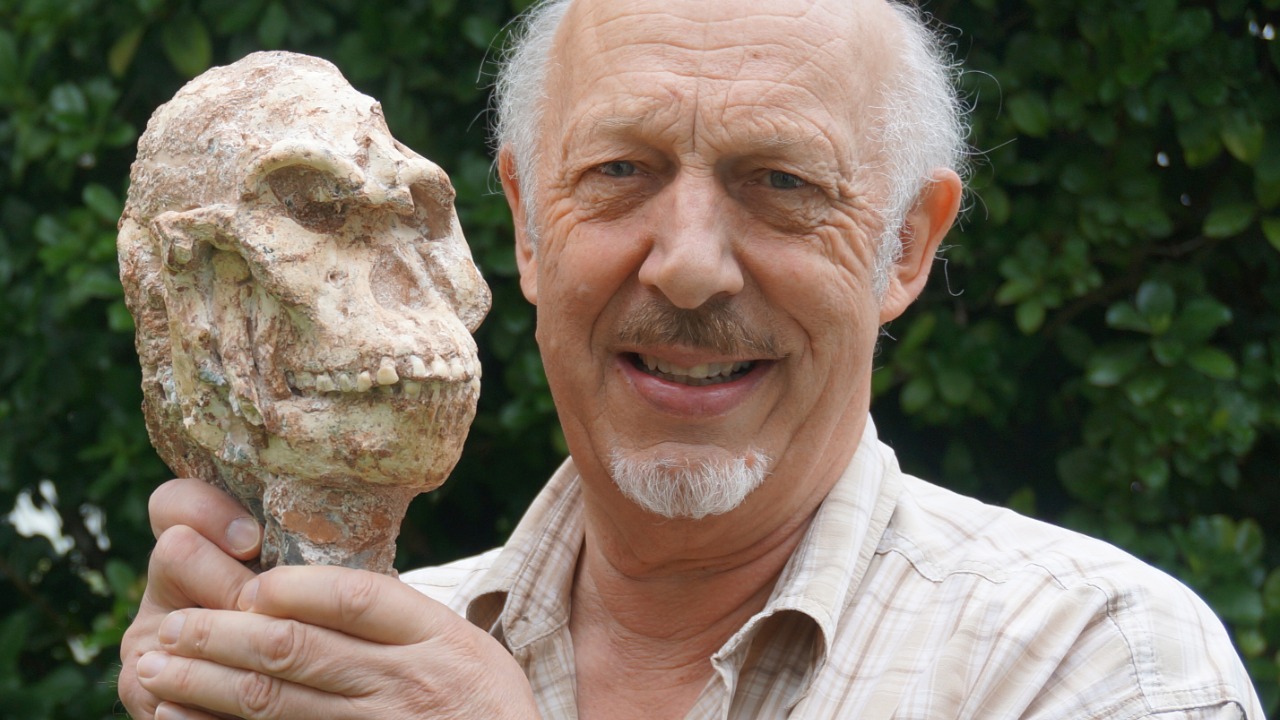

The ancient skeleton known as “Little Foot” has long been a celebrity in paleoanthropology, but a new wave of research is pushing it into even more provocative territory. Instead of fitting neatly into an existing species, the diminutive hominin may represent a previously unknown, humanlike branch of our family tree, one that forces scientists to redraw key parts of human evolution.
Researchers now argue that this remarkably complete fossil does not comfortably match any named Australopithecus species, suggesting it could stand as a distinct form of early human ancestor. If that holds, Little Foot would shift from being a spectacular specimen of a known group to a type specimen for a mystery lineage that complicates the story of how our own genus emerged.
Why Little Foot matters so much to human origins
Little Foot is not just another fossil, it is one of the most complete early hominin skeletons ever recovered, giving scientists an unusually holistic view of a single individual’s body plan. The skeleton preserves the skull, spine, limbs, hands, and feet in enough detail that researchers can compare subtle anatomical features across the entire body, rather than inferring behavior from a few isolated bones. That completeness is why several teams now describe Little Foot as one of the world’s most complete early human fossils and a crucial reference point for debates about how our ancestors walked, climbed, and adapted to changing landscapes.
Recent reporting underscores that Little Foot has become a benchmark specimen for early hominin anatomy, with researchers describing it as one of the world’s most complete hominin fossils and highlighting its importance for reconstructing the human family tree. That level of preservation allows scientists to test long standing assumptions about early Australopithecus, including how much time these ancestors spent in trees versus on the ground, and whether different populations were already diverging into separate species.
From cave curiosity to candidate new species
For years, Little Foot was treated as an intriguing but somewhat ambiguous member of the Australopithecus clan, often shoehorned into existing species labels for lack of a better option. The fossil was initially linked to forms such as Australopithecus prometheus or Australopithecus africanus, largely because it came from similar time periods and regions in southern Africa. That tidy classification is now under sustained pressure, as new analyses argue that the skeleton’s anatomy diverges too sharply from those templates to be explained as simple variation within a known species.
An international research team, led by specialists in early hominin anatomy, now contends that Little Foot does not belong to any previously described species and instead may represent a distinct human ancestor. A detailed release from La Trobe University describes how the iconic fossil may be a new type of human ancestor, while a separate synthesis of the work notes that the skeleton may represent a previously unknown species of Australopithecus described in the December issue of the American Journal of Biological Anthrop. Together, these accounts frame Little Foot not as an outlier within a familiar group, but as a potential anchor for a new branch of the hominin tree.
The scientists behind the new interpretation
At the center of the current rethink is Dr Jesse Martin of La Trobe University, who has emerged as one of the most prominent voices arguing that Little Foot should be treated as a distinct species. Dr Jesse Martin of La Trobe University has been quoted explaining that the fossil does not fit comfortably within the species Australopithecus prometheus, challenging earlier attempts to classify the skeleton under that name. His argument is that the combination of traits in the skull, teeth, and limbs is sufficiently unusual that it cannot be dismissed as normal variation within a known species.
In detailed coverage of the new research, Dr Jesse Martin of La Trobe University is described as leading work that suggests Little Foot could be a whole new branch of the human family tree, rather than a quirky member of an existing group. That perspective is echoed in reporting that highlights how the fossil, long associated with Australopithecus prometheus, now appears to diverge from both A. prometheus and A. africanus, a point underscored in analyses that argue it is more likely a previously unidentified species than either of those established taxa. One report notes that researchers now think it is demonstrably not the case that Little Foot belongs to A. prometheus or A. africanus, framing the fossil instead as a new human species that demands its own label.
What makes Little Foot anatomically different
The case for a new species rests on anatomy, not hype, and the details matter. Researchers point to features in Little Foot’s skull, teeth, and postcranial skeleton that do not match the patterns seen in classic Australopithecus africanus fossils from sites like Sterkfontein. Some of these differences involve the proportions of the limbs and the shape of the pelvis, which together hint at a distinctive mix of bipedal walking and climbing abilities. Others involve the structure of the hands and feet, which appear adapted both for grasping and for weight bearing in ways that do not line up neatly with previously described species.
Background work on Australopithecus has long emphasized that Little Foot sits in a time window of roughly 3.6 to 3.2 m years ago, when multiple hominin forms may have coexisted in Africa. Descriptions of Little Foot in that context highlight its distinctive tarsals and metatarsals, with “Tarsals and” other foot bones showing a blend of curved, grasping features and structures suited to upright walking. Those mixed traits, combined with a unique cranial profile, are now being used to argue that Little Foot’s anatomy is not just a variant of known Australopithecus species but a coherent, separate package of adaptations.
High tech tools and a 3.5 million year old puzzle
Modern technology has been critical in teasing out those anatomical nuances. Sophisticated scanning methods, including high resolution imaging of the skull and inner ear, have allowed researchers to peer inside the fossil without damaging it, revealing details of braincase shape, tooth roots, and balance organs that are invisible on the surface. These internal structures help scientists infer how Little Foot held its head, how it moved through its environment, and how its sensory systems compared with those of other early hominins.
A high profile project using advanced scanning technology has been described as shedding new light on human origins by analyzing Little Foot’s internal anatomy, with one video report emphasizing how such tools can shed light on human origins through non destructive imaging. Other coverage notes that the skeleton is roughly 3.5 million years old and that scientists have probed it in detail to test whether it truly belongs within Australopithecus or represents something new. One account describes the fossil as a 3.5m year old skeleton examined by scientists who now argue that this mysterious “Little Foot” creature could be a NEW humanlike species, a conclusion that rests heavily on the fine grained anatomical data these technologies provide.
A whole new member of our family tree
As the anatomical evidence has accumulated, several researchers have begun to frame Little Foot not just as a new species, but as a distinct branch of the hominin family tree that sits alongside, rather than within, familiar Australopithecus categories. In this view, Little Foot represents a lineage that split off early from other southern African hominins, preserving a unique combination of traits that did not directly lead to Homo but still shaped the broader evolutionary landscape. That interpretation helps explain why the fossil looks both recognizably humanlike and stubbornly different from better known species.
One synthesis of the new work describes Little Foot as potentially a Whole New Member of Our Family Tree After All, emphasizing that the fossil does not fit comfortably within A. prometheus or A. africanus. Another report from ANKARA notes that one of the world’s most complete early human fossils, known as Little Foot, may represent a previously unidentified human ancestor species distinct from both Australopithecus Prometheus and Australopithecus africanus, framing it as a previously unknown human ancestor species. Together, these accounts support the idea that Little Foot should be plotted as its own branch on the hominin tree, rather than squeezed into existing categories.
How Little Foot challenges the Australopithecus playbook
Reclassifying Little Foot has ripple effects far beyond a single fossil label, because Australopithecus has long served as a catch all category for early hominins that are clearly not apes but not yet Homo. If Little Foot falls outside that framework, it suggests that the diversity of early humanlike species in Africa was greater than many reconstructions have assumed. Instead of a simple sequence from Australopithecus to Homo, the picture becomes one of overlapping lineages, some of which may have experimented with different combinations of bipedalism, climbing, and diet without leaving direct descendants.
Several reports highlight this broader implication by stressing that Little Foot may be a previously unknown species of Australopithecus that does not belong to any known species, with one analysis describing it as One of the Most Complete Human Ancestor Fossils Called Little Foot May Be New Species. Another account notes that anatomically stable regions of the skeleton, such as parts of the skull and pelvis, provide key evidence that the fossil does not match previously described Australopithecus forms, and places Little Foot in a time range of roughly 3.5 to 2.8 million years in age, a period when multiple hominin species may have coexisted. That same report emphasizes that these anatomically stable regions provide crucial clues over a span of 2.8 million years, reinforcing the idea that Little Foot’s distinctiveness is not a trivial quirk but a sign of deeper evolutionary branching.
Global reactions and the shock of a new ancestor
The suggestion that Little Foot represents a new humanlike species has resonated far beyond specialist journals, in part because it challenges comfortable narratives about a linear march from ape to human. Coverage from different regions has framed the discovery as a shock to established thinking, with some accounts emphasizing how it reveals an unexpected new branch of human ancestors that had gone unrecognized despite decades of work at the same fossil sites. That sense of surprise reflects how deeply entrenched the old classifications had become, and how disruptive a single, well preserved skeleton can be when reinterpreted.
One widely shared report describes how They affirmed that Little foot does not belong to any known species but represents a completely new branch of the human family tree, characterizing the finding as a discovery that reveals a new branch of human ancestors and reshapes understanding of human history and civilization. That account notes that They affirmed that Little foot stands apart from previously described species, underscoring the global sense that this fossil has forced a major rethink. Another account, framed in more popular language, calls the skeleton a mysterious “Little Foot” creature that could be a new humanlike species, capturing the mix of scientific excitement and public fascination that often accompanies big shifts in human origins research.
Rewriting the story of early hominins in Africa
If Little Foot is indeed a separate species, it adds weight to the idea that early hominins in Africa were experimenting with multiple evolutionary strategies at the same time. Instead of a single, dominant Australopithecus lineage gradually giving rise to Homo, the fossil record would include several parallel branches, some of which combined tree climbing with upright walking in different ways. Little Foot’s distinctive mix of features, from its tarsals and metatarsals to its cranial shape, suggests that one such branch may have been particularly well adapted to a mosaic environment of forests and open areas, even if it did not ultimately lead directly to modern humans.
That more complex picture is reinforced by historical syntheses of Australopithecus research, which describe Little Foot as characterized by specific tarsals and curved hand and foot bones that hint at a unique locomotor repertoire. The chapter on Australopithecus that discusses Little Foot, Prometheus, and Africa notes how these skeletal details set the fossil apart from other specimens, even before the latest reclassification push. By elevating those differences from curiosities to defining traits of a new species, the current research effectively rewrites the early chapters of hominin evolution, turning what once looked like a narrow path into a branching network of possibilities.
Why this debate will not be settled quickly
Despite the bold claims, the argument over Little Foot’s status is unlikely to be resolved overnight. Species definitions in paleoanthropology are notoriously contentious, because researchers must infer biological boundaries from fragmentary fossils rather than from living populations. Some specialists will almost certainly argue that Little Foot’s unusual traits fall within the expected range of variation for Australopithecus, or that the fossil represents a regional variant rather than a full fledged species. Others will push for a formal new species name, backed by the detailed anatomical and chronological evidence now on the table.
What is clear already is that Little Foot has forced a reexamination of long standing assumptions about early human evolution, and that process is healthy for the field. By combining high resolution imaging, comparative anatomy, and fresh theoretical perspectives, researchers have turned a familiar fossil into a catalyst for new questions about how many humanlike species once walked the Earth and how they interacted. As one summary of the work puts it, the fossil is now seen as a remarkable specimen from South Africa that may be a new species of Australopithecus, with the research described in a paper that anchors its claims in detailed anatomical analysis and careful dating. That paper, highlighted in coverage of a remarkable fossil from South Africa, ensures that the debate over Little Foot’s identity will unfold in the pages of technical journals as well as in public facing reports.
Supporting sources: Little Foot hominin fossil may be new species of human ancestor.
More from MorningOverview