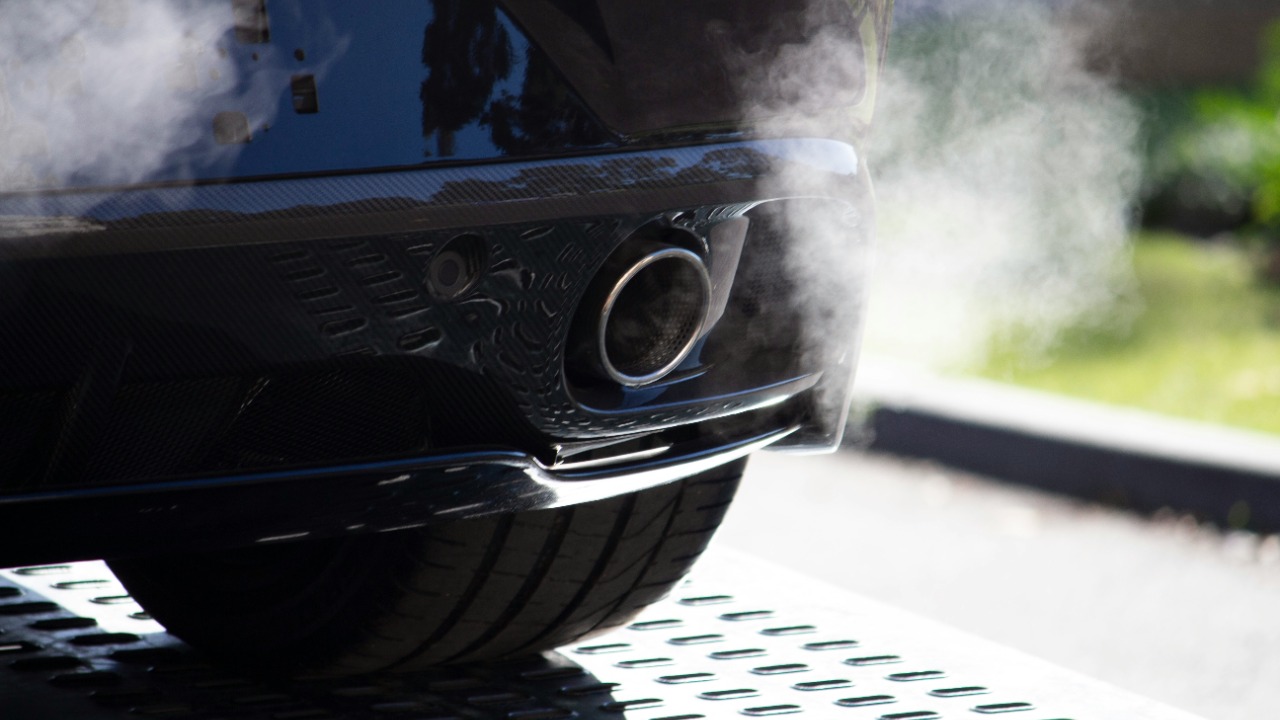

Across the United States, the rules for checking tailpipe pollution are quietly shifting, even as climate targets grow more ambitious and electric vehicles grab headlines. States are carving out exemptions for older cars, tightening standards on newer ones, and in some cases scrapping safety inspections while keeping emissions checks in place. The debate over whether it still makes sense to test aging vehicles is no longer theoretical, it is playing out in statehouses, inspection bays, and classic-car garages.
At the center of that debate is a simple tension: older cars pollute more per mile, but they are driven far less and already make up a shrinking share of the fleet. I set out to examine whether emissions testing these vehicles still delivers meaningful air-quality gains, or whether regulators are clinging to a system that has not fully caught up with how and what Americans drive today.
How emissions testing became a moving target
Modern emissions programs were built for an era when carburetors, leaded fuel, and failing catalytic converters were routine, and when a large share of daily commuters drove vehicles that would now count as “old.” Today, the landscape looks very different, with cleaner engines, onboard diagnostics, and a growing number of hybrids and EVs, yet the basic ritual of periodic testing still defines vehicle ownership in places like California and other populous states. The question is not whether emissions checks ever worked, but whether the current mix of rules is still calibrated to where the pollution is coming from.
States have responded with a patchwork of exemptions and targeted requirements that increasingly distinguish between vehicle ages, fuel types, and locations. In California, for example, the Department of Motor Vehicles explains that routine smog inspections are still required for most gasoline cars at registration or renewal, but the agency also lists specific carve-outs for certain model years and technologies. Other states, including Texas, Colorado, Illinois, Wisconsin, and New York, have built their own systems that reflect local air-quality challenges and federal requirements, which is why a car that passes easily in one jurisdiction can still run into trouble across a state line.
What the rules actually say about old cars
To understand whether testing older vehicles still matters, it helps to look closely at how states define “old” and what they do about it. In California, the DMV’s smog program spells out that a vehicle does not need a test if it is a gasoline-powered car from model year 1975 or older, or if it is a newer plug-in hybrid or fully electric model that falls under specific exemptions, while diesel vehicles face their own age and weight thresholds under the same smog inspection rules. That structure effectively treats pre-1976 cars as permanent outliers, while keeping the bulk of the late twentieth century fleet under periodic scrutiny.
Other states lean on rolling age cutoffs that move forward every year. Georgia’s emissions program, branded as Georgia’s Clean Air Force, notes in its general frequently asked questions that only certain model years in designated metro counties must test, and that some vehicles are exempt based on age, fuel type, or usage. A more detailed explanation clarifies that for registration in 2025, the requirement covers 2023 and newer model year vehicles on one end of the spectrum, while vehicles that are 25 model years or older fall into an exempt category, a point spelled out under the word Additionally in the program’s guidance.
Why regulators started carving out exemptions
Exemptions for older vehicles did not appear out of thin air, they reflect a growing recognition that a small number of hobby cars and low-mileage antiques are not the main drivers of urban smog. In North Carolina, for instance, the Department of Transportation announced that emissions inspections would no longer apply to vehicles that are at least 20 years old, adopting a rolling rule that means a 1999 model would have been exempt starting in 2019, as described in the state’s notice titled Emissions Inspections Exempts 20-Year-Old Vehicles Starting Dec. 1. That change was framed as a way to focus resources on newer, more numerous cars where inspection failures would yield bigger air-quality gains.
Insurance and legal guidance echo that logic. One consumer explainer on emissions and coverage notes that some states excuse vehicles 25 model years or older from inspection requirements, and that very old cars are often driven so infrequently that they are not required to test at all, a point captured in the phrase Very old cars in that guidance. Classic-car finance specialists make a similar argument, explaining that vehicles registered as historical or collector cars are often permanently exempt from routine testing because they are used sparingly, a point spelled out in a guide titled Your classic car and fuel emission testing.
The science of aging engines and real-world pollution
Even as exemptions expand, engineers warn that age still matters for emissions performance. Technical analysis from Ricardo describes how Old vehicles tend to have higher emissions because their exhaust control systems deteriorate over time, especially when maintenance is deferred. By linking mileage data from periodic inspections, such as the MOT tests used in the United Kingdom, to emissions measurements, researchers have been able to show that deterioration is not just theoretical, it shows up in real-world readings as catalysts age and sensors drift out of spec.
That technical backdrop helps explain why some older cars struggle to meet modern standards. A separate overview of regulatory hurdles notes that Older vehicles often struggle to meet 50 state emissions standards because wear and tear on components like catalytic converters and oxygen sensors means they no longer meet federal or state-specific requirements. That does not mean every aging sedan is a gross polluter, but it does underscore why regulators are reluctant to simply wave away testing for entire swaths of the fleet without some guardrails.
Do older cars really always fail?
For drivers who own a 1990s pickup or an early-2000s compact, the fear is often less about policy and more about whether their car will pass at all. A detailed explainer titled Do Older Cars Always Fail Emissions Tests tackles that anxiety head-on, noting that Older vehicles are often perceived as automatic failures when it comes to emissions checks, but that the reality is more nuanced. The key variable is condition, not just age, and a well-maintained older car with a healthy catalytic converter and intact fuel system can still meet its original standards.
On the ground, inspection technicians and online communities echo that message. In one discussion about New York’s 25-year rule, a commenter points out that Each emissions inspection for gasoline-powered vehicles confirms the presence and connection of the vehicle’s required components, highlighting that inspectors are looking for missing or tampered parts as much as tailpipe numbers, a point captured in the phrase Each emissions inspection. That mix of visual checks and diagnostic scans means an older car that has been modified or neglected is far more likely to fail than one that has simply accumulated years.
Patchwork policies from California to Texas and beyond
The policy map for emissions testing is anything but uniform, and the differences are especially stark when comparing coastal states to parts of the South and Midwest. In California, lawmakers are now debating whether to exempt pre-1981 cars from smog testing, a move that would shift the current fixed cutoff at 1976 that has been in place for years. Coverage of that proposal notes that Most states have a rolling cutoff for cars of a certain age that exempt them from smog testing, but the Republic of Ca has frozen that number at 1976, a detail highlighted in the phrase Most states. That static date has long frustrated classic-car owners who argue that their vehicles are being treated more harshly than similar-age cars elsewhere.
In Texas, the conversation has taken a different turn. A new law has eliminated annual safety inspections for non-commercial vehicles starting in 2025, but reporting from Austin makes clear that the 17 Texas counties that require annual emissions tests will continue to do so regardless of the change, a point spelled out in a local explainer on how Texas drivers are affected. A separate breakdown from a station in AUSTIN, Texas notes that As of January 2025, drivers in those local counties still require an emissions test to renew registration, even as their counterparts elsewhere in the state skip the inspection lane entirely, a distinction highlighted under the phrase As of January.
Urban hot spots and federal pressure
Federal law still looms large over local decisions, especially in metro areas that struggle to meet ozone and particulate standards. A short video explainer aimed at drivers in Bell County spells out that In 2025, Texas drivers will no longer need annual safety inspections, but emissions tests will still be required in 17 emissions counties in Texas because federal law mandates those checks in regions that do not meet air-quality targets, a point captured in the phrase Texas drivers. That same guidance notes that fully electric vehicles are exempt, underscoring how regulators are trying to focus on the engines that actually burn fuel.
Similar dynamics play out in other urban centers. In Houston, for example, drivers in surrounding counties remain subject to emissions checks because the region has long struggled with ozone levels tied to both traffic and industrial activity. In the Midwest, The Illinois EPA describes how its vehicle emissions inspection program plays an important role in improving air quality and public health in Illi, emphasizing that the agency’s focus is on high-population corridors where testing yields the biggest payoff, a point spelled out in the description of The Illinois EPA program.
How different states treat diagnostics and model years
Beyond age cutoffs, the technology of testing has shifted from tailpipe probes to computer ports, especially for vehicles built after the mid-1990s. Wisconsin’s program, for instance, explains that What Vehicles require testing depends on where they are kept, and that Vehicles that are 1996 and newer will receive an OBD inspection that checks the onboard diagnostics system rather than measuring exhaust directly, a detail laid out in the What Vehicles inspection elements. That approach allows inspectors to spot failing sensors and emissions components before they produce visible smoke, and it also makes it easier to standardize tests across thousands of vehicles.
Colorado takes a similarly structured approach, but with its own age brackets. The state’s Gas Emissions Requirements explain that 1982 and newer vehicles must undergo periodic inspections, with fees and test types that vary by model year and location. For drivers, these systems often blur into the broader world of automotive diagnostics, where Another critical diagnostic test is the emissions test that most states require to ensure a car is not releasing excessive pollutants and that it meets the state’s requirements, as one repair-focused guide notes under the phrase Another critical diagnostic test.
Classic cars, culture wars, and the Jay Leno factor
As regulators fine-tune rules, classic-car owners have become a vocal constituency arguing that their vehicles are being overregulated relative to their impact. A recent bill heavily promoted by Jay Leno would exempt certain older vehicles from emissions testing, with coverage noting that depending on where you live, cars more than 35 years old could be spared routine checks under the proposal, a detail highlighted in the phrase Dec and Jay Leno. Supporters frame it as a common-sense adjustment that recognizes how rarely many of these vehicles are driven, while critics worry it could open loopholes for heavily modified engines that see more road time than their “collector” label suggests.
The debate is particularly intense in California, where a proposed classic-car smog check change has sparked heated arguments among enthusiasts and environmental advocates. In one discussion, a commenter responds to criticism by saying Mar 6, 2025 and Yes, you are wrong about them being a poor tax, while another adds Yea but this law ties the exertion to classic status, capturing the tension between fairness and enforcement in a thread about Mar and Yes. Those exchanges underscore how emissions rules have become a proxy fight over who gets to define car culture in an era of tightening climate policy.
Georgia’s targeted approach and senior carve-outs
Georgia offers a glimpse of how states are trying to balance air-quality goals with demographic and geographic nuance. A legal explainer titled Georgia Car Inspection Requirements, Costs, How, Prepare Although Georgia does not demand an annual inspection on the state level, it notes that emissions checks are required in certain metro counties, and that drivers seeking exemptions must apply through a designated center. That structure allows the state to focus on high-traffic corridors around Atlanta while leaving rural areas with lighter-touch rules.
Within that framework, Georgia’s Clean Air Force has also created a Senior Exemption for older motorists who meet specific criteria. A public information video explains that Georgia’s Clean Air Force, the state’s emissions testing program, offers a Georgia Clean Air Force Senior Exemption for qualified motorists, directing viewers to an online portal to learn more and apply. That kind of targeted relief suggests regulators are aware of the financial and logistical burden that repeated testing can place on people who may drive infrequently but still rely on older vehicles.
Selling, registering, and living with an older car
Even when a car is exempt from routine testing, emissions rules can resurface at key moments like sales and registration changes. In California, for example, guidance on selling a used vehicle explains that California’s Smog Check Requirements When you go to the California DMV website and start looking at all the different smog information, you will find that a valid test is generally required when ownership changes, even if the car has recently passed, a point laid out in a consumer guide on California Smog Check Requirements When selling. The rationale is that a fresh certificate protects the buyer and keeps the fleet from backsliding as vehicles change hands.
In practice, that means owners of older cars must navigate a thicket of overlapping rules that vary by state, county, and even city. A video segment on changing inspection rules in Texas notes that Jan 5, 2025 brought the end of statewide safety inspections, but that it may not remove the need for emissions checks in certain counties, a nuance highlighted in coverage of Jan and Texas vehicle requirements. For drivers, the practical takeaway is simple but often overlooked: before buying, selling, or registering an older car, it is essential to check the specific emissions obligations tied to its model year and location, rather than assuming an exemption applies everywhere.
So, does testing old cars still matter?
When I weigh the evidence, the case for blanket emissions testing of every aging vehicle looks weaker than it did a generation ago, but the case for targeted oversight remains strong. Technical research shows that aging exhaust systems do deteriorate, and that Older vehicles often struggle to meet modern standards without proper maintenance, yet policy experiments in places like North Carolina and Georgia suggest that focusing on high-mileage regions and newer model years can deliver cleaner air without forcing every 30-year-old weekend cruiser through the same hoops. The key is aligning rules with where the pollution actually comes from, rather than treating age as the only proxy.
At the same time, the patchwork of exemptions, senior carve-outs, and classic-car bills promoted by figures like Jay Leno risks creating confusion and loopholes if not carefully designed. Programs in states from Colorado to Wisconsin and Illinois show that emissions testing can still play a vital role in protecting public health when it is paired with modern diagnostics and focused on the parts of the fleet that log the most miles. The real test for policymakers now is whether they can keep refining these systems so that the drivers who shoulder the burden are the ones whose vehicles still meaningfully shape the air everyone breathes.
More from MorningOverview