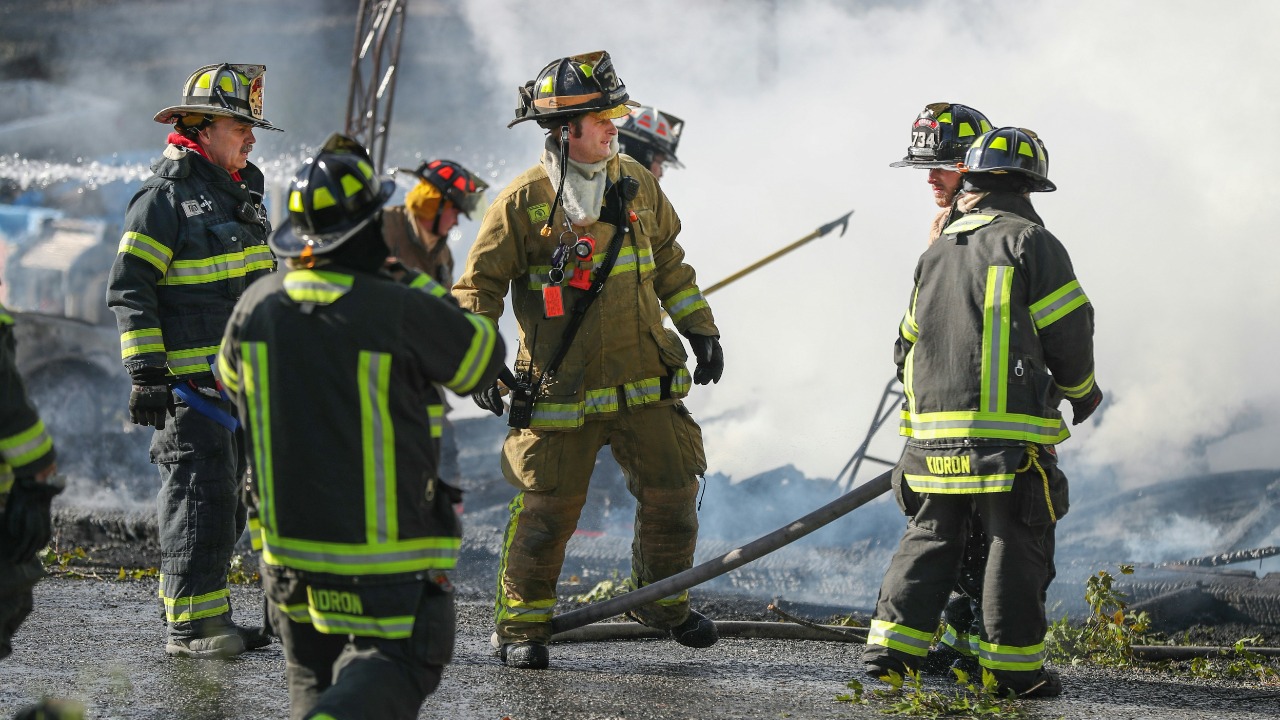

Firefighters suit up to escape flames, but mounting evidence suggests their own protective gear can quietly expose them to chemicals tied to cancer, hormone disruption, and other long‑term health problems. The same materials that keep water and heat at bay are now under scrutiny for harboring “forever chemicals” and other compounds that may linger in the body for years.
As researchers, regulators, and fire service leaders dig into what is inside turnout coats, pants, and liners, they are uncovering a complex mix of per‑ and polyfluoroalkyl substances (PFAS) and flame retardants that can migrate from fabric to skin and into blood. I am examining how that science is reshaping lawsuits, state policy, and the daily choices Firefighters make about the gear they rely on to stay alive.
Why firefighter cancer rates are drawing new scrutiny to gear
For years, Firefighters have been told that higher cancer rates were simply the cost of breathing smoke and toxic combustion products on the job. Now, attention is shifting to the possibility that the hazard is not only in the air but also woven into the fabric they wear. Studies summarized by the PFAS Exchange report that Firefighters experience elevated cancer incidence compared with the general population, a pattern that has pushed researchers to look closely at chronic exposures from turnout gear and station environments rather than just fireground smoke.
That shift in focus is reinforced by occupational health guidance that lists firefighting as a PFAS‑linked job category, with federal experts warning that Working in such roles can increase the risk of reproductive effects, immune changes, and kidney and testicular cancers. A concise overview from the PFAS Exchange notes that these “forever chemicals” are used in protective clothing to repel water and oil, which means Firefighters can be exposed not only during dramatic emergencies but also during routine training, gear handling, and storage in firehouses, compounding their lifetime dose of contaminants documented in Studies.
PFAS in turnout gear and the lawsuits forcing the issue
The legal system is now amplifying what scientists have been warning about in technical papers. Across the country, Firefighters are filing a growing number of complaints in the PFAS Firefighter Gear Lawsuit, arguing that manufacturers knew or should have known that the PFAS used to waterproof and oil‑proof turnout gear could accumulate in their bodies and contribute to cancer. Plaintiffs describe years of wearing the same coats and pants, often while sweating heavily, and then learning that the very textiles designed to protect them may have been a hidden source of exposure, a narrative echoed in detailed summaries of the Firefighter Gear Lawsuit.
Those claims lean heavily on emerging research that has detected PFAS in both the outer shells and moisture barriers of turnout ensembles, as well as in the blood of Firefighters who use them. Legal filings cite multiple peer‑reviewed studies that have found PFAS migrating from gear into the surrounding environment and onto skin, with one analysis of blood samples suggesting that Firefighters carry higher levels of certain compounds than non‑fire service workers, although more work is needed to confirm a direct causal link. Summaries of the litigation point to a 2023 NIST Study that documented PFAS present in turnout gear and a 2020 investigation that tied these exposures to elevated cancer and other health risks, details that are laid out in depth in the PFAS Firefighter Gear Lawsuit overview.
What the science says about PFAS exposure from gear
Laboratory work is starting to fill in the gaps between suspicion and proof. Researchers examining turnout gear have found that PFAS are not just present as trace contaminants but can be embedded in key layers that face repeated mechanical stress, heat, and moisture. A focused section on “Studies Examining PFAS and Turnout Gear” describes how scientists have measured these chemicals in fabric samples, then linked them to elevated PFAS levels in Firefighters’ blood, suggesting that the gear itself is a meaningful contributor to overall exposure rather than a negligible background source, as detailed in the Studies Examining PFAS section.
Federal toxicologists have already linked PFAS exposure in the general population to a long list of health outcomes, including decreased fertility, developmental effects in children, interference with hormones, immune system impacts, and increased risk of prostate, kidney, and testicular cancers. When those broad findings are combined with occupation‑specific data showing that Firefighters can encounter PFAS through their gear, contaminated dust in stations, and firefighting foams, the concern becomes less theoretical and more like a chronic occupational hazard. Legal and medical analyses aimed at Firefighters underscore that these compounds are nicknamed “forever chemicals” because they do not readily break down in the environment or the body, a point that underpins the Understanding the Growing Concern About PFAS Exposure guidance.
How wear, tear, and aging gear can increase chemical release
Even if a new set of turnout gear starts with PFAS locked deep in its fibers, that does not mean those chemicals stay put over time. A NIST analysis found that Textiles used to manufacture the protective coats and pants worn by Firefighters often contain measurable amounts of PFAS, and that simulated abrasion, flexing, and laundering can increase the amount of material that sheds from the fabric. In other words, the more a coat is bent, scraped, and washed, the more likely it is to release PFAS‑laden particles or residues, a pattern documented in detail in the Textiles study.
Reporting on Firefighters’ experiences with aging gear reinforces that lab finding with real‑world context. One account of a recent Study describes how older coats and pants, especially those that have seen years of structure fires and training burns, can show higher PFAS release potential than newer items, raising questions about replacement cycles and storage practices. Firefighters in that coverage are portrayed as heroes who already accept the acute dangers of their work, only to learn that the gear they have trusted for years may become more hazardous as it accumulates wear, heat, and contamination, a concern captured in a detailed look at how Firefighters face increased PFAS risks as their protective gear ages.
Beyond PFAS: flame retardants and other chemicals in “PFAS‑free” gear
As pressure mounts to remove PFAS from turnout gear, manufacturers are experimenting with alternative chemistries, but early research suggests that the replacements may carry their own risks. A Study from the Schools Nicholas School of the Environment highlights potentially hazardous flame retardants in Firefighter clothing, including compounds associated with thyroid disease and neurodevelopmental problems in other populations. That work, which examined multiple layers of gear, found that even as PFAS are being phased out, the chemical burden is shifting rather than disappearing, a dynamic described in a report that notes the Study highlights potentially hazardous flame retardants.
Separate testing of turnout ensembles marketed as “PFAS‑free” has detected other industrial chemicals in the thermal liner and moisture barrier, the very layers that sit closest to a Firefighter’s skin. Researchers say this matters because those inner components can be soaked with sweat and exposed to high heat, conditions that may increase the transfer of chemicals into the body. A detailed warning aimed at the fire service community explains that gear labeled as free of one class of contaminants can still contain substances linked to endocrine disruption or organ toxicity, underscoring that Firefighters need transparency about all additives, not just PFAS, as emphasized in a report that Researchers say PFAS‑free gear may contain other harmful chemicals.
What PFAS and other chemicals can do inside the body
The health concerns around Firefighter gear are not abstract, they are grounded in a growing body of toxicology and epidemiology. Federal assessments of PFAS warn that chronic exposure can lead to reproductive effects such as decreased fertility, developmental delays in children, interference with hormones, changes in cholesterol, and increased risk of prostate, kidney, and testicular cancers. Legal and medical briefings tailored to Firefighters add that these chemicals have been associated with thyroid cancer and thyroid disorders, liver damage, asthma, and other complications, a list that appears in guidance on Turnout Gear Injuries For Firefighters.
Newer research is drilling down to the genetic level. Scientists at a cancer center in Arizona have reported that PFAS exposure in Firefighters can alter the expression of certain genes involved in immune function and cancer pathways, suggesting a biological mechanism that may help explain why this workforce sees higher cancer rates. That work, described in a report titled Jul, New Research Uncovers Gene Impacts of PFAS Exposure In Firefighters, notes that these gene changes may be one reason why Firefighters are particularly vulnerable to the long‑term consequences of PFAS, adding weight to calls for more aggressive exposure reduction, as outlined in the New findings.
Firefighters caught between safety needs and chemical risks
On the ground, Firefighters and department leaders are trying to navigate a no‑win choice: wear full protective gear and accept potential chemical exposure, or scale back and risk burns and acute injuries. Reporting from Rhode Island describes how some fire departments concerned about cancer risks are buying alternative gear and trying to avoid PFAS‑treated products, yet they find that avoiding them is not always easy because Companies often do not list the chemicals used in their fabrics. One chief quoted in that coverage likens the situation to “getting it from every angle,” with Firefighters facing contaminants in foam, gear, and even station dust, a sentiment captured in an account that notes how Avoiding PFAS is difficult.
Legal advocates and Firefighter health organizations are urging departments to adopt practical steps while the science and regulations catch up. That includes limiting unnecessary wear of structural turnout gear in non‑emergency settings, improving ventilation and cleaning in gear storage areas, and pushing vendors for full chemical disclosure. Advocacy pieces focused on PFAS and Firefighter Cancer emphasize that Firefighters face significant occupational hazards from both fires and their equipment, and argue that understanding the link and risks is essential to negotiating better contracts, medical monitoring, and workers’ compensation coverage, themes that run through a detailed explainer on PFAS, Firefighter Cancer, Understanding the Link and Risks.
New findings on flame retardants and hidden chemicals in gear
While PFAS have dominated headlines, recent lab work is shining a light on other compounds that may be just as concerning. An analysis of turnout gear reported that Each set of turnout gear tested showed evidence of brominated flame retardants at extractable levels generally greater than those of PFAS, raising questions about whether Firefighters are trading one class of persistent chemicals for another. These brominated substances have been linked in other research to endocrine disruption and neurodevelopmental issues, and their presence in high‑contact gear components suggests that Firefighters may be absorbing a cocktail of contaminants every time they respond to a call, a finding summarized in a report that notes Each set of gear contained potentially hazardous flame retardants.
Another study, highlighted in fire service media, warns that even when PFAS are removed, the thermal liner and moisture barrier can still contain other harmful chemicals that become more mobile under high heat and heavy sweating. Researchers caution that these conditions, which are routine on a fireground, may drive chemicals from the fabric into a Firefighter’s skin, especially in areas where gear fits tightly or where skin is already irritated. The report underscores that illustration created by AI or marketing labels cannot substitute for rigorous chemical testing, and it urges Firefighters to treat “PFAS‑free” claims with skepticism until full ingredient lists and independent data are available, a message reinforced in coverage that notes how Share To high heat and heavy sweating can increase exposure.
Policy shifts and early bans on PFAS in firefighter gear
Regulators are beginning to respond to the mounting evidence and pressure from Firefighters and environmental groups. Massachusetts and Connecticut are the first states in the US to prohibit the presence of PFAS in Firefighters’ protective gear, a significant move given that these chemicals have long been prized for their water and heat resistant properties. The bans signal a recognition that the health costs of continued PFAS use may outweigh the performance benefits, and they are likely to push manufacturers to accelerate research into safer alternatives, as described in a policy update noting that Massachusetts and Connecticut have enacted PFAS bans.
Internationally and at the federal level, discussions are underway about how to regulate PFAS as a class rather than one compound at a time, a shift that could have sweeping implications for protective clothing, foams, and consumer products. Firefighter advocacy groups are pushing for standards that not only restrict PFAS but also require full disclosure and testing of replacement chemistries, to avoid repeating the cycle of regrettable substitutions. Environmental health commentators argue that the experience with turnout gear should serve as a cautionary tale about embedding persistent chemicals into products that sit directly on the body, a theme echoed in scientific coverage that warns Firefighter Gear May Hide Chemicals Linked to serious health risks.
More from MorningOverview