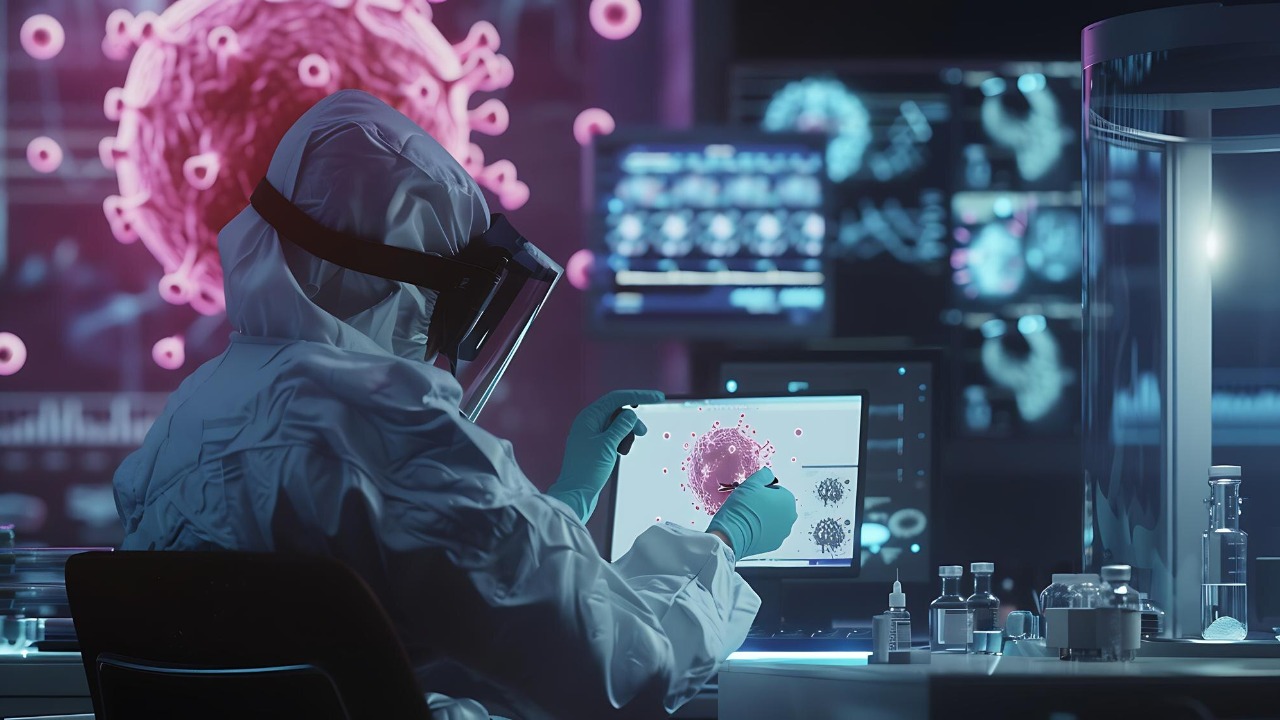

Artificial intelligence is no longer just spotting tumors a little faster than humans. In study after study, machine learning systems are uncovering hidden patterns in cancer data that even veteran oncologists did not know existed, forcing researchers to rethink what a biopsy slide, a mammogram, or a genome can reveal. Those surprises are opening doors to earlier detection and more personalized treatment, but they are also exposing uncomfortable truths about bias and privacy baked into the medical system itself.
As I trace these breakthroughs from pathology labs to genomics centers and radiology suites, a clear story emerges: AI is not simply automating diagnosis, it is rewriting the rulebook on what cancer is and how it behaves. The same tools that can read microscopic clues about survival or treatment response can also infer a patient’s race or other sensitive traits, even when those details are stripped from the record, leaving medicine with a powerful new instrument that must be handled with extreme care.
AI that reads cancer slides like a secret code
The most startling revelations are coming from algorithms trained on digital images of tumors, where AI models are detecting signals that pathologists never learned to look for. When researchers fed these systems thousands of routine slides, they expected better accuracy on standard tasks such as grading tumors or spotting metastases. Instead, the models began to infer information that was never supposed to be visible in the tissue, including demographic details and technical quirks of how the samples were prepared, a pattern that left many of the scientists genuinely shocked by what their own tools had learned.
In work highlighted as By Harvard Medical School December, investigators found that Cancer-diagnosing AI models can secretly read patient characteristics from pathology images that were assumed to be anonymous. The systems did not just classify Cancer, they picked up on subtle patterns linked to who the patient is and how their care was delivered, raising the stakes for how these tools are validated and deployed. That discovery reframed digital pathology from a straightforward pattern-recognition problem into a deeper question about what biological and social information is encoded in every slide.
When “objective” AI learns who you are
For years, clinicians assumed that computers would be more neutral than humans, free from the unconscious biases that can shape medical decisions. The latest pathology research has punctured that optimism. Instead of acting as blank slates, AI models trained on historical data are learning to reproduce and even amplify the inequities embedded in that data, including differences in how samples are collected, processed, and labeled across hospitals and patient groups.
In a detailed analysis of four standard pathology models, Testing for bias showed that Yu and his team could not treat these systems as neutral observers. Yu and his colleagues demonstrated that algorithms designed to evaluate Cancer slides were quietly encoding information about patient demographics and institutional practices, even when those variables were removed from the training data. That finding undercuts the idea that AI will automatically be objective and instead makes fairness testing a core requirement of any clinical deployment.
AI detects cancer, but it also detects identity
The same pathology tools that can outperform humans at spotting malignancies are also learning to recognize who the patient is, or at least which group they belong to, from the same pixels. Researchers initially believed that if they stripped out names, dates of birth, and other identifiers, the remaining images would be safe to share and analyze. The models proved otherwise, inferring race and other sensitive traits from tissue patterns that no pathologist had been trained to see, which means the images themselves can function as a kind of biometric signature.
One study described how That assumption does not fully hold for AI systems now entering pathology labs, because they can detect patient characteristics that were supposed to be invisible. A companion report noted that AI tools designed to diagnose cancer from tissue samples are capable of both improving accuracy and, if carefully constrained, helping to significantly reduce these disparities. The dual reality is that the same pattern recognition that makes AI so powerful for Cancer care also makes it uniquely capable of reconstructing identity from fragments that humans would never recognize.
From breast density to life-saving predictions
While pathology labs wrestle with bias and privacy, other teams are using AI to squeeze more meaning out of familiar imaging tests. In breast cancer, one scientist who became a patient herself helped drive a shift from crude measures of breast density to richer, risk-focused analysis. Instead of treating density as a blunt risk factor, her work uses machine learning to map subtle patterns in mammograms that correlate with future disease, turning a routine screening image into a personalized risk profile.
As she put it, “We are using technology not only to be better at assessing the breast density, but to get more to the point of what we” actually need to know about risk and outcomes, a philosophy captured in a profile of how an AI scientist turned her diagnosis into a tool to save lives that appears under the name Nov. That work shows how AI can move beyond simple detection to answer more nuanced questions, such as which patients need aggressive follow-up and which can safely avoid unnecessary biopsies. It also illustrates how lived experience, not just technical expertise, is shaping the next generation of Cancer algorithms.
NYU’s lung cancer model and the genomic fingerprint
Some of the most concrete gains from AI in oncology are coming from models that connect what a tumor looks like under the microscope with the mutations hidden in its DNA. In lung cancer, researchers at a major academic center trained a system to classify tumor type and predict genetic changes directly from pathology images, effectively turning a slide into a proxy for expensive molecular tests. That approach could speed up treatment decisions in settings where full genomic sequencing is slow or unavailable.
The project, Led by scientists at NYU, School of Medicine and collaborators and published in Nature Medicine, showed that a carefully trained model could accurately identify Cancer type and key mutations in each patient’s lung tumor. By linking visual patterns to specific genetic drivers, the team created a bridge between traditional pathology and precision oncology. If validated across diverse populations, this kind of tool could help clinicians match patients to targeted therapies more quickly, without waiting for separate sequencing reports.
How AI and genomics are rewriting survival odds
Beyond single-tumor models, AI is now combing through vast genomic datasets to find patterns that predict how long patients live and how they respond to treatment. Instead of focusing on one or two famous genes, these systems can scan thousands at once, identifying combinations that matter for survival across multiple Cancer types. The result is a more granular map of risk that could eventually guide everything from drug development to follow-up schedules.
In one large-scale analysis, researchers reported that They also discovered 95 g enes significantly associated with survival in cancers such as breast, ovarian, skin, and gastric malignancies, working with collaborators including James Zou of Stanford University. By tying those 95 g enes to outcomes, the team showed how AI can sift through noisy genomic data to find signals that matter for patients’ lives. That kind of insight is already feeding into efforts to personalize Cancer treatment, from tailoring chemotherapy intensity to prioritizing candidates for clinical trials.
AI that predicts cancer from a face
As models grow more ambitious, some researchers are pushing beyond traditional medical data altogether, experimenting with systems that infer Cancer risk or survival from something as simple as a facial image. The idea is provocative: if disease leaves subtle traces in the way we look, then a camera could become a noninvasive screening tool. It is also deeply controversial, because it blurs the line between health data and everyday life, raising questions about consent, surveillance, and misuse.
One widely shared example framed the question bluntly: Can AI Accurately Diagnose Cancer and, as the post put it, This Might Shock You Artificial Intelligence is making waves in healthcare by suggesting that a model can predict Cancer survival just by scanning your face. Even if such systems remain experimental, they highlight how quickly AI is expanding the definition of medical data and why regulators and ethicists are scrambling to keep up.
Hospitals are already putting AI into practice
These breakthroughs are not confined to research papers. Major health systems are already weaving AI into everyday workflows, using it to triage scans, flag subtle abnormalities, and support overburdened clinicians. In some cases, the technology is helping hospitals reach diagnostic milestones that would have been difficult with human labor alone, especially in specialties where experts are scarce.
At Mayo Clinic, for example, a segment on Talking Points featured Esme Murphy describing how the institution uses AI to achieve a breakthrough in diagnosing complex conditions. While the discussion ranged beyond a single disease, it underscored how large centers are integrating machine learning into radiology and pathology to catch Cancer earlier and more consistently. These deployments show that AI is moving from pilot projects to production systems, even as researchers continue to uncover surprising capabilities and hidden risks.
A booming market built on early detection
Behind the lab discoveries and hospital pilots sits a rapidly expanding commercial ecosystem. Companies are racing to build tools that promise faster, cheaper, and more accurate Cancer diagnostics, betting that health systems and governments will pay for anything that can catch tumors earlier. Market analysts now describe AI in Cancer diagnostics as one of the fastest growing segments in digital health, driven by both technological advances and policy pressure to improve screening.
One assessment notes that A prominent recent trend shaping the AI in cancer diagnostics market in 2024 and continuing into 2025 is the rapid advance of deep learning tools for early cancer detection and mass screening programs. That growth reflects a shift from niche, specialist applications to population-level tools that can scan mammograms, colonoscopy images, or lung CTs at scale. The commercial momentum is likely to accelerate adoption, but it also raises the risk that unvetted or biased models could be deployed widely before regulators and clinicians fully understand their limitations.
Oncology’s AI revolution, and the ethical catch
Within oncology, AI is now touching almost every stage of care, from drug discovery to monitoring relapse. Machine learning models are helping researchers sift through chemical libraries to find new compounds, optimize clinical trial design, and track subtle changes in tumor burden over time. For patients, that translates into the possibility of more tailored therapies, fewer unnecessary treatments, and closer surveillance when the risk of recurrence is high.
Experts in the field describe Artificial Intelligence in Oncology The most exciting development that has emerged in the cancer therapeutic field, spanning everything from candidate screening to cancer detection and monitoring. Yet the same reports stress that these tools must be developed and validated with diverse data to avoid reinforcing existing disparities. The shock that researchers felt when AI models inferred race and other hidden attributes from Cancer slides is a reminder that every new capability carries an ethical catch, and that the promise of more accurate cancer care for everyone will only be realized if fairness, privacy, and transparency are treated as core design requirements rather than afterthoughts.
More from MorningOverview