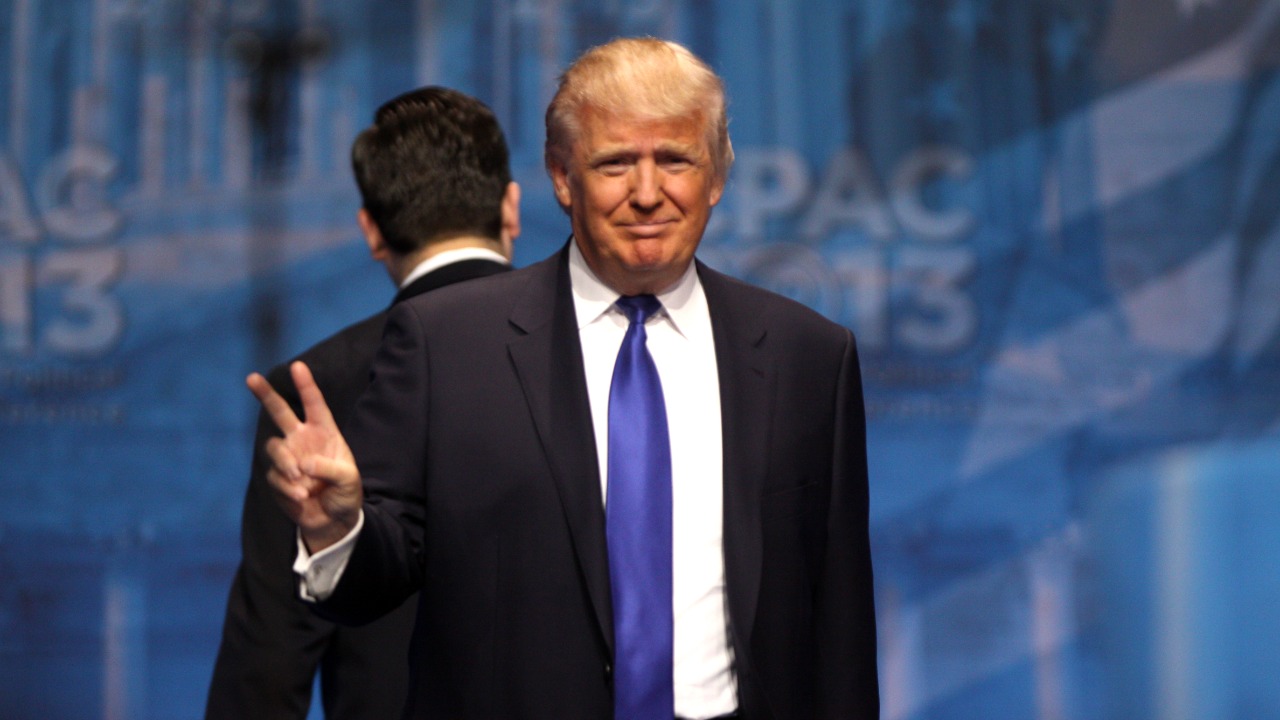

Donald Trump’s media company has embraced a cryptocurrency partnership that would be eye catching for any president, let alone one who once dismissed Bitcoin as a scam and later vowed to make the United States a global crypto hub. The arrangement intertwines Trump Media’s fortunes with a digital token market that his own administration is reshaping, raising unusually direct questions about whether public power is being used to benefit a private platform tied to the Oval Office.
At the center of the controversy is a deal that gives a crypto firm a prominent role in Trump’s social media ecosystem while that same industry seeks friendlier rules from regulators and the White House. The structure of the agreement, the timing of regulatory decisions, and the cast of insiders around it have combined to create a textbook test of how far a sitting president can go in monetizing his political brand without crossing into self-dealing.
The Trump Media–crypto nexus comes into focus
The basic contours of the Trump Media crypto arrangement are straightforward but politically explosive. Trump’s social media company, built around his personal brand and political following, has aligned itself with a digital asset partner whose business depends on regulatory clarity from the very administration he leads. Reporting on How a Trump business deal with a crypto firm exposes potential conflicts of interest describes how the crypto company effectively becomes a financial and promotional partner for Trump’s social media platform, tying the value of a token to the success of a network that thrives on his political prominence.
That alignment means any policy move that boosts crypto markets could also lift the value of the partner’s token and, by extension, the perceived value of Trump Media itself. The deal does not exist in a vacuum, it sits alongside a broader push by President Trump to champion digital assets as part of a national economic strategy. When the same person controls the bully pulpit, influences regulators and benefits from a platform that is now linked to a crypto asset, the line between public policy and private profit becomes unusually thin.
From “scam” to centerpiece: Trump’s evolving crypto stance
Trump’s journey from crypto skeptic to crypto booster is central to understanding why this deal is drawing so much scrutiny. Not long after leaving office the first time, he said that Bitcoin, a leading cryptocurrency, “seems like a scam,” a remark that signaled deep suspicion of the entire asset class. Yet within roughly three years, his political and business posture shifted, with his media company courting a crypto partner and his administration presenting digital assets as a pillar of American innovation, a reversal that reporting traces from that early dismissal of Bitcoin to the current embrace.
That pivot is not just rhetorical. As President Trump’s team has loosened regulations on cryptocurrency and pledged to make the United States the crypto capital of the world, the policy environment has become markedly friendlier to the very firms now intertwined with his media brand. A video report on how the Trump family’s cryptocurrency ties raise concerns notes that this deregulatory push has unfolded even as the president’s orbit deepens its exposure to digital assets, with President Trump publicly aligning himself with an industry that once drew his scorn.
Regulatory power meets private gain
The most troubling aspect of the Trump Media crypto deal is how directly it intersects with the machinery of federal regulation. Ethics experts have warned that when a president’s personal business is linked to a sector that depends on decisions from agencies like the Securities and Exchange Commission, every enforcement action or policy shift risks being seen through the lens of self-interest. A televised segment on potential conflicts of interest underscores that this newly announced crypto deal has prompted questions about whether Trump is aiming to enrich the country or his own enterprise, with commentators explicitly framing the arrangement as a test of whether Trump is blurring that line.
Those concerns are sharpened by the fact that the White House itself has been drawn into crypto policy debates. The White House has repeatedly said that Trump has taken the proper steps to avoid conflicts of interest, pointing to internal ethics reviews and the formal separation between his official duties and his media company. Yet the same reporting notes that the administration has also weighed in on social media regulation and digital asset oversight at a time when Trump’s accounts have been reinstated on major platforms, a sequence that places The White House in the awkward position of defending both policy choices and the president’s business entanglements.
Inside the dealmakers’ network
Behind the scenes, a familiar cast of political and industry insiders has helped shape the Trump Media crypto partnership. One key figure is Miller, a lobbyist who did not respond to requests for comment but has a documented history of pressing the White House and the SEC on regulatory matters related to digital assets. According to detailed accounts of his activities, Miller lobbied the White House and the SEC while the crypto sector was making news of its own, a dual role that places him at the intersection of policy advocacy and private dealmaking.
The network extends beyond Washington. Among those who have had business entanglements with Trump’s circle is Changpeng Zhao, the billionaire founder of Binance, who was pardoned by Trump after facing legal scrutiny. Reporting notes that Zhao’s company has been a major player in global crypto markets and that his interactions with Trump’s orbit included financial ties that later coincided with favorable outcomes, with Changpeng Zhao declining to comment through his company. The presence of such figures around the Trump Media deal reinforces the perception that the arrangement is part of a broader ecosystem of allies who both influence and benefit from crypto policy.
Ethics experts see a “pay-to-play” pattern
For professional ethics watchdogs, the Trump Media crypto partnership fits into a pattern they have been tracking for years. One prominent critic, Payne, who leads the ethics program at a nonprofit organization, described the arrangement as “another example of the pay-to-play administration,” arguing that donors and business partners appear to gain access and favorable treatment in ways that blur the boundaries between public service and private enrichment. That assessment is grounded in a broader review of Trump’s financial relationships with crypto executives and lobbyists, with Payne pointing to the timing of policy shifts as a red flag.
Other ethics specialists have echoed those concerns in televised interviews, warning that the president’s cryptocurrency business activities create overlapping obligations that are difficult to police. A segment focused on ethics experts raising concerns about potential conflicts of interest after Pres. Trump’s cryptocurrency business announcement highlighted how watchdogs fear the deal could influence decisions on enforcement, taxation and consumer protection, with Ethics advocates stressing that the appearance of impropriety alone can erode public trust even if no explicit quid pro quo is proven.
Family ties and insider advantages
The Trump family’s own role in the crypto boom has added another layer of complexity to the Trump Media deal. Reports on how Trump’s sons got help from insiders describe a pattern in which allies who sent the president money later benefited from favorable outcomes, including pardons and regulatory breaks, in the wake of their support. A detailed video investigation framed these relationships as “Trump’s crypto cronies,” noting that they sent the president money and got off easy shortly after Donald Trump pardoned certain figures, with the narrative explicitly tying those advantages to the world of Forbes Trump and his family’s ventures.
Those dynamics have not gone unnoticed by ethics observers. Another broadcast segment, titled around the idea that “the conflicts of interest are everywhere,” pointed out that almost four years after Donald Trump called crypto “a disaster waiting to happen,” the president is now all in on digital assets, with his family members and close associates positioned to benefit. The report emphasized how Donald Trump shifted from harsh criticism to enthusiastic promotion while his relatives explored token launches, exchange relationships and advisory roles that could all gain from a friendlier regulatory climate.
Crypto policy as political branding
Trump’s embrace of crypto is not just a financial play, it is also a political branding exercise that dovetails with his media strategy. By casting digital assets as a symbol of American innovation and resistance to what he portrays as overbearing regulators, the president has turned crypto into a cultural marker for his base. A video examining the Trump family’s cryptocurrency ties notes that his administration has loosened regulations and pledged to make the United States the crypto capital, a message that resonates with investors and ideologues alike and that positions Nov era policy as a break from previous caution.
That political framing feeds directly into the business model of Trump Media, which relies on a loyal audience that sees itself as part of a movement rather than just a user base. When that audience is encouraged to adopt or trade a token associated with the platform, the line between political support and speculative investment blurs. A separate ethics-focused segment stressed that experts are raising concerns about potential conflicts of interest after Pres. Trump’s cryptocurrency business announcement, warning that the fusion of campaign-style messaging with a financial product could pressure supporters to buy into a risky asset because they trust Pres Trump rather than because they understand the underlying risks.
Regulatory whiplash and market windfalls
One of the most striking examples of the potential for conflicts involves a major crypto platform that faced scrutiny, then quickly rebounded with a massive investment tied to Trump’s orbit. Within months of a federal investigation into the company, the case was dropped. By August, Crypto.com announced it was plunging roughly $1 billion worth of investment into a project that included a significant role for Trump’s media ecosystem and its associated token, a sequence that raised eyebrows among ethics lawyers who saw the timing as unusually favorable for Crypto.
Historically, presidents have gone to great lengths to avoid even the appearance of benefiting personally from companies that interact with federal regulators, often placing assets in blind trusts or divesting entirely. In this case, however, the Trump Media crypto deal has unfolded in parallel with regulatory decisions that materially affect the fortunes of the firms involved. That convergence of dropped investigations, billion dollar commitments and presidential branding has fueled the perception that the playing field is tilted toward those willing to tie their fate to Trump’s media and political machine.
What the White House says, and what remains unresolved
Faced with mounting questions, the administration has leaned heavily on formal assurances that Trump is complying with ethics rules. Officials have pointed to internal reviews, recusal memos and the president’s stated intention to separate his official duties from his private ventures, arguing that the Trump Media crypto deal is just one of many business arrangements that do not influence policy. A detailed report on how a Trump business deal with a crypto firm exposes potential conflicts of interest notes that the White House has repeatedly insisted Trump has taken the proper steps to avoid conflicts, even as his accounts have been reinstated on major platforms and his media company has pursued new partners.
Yet those assurances have not quelled the broader debate about what ethical leadership should look like in the digital age. Presidents have historically gone to the Office of Congressional Ethics or similar bodies to seek guidance on complex financial entanglements, but the Trump Media crypto deal has unfolded largely through private negotiations and public branding rather than transparent review. As long as the same person is both the country’s chief regulator of markets and the most important asset of a media company tied to a volatile token, the questions about conflicts of interest will persist, regardless of how many legal boxes the arrangement technically checks.
More from MorningOverview