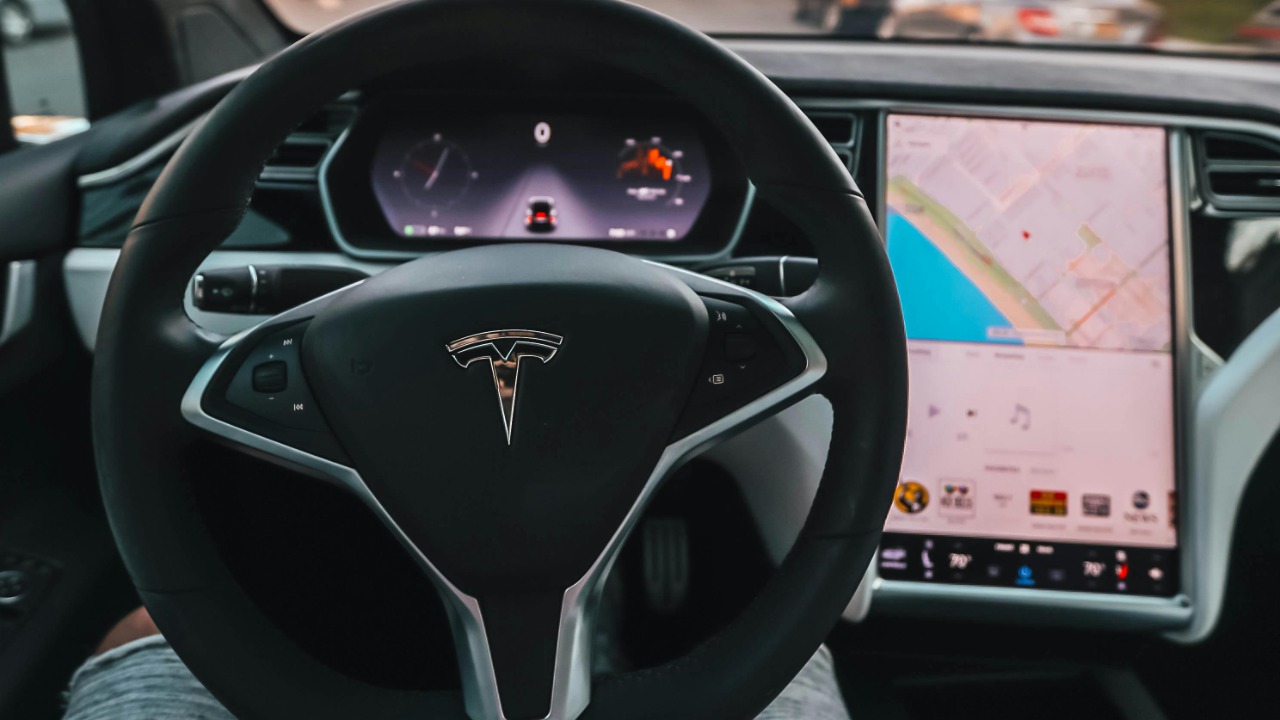

A California administrative law judge has concluded that Tesla misled drivers about what its Autopilot technology can actually do, a finding that strikes at the heart of how the company has sold its most famous software feature. The ruling lands at a moment when regulators, juries and safety advocates are converging on a single question: where does driver assistance end and self-driving hype begin.
As I see it, the decision is not just a rebuke of one company’s marketing strategy, it is a test of whether regulators are willing to police the language around automation before more drivers treat aspirational branding as a promise of full autonomy.
The judge’s finding: Autopilot marketing crossed the line
The core of the California decision is simple but sweeping: the judge found that Tesla engaged in deceptive marketing by suggesting its cars could handle more of the driving task than the technology safely allows. In practical terms, that means the company’s own branding and promotional language around Autopilot and related features were judged to have created an inflated impression of self-driving capability, even though the system still requires constant human supervision.
According to the ruling, the problem was not that Tesla offered advanced driver assistance, but that it wrapped those tools in language that implied something closer to a robot chauffeur. An administrative law judge in California concluded that Tesla’s Autopilot branding and claims about self-driving performance misrepresented the true state of the technology, a finding that now frames the company’s broader regulatory fight in its biggest U.S. market.
How California regulators built the deception case
Regulators did not arrive at this judgment in a vacuum. The California Department of Motor Vehicles has been scrutinizing how Tesla describes its driver-assistance features for years, focusing on whether the company’s language matches what the cars can reliably do on public roads. The agency’s concern has been that marketing phrases can subtly, or not so subtly, encourage drivers to overtrust automation and underplay their own responsibility behind the wheel.
That scrutiny culminated in a formal finding that the California DMV determined Tesla Motors had violated state law through misleading use of the terms Autopilot and Full Self in its marketing. Regulators concluded that the company’s descriptions suggested vehicles could operate as fully autonomous when that was not the case, a gap between promise and reality that became the backbone of the state’s legal argument.
From DMV complaint to courtroom ruling
Once the DMV laid out its allegations, the dispute moved into a more formal legal arena where an administrative law judge could weigh the evidence. The judge’s role was to decide whether Tesla’s statements about Autopilot and related features were simply optimistic sales talk or crossed into unlawful deception under California consumer protection rules. That distinction matters, because it determines whether the state can impose penalties and force changes in how the company markets its technology.
In siding with regulators, the judge effectively endorsed the DMV’s view that Tesla’s branding overstated the capabilities of its driver-assistance systems. The decision aligns with a broader state position that California Says Tesla Deceived Consumers With Its Self driving Claims, and that the Department of Motor Vehicles is justified in treating misleading automation claims as a violation of law rather than a mere marketing flourish.
What the ruling means for Tesla’s Autopilot brand
The immediate consequence of the judge’s finding is reputational: Autopilot, once a marquee selling point, is now officially associated with deceptive marketing in a key jurisdiction. That label complicates Tesla’s effort to position its software as a cutting-edge advantage over rivals, especially when the company has leaned so heavily on the idea that its cars are on the cusp of full autonomy. For buyers, the ruling reinforces that Autopilot is a driver-assistance tool, not a substitute for human judgment.
There are also practical implications for how Tesla can talk about its technology going forward. The decision strengthens the DMV’s hand as it pushes the company to align its promotional language with the actual capabilities of its systems, particularly in California, where Tesla has long enjoyed a strong market presence. The state’s conclusion that Tesla engaged in deceptive Autopilot marketing sends a signal that regulators are prepared to treat branding choices as a safety issue, not just a communications strategy.
California’s 90-day ultimatum on Autopilot advertising
Beyond the legal finding, California regulators have paired the ruling with a concrete deadline. Tesla has been given a finite window to bring its Autopilot advertising into compliance with state expectations, a move that turns an abstract legal dispute into an operational challenge for the company’s marketing and legal teams. The clock now matters as much as the courtroom.
Specifically, California has given Tesla 90 days to change Autopilot advertising, a directive that forces the company to revisit everything from website copy to in-store materials. For a brand that has built so much of its identity around the promise of self-driving, that 90 day mandate is more than a compliance box, it is a demand to recalibrate how Tesla talks about the future of driving in its largest U.S. market.
Why Autopilot and “Full Self” language matters to safety
At the center of this fight is a deceptively simple question of wording. When a company labels a feature Autopilot or uses phrases like Full Self, it shapes how drivers understand their role behind the wheel. If the language suggests the car can handle complex scenarios on its own, some drivers will inevitably relax their vigilance, even if the fine print insists they must stay fully engaged. That gap between headline promise and legal disclaimer is where regulators see real-world risk.
The California DMV’s conclusion that Tesla Motors misused the terms Autopilot and Full Self in a way that implied full autonomy captures this concern in regulatory language. By finding that the company’s descriptions suggested a level of independence that did not exist, the agency effectively argued that marketing can become a safety hazard when it encourages drivers to treat experimental software as a finished self-driving product, a view that underpins the state law violation finding.
Legal pressure is not limited to California
While California’s ruling is the headline development, Tesla’s Autopilot system is also under pressure in other courts, which gives the state’s decision broader context. In Florida, a landmark civil case has already tested how juries respond to crashes involving the technology, and how much responsibility they place on the company’s design and warnings. Those proceedings show that questions about Autopilot are no longer hypothetical debates about future robots, they are being litigated in the aftermath of real collisions.
In one such case, the factual background traces back to an incident in Key Largo, where George McGee was driving when a crash involving Autopilot led to a high stakes trial over Tesla’s liability. A defense-side analysis of Benavides v. Tesla describes how jurors weighed the company’s explanations against the circumstances of the accident, underscoring that the legal system is increasingly willing to dissect both the technology and the messaging around it.
The $329 million verdict that raised the stakes
Perhaps the clearest sign that Autopilot has moved from tech curiosity to legal flashpoint came in a Miami courtroom earlier this year. There, a jury delivered a verdict that not only found fault with the system but attached a price tag large enough to reverberate through the entire auto industry. The size of the award signaled that jurors saw Autopilot’s shortcomings as more than a marginal defect.
In September, a Miami jury awarded Tesla crash victims $329 m in damages, a landmark $329 million verdict that found the Autopilot system defective and opened the door to more product liability lawsuits against the automaker. That figure now hangs over every regulatory and marketing dispute, including California’s, as a reminder that juries are prepared to translate concerns about automation into nine figure judgments.
California’s market power and Tesla’s future choices
California is not just another jurisdiction for Tesla, it is a core market and a symbol of the company’s identity as a technology leader. When regulators in that state say the company deceived consumers with its self-driving claims, they are not only threatening fines or advertising changes, they are challenging the narrative that has helped Tesla dominate the electric vehicle conversation. The judge’s ruling therefore carries strategic weight that goes beyond the specific legal remedies.
The state’s position that California Says Tesla Deceived Consumers With Its Self driving Claims, combined with the DMV’s enforcement posture and the 90 day advertising deadline, forces Tesla to choose between doubling down on its existing branding or recalibrating its promises to match what regulators and juries now expect. As I read the trajectory, the company is being pushed toward a more cautious, engineering grounded description of Autopilot, one that treats drivers as the final authority rather than passengers in a nearly autonomous machine.
More from MorningOverview