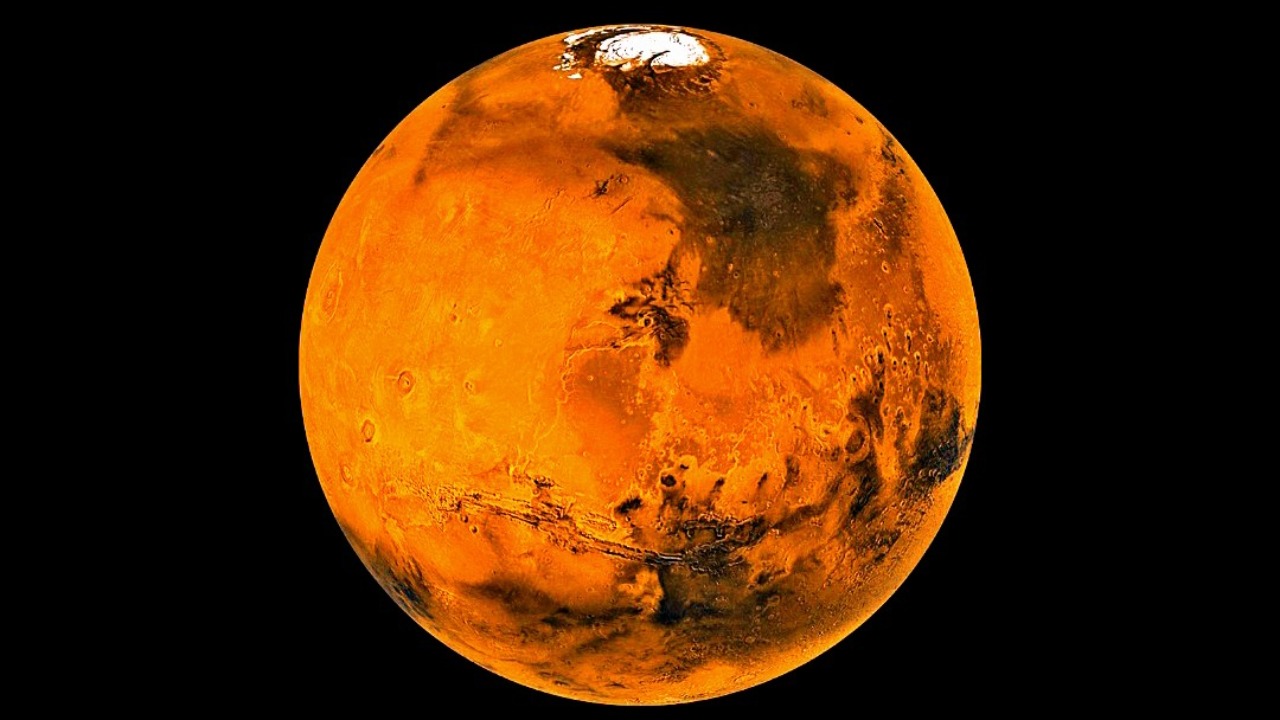

Mars has become the ultimate blank canvas for human ambition, a place where science fiction promises forests under a salmon sky and oceans filling ancient basins. Yet the closer scientists look at the real planet, the clearer it becomes that reshaping it into anything like Earth is far beyond what current physics, engineering and budgets can deliver. Terraforming is not just a long shot for the next few centuries, it may be physically impossible in the form its loudest advocates imagine.
The dream is not entirely dead, but it is being radically downsized. Instead of a quick planetary makeover, the emerging consensus points toward fragile outposts, sealed habitats and a permanent dependence on machines. The story of Mars right now is not how soon we can walk outside without a suit, but how much reality has caught up with the fantasy.
The gap between sci‑fi Mars and the real planet
Popular culture still treats Mars as a fixer‑upper, a world that only needs a few bold engineering tricks to become a second Earth. Classic novels, glossy streaming dramas and viral explainer videos lean on images of blue seas and green continents, as if the planet were waiting for a gardener rather than a geophysicist. In that vision, the hard part is political will, not planetary physics, and the time horizon is measured in centuries at most.
Planetary scientists, however, describe a very different Mars. Detailed orbital and rover data show a cold, thin‑aired world with a surface pressure less than 1 percent of Earth’s and temperatures that keep water locked up as ice or vapor. Educational explainers on why we can’t terraform Mars emphasize that the planet has lost most of the ingredients that once made it more Earth‑like, and that its current environment is shaped by deep, long‑running processes that no quick technological fix can reverse.
What “terraforming Mars” would actually require
When people talk about terraforming Mars, they are usually imagining three big changes: thickening the atmosphere, warming the surface and adding liquid water. To reach even the lower edge of human habitability, the air pressure would need to rise enough that liquid water can persist and unprotected lungs can function, while temperatures would have to climb by tens of degrees. That is not a matter of sprinkling a few greenhouses across the landscape, it is a planetary‑scale climate project.
Researchers who model these scenarios point out that the most obvious lever is carbon dioxide, which can trap heat and build pressure if it is present in large quantities. The optimistic picture assumes that Mars hides vast stores of CO2 in its polar caps and rocks, ready to be liberated by industry or even nuclear detonations. In practice, as detailed analyses of Martian climate data show, the accessible reservoirs are far too small to deliver the pressures and temperatures that a shirt‑sleeve Mars would demand.
The missing carbon dioxide problem
The most sobering constraint is simple: there is not enough carbon dioxide on Mars that humans can realistically reach. Detailed inventories of the polar caps, dust and regolith indicate that even if we mined and vaporized every plausible CO2 source, the resulting atmosphere would still be far thinner than Earth’s. One widely cited analysis concluded that the total accessible gas would only raise the pressure to a fraction of what is needed for stable lakes or unpressurized habitats, a finding echoed in work that bluntly states terraforming Mars might be impossible due to a lack of carbon dioxide.
Follow‑up studies from Mars orbiters and landers reinforce the same point. Teams working with orbital instruments have catalogued carbon‑bearing minerals and frozen deposits, then calculated how much pressure they could provide if fully processed. Their conclusion, summarized in a technical review that notes how a third source is carbon locked in the Martian soil, is that the energy and infrastructure required to unlock these reserves would be staggering, and the payoff would still fall short of a truly habitable sky.
Solar wind, lost atmosphere and the MAVEN verdict
Even if humanity could conjure a thicker atmosphere on Mars, the planet itself would work against us. Without a global magnetic field, the upper air is constantly eroded by charged particles streaming from the Sun. Long‑term measurements show that solar radiation and solar wind strip away both water vapor and CO2, a process that has been directly observed by orbiters tracking how the Martian atmosphere is removed into space.
The MAVEN mission, formally known as Mars Atmosphere and Volatile EvolutioN, has been central to this story. Its data underpin the conclusion that any artificially thickened atmosphere would slowly leak away, forcing future settlers into a permanent race against physics. NASA’s own summary of the work notes that our results suggest that there is not enough CO2 remaining on Mars to produce the greenhouse warming needed to allow for stable liquid water, and that any gains would be vulnerable to the same escape processes that hollowed out the planet’s ancient air.
Elon Musk, nuked poles and the limits of spectacle
No modern figure has done more to popularize the idea of a quick‑fix Mars makeover than Elon Musk. The SpaceX founder and CEO has repeatedly floated the notion of detonating nuclear devices over the poles to vaporize frozen CO2, a concept that has migrated from late‑night talk shows to viral infographics. In one widely shared explainer, the plan is summarized with the claim that according to Elon Musk, the quickest way to turn Mars into another Earth is detonating thermonuclear weapons over the Martian poles to melt the CO2 frozen at the poles.
Planetary scientists have been blunt in their response. Analyses of the polar caps and climate models show that even such extreme measures would not release enough gas to reach Earth‑like pressures, and would introduce new radiation and fallout problems for any future settlers. Coverage of the underlying research has framed it as a direct rebuttal to the spectacle, noting that SpaceX founder and CEO Elon Musk has promoted ideas that the data simply do not support, while a separate summary of the same study underscores that the study in Nature Astronomy throws cold water on schemes that involve nuclear warheads over the planet’s icy poles.
“Ridiculously hard” even before ethics enter the room
Strip away the showmanship and the basic engineering challenge remains overwhelming. Long‑form explainers that walk through the numbers describe terraforming as ridiculously hard, not because of any single insurmountable barrier, but because every step multiplies the scale of the next. Heating the poles requires vast energy, which demands huge infrastructure, which in turn must be built and maintained in a hostile environment that already strains robotic missions.
Other commentators go further and argue that even if the physics were marginally more forgiving, the project would still be a bad idea. One widely viewed critique lays out why terraforming Mars is a big mistake, pointing to the risk of contaminating a world that may host its own microbial ecosystems and the opportunity cost of pouring resources into a planetary makeover instead of more immediate problems on Earth. Another video essay frames the whole concept as misguided, arguing that terraforming Mars is a terrible idea when compared with more modest, reversible approaches like building self‑contained habitats.
Scientists versus the dream: “we probably can’t”
Within the scientific community, the tone has shifted from speculative enthusiasm to cautious skepticism. Planetary scientists and astrobiologists now tend to stress how little control humans have over deep planetary processes, and how much we still do not know about Mars itself. In a recent discussion on why we probably can’t terraform Mars, astrobiologist Kenda Lynch told the Star Talk audience that the planet’s thin atmosphere, lack of magnetic field and unknown subsurface biology make any large‑scale climate engineering both technically dubious and scientifically risky.
That skepticism is not universal, and some researchers still explore more targeted interventions. A research summary notes that in 2024, scientists suggested that they proposed inserting specific particles into the Martian atmosphere to boost temperatures by up to 10 °C in just months, a far more modest goal than full terraforming. Even that idea, however, faces enormous practical hurdles, and its proponents frame it as a way to make local regions slightly more manageable rather than a path to open‑air cities.
Ethics, history and the value of a pristine Mars
As the technical case for a quick planetary makeover weakens, ethical questions are moving to the foreground. Astrobiologists and philosophers argue that Mars has its own planetary history, one that records billions of years of climate shifts and perhaps the emergence of life. A recent analysis of whether we could really turn Mars green stresses that Mars has its own planetary history, and that large‑scale terraforming would effectively end our opportunity to study that pristine record in favor of a human‑designed environment.
Public debate is reflecting that shift. In one ethical discussion about Mars, a commenter writes that what they love most about Mars is that “they still dream, we gave up,” framing terraforming as an act of giving up on Earth rather than expanding human possibility. Another thread in the same community wrestles with whether humanity has the right to overwrite an entire world’s geology and potential biology for the sake of a speculative future, especially when the science suggests the project may never fully succeed.
Gravity, bodies and the limits of human adaptation
Even if engineers could conjure a thicker atmosphere and warmer temperatures, Mars would still be a low‑gravity world, and human physiology is not designed for that. Long‑duration stays on the International Space Station have already shown how microgravity erodes bone density, muscle mass and cardiovascular health, even with rigorous exercise regimes. Extrapolating from that experience, some analysts argue that a permanent population on Mars would face chronic health challenges that no amount of terraforming could fix.
One widely shared critique of long‑term settlement points out that it is likely the low gravity of Mars would come to the detriment of long term human inhabitants of the red planet: 38% of Earth’s gravity may simply be too little for healthy bones and organs over a lifetime. That figure is baked into the planet itself, not its climate, which means no amount of atmospheric tinkering can change it. Terraforming, in other words, cannot make Mars fully human‑friendly, only somewhat less hostile.
Online debates: slow erosion, “idiotic” ideas and partial fixes
Outside formal journals, the most candid assessments of terraforming often unfold in online forums where space enthusiasts argue through the details. In one Comments Section on r/space, a user notes that it is true Mars would eventually lose a thicker atmosphere if it were created, but that the erosion would be slow rather than immediate. That kind of argument accepts the basic physics of atmospheric escape, yet still imagines a future where human industry can outpace the loss for centuries at a time.
Other threads are less forgiving. A heated discussion in the Mars Society community includes a commenter who calls it an idiotic idea to ‘terraform’ Mars, echoing astrophysicist Neil Degrasse Tyson’s skepticism about the concept. Another Comments Section on whether terraforming is even possible circles back to the same themes scientists raise: slow but relentless atmospheric erosion, limited CO2 stocks and the likelihood that any progress would be partial and fragile rather than transformative.
From planetary makeover to domes and outposts
As the terraforming narrative frays, a more modest vision of Mars is taking shape. Instead of open‑air cities, many experts now talk about sealed habitats, underground bases and localized engineering that accepts the planet’s broader constraints. Even Elon Musk has described an interim future where people live in “big domes made of glass” on the surface, a scenario highlighted in critiques that argue Elon Musk says we would live in big domes at first rather than walking freely under a blue sky.
That shift is visible in both technical proposals and public commentary. Some researchers explore targeted climate tweaks, like the 2024 suggestion that they could raise local temperatures by a few degrees, while others focus on preserving Mars as a scientific treasure. A recent analysis of whether we should turn Mars green concludes that any intervention must be weighed against the loss of a unique planetary record, arguing that genuine progress means moving from grandiose fantasies to careful, reversible steps that respect both the science and the stakes.
Why “not close” might be the most hopeful answer
Admitting that terraforming Mars is not close, and may never be possible in the classic sense, is not an act of defeat. It is a recognition that the universe is under no obligation to match our favorite stories, and that real progress often looks smaller and slower than the sweeping arcs of science fiction. A Mars of domes, tunnels and carefully managed outposts is less cinematic than a blue‑green twin of Earth, but it is far more consistent with what orbiters, landers and climate models are telling us.
In that light, the most responsible path forward is to treat Mars as both a laboratory and a mirror. The same physics that make it so hard to thicken the Martian atmosphere also govern Earth’s climate, and the same impatience that fuels talk of nuking the poles can be seen in our approach to environmental crises at home. As one reflective post on ethical considerations of Mars puts it, the real question is not just whether we can change another world, but what it says about us that we want to.
Supporting sources: It’s official: we can’t terraform Mars – Natural History Museum.
More from MorningOverview