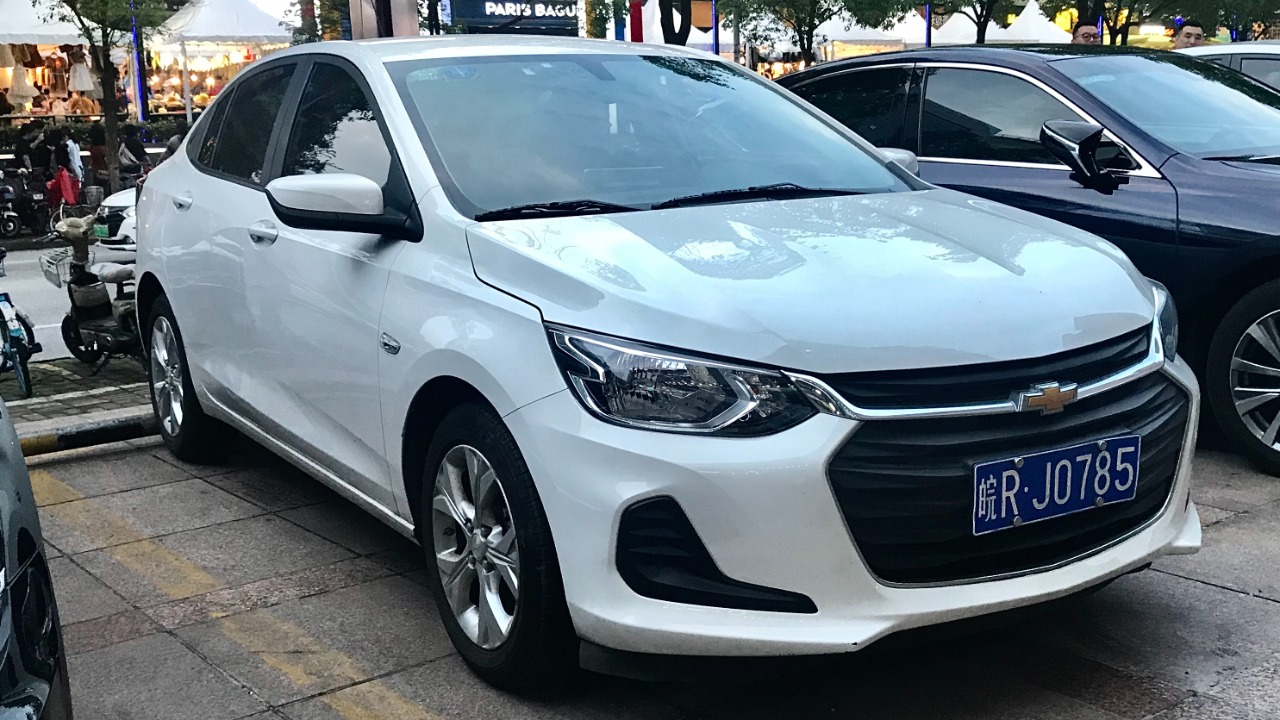

Chevrolet is reaching back into its catalog and pulling a familiar badge out of the grave, but the car it now sits on looks nothing like the subcompact many drivers remember. Instead of a low-slung hatchback or sedan, the New Sonic returns as a small SUV with a powertrain and mission tuned to a very different market reality. The move captures how far the industry has shifted in just a few years, and how aggressively General Motors is willing to reshape its heritage to chase the next wave of buyers.
By reviving a so-called “dead” name on a body style that would have been unthinkable for it a decade ago, Chevy is signaling that nostalgia alone is no longer enough. The New Sonic is part of a broader strategy that stretches from flex-fuel hybrids in South America to electric fastback SUVs wearing once-sacred performance badges, and it shows how the company is trying to balance emotional nameplates with the cold math of global demand.
The New Sonic: from budget hatchback to flex-fuel hybrid SUV
The original Sonic built its reputation as a thrifty hatchback and sedan, a basic commuter that traded on value rather than presence. In its new life, the New Sonic abandons that humble silhouette and reappears as an SUV, a shape that now dominates showrooms in nearly every region. Instead of chasing the cheapest sticker price, the revived model leans into a more sophisticated package that combines extra ride height with a flex-fuel hybrid powertrain aimed at drivers who want efficiency without giving up the crossover stance that has become the default choice.
That shift is especially clear in South America, where the New Sonic is positioned as a Chevrolet Chevy Sonic that can run on multiple fuels while using hybrid assistance to stretch every liter. The New Sonic is described as a flex-fuel hybrid SUV, a far cry from the small hatchback that once held the Sonic name in North America, and the change underlines how Chevy is tailoring the badge to regional tastes rather than trying to recreate the old formula. By turning a once-basic compact into a tech-forward crossover, the company is betting that familiarity with the Sonic name will help buyers embrace a very different kind of vehicle, one that reflects how quickly the market has pivoted toward SUVs and alternative powertrains, as detailed in coverage of the New Sonic.
Why Chevy keeps recycling “dead” badges
Chevrolet has developed a reputation for pulling old nameplates off the shelf and giving them new lives on very different vehicles, and the New Sonic fits neatly into that pattern. Instead of inventing entirely new branding for every crossover, the company is leaning on the equity built up by small cars and coupes that once filled its lineup. The strategy is simple: a familiar badge can cut through the noise in a crowded SUV market, even if the product underneath has changed almost beyond recognition.
Industry observers have noted that Chevrolet is particularly adept at this kind of recycling, pointing to a string of crossovers that now wear badges once reserved for compact cars. The New Sonic is described as one of the freshest examples of this approach, a name that once sat on a subcompact hatchback now applied to a small SUV that looks and feels more in step with current tastes. That pattern, highlighted in analysis of how Chevrolet is great at reusing old names and even calling out the Sonic as something “a bit more fresh,” shows how the brand is trying to keep its SUV lineup from blurring together by reviving recognizable labels like Sonic instead of launching anonymous new badges.
From Sonic to Chevelle: how far can nostalgia stretch?
The New Sonic is not the only example of Chevy breathing new life into a dormant name, and it sits alongside a more overtly nostalgic revival in the form of the 2026 Chevrolet Chevelle. Where the Sonic has been reimagined as a practical SUV, the Chevelle is being pitched as a legend reborn, a car that leans heavily on retro styling cues while promising modern performance and technology. The contrast between the two shows how Chevrolet is experimenting with different ways to deploy its heritage, sometimes using a badge as a pure marketing hook and other times trying to channel the spirit of the original.
In video coverage that trumpets “Chevy Brings Back a LEGEND,” the 2026 Chevrolet Chevelle Is Finally Here is framed as a case of Retro Meets the Future, with the car’s design and positioning meant to evoke the muscle era while still fitting into today’s regulatory and performance landscape. That approach is very different from the New Sonic’s pragmatic crossover reinvention, yet both rely on the same basic idea that a familiar name can make a new product feel instantly anchored. By putting the Chevelle badge on a modern performance model and the Sonic badge on a flex-fuel hybrid SUV, Chevy is testing how far nostalgia can stretch before it snaps, a tension that is on full display in the Chevrolet Chevelle Is Finally Here launch coverage.
Discontinuations clear space for revived crossovers
Chevy’s willingness to resurrect old names is easier to understand when viewed against the backdrop of what General Motors is cutting. As the company trims slower-selling sedans and even some crossovers, it is freeing up factory capacity and marketing bandwidth that can be redirected toward new SUVs wearing familiar badges. The New Sonic arrives in a landscape where buyers are being nudged away from traditional passenger cars and toward higher-riding models that promise more versatility and, often, higher margins.
That shift is visible across GM’s portfolio, including at Cadillac, where the Cadillac XT4 is among the models being discontinued as part of a broader restructuring. General Motors announced that production of the XT4 crossover would end in January 2025, a move that underscores how even relatively recent crossovers are not immune if they no longer fit the company’s long-term strategy. In the same breath, GM has been clear that it is not afraid to take “this legend to the grave” when a nameplate no longer earns its keep, a phrase that captures the ruthlessness behind the product planning that makes room for revivals like the New Sonic and other recycled badges, as outlined in the detailed list of cars being discontinued in 2025.
Camaro’s electric SUV turn raises the stakes
If the New Sonic’s transformation into an SUV feels bold, the plan for Camaro shows just how far Chevrolet is prepared to go in reshaping its icons. Instead of returning as a traditional coupe, the Camaro nameplate is being revived as an electric fastback SUV, a configuration that would have been unthinkable for a car once defined by its long hood and rear-drive proportions. The move signals that Chevy sees more future in performance-flavored crossovers than in low-slung two-doors, even when it comes to one of its most storied badges.
Social media teasers have already framed the shift in stark terms, stating that Chevrolet is reviving the Camaro nameplate not as a traditional coupe but as an electric fastback SUV positioned directly in the heart of the EV crossover market. The posts emphasize that the new Camaro SUV will carry the Chevrolet and Camaro branding into a segment where aerodynamics, battery packaging, and interior space matter as much as quarter-mile times, and they tag the project with hashtags like #SUV and #electriccar to underline the pivot. That messaging, captured in an Instagram update that spells out how Chevrolet is reviving the Camaro nameplate as an SUV, shows that the company is not shy about reinterpreting even its most hallowed performance names to fit the EV era.
Trademarks hint at a global Camaro strategy
Behind the public teasers, there are also legal breadcrumbs that point to how seriously General Motors is taking the Camaro revival. Trademark filings suggest that the company is preparing to use the Camaro name in multiple regions, not just in its traditional North American stronghold. That global ambition helps explain why the new Camaro is being shaped as an electric fastback SUV rather than a niche sports coupe, since crossovers have far broader appeal in markets where road conditions, fuel prices, and consumer preferences favor taller, more practical vehicles.
Reporting on these filings notes that a recently filed General Motors trademark points to the Return of the Camaro, and that the Mustang’s No. 1 rival might come back in markets that include Southeast Asia and North America. The language around the Return of the Camaro makes it clear that GM is thinking beyond a single halo model and instead positioning the badge as a flexible tool that can be applied to different body styles and powertrains as needed. By securing protection for the name in Southeast Asia and North America, the company is laying the groundwork for a Camaro that can serve as a global EV SUV flagship, a strategy that aligns with the broader pattern of revivals like the New Sonic and is spelled out in coverage of the Recently Filed General Motors Trademark Points to the Return of the Camaro.
How the New Sonic fits into Chevy’s SUV-heavy future
Placed alongside the Chevelle and the Camaro SUV, the New Sonic looks less like an outlier and more like a key piece of Chevy’s SUV-heavy future. By turning a once-modest subcompact into a flex-fuel hybrid SUV, Chevrolet is filling out the lower end of its crossover lineup with a name that already has some recognition, especially in markets like South America. The New Sonic gives the brand a way to talk about efficiency and affordability without abandoning the SUV form factor that buyers now expect, and it helps bridge the gap between entry-level crossovers and more aspirational models that carry performance-flavored badges.
That strategy also allows Chevy to segment its audience more precisely. Buyers who remember the Sonic as a basic hatchback may be drawn to the idea of a more capable, tech-forward version, while younger drivers encounter the name for the first time as an SUV that fits their expectations of what a modern car should look like. In this context, the New Sonic’s flex-fuel hybrid setup is not just a technical detail but a way to future-proof the badge in markets where fuel availability and emissions rules are in flux. By aligning the Sonic with both the crossover boom and the push toward alternative powertrains, Chevrolet is using a “dead” name to anchor one of its most forward-looking products.
The risk and reward of rewriting a nameplate’s identity
Recasting the Sonic as an SUV and the Camaro as an electric fastback SUV carries obvious risks. Longtime fans may feel that the identities of these cars are being diluted, especially when badges associated with small, tossable hatchbacks or burly coupes end up on taller, heavier vehicles. There is also the danger that, by stretching a name across too many formats, Chevy could blur what it stands for, making it harder for buyers to form a clear mental picture when they hear labels like Sonic or Camaro.
The potential reward, however, is significant. If the New Sonic can leverage its existing recognition to win over buyers who might otherwise default to rival crossovers, and if the Camaro SUV can translate performance heritage into EV-era desirability, Chevrolet will have turned its back catalog into a powerful asset. The company’s willingness to discontinue models like the Cadillac XT4 while simultaneously reviving names like Sonic, Chevelle, and Camaro shows a clear bias toward badges that can be repurposed for the SUV and EV age. In that light, bringing back a “dead” name on a vehicle that looks nothing like its predecessor is less a gimmick and more a central pillar of how Chevy plans to navigate the next decade of automotive change.
More from MorningOverview