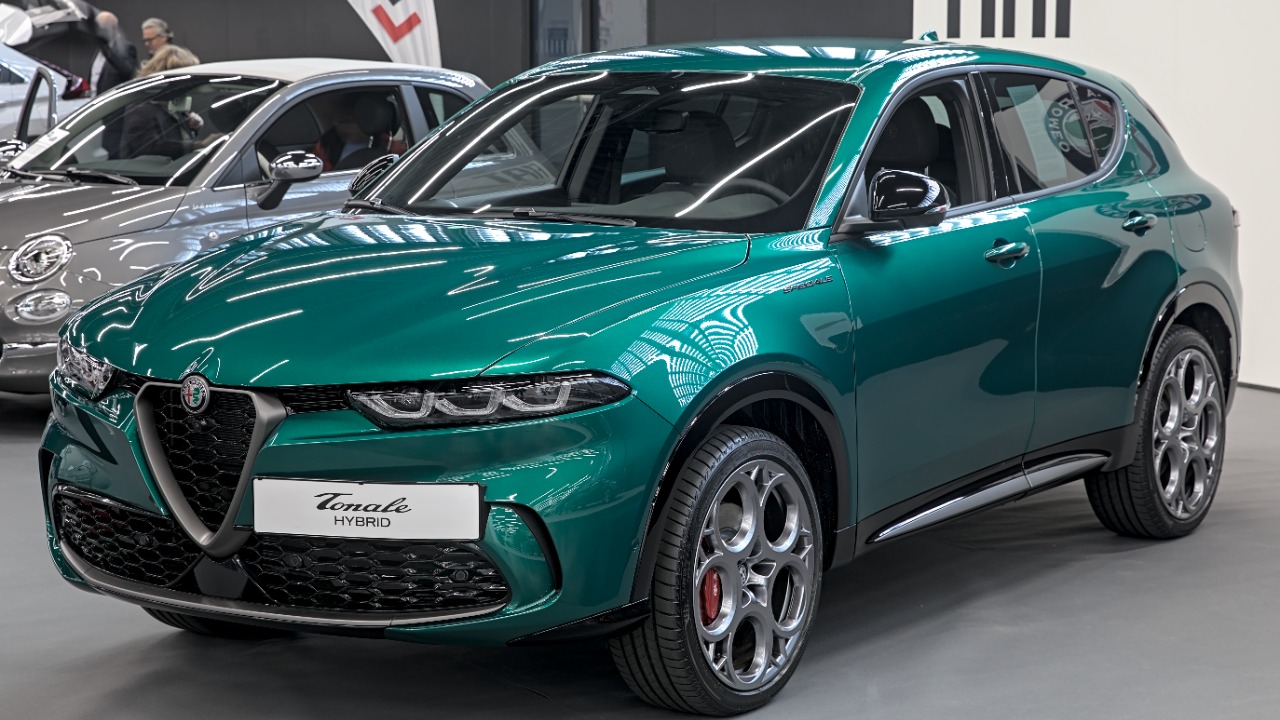

Stellantis is confronting a fresh safety crisis as thousands of its plug-in hybrid SUVs are recalled because their brake pedals can suddenly fail, raising the specter of drivers losing stopping power without warning. The campaign targets roughly 6,000 Dodge Hornet and Alfa Romeo Tonale PHEVs whose front brake pedals can collapse or snap, a defect that cuts to the core promise of any vehicle: that the brakes will work when a driver needs them most.
The recall underscores how a single flawed component can ripple across brands and model lines, especially in a fast-growing segment like plug-in hybrids. It also revives questions about how quickly Stellantis and its suppliers identified the problem, how thoroughly earlier fixes were applied, and what owners should do now if they are behind the wheel of one of the affected SUVs.
What Stellantis is recalling and why it matters
The latest campaign centers on a batch of plug-in hybrid SUVs whose front brake pedals can physically fail underfoot, leaving drivers with a collapsing or broken pedal instead of firm resistance. According to multiple technical summaries, the defect can lead to a sudden Brake Pedal Collapse or cause the pedal arm to snap, which in turn can reduce or eliminate hydraulic braking and dramatically lengthen stopping distances. Stellantis is now recalling roughly 6,000 plug-in hybrids in the United States to address this risk, a figure highlighted in coverage of how Stellantis Recalls Another wave of affected PHEVs.
At the heart of the problem is a brake pedal that simply does not meet the durability drivers assume as a baseline. One analysis notes that a brake pedal should not collapse under any circumstances, yet tens of thousands of Stellantis-built plug-in hybrids were fitted with components that did not meet that standard, including the additional 6,000 now being pulled back because their Because Their Brake Pedals Could Snap. For owners, the stakes are not abstract: a collapsing pedal in traffic or at highway speeds can turn a routine stop into an emergency, forcing drivers to rely on backup systems and quick reflexes to avoid a crash.
How investigators uncovered the defect
The path to this recall runs through internal data analysis as much as it does through driver complaints. Within Stellantis, the Stellantis Europe Control Tower reviewed supplier information, warranty claims, and field reports over a short window, from November 20 through November 24, as part of a broader safety review. That internal process, described in a formal Part 573 Safety Recall Report 25V846, helped crystallize the pattern: certain plug-in hybrid SUVs were experiencing abnormal brake pedal behavior that could not be dismissed as isolated incidents or misuse.
Once the Stellantis Europe Control Tower connected the dots between supplier batches and real-world failures, the company had little choice but to escalate the issue into a formal safety recall. The report shows how data from warranty returns and supplier traceability can expose a systemic defect long before every affected vehicle fails, but it also highlights how a narrow review window, from November 20 through November 24, suggests the company was reacting to a problem that had already surfaced in the field. That tension between proactive analysis and reactive crisis management is now playing out in how Stellantis communicates with owners and regulators.
Which Dodge Hornet and Alfa Romeo Tonale PHEVs are affected
The recall zeroes in on two closely related compact SUVs: the Dodge Hornet and the Alfa Romeo Tonale, both in plug-in hybrid form. These models share key underpinnings, including the braking hardware now under scrutiny, which is why the defect spans brands. Legal and consumer advocates have already flagged the issue under the banner of “2024 Dodge Hornet And Alfa Romeo Tonale PHEVs: Loss Of Brakes,” underscoring that the problem is not limited to a single badge or trim line.
Within that shared architecture, the plug-in hybrid variants are the focus, not the conventional gasoline-only versions. Reporting on the campaign notes that Stellantis is recalling 5,974 2024 Recall, Alfa Romeo Tonale and Dodge Hornet PHEV units in the United States for this brake defect, a figure that aligns with the broader 6,000-vehicle estimate once rounding and additional markets are considered. The focus on 2024 model year plug-in hybrids reflects how a specific production window and component batch can define the scope of a safety campaign.
The scale of the recall and how it fits into a larger pattern
While the headline number of roughly 6,000 vehicles might sound modest in an industry that sells millions of cars a year, it sits atop a much larger pool of affected plug-in hybrids. One detailed breakdown notes that a total of 27,000 Stellantis-made plug-in hybrids were originally built with brake pedals that did not meet durability expectations, a figure that captures the full scale of the underlying manufacturing problem. That broader context is spelled out in coverage of how Stellantis has had to revisit its earlier assumptions about which vehicles were safe.
The current campaign is described as an expansion, not a standalone event, which means Stellantis is effectively admitting that its first pass at identifying and fixing the defect did not capture every at-risk SUV. Additional reporting on a “Re-Recall” for Dodge Hornet and Alfa Romeo Tonale plug-in hybrids notes that earlier recall work left some vehicles with unresolved brake issues, prompting regulators and the company to circle back. For owners, that history matters, because it means a vehicle that was already in the shop once for brake repairs may still be subject to new work.
What “brake pedal collapse” looks like behind the wheel
On paper, phrases like “Loss Of Brakes” and “Brake Pedal Collapse” can sound abstract, but they describe a very specific and unnerving experience. Drivers of affected Dodge Hornet and Alfa Romeo Tonale plug-in hybrids have reported pressing the brake only to feel the pedal suddenly sink toward the floor, sometimes with a popping sensation or a change in resistance that signals something has broken. Legal commentary on the defect frames it bluntly: Loss Of Brakes is not a hypothetical risk but a real-world outcome when the pedal mechanism fails.
In practice, a collapsing pedal can leave the driver scrambling for alternatives, such as downshifting, steering into an escape lane, or using the parking brake. Stellantis has gone so far as to instruct drivers to pull the electronic parking brake if the main pedal collapses, guidance that appears in coverage under the headline “Stellantis Tells Drivers To Pull Brake If Brake Pedal Collapses On These SUVs.” That advice underscores how serious the defect is: the company is effectively telling owners to be prepared to use an emergency system that most drivers rarely touch in normal conditions.
How many SUVs are covered and which builds are at risk
Within the broader 6,000-vehicle estimate, Stellantis has provided more granular figures that show how the recall breaks down by model. One detailed account notes that “This new recall covers 5,974 vehicles across the U.S., including 2,688 Alfa Romeo Tonale PHEVs built from February 23,” a level of specificity that helps owners and dealers pinpoint which SUVs are at risk. Those exact figures, 5,974 and 2,688, appear in reporting on the latest campaign targeting the Alfa Romeo Tonale plug-in hybrid and its Dodge sibling.
Those production details matter because they show that not every Hornet or Tonale is affected, only those built within a specific window when the flawed brake pedal components were installed. The recall documentation and follow-up reporting indicate that Stellantis relied on vehicle production records and supplier traceability to identify the affected batch, a process described in coverage of how Additional 6,000 Affected Units were flagged. For owners, the key takeaway is that the recall is VIN-specific: two seemingly identical SUVs on the same dealer lot may have very different risk profiles depending on when and where they were built.
Why this is a “re-recall” and what it says about quality control
One of the most striking aspects of this episode is that it is not the first time Stellantis has had to address faulty brake pedals on these plug-in hybrids. Earlier campaigns targeted the same Dodge Hornet and Alfa Romeo Tonale PHEVs for brake issues, only for additional problems to surface later, prompting what some coverage bluntly labels a “Re-Recall.” Reporting on that sequence notes that Last year, Stellantis issued a Recall for Dodge Hornet and Alfa Romeo Tonale hybrids with faulty brakes, only to discover that more vehicles and possibly more failure modes were still in play.
From a quality control perspective, a re-recall is a red flag. It suggests that the initial investigation either underestimated the scope of the defect or misjudged the effectiveness of the remedy. In this case, the need to recall another 6,000 plug-in hybrids because their brake pedals could still snap points to gaps in how Stellantis and its suppliers validated the original fix. The company’s own documentation, including the Part 573 Safety Recall Report 25V846, shows that the Stellantis Europe Control Tower had to revisit supplier data and warranty claims to refine its understanding of which vehicles remained at risk, a process that ideally would have been completed before the first recall was closed.
What Stellantis is telling owners to do right now
For owners of affected Dodge Hornet and Alfa Romeo Tonale plug-in hybrids, the immediate question is what to do if they experience any unusual brake behavior. Stellantis has advised drivers that if the brake pedal collapses, they should pull the electronic parking brake to help slow the vehicle, guidance captured in coverage under the phrase “Stellantis Tells Drivers To Pull Brake If Brake Pedal Collapses On These SUVs.” That instruction, highlighted in reports on how Stellantis Tells Drivers To Pull the e-brake, effectively turns a backup system into a frontline safety tool for those who encounter a collapsing pedal before their vehicle is repaired.
Beyond emergency maneuvers, Stellantis is expected to notify owners by mail and instruct them to schedule a service appointment where dealers will inspect and, if necessary, replace the defective brake pedal assemblies. The language used in other safety campaigns offers a template for how urgent that message should be. One earlier recall notice, unrelated to Stellantis but illustrative of regulatory expectations, told owners that “It is very important that both Safety Recalls be performed on your vehicle,” and directed them to Fordowner for dealer information. That kind of unequivocal language is what owners of these Stellantis plug-in hybrids should expect, and it reflects the reality that until the repair is completed, they are driving with a known safety defect.
What this means for Stellantis and the plug-in hybrid market
For Stellantis, the brake pedal saga lands at a sensitive moment. The company is investing heavily in electrification, and the Dodge Hornet and Alfa Romeo Tonale PHEVs are meant to showcase its ability to blend performance with lower emissions. Instead, they are now associated with a defect that strikes at the most basic expectation of any vehicle, regardless of powertrain: that the brakes will work. The fact that Stellantis Recalls Another batch of plug-in hybrids for the same core issue raises questions about how robust its quality systems are as it scales up new technologies.
At the same time, the recall is a reminder that safety defects in electrified vehicles are often rooted in traditional components like brakes and steering, not just batteries and software. The plug-in hybrid market depends on consumer trust that these vehicles are at least as safe and reliable as their gasoline counterparts. When a defect like this emerges, especially as a re-recall, it risks eroding that trust unless the manufacturer responds quickly, transparently, and comprehensively. For Stellantis, that means not only fixing the 5,974 recalled SUVs and the broader pool of roughly 27,000 affected plug-in hybrids, but also demonstrating that the Stellantis Europe Control Tower and its global safety teams can catch the next problem before it reaches customers.
More from MorningOverview