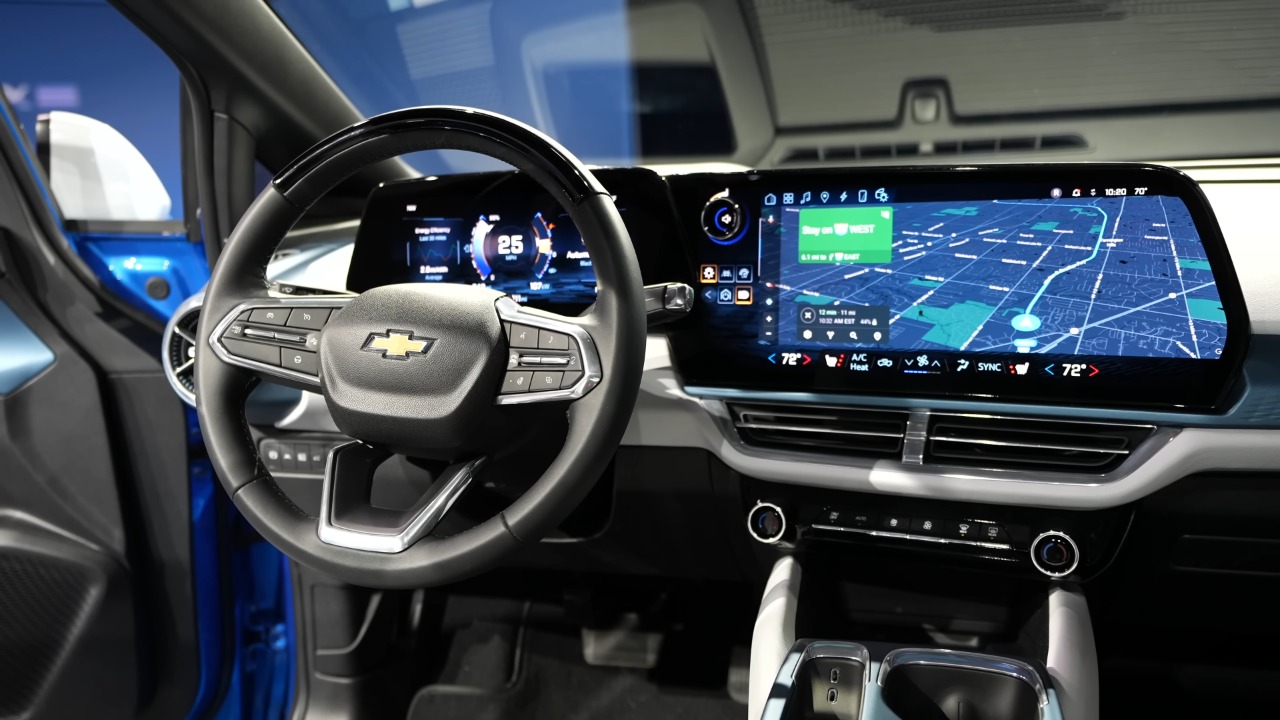

General Motors removed native Apple CarPlay support from its latest electric vehicles, betting that drivers would embrace a built-in Google-based interface instead. For many owners, that decision felt like losing a familiar digital cockpit overnight. Now a community-built modification is quietly restoring CarPlay to those dashboards, and in the process, it is testing how far drivers will go to reclaim control of the software in their cars.
I set out to understand how GM got here, why CarPlay matters so much to its most loyal users, and what it really takes to bring the feature back through unofficial hardware and open-source code. The result is a story about power users, tinkerers, and a company that underestimated how attached people are to the phone-first experience in their vehicles.
GM’s break with CarPlay and Android Auto
GM’s move away from Apple CarPlay and Android Auto did not happen in a vacuum. The company has been rolling out a Google-powered infotainment stack in its new electric trucks and SUVs, positioning it as a more tightly integrated system that can manage everything from navigation to battery management without relying on a smartphone. In practice, that meant GM deliberately removed the option to mirror an iPhone or Android device in the interface, even though many drivers had come to see those platforms as non‑negotiable parts of the driving experience.
The shift became more controversial when GM also shut down the only sanctioned retrofit path for its EVs. Reporting on the decision describes how GM pulled support for an aftermarket kit that had been developed to add Apple CarPlay and Android Auto to its electric lineup, a move that effectively cut off owners who hoped to upgrade their vehicles after purchase. One detailed account notes that GM banned the only aftermarket solution for Apple CarPlay and Android Auto in its electric vehicles and that the manufacturer of the kit removed it from its website, saying it was no longer viable to continue offering the product, a decision that affected customers at LaFontaine Chevrolet in Plymouth, Michigan, and other dealers that had been installing the system for buyers who insisted on phone mirroring in their new cars, as documented in GM bans the only aftermarket solution.
Why drivers are so attached to Apple CarPlay
For many GM owners, CarPlay is not a luxury feature, it is the primary way they navigate, communicate, and listen to media on the road. The interface mirrors the iPhone’s core apps, from Apple Maps to Messages, in a layout that feels familiar and predictable. That consistency matters when a driver is moving between vehicles or renting a car, and it is part of why CarPlay has become a default expectation in modern dashboards. When GM removed it, the company was not just swapping one navigation app for another, it was asking drivers to abandon a workflow that had been built around their phones for years.
That attachment shows up in the broader aftermarket world as well. Tutorials that walk owners through adding Apple CarPlay to older vehicles routinely attract large audiences, and they often frame the upgrade as a way to make an aging car feel new again. One example is a detailed guide on how to add Android Auto and Apple CarPlay to 2014–2018 GMC Sierra trucks, where the host from CLS All in One explains how a replacement head unit can bring modern phone integration to a factory dashboard that never shipped with it, a process broken down step by step in a video titled How to add Android Auto & CarPlay.
Inside GM’s Google-powered infotainment bet
GM’s argument for dropping CarPlay and Android Auto rests on the idea that a native, cloud-connected interface can do more than a mirrored phone screen. The company has promoted its Google-based system as a way to integrate vehicle data, voice control, and app services in a single environment, with the promise that over-the-air updates will keep it improving over time. In theory, that approach could reduce fragmentation and give GM more control over the user experience, from how drivers search for charging stations to how they receive software updates.
Tech-focused coverage of GM’s strategy has emphasized that this is as much about data and platform control as it is about convenience. One analysis of GM’s Google-powered infotainment notes that the story is less about cars and more about the technology behind them, highlighting how the company is leaning on Google’s software stack to power navigation, voice commands, and app integration in place of Apple CarPlay and Android Auto, a shift that is unpacked in a video titled GM’s Google-powered system.
The backlash: when GM “killed” CarPlay for EV buyers
Once GM’s new EVs began arriving without CarPlay or Android Auto, the backlash was swift among drivers who had expected those features as standard. For buyers who had followed the smartphone integration story for years, the change felt like a step backward, especially when rival brands continued to promote seamless phone mirroring as a selling point. The frustration was amplified by the fact that many GM owners had already invested in Apple’s ecosystem, from apps to subscriptions, and saw little reason to abandon that setup for a proprietary interface.
The tension came to a head when GM not only declined to offer CarPlay in new EVs but also pulled the plug on an official retrofit program that had been in development. A video report on the decision describes how GM took away the chance to add Apple CarPlay and Android Auto to its electric vehicles, explaining that the company ended support for a retrofit kit that had been designed to restore those features for EV buyers, a move that left owners with no sanctioned path to bring back Apple CarPlay or Android Auto in their dashboards, as detailed in GM takes away your shot.
The open-source workaround that brings CarPlay back
Against that backdrop, an open-source workaround has emerged as a lifeline for GM EV owners who are unwilling to give up CarPlay. The modification is not a simple app download, it is a hardware and software combination that effectively inserts itself between the vehicle’s systems and the driver’s phone. By tapping into the car’s display and controls, the mod can present a CarPlay interface where GM’s own software would normally appear, giving drivers back the familiar grid of icons and Siri-powered voice control they had lost.
Coverage of the project describes it as an open-source hack that restores CarPlay in New General Motors electric trucks and SUVs, explaining that the workaround uses community-developed code and off-the-shelf components to reintroduce Apple’s interface without official support from GM. The same reporting notes that the project’s maintainers see it as a stopgap until GM potentially offers an official app in the future, but for now it is the only way for many EV owners to get CarPlay back in Their vehicles, a reality laid out in detail in a post titled Killed CarPlay… But This Open-Source Hack Brings It Back.
How the mod actually works in GM’s new EVs
From a technical standpoint, the mod behaves like a translator between the car and the phone. It typically relies on a small computer that connects to the vehicle’s internal network and display, intercepting the video signal and replacing it with the CarPlay interface when activated. The driver can then use the existing touch screen and steering wheel controls to interact with CarPlay, while the underlying GM system continues to run in the background. That setup allows the mod to coexist with the factory software rather than fully replacing it, which is crucial for safety-critical functions like climate control and vehicle settings.
One detailed report on the mod explains that there is some tinkering involved, but for Apple CarPlay power users it is the only way to get the feature in GM’s new EVs. The same coverage notes that GM executives had previously discussed their decision to move away from CarPlay in a Decoder podcast interview, framing it as a strategic choice to own the in-car experience. For owners who disagree with that strategy, the mod’s ability to restore CarPlay on the main screen of a new GM electric truck or SUV is a powerful counterargument, as described in GM pulled the plug on CarPlay.
The broader DIY CarPlay ecosystem that made this possible
The GM-specific hack did not appear in isolation. It builds on a decade of experimentation in the aftermarket world, where enthusiasts have been adding Apple CarPlay to vehicles that never shipped with it. That ecosystem has produced a wide range of hardware, from full replacement head units to compact adapters that plug into existing USB ports. The common thread is a willingness to reverse engineer factory systems and find ways to inject CarPlay into them, even when automakers did not intend to support it.
Some of the most accessible examples are plug-and-play boxes that promise to add Apple CarPlay to virtually any car with a screen. One popular video tutorial walks viewers through a “little black box” that connects to a vehicle’s existing display and enables Apple CarPlay without replacing the entire infotainment system, showing how a simple adapter can transform the driving experience in a matter of minutes, a process demonstrated in a guide on how to add CarPlay to any car.
What owners risk when they install the hack
For all its appeal, installing an unofficial CarPlay mod in a new GM EV is not without tradeoffs. Owners who open up their dashboards or plug unapproved hardware into the vehicle’s network risk voiding parts of their warranty, especially if something goes wrong with the infotainment system or related electronics. There is also the question of software updates, since GM can change how its systems communicate over time, potentially breaking the mod or forcing its developers to scramble to keep up. For drivers who rely on their vehicles for daily commuting, that uncertainty can be a significant concern.
Security and reliability are part of the equation as well. When a third-party device sits between the car and the phone, it becomes another potential point of failure, and any bugs in the open-source code could have real-world consequences. That is why many owners still gravitate toward more traditional aftermarket solutions, such as replacing the factory head unit with a dedicated CarPlay-compatible system. Guides aimed at GM drivers explain that Aftermarket head units are one of the most straightforward ways to add CarPlay to a car that does not have it, offering seamless integration with an iPhone while keeping the factory wiring intact, a path laid out in detail in a resource titled How to add CarPlay to my car.
Lessons from older GM retrofits and the path forward
Looking at how owners have retrofitted older GM trucks and SUVs helps explain why the new EV hack has gained traction so quickly. For years, drivers of models like the 2014–2018 GMC Sierra have been upgrading their infotainment systems to gain Android Auto and Apple CarPlay, often following detailed walkthroughs that demystify the process. Those projects showed that with the right harnesses and modules, it was possible to integrate modern phone mirroring into factory dashboards without sacrificing core vehicle functions, a lesson that today’s EV hackers have clearly absorbed.
One widely shared example features a host from CLS All in One demonstrating how to add Android Auto and Apple CarPlay to a 2014–2018 GMC Sierra by swapping in a compatible module and updating the software, a process that turns an older truck into a connected vehicle with full phone integration, as shown in CLS All in One’s retrofit guide. The success of those retrofits has given GM owners confidence that similar ingenuity can overcome the company’s decision to remove CarPlay from its latest EVs, even if the technical details are more complex.
Why GM’s CarPlay gamble still matters
GM’s decision to cut off CarPlay and Android Auto in its new electric vehicles, and the community’s response, has turned into a case study in who controls the software in modern cars. On one side is an automaker that wants to own the interface, the data, and the long-term relationship with drivers through a Google-powered platform. On the other side are owners who see their phones as the center of their digital lives and are willing to install unofficial hardware and open-source code to keep that relationship intact on the road.
The stakes are clear in the way enthusiasts talk about the new hack. One video that dives into GM’s removal of CarPlay frames the change as the company “killing” a beloved feature, then walks through how an open-source solution can bring it back in New General Motors electric trucks and SUVs, highlighting both the technical achievement and the underlying frustration that made it necessary, a narrative captured in a detailed explainer. As more vehicles become software-defined, the battle over who gets to decide what runs on the dashboard is only beginning, and GM’s CarPlay gamble is likely to shape that conversation for years to come.
More from MorningOverview