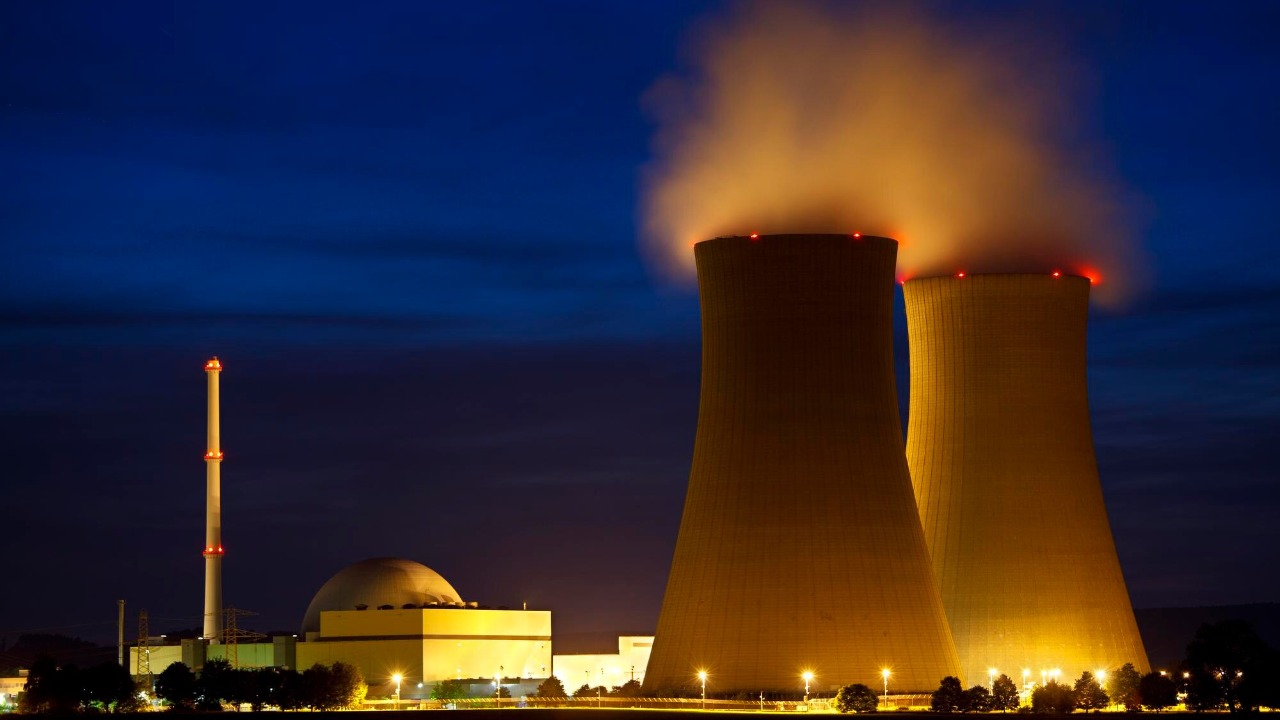

Nuclear power sits at the center of today’s climate debate because it can generate large amounts of electricity without the smokestacks and tailpipes that drive global warming. Yet calling it 100% clean glosses over the fuel mining, plant construction, accident risk, and long‑lived waste that come with every reactor. I want to unpack how “clean” nuclear really is, where it outperforms fossil fuels, and where the trade‑offs are harder to ignore.
What “clean” really means in the nuclear debate
When people describe nuclear as clean, they are usually talking about what comes out of the cooling towers during normal operation. On that narrow measure, nuclear reactors look impressive, because they produce electricity without the carbon dioxide, sulfur dioxide, or soot that coal and gas plants emit. The complication is that a full environmental ledger has to include uranium mining, fuel processing, plant construction, decommissioning, and the management of radioactive waste, all of which leave a footprint that does not fit neatly into a simple 100% clean label.
That is why some climate advocates argue that nuclear energy is often regarded as the cleanest power source in terms of emissions at the point of generation, yet still cannot honestly be labeled as 100% clean once the entire life cycle is counted. In that framing, the phrase “Is Nuclear Power 100% Clean? Here’s What You Should Know” becomes less a slogan and more a warning that the answer depends on which part of the system you choose to see. The tension between low operational emissions and unresolved waste and safety questions runs through every serious discussion of nuclear’s role in a decarbonized grid.
Nuclear’s carbon advantage over fossil fuels
From a climate perspective, the strongest case for nuclear is its extremely low greenhouse gas emissions per unit of electricity compared with coal, oil, or gas. Reactors split atoms rather than burn fuel, so they avoid the direct carbon pollution that drives global warming and local air quality crises. When I look at the numbers, nuclear’s life‑cycle emissions, including construction and fuel, are typically in the same low range as wind and lower than most solar, which is why many climate modelers treat it as a powerful tool for cutting carbon quickly.
That advantage shows up clearly in assessments that compare technologies across their entire life span. A recent U.N. analysis, cited by clean energy advocates, found that nuclear energy has the lowest lifecycle carbon emissions of any energy technology, even when mining, enrichment, and decommissioning are included. This is the logic behind arguments that the world will need both nuclear power and renewables to get to 100 clean energy, rather than relying on wind and solar alone. In that view, nuclear’s carbon profile is not just good, it is essential for any realistic path to deep decarbonization.
How much nuclear already contributes to clean electricity
Beyond theoretical models, nuclear already plays a major role in cutting emissions in the United States. Reactors run around the clock, providing a steady flow of electricity that does not fluctuate with the weather or time of day. That reliability has made nuclear a backbone of the existing low‑carbon grid, even as wind and solar have grown rapidly in recent years.
Federal energy data underline how central that role is. In 2017, nuclear energy provided 56% of AMERICA’s carbon‑free electricity, making it by far the largest domestic source of CLEAN ENERGY at the time. That single figure captures why some policymakers see existing reactors as climate assets that should be preserved as long as they can be operated safely. Shutting them down prematurely would mean replacing a large block of low‑carbon power, often with gas, which would push emissions in the wrong direction.
Why nuclear is not 100% clean: waste and risk
The case against calling nuclear fully clean starts with the waste that every reactor produces. Spent fuel remains dangerously radioactive for thousands of years, and no country has yet operated a permanent deep geological repository at full scale for commercial waste. In practice, much of this material sits in pools or dry casks at reactor sites, a temporary solution that keeps being extended because long‑term storage projects are politically and technically difficult.
Critics argue that this unresolved waste problem alone disqualifies nuclear from any 100% clean label. Environmental groups point out that the waste generated by nuclear reactors is often stored in temporary, above‑ground facilities that were never meant to last for the entire hazardous life of the material. As one detailed critique of the Cons of Nuclear Energy notes, the combination of long‑lived toxicity and interim storage raises questions about intergenerational fairness and the true cost of managing the fuel cycle. On top of that, the risk of severe accidents, even if statistically rare, carries consequences that are anything but clean for affected communities and ecosystems.
The environmental downsides beyond carbon
Even when reactors operate as designed, they interact with the environment in ways that go beyond carbon accounting. Nuclear plants typically require large volumes of water for cooling, which can heat local rivers or coastal zones and affect aquatic life. Uranium mining and milling disturb land, generate tailings, and can expose workers and nearby residents to radiation and heavy metals if not carefully managed. These impacts are not unique to nuclear, but they complicate any claim that the technology is environmentally benign.
Some climate advocates who are skeptical of nuclear emphasize that there is no such thing as a perfectly clean power source once you factor in land use, resource extraction, and waste. One detailed analysis framed this bluntly by arguing that There is no such thing as a zero‑impact energy system, and that conventional reactors bring their own set of ecological and safety burdens. In that light, the question is not whether nuclear is perfectly clean, but whether its specific mix of impacts is acceptable compared with the alternatives, especially fossil fuels that drive climate change and air pollution on a massive scale.
Debating nuclear’s role in a 100% clean grid
As governments set targets for fully decarbonized power systems, the argument over nuclear’s place in a 100% clean grid has sharpened. Some scientists and engineers propose replacing 100% of the world’s fossil fuel power plants with nuclear reactors, pointing to the technology’s reliability and compact land footprint. Others counter that such a build‑out would be too slow, too expensive, and too risky, especially when wind, solar, and storage costs have fallen dramatically.
One detailed critique published in Jun highlights seven reasons why conventional nuclear energy is not the answer to solve climate change, starting with the claim that there is no such thing as a perfectly clean reactor and extending to concerns about cost overruns, accident risk, and the water vapor and heat they release. That analysis argues that trying to replace 100% of fossil generation with nuclear would divert capital and political attention from faster, safer options. The debate is not just technical, it is also about which risks societies are willing to accept in the name of decarbonization and how quickly they need emissions to fall.
Public perception, memes, and the politics of fear
Public opinion about nuclear power is shaped as much by emotion and imagery as by data. High‑profile accidents, from Three Mile Island to Fukushima, left deep cultural scars that still influence how people react to proposals for new reactors. At the same time, social media has turned nuclear into a meme battleground, with some posts painting it as a silver bullet for climate change and others as an inherently toxic and reckless technology.
One widely viewed explainer released in Mar captures this clash by skewering viral claims that nuclear is simply “toxic” and “risky” while also acknowledging that it is more expensive in many markets and that even beloved species like koalas can become collateral damage in energy debates. In that video, titled Is Nuclear Energy Good For The Environment?, the creator walks through the trade‑offs in a conversational way that reflects how many people actually encounter the issue: through short clips, jokes, and simplified talking points. I see that dynamic as a reminder that any serious conversation about whether nuclear is clean has to grapple with fear, trust, and political narratives, not just engineering charts.
Why some advocates still call nuclear “clean”
Despite the unresolved waste and safety questions, many climate advocates and policymakers still group nuclear with renewables under the banner of clean energy. Their argument is that, in a world racing to limit warming, the overriding priority is to cut carbon emissions as fast as possible, and on that metric nuclear performs extremely well. They also point out that every energy source has trade‑offs, from the mining required for solar panels and batteries to the land footprint of large wind farms, so singling out nuclear for imperfection can be misleading.
One detailed explainer framed this tension directly by noting that Nuclear energy is often regarded as the cleanest power source in terms of emissions, yet still cannot be labeled as 100% clean once mining, waste, and accident risk are included. The piece, titled Is Nuclear Power 100% Clean? Here’s What You Should Know, uses that contrast to argue for a more nuanced vocabulary that distinguishes between low‑carbon and impact‑free. I find that distinction useful, because it allows nuclear to be recognized as a powerful climate tool without pretending that it is environmentally invisible.
Balancing nuclear with renewables in future energy mixes
Looking ahead, the most pragmatic scenarios for decarbonizing electricity do not treat nuclear and renewables as enemies. Instead, they explore combinations where wind and solar provide cheap, variable power while nuclear offers firm capacity that can run when the sun is down and the wind is weak. In those models, the question is not whether nuclear is 100% clean, but how much of it is needed alongside renewables, storage, and efficiency to keep the lights on without carbon.
Advocates of this blended approach argue that trying to reach 100% clean energy with renewables alone would require massive overbuilding and storage, which could be more expensive and land‑intensive than keeping some nuclear in the mix. They point to analyses showing that nuclear energy has the lowest lifecycle carbon emissions and that a portfolio including both reactors and renewables can reach deep decarbonization more reliably. In that sense, the phrase “we need both nuclear power and renewables to get to 100 clean energy” is less a slogan than a planning principle, one that accepts nuclear’s imperfections while still counting it as a crucial part of the climate toolbox.
How I weigh the “clean” label on nuclear
When I step back from the technical details, I find it helpful to separate two questions that often get blurred together. The first is whether nuclear power is low‑carbon, and on that front the evidence is strong: reactors deliver large amounts of electricity with minimal greenhouse gas emissions across their life cycle. The second is whether nuclear is 100% clean in the broader sense of being free from serious environmental and safety impacts, and here the answer is clearly no, given the unresolved waste, accident risk, and mining and water issues.
That is why I tend to describe nuclear as a low‑carbon but not impact‑free technology, one that can play a significant role in cutting emissions if its risks are managed transparently and its costs are weighed honestly against alternatives. The climate crisis is already forcing societies to choose between imperfect options, and nuclear is one of the most consequential of those choices. Whether it deserves the word “clean” may ultimately matter less than whether it helps phase out fossil fuels fast enough to avoid the worst outcomes of global warming, while still respecting the communities and ecosystems that live in its shadow.
More from MorningOverview