
The Indus Valley Civilization has long stood as one of humanity’s great enigmas, a Bronze Age society that mastered urban planning, long-distance trade and sophisticated water management, then faded from its great cities without a clear trace of why. After decades of debate, a new generation of climate and archaeological research is converging on a stark answer, pointing to a prolonged environmental crisis that slowly strangled this urban experiment. Rather than a single cataclysm, scientists now argue that a sequence of severe droughts and warming reshaped rivers, food systems and settlement patterns until the civilization’s city life could no longer survive.
What emerges from this work is not a story of sudden conquest or mysterious disappearance, but of a society forced to adapt to a changing monsoon and a weakening river system until its dense urban centers gave way to smaller, more dispersed communities. In tracing how that happened, I find a narrative that feels uncomfortably familiar in an era of accelerating climate disruption, with the Indus Valley’s fate offering a deep-time case study in what happens when environmental stress outpaces political and technological resilience.
The puzzle of a vanished urban giant
For more than a century, the Indus Valley Civilization has puzzled researchers because it combined extraordinary sophistication with an apparently gentle exit from history. At its height, this culture built gridded cities, standardized weights and measures, and intricate drainage systems, yet its major centers like Mohenjo-daro and Harappa were eventually abandoned without the obvious burn layers or mass graves that usually signal violent collapse. The absence of clear battlefield evidence left generations of scholars to speculate about everything from invasions to epidemics, but none of those theories fully matched the archaeological record of gradual decline and dispersal.
Recent work reframes that puzzle by treating the Indus world as an ecological system as much as a political one, asking how its cities depended on rivers, monsoons and agricultural cycles that could shift over centuries. Studies that track how the civilization peaked around a particular phase of monsoon strength, such as research highlighted under the banner of Why Did This Advanced Ancient Civilization Collapse, show that its urban zenith coincided with a relatively wet climate. When that climate regime shifted, the same infrastructure that once made the Indus cities so resilient may have become a liability, locking them into river and rainfall patterns that no longer behaved as expected.
From invasion myths to climate reality
Older narratives leaned heavily on the idea that outside forces toppled the Indus Valley Civilization, particularly the theory that a nomadic, Indo-European tribe called the Aryans swept in and conquered the region. That story, rooted in early twentieth century interpretations, imagined the Indo European Aryans as a decisive military shock that erased an older urban culture. Yet as archaeologists mapped more sites and refined dating techniques, they found little evidence of widespread destruction layers or abrupt cultural replacement, and instead saw continuity in pottery styles, settlement layouts and agricultural practices across the supposed invasion horizon.
In place of a single dramatic conquest, many scholars now emphasize a drawn-out transformation in which urban centers shrank while people moved into smaller villages and isolated farms. The same synthesis that once foregrounded the Aryan invasion now notes that the Indus Valley population appears to have dispersed rather than vanished, suggesting internal reorganization rather than annihilation. That shift in interpretation opened the door for climate scientists and geoarchaeologists to ask what long term environmental pressures might have nudged people away from big cities and toward more flexible rural lifeways.
The Indus River lifeline under stress
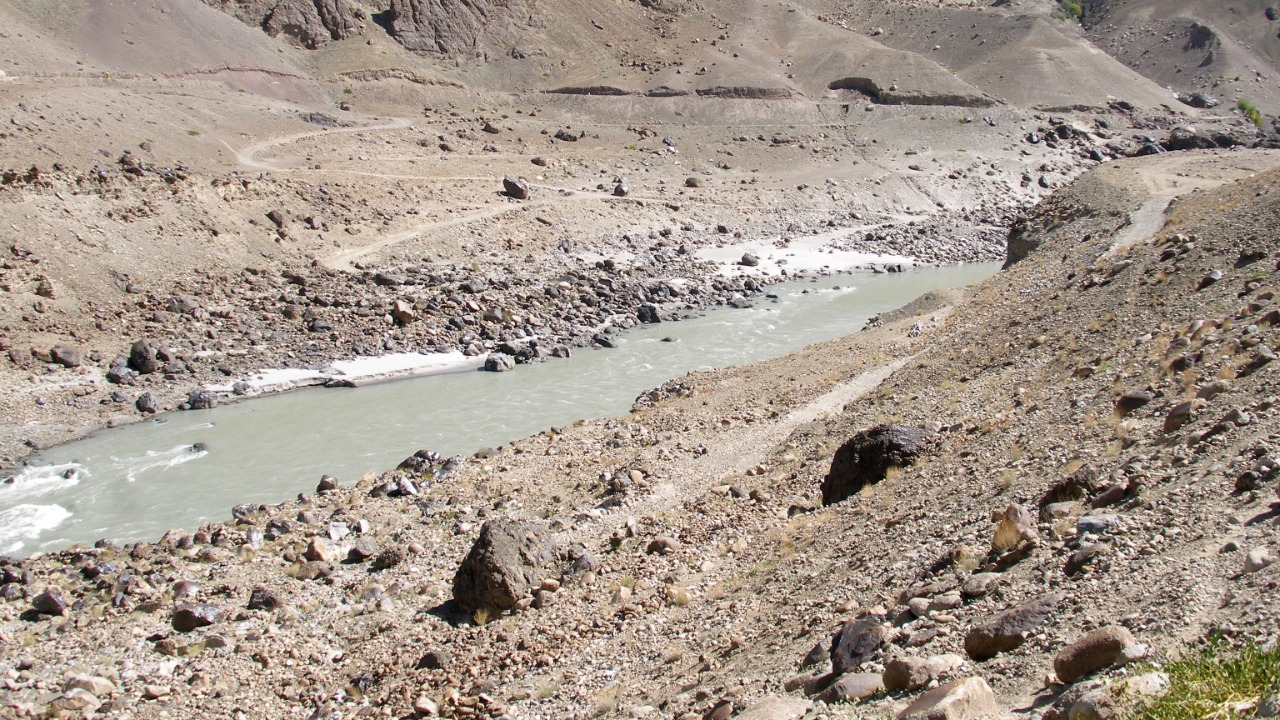
At the heart of the story is water, and specifically the river system that made intensive agriculture and dense settlement possible across the northwestern subcontinent. The Indus River was the lifeblood of the civilisation, feeding irrigation networks and floodplains that supported crops and trade across a vast territory. When I look at the latest reconstructions of ancient river courses, I see a picture of a landscape where even small shifts in flow or flood timing could have rippled through food supplies, taxation systems and urban planning.
New Delhi based reporting on recent research underscores how dependent major sites like Mohenjo-daro, Rakhigarhi and Lothal were on this hydrological engine, and how vulnerable they became as that engine faltered. Work by scientists at IIT Gandhinagar, summarized under the line The Indus River, traces how changes in river levels and sediment loads would have affected navigation, irrigation and the reliability of seasonal floods. When that fluvial rhythm broke down, the very cities that had flourished along stable channels suddenly faced unpredictable water, salinizing soils and the slow strangling of their agricultural hinterlands.
Warming, monsoon shifts and a drying heartland
The climate signal behind those river changes is becoming clearer as researchers stitch together data from lake sediments, cave formations and climate models. Reconstructions show that regional temperatures rose by about 0.5°C during a critical window in the late Bronze Age, a seemingly modest figure that nonetheless altered monsoon dynamics and evaporation rates. That warming, combined with shifts in the timing and intensity of seasonal rains, appears to have weakened the summer monsoon that once reliably recharged rivers and groundwater across the Indus basin.
According to climate modeling work on the region, Temperatures rising by that 0.5°C coincided with a measurable fall in the level of the Indus, which in turn undermined the water security that The Harappans had long taken for granted. The same analysis links warming and droughts directly to the collapse of the Indus Valley Civilisation, arguing that as the Indus dropped and rainfall patterns became erratic, urban centers faced repeated crop failures and water shortages. In that context, the decision to abandon large, water hungry cities and shift toward smaller, more dispersed settlements looks less like a mystery and more like a rational adaptation to a drying world.
Century scale droughts and the slow unravelling
Beyond gradual warming, the new research highlights a series of intense drought episodes that hit the Indus system over several centuries. Rather than a single bad year or decade, scientists now describe century scale dry spells that repeatedly stressed crops, pastures and reservoirs. When I read through the climate reconstructions, what stands out is how these long droughts would have eroded resilience layer by layer, depleting grain stores, weakening trade networks and pushing communities to the edge even before the final urban decline became visible in the archaeological record.
One synthesis of paleoclimate data describes a series of century scale droughts that quietly reshaped the Indus Valley Civilization, reducing its urban and cultural complexity over time. Another team, focusing on specific dry intervals, reports that Scientists identified four droughts that lined up closely with key phases in the rise or decline of the society. Taken together, these findings suggest that the Indus story is not about a single climatic shock, but about repeated blows that gradually made the maintenance of large, complex cities untenable.
How droughts reshaped cities, farms and trade
To understand how those droughts translated into social change, it helps to zoom in on the choices people made on the ground. Archaeological surveys show that as rainfall became less reliable, communities shifted away from the largest urban centers and experimented with new cropping strategies and settlement locations. Instead of relying on a narrow band of river fed fields, farmers diversified their plots, moved closer to zones with more stable rainfall and adjusted their crop mixes to hedge against failure in any single season.
One recent study highlights how Smaller communities in regions like Saurashtra adopted diversified crops and took advantage of foothill locations with more dependable rain. That same work argues that intense decades long droughts collapsed the Harappan urban system, not by wiping out the population, but by making the old model of dense, riverine cities too risky to sustain. In this reading, the Indus Valley Civilization did not simply fall, it reconfigured itself into a patchwork of smaller villages and farmsteads that were better suited to a world where the monsoon could no longer be trusted.
Reconstructing the climate story with modern tools
The confidence behind these conclusions rests on a suite of modern techniques that allow scientists to read ancient climates with increasing precision. By analyzing oxygen isotopes in cave stalagmites, for example, researchers can infer past rainfall patterns, while sediment cores from lakes and riverbeds reveal shifts in erosion, flooding and vegetation. When I look at how these datasets line up, I see independent lines of evidence converging on the same picture of a drying, warming Indus basin over the centuries when its cities declined.
Some of the most widely cited work in this area has been popularized under the framing of New Research Suggests Climate Change Played a Role in the Indus collapse, emphasizing how multiple proxies point to the same long term drying trend. Complementary reporting on New Research Suggests Climate Change Played a Role also stresses that the Indus case offers a warning shot for modern societies, showing how even advanced urban systems can be undone when climate shifts undermine their water and food foundations. The convergence of these methods and narratives is what allows scientists to speak with new clarity about why the Indus cities emptied out.
Inside the “slow death” of an urban civilization
What makes the Indus Valley story so compelling is that it does not fit the cinematic image of civilizational collapse as a single dramatic event. Instead, the evidence points to a “slow death” in which urban density, monumental architecture and long distance trade gradually ebbed away while people quietly reoriented their lives. I find that framing especially powerful because it mirrors how many modern climate impacts unfold, not as sudden apocalypse, but as a steady accumulation of stresses that make old ways of living harder to maintain.
A recent discussion on the Weon podcast captures this idea by exploring how new evidence reframes the Indus decline as a drawn out process of adaptation and loss. The conversation, building on work summarized as the Indus Valley Civilization’s slow death, emphasizes that urban abandonment did not mean cultural extinction, but rather a shift in scale and organization. That perspective aligns with archaeological findings of continued habitation in many regions, even as the iconic baked brick cities fell silent, underscoring that the real story is one of transformation under relentless environmental pressure.
Why the Indus collapse matters in a warming world
For all its distance in time, the Indus Valley experience resonates sharply with contemporary debates about climate risk and resilience. Here was a society that had mastered water management, standardized infrastructure and regional trade, yet it still struggled when its underlying climate regime shifted beyond historical norms. As I weigh the new evidence, I see a cautionary tale about the limits of even sophisticated systems when they are built around assumptions of stable rivers and predictable rains.
Modern researchers who frame their work under questions like Why Did This Advanced Ancient Civilization Collapse often stress that the Indus case should be read as a warning shot. The combination of warming, shifting rainfall and multi decade droughts that undermined the Indus Valley Civilization is not so different from the compound climate stresses facing river basins today, from the Colorado to the Nile. If anything, the Indus story suggests that the real danger lies not only in sudden disasters, but in the slow, grinding erosion of water security that can hollow out even the most impressive cities over time.
More from MorningOverview