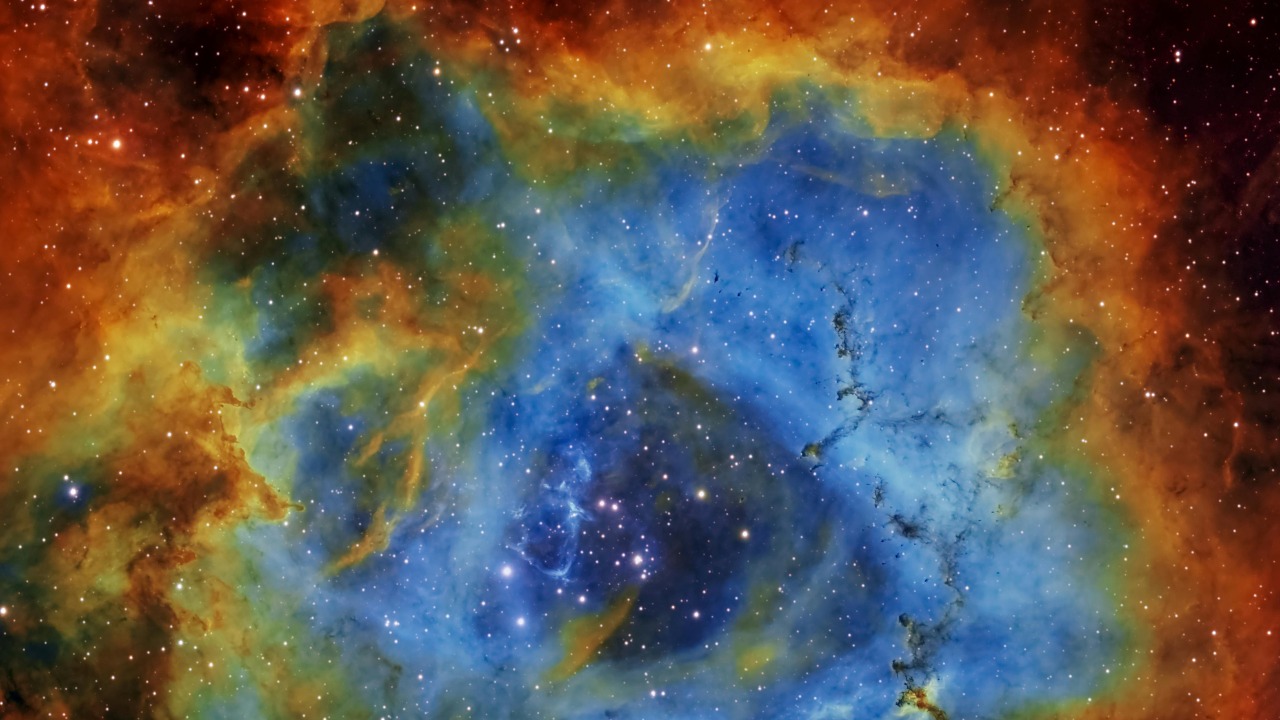

The latest image from the Hubble Space Telescope turns a quiet patch of sky into a spectral scene, revealing a so‑called “Ghost Nebula” where a dying star is shedding its outer layers into space. The view is not just visually striking, it captures a fleeting phase in stellar evolution that shows how stars prepare for their final act and seed the cosmos with new material. By freezing this moment in exquisite detail, Hubble lets me watch the boundary between a star’s life and death unfold in real time.
What looks like a delicate, glowing apparition is in fact a complex structure of gas, dust, and radiation sculpted by a star that has exhausted its fuel. The Ghost Nebula, and its close cousin the Little Ghost Nebula, reveal how stars like our Sun will eventually cast off their outer shells, leaving behind dense remnants that continue to shape their surroundings long after the main star has faded from view.
The haunting beauty of the Ghost Nebula
At first glance, the Ghost Nebula appears almost painterly, with wisps of illuminated gas curling around darker pockets of dust that resemble a translucent figure drifting through space. This ethereal look is not an illusion of the camera but the natural result of intense ultraviolet radiation from nearby stars energizing the surrounding material. In the latest coverage of Hubble Captures Breathtaking imagery, the Ghost Nebula is framed as both a scientific target and a visual spectacle, a combination that has long made Hubble’s work resonate beyond the astronomy community.
What makes this particular view so compelling is the way it compresses vast scales into a single frame. The Ghost Nebula is not a small object, yet Hubble’s optics resolve fine filaments and knots of gas that trace shock fronts and ionization fronts around the dying star. The interplay of bright rims and shadowed interiors hints at three‑dimensional structures, with some regions facing the harsh glare of stellar radiation while others lie in relative shelter. That contrast gives the nebula its ghostly character and turns a distant astrophysical process into something that feels almost intimate.
What happens to stars before they die
Behind the beauty of the Ghost Nebula lies a stark physical story. Stars like the one at its center spend most of their lives fusing hydrogen into helium, but as their fuel runs low they swell into red giants and begin to lose mass in powerful stellar winds. In the late stages, those winds become dense and structured, creating shells of material that drift outward even as the core of the star grows hotter and more compact. The recent reporting on What Happens to such stars emphasizes that these nebulae are not static clouds but the active remnants of a dying star in transition.
As the outer layers drift away, the exposed stellar core floods its surroundings with ultraviolet light, ionizing the gas and making it glow in characteristic colors. This is the planetary nebula phase, a relatively brief episode in cosmic terms, when the star’s death throes are at their most visible. The Ghost Nebula captures this moment when the central object has become hot enough to light up the expanding shell but has not yet faded into a compact white dwarf. It is a snapshot of stellar mortality, showing how a once stable star transforms into a stripped‑down remnant while its discarded atmosphere becomes a luminous shroud.
The Little Ghost Nebula and its blue‑green ring
The Ghost Nebula is not alone in this category of haunting stellar remains. Another object, the Little Ghost Nebula, offers a complementary view of the same underlying physics. In detailed imagery of this object, astronomers highlight a prominent blue‑green ring that spans nearly a light‑year in diameter, a structure that marks where energetic ultraviolet light from the central star has ionized the surrounding gas. That ring, described in NASA’s account of The prominent blue‑green ring, is not just a visual flourish but a boundary between regions of different physical conditions.
Inside the ring, the gas is hotter and more highly ionized, while outside it the material is cooler and less affected by the star’s radiation. Over roughly 10,000 years, the expanding shell will continue to move outward, thinning as it goes, until it blends into the interstellar medium. The Little Ghost Nebula shows this process in mid‑stride, with the ring acting like a time stamp on how long the gas has been exposed to the central star’s intense light. By comparing structures like this blue‑green ring to the more diffuse glow of the Ghost Nebula, astronomers can piece together a sequence of stages in the life and death of similar stars.
NGC 6369, where an old star gives up the ghost
The Little Ghost Nebula has a more formal catalog name, NGC 6369, and it has become a textbook example of how a star’s final outburst reshapes its environment. High resolution images show a compact central star surrounded by a bright inner ring and fainter outer extensions, all carved out by the interaction of stellar winds and radiation. In NASA’s description of how NASA’s Hubble Space Telescope captured NGC 6369, the emphasis falls on how the hot central star pours ultraviolet light into the surrounding gas, causing it to fluoresce in different colors depending on its composition and temperature.
NGC 6369 illustrates the layered history of mass loss from the progenitor star. The bright inner ring traces more recent ejections, while the fainter outer structures preserve evidence of earlier, slower winds that were pushed outward and reshaped by later, faster flows. This stratified appearance is a reminder that stellar death is not a single event but a series of episodes, each leaving its imprint on the nebula. When I look at the Ghost Nebula in that context, I see not just a single ghostly shell but a complex record of how the star has been shedding material over time, with each layer telling part of the story.
How Hubble reveals short‑lived stellar phases
One reason images of the Ghost Nebula and NGC 6369 feel so revelatory is that they capture phases of stellar evolution that are both brief and intricate. The planetary nebula stage typically lasts only tens of thousands of years, a blink compared with the billions of years a star spends on the main sequence. Without instruments like Hubble, which can resolve fine details in distant objects, much of that complexity would be blurred away. The reporting on how NASA’s Hubble Space Telescope isolates these short‑lived phenomena underscores how crucial resolution and sensitivity are for understanding stellar death.
By dissecting the light from these nebulae, Hubble can map where different elements reside and how fast the gas is moving, turning a static image into a dynamic story. Structures that look like smooth arcs in ground‑based telescopes break apart into knots, filaments, and jets under Hubble’s gaze, each feature tied to a particular episode of mass loss or a shock front where faster material plows into slower gas. For the Ghost Nebula, that level of detail means astronomers can distinguish between regions dominated by ionization, where radiation rules, and those shaped more by mechanical forces, where winds and collisions sculpt the gas. The result is a far richer picture of how stars dismantle themselves at the end of their lives.
Why astronomers call it the Little Ghost Nebula
Names like Ghost Nebula and Little Ghost Nebula are not just poetic flourishes, they reflect how these objects appear through telescopes and how they have been adopted by the observing community. NGC 6369, in particular, has earned its nickname because its faint outer halo and brighter inner ring resemble a small, glowing apparition against the dark background of space. Amateur observers who seek it out in backyard telescopes see a compact, misty patch that seems to hover in the eyepiece, a quality that has helped cement the “Little Ghost” label in popular use. In official descriptions, it is noted that the object is Known to amateur astronomers as the Little Ghost Nebula, a nod to that visual impression.
The ghostly theme also captures something deeper about planetary nebulae. They are, in a sense, the lingering presence of a star that has already left its main stage of life, a luminous echo of processes that have largely run their course. The central star is on its way to becoming a white dwarf, a tiny but incredibly dense object that will cool slowly over billions of years. What remains visible in the nebula is the star’s former outer layers, now detached and drifting away. Calling such structures “ghosts” is a way of acknowledging that we are seeing the afterimage of a star’s life, a beautiful but temporary apparition that will eventually fade into the broader interstellar medium.
IC 63, another ghostly nebula close to home
The Ghost Nebula label is not limited to planetary nebulae like NGC 6369. Another object, IC 63, carries the same nickname and offers a different perspective on how starlight sculpts gas and dust. IC 63 lies about 63 is about 550 light‑years from Earth, close enough in galactic terms that its structure can be studied in detail. Unlike the Little Ghost Nebula, which is the direct product of a dying star’s mass loss, IC 63 is shaped by the radiation of a nearby massive star that is eroding and illuminating a cloud of gas and dust.
IC 63 is classified as both a reflection and an emission nebula, meaning it both scatters starlight and glows from ionized gas. The combination gives it a layered appearance, with some regions shining in their own right while others simply redirect light from the illuminating star. The ghostly nickname fits here as well, since the nebula’s faint, wispy outlines and partially transparent look evoke a spectral figure. By comparing IC 63 to the Ghost Nebula around a dying star, astronomers can tease apart how different types of radiation and stellar environments produce similar visual motifs, even when the underlying physics diverge.
From glowing shells to tiny white dwarfs
All of these ghostly nebulae point toward the same ultimate destination for their central stars. Once the planetary nebula phase ends and the gas has drifted away, what remains is a compact stellar remnant that no longer sustains nuclear fusion. In the case of objects like NGC 6369, the central star will contract into a white dwarf, a body roughly the size of Earth but with a mass comparable to the Sun. Reporting on how the Hubble Space Telescope captured the Little Ghost Nebula emphasizes that when the glowing gas has dispersed, a tiny white dwarf star will be all that is left at the center.
That transformation is dramatic but also orderly. The white dwarf retains much of the original star’s mass, packed into a volume so small that its density defies everyday intuition. It will shine for billions of years, not by generating new energy but by slowly radiating away the heat stored in its compressed interior. The nebula that once surrounded it will have long since merged with the interstellar medium, contributing enriched material that can later be incorporated into new stars and planets. In that sense, the Ghost Nebula and its kin are not just symbols of stellar death, they are also agents of cosmic recycling, turning the end of one star’s life into the raw material for future generations.
Why ghostly nebulae matter for our own Sun
For all their otherworldly appearance, ghostly nebulae like NGC 6369 and IC 63 offer a preview of our own Sun’s distant future. The Sun is less massive than the stars that end their lives as supernovae, so it will not explode in a catastrophic blast. Instead, it will follow a path more like the one traced by the Ghost Nebula, swelling into a red giant, shedding its outer layers, and eventually leaving behind a white dwarf. The structures we see in the Little Ghost Nebula and related objects are, in effect, a time‑lapse of what will happen in our own neighborhood billions of years from now.
That perspective gives these images a particular resonance. When I look at the Ghost Nebula, I am not just seeing an abstract astrophysical process, I am seeing a possible fate for the star that makes life on Earth possible. The glowing shells, the blue‑green rings, the tiny remnant at the center, all of these features are part of a script that our Sun is likely to follow. Hubble’s ability to capture these scenes in such detail turns them into more than distant curiosities, it makes them mirrors, however faint, of our own long‑term cosmic story.
More from MorningOverview