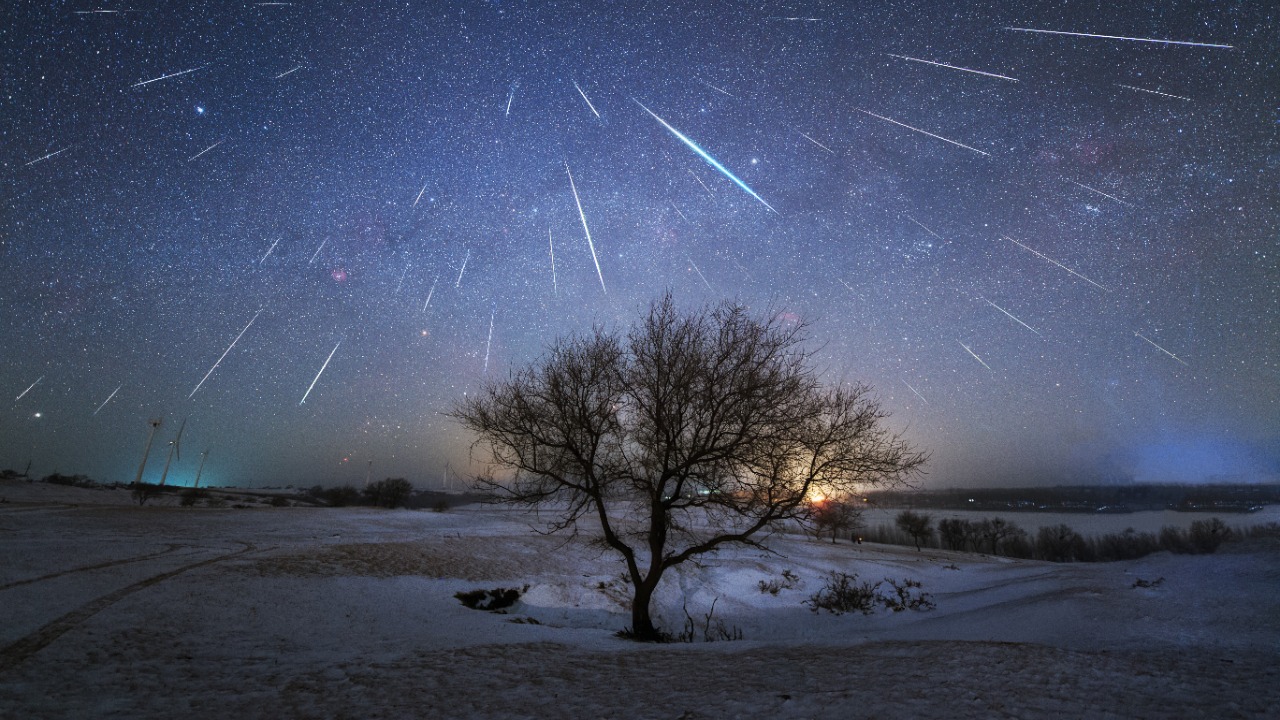

The final meteor shower of the year is about to crest, slipping in quietly after the fanfare of the Geminids and just before the holidays pull most eyes back to Earth. The Ursids rarely dominate skywatching calendars, but with a dark sky, a well-timed peak and a hint of unpredictability, they can still deliver a surprisingly memorable show for patient observers in northern latitudes.
As the shower builds toward its maximum next week, the question is not whether it will rival the Geminids, but whether this modest stream will “pop” enough to reward those willing to brave cold, late-night hours. I see a setup that favors careful planning, realistic expectations and a bit of luck, rather than guaranteed spectacle.
Why the Ursids are December’s quiet meteor finale
Every December, the Ursids arrive in the shadow of the Geminids, which are brighter, richer in fireballs and far better known to casual stargazers. The Geminid display peaks more than a week before the Ursids, and its reputation for high hourly rates and vivid streaks tends to soak up most of the attention that month. By the time the calendar rolls toward the winter solstice, many observers assume the meteor season is effectively over, even though the sky is still hosting a second, subtler performance.
In reality, the Ursids form a distinct shower with its own rhythm, active around the solstice and radiating from the northern sky near Ursa Minor. Reports note that its hourly rate is lower than that of the Geminids, which helps explain why it is often treated as an afterthought. Yet that same lower profile can be an advantage for dedicated observers, because it means darker fields, less competition for prime observing spots and a chance to appreciate individual meteors instead of being overwhelmed by a constant barrage.
Peak timing: when the shower should be strongest
The key to catching any meteor shower is aligning your observing window with both the shower’s peak and your local night. For the Ursids this year, predictions indicate that the shower will peak on December 22, 2025, around 11:00 UTC. That timing favors observers in Europe and parts of Africa, where the peak aligns more closely with local nighttime hours, but it still offers a useful guide for skywatchers across the Northern Hemisphere. The closer your observing session falls to that predicted maximum, the better your odds of seeing the shower at its most active.
For practical planning, the best time for viewers to watch is usually the late night into the early morning hours, when the radiant is higher and the sky is darkest. Guidance for this year’s event notes that the most favorable viewing will come in the hours before dawn on the peak night, when the Ursid radiant climbs well above the horizon and the Moon’s phase keeps the background sky relatively dim. That combination of a well-timed maximum and minimal lunar interference gives the shower a better chance to stand out than in years when bright moonlight washes out all but the brightest streaks.
How active the Ursids really are
Anyone heading outside for the Ursids needs to calibrate expectations. Typical activity is modest, with only a handful of meteors per hour under good conditions, which is a far cry from the richer winter displays that dominate social media feeds. Reports emphasize that its hourly rate is lower than that of the Geminid shower, so even under ideal skies you are more likely to experience a slow, contemplative trickle than a rapid-fire storm. That quieter pace can be frustrating if you are expecting constant action, but it also makes each meteor feel more distinct and memorable.
What keeps the Ursids on the radar of experienced observers is not its average performance, but its capacity for surprise. Historical accounts describe rare, intense bursts in the past that have produced 100 or more meteors per hour, a level that instantly transforms this quiet shower into a headline event. Those outbursts are not guaranteed and are difficult to forecast with precision, which means most years will not deliver anything close to that level. Still, the possibility of an unexpected spike is part of the appeal for dedicated meteor watchers who are willing to gamble on a cold December night.
Where the meteors come from and why “Ursid” matters
The Ursids trace their apparent origin in the sky to the constellation Ursa Minor, near the Little Dipper and Polaris, which is why the shower carries that name. Meteor showers are traditionally named after the constellation from which the meteors appear to radiate, so the Ursid label is a direct nod to that northern celestial bear. Some references even note that Ursid meteors are sometimes called the Umids, in a rather unsuccessful attempt to make clear that their radiant is in the bowl of the Little Dipper rather than in the larger Ursa Major. That alternative name never really caught on, but it underscores how closely the shower is tied to its patch of sky.
Because the radiant sits so far north, the shower is best placed for observers in the Northern Hemisphere, where the constellation Ursa Minor is circumpolar at many latitudes and never fully sets. Over this period, there will be a chance of seeing Ursid meteors whenever the shower’s radiant point in the constellation Ursa Minor is above the horizon, though activity will be strongest when it climbs higher in the sky. That geometry is why the shower is essentially invisible from much of the Southern Hemisphere, where the radiant either hugs the horizon or never rises at all.
Why this year’s conditions favor patient observers
Sky conditions can make or break a minor meteor shower, and this year the Ursids benefit from a relatively cooperative Moon. Reports highlight that in 2025 the new Moon occurs close to the shower’s active period, which means moonlight will present minimal interference during the peak. With the brightest natural light source out of the way, even the fainter streaks have a better chance of standing out against the background sky, especially from rural or dark-sky locations. For a low-rate shower, that difference is crucial, because losing even a few dim meteors to glare can cut your visible count dramatically.
Weather, of course, remains the wild card. In many northern regions, late December brings clouds, snow and biting cold, all of which can discourage long observing sessions. I find that planning a flexible window around the predicted maximum, rather than fixating on a single hour, gives you more chances to thread the needle between passing clouds. Because the shower is active for several nights around the peak, observers who can step outside on multiple evenings, even for short checks, are more likely to catch a clear spell when the radiant is high and the sky is transparent.
How and where to watch for the best view
Getting the most from the Ursids is less about specialized equipment and more about thoughtful preparation. The basic advice is familiar: find the darkest site you can reasonably reach, give your eyes time to adapt and settle in for at least an hour of uninterrupted watching. Guidance on how to view the Ursids stresses that you should allow at least 20 to 30 minutes for your night vision to fully develop, avoid looking at phone screens and use only dim red light if you need to check a star chart or adjust gear. The longer you stay outside, the more meteors you are likely to see, because your eyes and brain become better tuned to spotting faint, fleeting streaks.
Comfort matters just as much as technique, especially in late December. I recommend treating a meteor watch like a winter camping trip: dress in multiple insulating layers, wear a hat and gloves, bring a reclining lawn chair or camping cot and pack a thermos of something hot. Advice on How to watch the Ursid meteor shower also emphasizes choosing an observing spot with a wide, unobstructed view of the sky, ideally away from streetlights and house lights that can erode your dark adaptation. You do not need a telescope or binoculars; in fact, they narrow your field of view and make it harder to catch meteors that can appear anywhere overhead.
What to look for in the sky
Visually, Ursid meteors tend to be modest, but they can still be striking when conditions cooperate. Many will appear as quick, faint streaks that zip away from the region near the Little Dipper, though some can flare into brighter events that briefly rival the more famous winter showers. Because the radiant is high in the northern sky for much of the night at mid to high latitudes, meteors can appear in any direction, so I suggest leaning back and scanning a broad swath of sky rather than staring directly at Ursa Minor. That approach increases your chances of catching both short, fast trails near the radiant and longer, slower streaks farther away.
Observers sometimes report that the shower’s activity feels uneven, with lulls punctuated by brief clusters of meteors. Accounts of enhanced activity describe intervals when the Ursids seem to surge for a short time, but with no pronounced peak that matches the sharp spikes seen in some other showers. A detailed look at December’s overlooked meteor shower notes that Ursid meteors are sometimes called the Umids, a reminder that they radiate from the bowl of the Little Dipper and can be easy to misattribute if you are not familiar with that part of the sky. Keeping an eye on that region while still scanning widely helps you distinguish true shower members from sporadic meteors that are not part of the stream.
How the Ursids compare with the Geminids and other December showers
Context is important when judging whether the Ursids have “popped” in a given year. The Geminids, which peak earlier in Dec, are widely regarded as one of the most reliable and prolific annual showers, often producing dozens of meteors per hour under dark skies. You can see this meteor display from well lit suburban skies, but expect fewer meteors than from a rural site, and you still have a good chance of catching bright fireballs. By contrast, the Ursids are more sensitive to light pollution and require darker conditions to reveal even a modest number of streaks, which is one reason they are often overlooked by casual observers who only step outside for a quick glance.
Guidance on How to view the Geminids and Ursids side by side underscores that the two showers occupy different niches in the December sky. The Geminids reward a single, well timed outing with a high rate and plenty of bright events, while the Ursids favor observers who are willing to watch on the peak night and one of the surrounding nights, accepting that the payoff may be subtle. I see the Ursids less as a rival to the Geminids and more as a coda, a quieter epilogue that invites you to slow down and appreciate the winter sky after the main performance has ended.
Why the Ursids still matter for dedicated skywatchers
For many people, the appeal of the Ursids lies in their timing as much as their brightness. The shower occurs around the time of the winter solstice, when nights are long, the air is crisp and the constellations of the northern sky feel especially prominent. That seasonal context gives the event a certain intimacy, as if the year is closing with a final, understated celestial gesture. Even if the hourly rate is low, the experience of stepping outside in the quiet of a late December night, with Orion rising and the Little Dipper hanging high, can be its own reward.
There is also scientific and observational value in tracking a shower that is less predictable and less studied than its famous cousins. Over this period, there will be a chance of seeing Ursid meteors whenever the radiant is above the horizon, and careful observers can contribute counts, sketches and photographs that help refine our understanding of its behavior. I find that approaching the Ursids with that mindset, as an opportunity to participate in a shared, ongoing record of the sky rather than to chase a guaranteed spectacle, makes even a modest display feel meaningful.
Practical tips for maximizing your odds on peak night
With the peak approaching, the most effective strategy is to combine good timing, a smart location and realistic expectations. The Ursid meteor shower is active between Dec. 13 to Dec. 26 and will peak on Dec. 22, so I recommend planning at least one serious observing session centered on that date, with backup windows on the nights immediately before and after. The best time to look out for The Ursid meteors is typically after midnight, when the radiant is higher and the sky has fully darkened, but if you are limited by work or family schedules, even a shorter session in the late evening can yield a few streaks.
Location matters just as much as timing. To best see the Ursid shower, choose a site with minimal light pollution, a clear view of the northern sky and as little local glare as possible from nearby houses or roads. If you live in a city, consider driving to a darker suburb or rural area, using tools like light pollution maps or astronomy apps to scout potential spots. Once you arrive, give yourself time to set up, let your eyes adjust and settle into a comfortable position that allows you to watch the sky continuously without strain.
Will the Ursids “pop” this year?
Whether the Ursids will truly “pop” this year depends on what you are hoping to see. If your benchmark is the kind of sustained, high rate display that the Geminids can deliver, the Ursids are almost certain to feel subdued, even under ideal conditions. But if you approach the shower as a chance to catch a handful of graceful streaks, framed by a dark winter sky and perhaps punctuated by a brighter fireball or two, the setup this year is promising. The combination of a well timed peak, a cooperative Moon and the shower’s position near a circumpolar radiant gives observers in northern latitudes a genuine opportunity to see it at its best.
There is always the tantalizing possibility of a Rare outburst, the kind of sudden enhancement that has occasionally pushed the shower to 100 or more meteors per hour in the past, but that scenario should be treated as a bonus rather than a baseline expectation. Guidance on the 2025 event notes that the shower will be active from the night of Dec. 21 through dawn on Dec. 22, with the most favorable viewing in the pre dawn hours when the radiant is highest. If you can carve out that time, dress warmly and give the sky your full attention, you will have done everything within your control. The rest is up to the stream of dust in space and the atmosphere overhead, which is part of what keeps meteor watching endlessly compelling.
More from MorningOverview