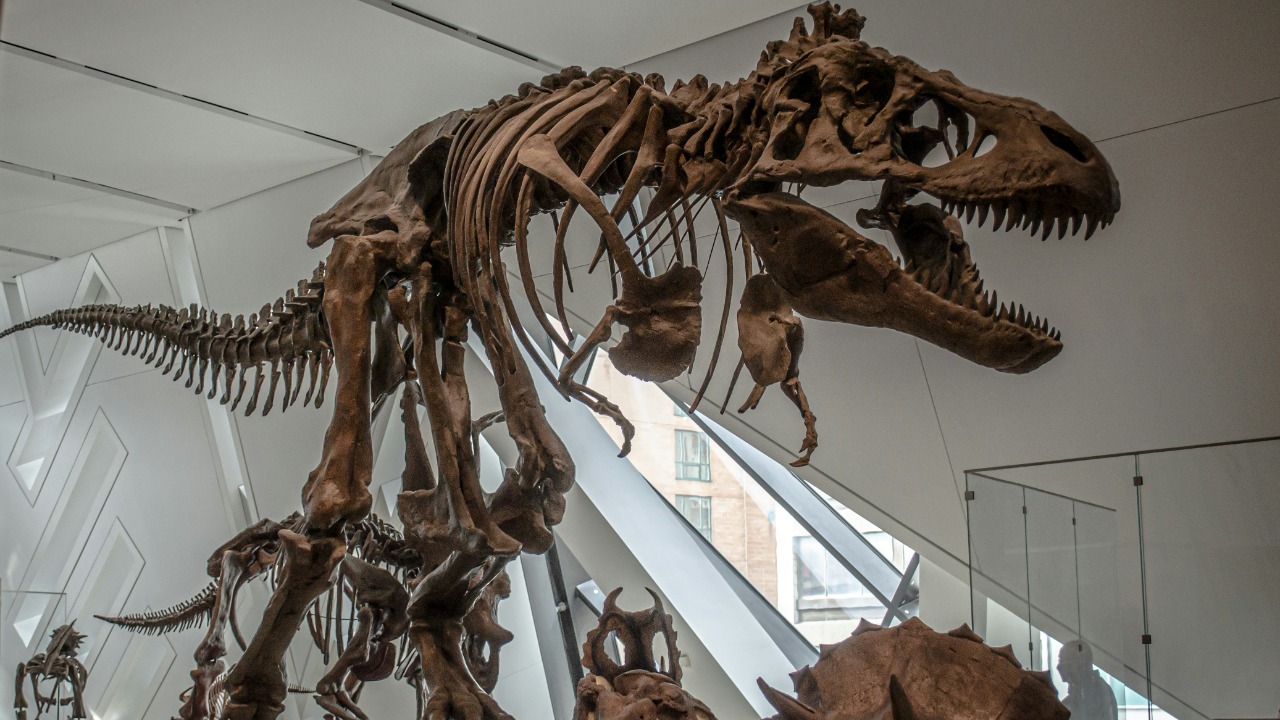

For more than a century, paleontologists have treated dinosaurs and mammals as rival success stories that simply took turns ruling the planet. New work on how each group raised its young suggests the split ran much deeper, shaping everything from ancient food webs to which species survived global shocks. By tracing that hidden difference in life strategy, I can see the deep past coming into sharper focus, with dinosaur nests and mammal burrows telling a shared story about competition, creativity, and collapse.
The quiet revolution in dinosaur versus mammal science
The latest wave of research argues that the real divide between dinosaurs and mammals was not just warm blood or body shape, but how each group invested in its offspring. Instead of treating parenting as a soft, secondary detail, scientists are now putting it at the center of evolutionary history, arguing that it controlled how many young animals were out in the open, how quickly they grew, and how they filled ecological space. That shift is turning what once looked like a simple dinosaur age followed by a mammal age into a more intricate mosaic of overlapping strategies.
One line of work, described as a Hidden Difference Between Dinosaurs and Mammals Is Changing Science, frames this as a fundamental contrast in how young animals moved through ancient ecosystems. In that view, dinosaur hatchlings left the nest early and fended for themselves, while mammal babies stayed close to their mothers for long stretches. That single divergence, researchers argue, altered how crowded ancient habitats became, how predators hunted, and how quickly new species could evolve, giving fresh meaning to the idea that parenting can rewrite the rules of life.
Free‑range dinosaur parenting and crowded ecosystems
When I look at the fossil record through this lens, dinosaurs start to resemble free‑range parents whose offspring flooded the landscape. Instead of a few well‑guarded juveniles, many species likely produced large clutches of eggs, with hatchlings dispersing into the environment soon after emerging. That pattern would have filled rivers, forests, and floodplains with small, fast‑growing youngsters, each one a tiny experiment in survival that could push into new niches if it managed to avoid becoming prey.
Researchers describe this as free‑range dinosaur parenting, a system where adults did not shoulder most of the heavy lifting once eggs hatched. Instead, young dinosaurs quickly joined the broader community, competing directly with small reptiles, early birds, and even the first mammals. That constant influx of juveniles, each growing through several size classes, would have created surprisingly diverse ancient ecosystems, with dinosaur youngsters themselves acting as a major ecological force rather than a hidden background detail.
Intensive mammal care and the cost of protection
Mammals, by contrast, built their evolutionary bets around a smaller number of heavily protected young. Rather than releasing offspring into the wild as soon as they could walk, mammal parents kept them close, feeding, grooming, and defending them through long childhoods. That strategy reduced the number of tiny bodies competing in the open, but it also meant each individual represented a larger investment, tying the fate of the next generation to the survival and behavior of adults.
Modern biology underscores how deep that pattern runs. Studies of Parental Care emphasize that Most mammals exhibit some form of prolonged parental care, including education and socialization, which keeps offspring dependent for extended periods. In the fossil context, that kind of intensive care would have limited how many young mammals could be raised at once, but it also allowed for more learning, more flexible behavior, and potentially higher survival rates for each juvenile that made it to adulthood.
How parenting shaped competition in the Mesozoic
Once I factor these contrasting strategies into the Mesozoic, the age of dinosaurs looks less like a simple story of reptilian dominance and more like a complex negotiation over space and time. Dinosaurs, with their free‑ranging young, filled many of the obvious roles in daylight ecosystems, from small plant‑eaters to mid‑sized predators. Mammals, constrained by slower reproduction and longer care, had to find ways to survive without directly colliding with those juvenile‑rich dinosaur communities.
Paleontologists describe this pressure clearly when they note that In the Mesozoic, mammals had to find resources that were not already being used by dinosaurs and other Mesozoic clades. That constraint pushed them into nocturnal lifestyles, insect‑eating diets, and burrowing habits, carving out a parallel world that coexisted with dinosaur‑dominated days. The result was not a single hierarchy, but two overlapping universes of activity, each shaped by how parents managed their young.
Mammals holding each other back under dinosaur rule
Even within that constrained world, mammals were not simply waiting in the wings for dinosaurs to disappear. They were evolving, diversifying, and, at times, limiting one another. When I look at statistical reconstructions of their family tree, a striking pattern emerges: mammal lineages often expanded in fits and starts, with bursts of innovation followed by periods where closely related species seemed to slow each other down.
One analysis of this pattern, framed as Extraordinary Evolution Research Reveals Mammals in the Time of Dinosaurs Held Each Other Back, suggests that competition among mammals themselves could cap how quickly new forms emerged. In that view, once a successful mammal group occupied a niche, it made it harder for close relatives to break into similar roles, even before dinosaurs entered the picture. Parenting strategies, body size, and feeding habits all intertwined, creating a crowded evolutionary landscape where mammals were both victims of dinosaur dominance and architects of their own limits.
Dinosaur parenting secrets and the Mesozoic nursery
As scientists dig deeper into dinosaur nests and bone beds, they are uncovering hints that parenting in the Mesozoic was more varied than the old stereotype of indifferent reptilian adults. Some species may have guarded nests or chosen particular environments for laying eggs, while others relied almost entirely on numbers and rapid growth. That diversity matters, because it changes how we imagine the Mesozoic nursery and the pressures young animals faced.
New work on what has been called The Dinosaur Parenting Secret That Could Change Everything We Know About the Mesozoic argues that for a long time, scientists underestimated how much dinosaur parenting behavior could reshape entire ecosystems. If some dinosaurs clustered nests in safe areas or timed hatching to seasonal booms in food, they would have created pulses of juvenile abundance that rippled through predator and prey communities. Those rhythms, layered on top of the basic free‑range pattern, would have made Mesozoic landscapes even more dynamic than previously thought.
Behavioral individuality and the power of animal creativity
Parenting is only one part of the story. To understand how dinosaurs and mammals navigated their worlds, I also have to consider individual differences in behavior, the quirks and innovations that can tip the balance between survival and extinction. Modern studies of animal cognition show that even within a single species, some individuals are more exploratory, more inventive, or more willing to take risks, traits that can spread through populations when conditions change.
Research on marine mammals, for example, has documented how Individual differences have been confirmed in many animals, as reviewed by Gosling 2001, and how Each animal will assume many roles over its lifetime. In one striking case, killer whales have been trained to use their creativity upon request, revealing a capacity for innovation that would have been invisible from bones alone. When I project that kind of behavioral flexibility back into deep time, it suggests that some dinosaurs and early mammals may have been better equipped than others to exploit new resources or adjust their parenting tactics, even if the fossil record only hints at those possibilities.
Climate shocks, shrinking bodies, and the resilience of small mammals
Parenting strategies and behavioral quirks did not play out in a stable world. They were tested repeatedly by climate shocks that reshaped habitats and food supplies. One of the clearest examples comes from the Paleocene–Eocene Thermal Maximum, or PETM, a rapid warming event that pushed temperatures and carbon levels sharply higher and forced animals to adapt or vanish.
Analyses of that interval show that Some organisms shrank, and in particular, mammals of the PETM are smaller than both their predecessors and descendants. That pattern suggests that small body size, rapid reproduction, and flexible diets helped mammals ride out extreme conditions, even as larger species struggled. When I connect that to the earlier Mesozoic story, it reinforces the idea that the mammal playbook of intensive care, smaller litters, and behavioral adaptability could become a strength once the dinosaur‑dominated framework collapsed.
From dinosaur extinction to the rise of tiny mammals
The end‑Cretaceous asteroid impact did not simply remove dinosaurs and hand the world to mammals. It stripped away the ecological scaffolding that had kept mammal strategies in check, clearing space for new experiments in size, diet, and behavior. In the immediate aftermath, the winners were not giant predators or massive herbivores, but small, fast‑breeding species that could exploit patchy resources and recover quickly from local setbacks.
Studies of this transition highlight how, after the impact, tiny mammals rapidly diversified into roles that had been off‑limits while dinosaurs ruled. One analysis of this shift, framed as unraveling the surprising rise of tiny mammals after dinosaur extinction, notes that once dinosaurs were gone, mammals that had been squeezed into marginal niches actually had a lot of different ecologies available. The same traits that once forced them into the shadows, including careful parenting and small body size, now allowed them to radiate into forests, grasslands, and oceans, setting the stage for the modern mammal‑dominated biosphere.
Rethinking the deep past through the lens of care
When I pull these threads together, the hidden difference between dinosaurs and mammals looks less like a footnote and more like a master key. Free‑range dinosaur parenting created teeming nurseries that filled ancient landscapes with juvenile bodies, while mammal care concentrated risk and opportunity in fewer, more protected young. Those choices shaped how each group responded to competition, climate shocks, and catastrophic events, influencing which lineages could seize new ground when old systems failed.
The emerging picture, captured in work described as Changing Science’s View of the Past, suggests that parenting, individuality, and life history are as central to deep time as teeth and claws. By treating care as a core evolutionary variable rather than an afterthought, I can see the age of dinosaurs and the rise of mammals not as disconnected eras, but as two contrasting answers to the same ancient question: how best to launch the next generation into an unpredictable world.
More from MorningOverview