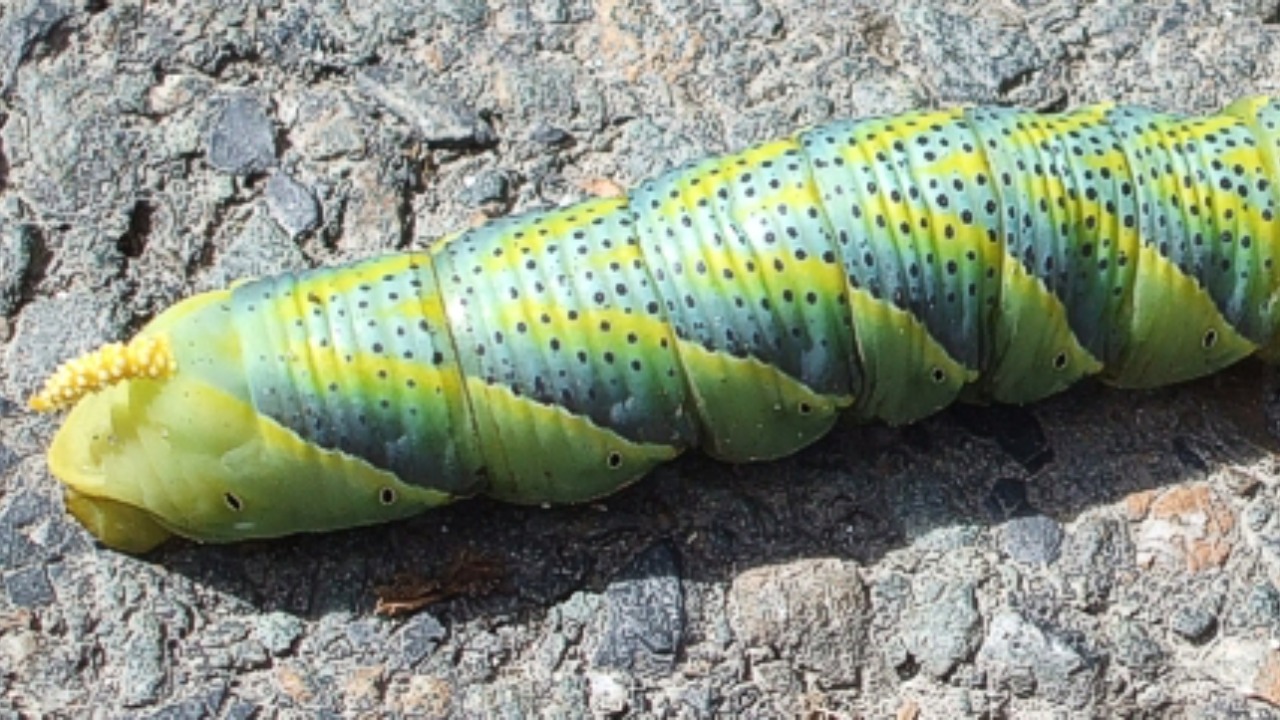

Predators in the forest understory are learning a strange new lesson: sometimes that ominous hiss in the leaf litter is not a snake at all, but a moth that has not even finished growing its wings. Young moths and their close relatives are turning air and body fluid into startling bursts of sound, and the effect on would‑be attackers is powerful enough to change how these fragile insects survive. What sounds like a simple noise is emerging as one of the most inventive defenses in the animal kingdom.
Instead of relying only on camouflage or toxins, these insects are using acoustic tricks that mimic more dangerous animals or simply shock predators into backing off. From caterpillars that whistle like boiling kettles to pupae that puff and hiss from inside their cocoons, the next generation of moths is anything but quiet, and the science behind their noisy defenses is advancing just as quickly.
How a breath of air turns into a weapon
The most dramatic example of this acoustic arms race comes from the buff‑leaf hawkmoth, which has turned its own breathing into a defensive weapon. When threatened, this insect forces air through its spiracles, the tiny openings it uses to breathe, and channels that airflow through internal structures that convert a simple exhale into a sharp hiss. The sound is not a gentle rustle, it is a sudden, snake‑like burst that can startle birds and small mammals long enough for the moth to escape, a strategy that has been detailed by Eric Ralls and colleagues.
What makes this system so effective is that it piggybacks on a behavior the moth must perform anyway. Every insect has to move air in and out of its body, but the buff‑leaf hawkmoth has evolved a way to route that air so it doubles as a warning signal. The hiss is not just loud, it is acoustically similar to the sound of a snake, which many predators instinctively avoid, and the way the noise bursts from the moth’s body is especially striking according to research on hawkmoths that hiss like snakes.
Young moths find their voice long before they fly
For a long time, scientists assumed that if moths made noise, they did it as adults, when wings and flight muscles were fully formed. That view has been overturned by work showing that immature stages, including larvae and pupae, can be surprisingly loud. Scientists have documented that some species begin producing defensive sounds while they are still encased in their cocoons, with pupae puffing and clicking from inside their protective shells when they sense contact or vibration, a pattern that Scientists studying young moths have now traced across multiple life stages.
These juvenile sounds are not random. Researchers have found that the majority of mature larvae and about half of the pupae in some hawkmoth species respond to simulated attacks with distinct acoustic bursts. In controlled experiments described in the Journal of Experimental Biology, these noises functioned as warning signals that helped the insects protect themselves, suggesting that sound is a core part of their survival toolkit long before adulthood.
Pupae that hiss and bubble from inside their shells
The pupal stage is usually portrayed as a quiet pause between the busy life of a caterpillar and the flight of an adult moth, but recent work shows it can be anything but silent. When disturbed, some pupae rapidly contract internal muscles and force air or fluid through narrow passages, generating hisses, clicks, or even bubbling sounds that leak through the cocoon wall. In one set of experiments, researchers gently prodded pupae and recorded them unleashing these hisses while also producing bubbles inside their bodies, a behavior that was highlighted when Researchers theorize that they might be imitating snakes.
From a predator’s perspective, this is a confusing and risky signal. A pupa is usually a soft, immobile package that should be easy to eat, but if it suddenly hisses like a small reptile, a bird or rodent may hesitate or abandon the attack altogether. The fact that these sounds can be produced from within a sealed casing shows how far evolution has pushed the limits of insect physiology, turning what looks like a vulnerable stage into a booby‑trapped capsule that talks back when touched.
Why sounding like a snake works so well
Imitating a snake is not a random choice, it is a calculated move in evolutionary terms. Many predators, including birds, small mammals, and even other insects, have learned through experience or instinct that snakes can be dangerous. A hiss that resembles a snake’s warning can trigger an immediate avoidance response, even if the source is a harmless moth. Studies on hawkmoths that produce snake‑like hisses show that the acoustic pattern and sudden onset of the sound are enough to make predators flinch, and the resemblance to a reptile’s warning call is central to the strategy described in work on hawkmoths that hiss like snakes.
This kind of mimicry is a classic example of what biologists call Batesian mimicry, where a harmless species copies the signals of a more dangerous one. In the case of young moths, the mimicry is acoustic rather than visual, which is particularly useful in low light or dense vegetation where predators rely more on sound than sight. By tapping into a pre‑existing fear of snakes, these insects gain protection without having to evolve venom or fangs of their own, a trade‑off that is far more efficient for a small, soft‑bodied animal.
The physics of insect hissing and whistling
Behind the drama of a hissing moth is a surprisingly elegant bit of physics. Insects do not have vocal cords, so they must generate sound by moving air or body parts in ways that create vibrations. In hawkmoths and related species, this often involves forcing air through narrow internal passages or spiracles, which act like tiny whistles. The rapid movement of air through these constrictions produces pressure changes that our ears interpret as hisses or whistles, and the exact pitch and volume depend on the size and shape of the passages, as shown in detailed work on Nessus sphinx caterpillars that whistle like a kettle.
In some species, the sound is produced by moving fluid rather than air. Pupae that generate bubbles inside their bodies are essentially using liquid to vibrate internal membranes, which then transmit sound through the cocoon. This combination of air‑driven and fluid‑driven acoustics allows different life stages to produce distinct noises using the same basic body plan. It is a reminder that even simple anatomical structures can be repurposed in creative ways when survival is on the line.
The Nessus sphinx caterpillar and its kettle‑like alarm
Among the most striking examples of juvenile insect acoustics is the caterpillar that will eventually become the Nessus sphinx moth. When attacked or even gently pinched with forceps by a researcher, these caterpillars emit a piercing whistle that has been compared to a kettle coming to a boil. The sound is produced by forcing air through the gut and between specialized chambers, turning the digestive system into a makeshift wind instrument, a mechanism that has been carefully mapped in studies of Nessus sphinx caterpillars.
Predators do not expect their prey to scream back, and that surprise is part of the defense. The whistle is loud relative to the caterpillar’s size and can carry through leaves and branches, potentially alerting other animals or simply startling the attacker into letting go. Because the sound is tied to physical manipulation, it functions as a last‑ditch alarm that only triggers when the caterpillar is already in danger, which makes it a highly targeted use of energy and anatomy.
From lab recordings to real‑world predator behavior
Much of what we know about these sounds comes from controlled experiments, where researchers record insects in soundproof chambers and analyze the resulting audio. In one study, a team working on hawkmoth larvae and pupae reported that the majority of mature larvae and about half of the pupae they tested produced clear defensive sounds when touched or squeezed. Their findings, published in the Journal of Experimental Biology, showed that these noises were not random byproducts of movement but consistent, repeatable signals that functioned as warnings.
Other researchers have focused on how predators respond. In experiments where birds or small mammals were exposed to recordings of caterpillar whistles or pupal hisses, the animals often paused, retreated, or avoided the source of the sound altogether. A study that tracked how a specific species of caterpillar, the Nessus sphinx, reacts when it thinks it is under attack found that the insects reliably produced their hiss when threatened, and that predators changed their behavior in response, as documented in work that invited readers to listen to this caterpillar hiss when it thinks it is under attack.
Why evolution favors noisy youngsters
From an evolutionary perspective, it makes sense that sound would become part of the defensive playbook for young moths. Larvae and pupae cannot fly, and many cannot move quickly enough to outrun a predator, so they need other ways to tip the odds in their favor. Acoustic signals are relatively cheap to produce compared with growing heavy armor or potent toxins, and they can be deployed instantly when danger appears. The fact that scientists have now documented defensive sounds in multiple life stages, from caterpillars to pupae to adults, supports the idea that noise is a flexible, multi‑purpose tool in these insects’ survival strategy, a pattern that Scientists working on young moths hissing have emphasized.
There is also a generational payoff. Any juvenile that manages to survive long enough to reproduce passes on the genes that support these acoustic tricks, whether they involve specialized spiracles, internal chambers, or neural circuits that trigger hissing at the right moment. Over time, natural selection can refine both the sound itself and the behavior that controls it, making the hiss more snake‑like or the whistle more piercing. The result is a chorus of defensive noises that may sound chaotic to us but are finely tuned to the fears and reflexes of the predators that share the same habitat.
What these hissing moths reveal about animal communication
These discoveries also broaden how I think about communication in the natural world. We tend to reserve the word “communication” for signals exchanged within a species, like bird songs or bee dances, but the hisses and whistles of young moths are aimed squarely at other animals. They are messages that say, in effect, “I am not worth the risk,” and they rely on the receiver having the right instincts or experience to understand that warning. The idea that a soft‑bodied insect can tap into a predator’s fear of snakes or sudden loud noises shows how deeply interconnected different species’ sensory worlds can be, a point underscored when Researchers theorize that they might be imitating snakes with their shockingly noisy defense sounds.
There is still much that remains unverified based on available sources, including exactly how widespread these behaviors are across all moth families and how different predators learn to interpret them. But the work already completed makes one thing clear. The next time a leaf twitches and a sharp hiss cuts through the undergrowth, the safest assumption for a hungry predator may be that something dangerous is hiding there, even if the sound is coming from a young moth that has turned its own breath and body into an acoustic bluff.
More from MorningOverview