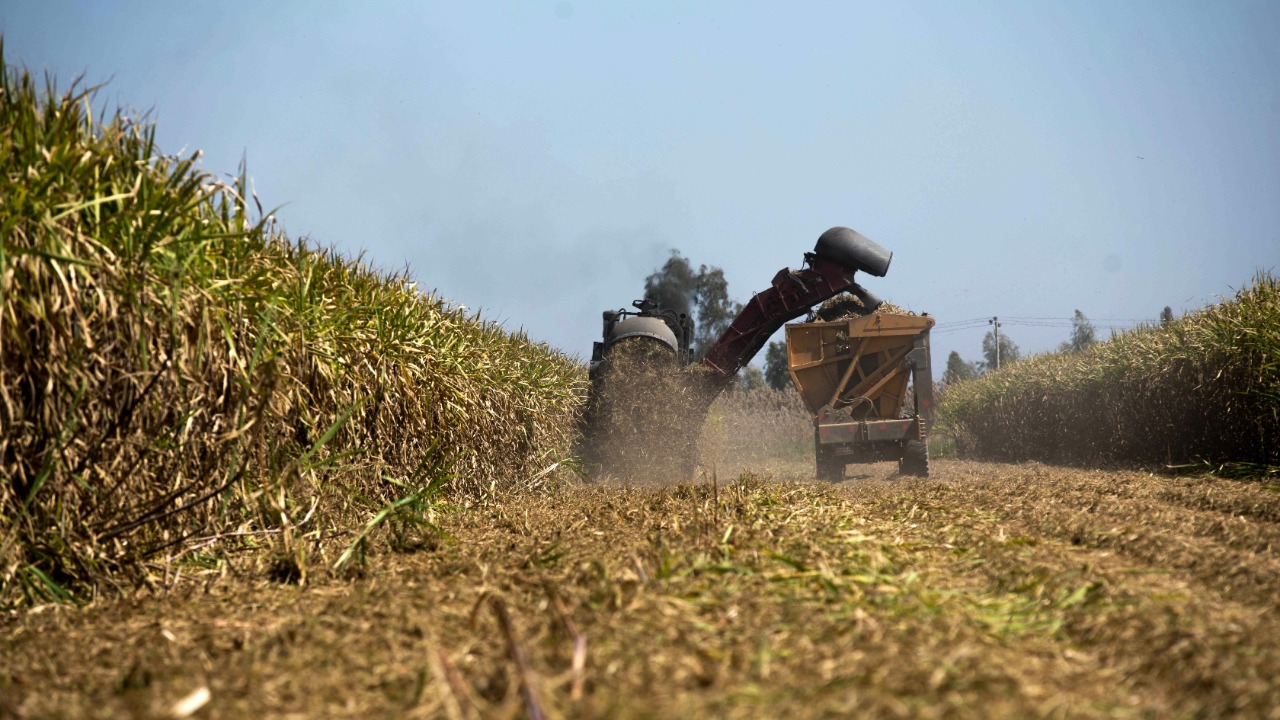

Across some of the world’s most productive fields, farmers are warning that a cornerstone crop is on the brink of becoming unviable within just a few growing seasons. Their message is blunt: without rapid changes to how we manage climate risk, water, and farm economics, a harvest that underpins food security and rural livelihoods may no longer be worth planting in five years.
I see their alarm as more than a local complaint about bad weather. It is an early signal of how quickly climate stress, volatile markets, and fragile supply chains can converge on a single crop, turning a familiar staple into a high-stakes gamble that many growers are no longer sure they can afford to take.
The crop farmers say may not survive the next five years
In the Himalayan region of Kashmir, growers of high-value saffron are already speaking about their signature crop in the past tense. After years of erratic rainfall and shrinking yields, some of these farmers now say the delicate purple flowers that produce saffron threads are “not sustainable after the next five years,” a stark assessment that reflects how quickly a once-reliable harvest has become almost impossible to manage. Their concern is not abstract: the crop depends on cool nights, specific soil moisture, and a narrow flowering window, all of which are being disrupted by hotter, drier conditions and unpredictable storms.
When I listen to those warnings, I hear a broader alarm about the fragility of climate-sensitive crops that require precise conditions, from specialty spices to fruits and nuts. The same forces that are undermining saffron in Kashmir, including shifting rainfall patterns and rising temperatures, are already eroding yields and quality in other regions that rely on similar microclimates. The growers’ blunt prediction that saffron may be “not sustainable after the next five years” is captured in reporting on Farmers issue urgent warning from Kashmir, and it mirrors the unease I hear from growers of other climate-exposed crops who now see each planting season as a roll of the dice.
Why climate extremes are turning planting into a yearly gamble
Across the United States, farmers who depend on rain-fed fields are increasingly describing their work in the language of risk rather than routine. One corn and soybean producer put it bluntly, saying “I gamble every year” as he watches weather patterns swing from drought to deluge, compressing planting windows and raising the odds of crop failure. That sense of gambling reflects a hard reality: the more greenhouse gases accumulate in the atmosphere, the more extreme heat waves, flash droughts, and violent storms are reshaping what used to be predictable growing seasons.
Researchers tracking these shifts are not relying on anecdotes alone. Climate scientists and agronomists are using detailed models, field data, and even farmer poll responses to map how rising temperatures and shifting rainfall are cutting into yields and raising production costs. When growers say they are gambling, they are responding to a measurable uptick in weather volatility that is already making some crops harder to grow consistently, and they are doing so in a context where a single poor season can erase thin margins and push families off the land.
Climate science points to a future of more frequent crop failures
The warnings from fields in Kashmir and the American Midwest are echoed in global climate research that points to a sharp rise in crop failures over the next few decades. Scientists analyzing temperature, rainfall, and soil moisture trends project that by 2030, the likelihood of major yield failures will be 4.5 times higher than it is today. By 2050, that risk could jump to as much as 25 times current rates, turning what used to be once-in-a-generation disasters into events that strike multiple times within a farmer’s working life.
These projections are not limited to one crop or one region. They reflect a world in which hotter summers, longer dry spells, and more intense downpours are pushing plants beyond their biological comfort zones and stressing water systems that are already overdrawn in many places. When I connect those findings to the on-the-ground stories from growers, I see a consistent pattern: the climate is moving faster than traditional farming practices can adapt, and the result is a rising probability that a crucial crop will fail so often that it no longer makes economic sense to plant it.
Staple crops under pressure: corn, soybeans, wheat and beyond
While saffron is a vivid example of a high-value crop at risk, the deeper concern is what happens when climate stress hits the staples that feed hundreds of millions of people. Analysts tracking U.S. agriculture warn that corn, soybean and wheat harvests are likely to see slower yield growth by 2030 as extreme heat, changing rainfall, and other climate pressures intensify. In key states such as Kansas, those stresses are expected to erode productivity further by mid-century, particularly where irrigation water is already scarce or groundwater aquifers are in decline.
Global projections tell a similar story. Future projections in global yield trends for maize and wheat point to significant declines, with researchers attributing much of the drop to rising temperatures and more frequent droughts linked to increasing greenhouse gas emissions. When I put those findings alongside the farmers who already describe their work as a yearly bet, it becomes clear that the risk is not confined to niche crops. The same forces that could make saffron unsustainable within five years are bearing down on the grains and oilseeds that anchor the world’s food supply.
How climate shocks are already hitting farm incomes
Even before yields collapse outright, climate volatility is squeezing farm finances in ways that make certain crops feel unsustainable. In the United States, analysts describe an agricultural sector under stress from a combination of High input and production costs, low commodity prices, and a run of poor weather that has left many producers with low net farm incomes. When fertilizer, fuel, and seed prices climb while markets remain volatile, farmers have less room to absorb a bad season, and a crop that fails too often can quickly become a financial liability rather than a source of stability.
The human toll of that pressure is visible in places like Shoreham, where a veteran grower named After 45 tireless years of farming in Shoreham, drought wiped out so much of Sabourin‘s corn crop that continuing no longer made sense. His experience, documented in a survey of drought-driven losses, underscores how a single season of extreme dryness can tip a long career into retirement, and how quickly a crop can move from marginally profitable to untenable when conditions fall outside a farmer’s control.
From local disaster to global price shock
When a harvest fails in one region, the immediate impact is felt by local families and businesses. But as climate shocks become more frequent, those local losses are increasingly feeding into global price spikes that ripple through supermarket shelves and restaurant menus. Analysts tracking food markets note that crops such as coffee, cocoa, and key grains are especially exposed to drought and heat, and that their prices are among those most affected when climate extremes hit major producing regions. Writer Rebecca Geldard has highlighted how repeated droughts and floods are already pushing up costs for consumers while putting pressure on the agricultural sector to become more sustainable.
That pattern is visible whenever an unexpected event devastates key crops and forces farmers to sell what remains at much higher rates just to stay afloat. Recent reporting on growers facing sudden losses, including those described by Farmers and summarized by Alyssa Ochs and Thu, shows producers “Selling at much higher rates” after a shock, a coping strategy that can keep farms afloat in the short term but also feeds into a recurring pattern of higher prices and tighter supplies for consumers worldwide.
The human calculus: when a crop stops making sense
Behind every warning that a crop may be unsustainable within five years is a personal calculation about risk, reward, and identity. For a saffron grower in Kashmir or a corn farmer in the Midwest, deciding to walk away from a crop is not just a business choice, it is a break with family history and community expectations. When I speak with farmers, they often describe a tipping point where the emotional pull of tradition can no longer outweigh the financial and physical strain of planting a crop that fails too often or demands inputs they can no longer afford.
That calculus is shaped by more than weather. It includes the cost of irrigation equipment, the availability of crop insurance, the reliability of markets, and the mental toll of watching a season’s work wither in a heat wave or wash away in a flood. As climate extremes intensify and research points to more frequent failures, the question many growers are asking themselves is not whether they can survive one more bad year, but whether they can justify betting their future on a crop that, like saffron in Kashmir, may be “not sustainable after the next five years.” For some, the answer is already no, and their decisions are an early indicator of how climate change is beginning to redraw the map of what the world can grow, and where.
More from MorningOverview