
Electric cars are no longer niche experiments, but not every EV on sale is a smart buy. Some models are quietly left off “best of” lists, while others raise red flags around reliability, battery health or day to day usability. I am focusing on the EVs and scenarios that experts either sidestep or explicitly warn about, to highlight the 10 worst electric car choices you can make right now.
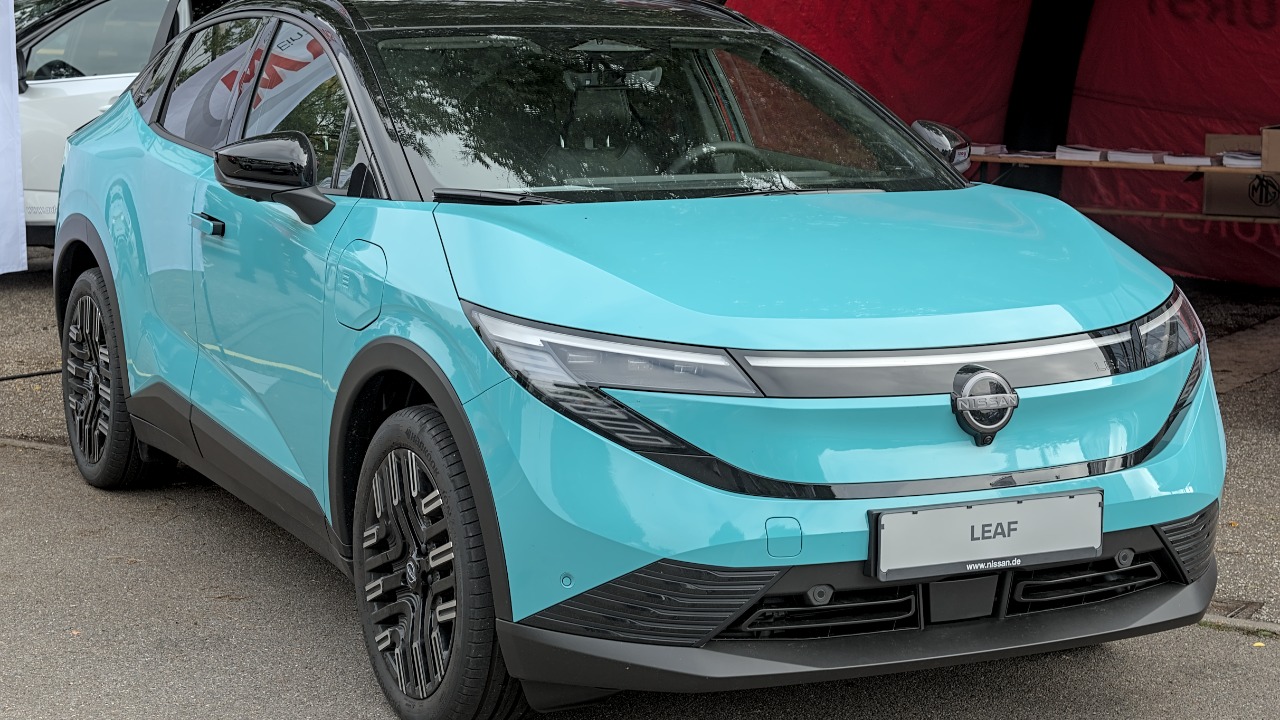
1. Nissan Leaf (older 24 kWh)
The Nissan Leaf, especially early 24 kWh versions, is a textbook example of an EV that struggles to earn modern praise. When a curated ranking of the 12 best electric cars in the UK highlights specific best electric cars (EVs) in the UK, any model that fails to appear is, by definition, not counted among “the 12 best EVs in 2025” as that list defines them. The omission matters because the Leaf was once a pioneer, yet its limited real world range, modest charging speeds and early battery chemistry now leave it lagging behind newer rivals.
For buyers, that gap shows up in practical ways. Older Leafs often lack liquid battery cooling, which can accelerate degradation in hot climates or with frequent rapid charging, and their CHAdeMO fast charging port is increasingly sidelined as networks prioritize CCS. When a once mainstream EV no longer qualifies for a tightly edited “best” list, it signals that the market has moved on, and shoppers risk paying for outdated tech that will feel like a compromise almost immediately.
2. Mazda MX-30
The Mazda MX-30 stands out for the wrong reasons because it is explicitly placed in the “those to avoid” group rather than among “the EVs to buy” in a major breakdown of best electric cars 2025. That split is not subtle, it is a direct signal that some EVS are recommended and others are singled out as poor choices. The MX-30’s tiny usable battery, short range and relatively slow charging performance make it hard to justify next to similarly priced rivals that travel much farther on a charge.
Being named in a “those to avoid” category has real consequences for buyers and for Mazda. It suggests that even if the MX-30’s interior quality or driving dynamics are acceptable, the core EV package is not competitive enough to earn a place among the recommended models. For anyone cross shopping electric crossovers, that explicit warning should push the MX-30 to the bottom of the list, especially if they rely on a single car for commuting, errands and longer trips.
3. Fiat 500e
The Fiat 500e is charming and compact, but charm alone does not secure a place among the top performers. When a detailed ranking presents the 20 best electric cars on sale right now, any EV that fails to make the cut is, by definition, not considered one of “the 20 best electric cars on sale right now.” The 500e’s absence from such a list underlines its limitations, particularly its modest range and cramped practicality compared with similarly priced small EVs that offer more space and flexibility.
For city drivers who rarely leave urban streets, the 500e can still function as a stylish runabout, but its omission from a top 20 ranking signals that there are better rounded options. Buyers who stretch their budget for an EV expect more than a fashion statement, they want usable range, decent charging speeds and enough room for passengers or luggage. When a car misses a broad “best” list, it is a sign that the compromises outweigh the benefits for most people.
4. Any used EV with an unknown battery’s condition
The used EV with an unknown battery’s condition is one of the worst purchases you can make, regardless of badge. Guidance on second hand electric cars stresses that shoppers should “Know the battery’s condition before you buy,” and treats a used electric vehicle with an unverified pack as a risky bet. In its advice on what to know before you buy a used electric vehicle, the focus is clear, the battery is the most expensive component and its health directly determines range and value.
Skipping a battery health report, dealer diagnostic or third party scan can leave you with an EV that shows a full charge on the dash but delivers far less range than advertised. That shortfall affects everything from daily commuting to resale value, and it can turn a seemingly cheap used EV into a car you constantly nurse between chargers. Because pack replacement can cost tens of thousands of dollars, treating battery condition as an unknown is effectively gambling with the entire purchase price.
5. Out‑of‑warranty early Tesla Model S
An out‑of‑warranty early Tesla Model S illustrates how a once aspirational EV can become a financial trap. Expert advice on second hand electric cars urges buyers to “Check for remaining battery and emissions warranties,” and flags an out‑of‑warranty used electric vehicle as especially vulnerable to expensive battery related repairs in its guidance on Some used and new EV’s you should stay away from. When the original battery and drivetrain coverage has expired, owners are fully exposed to the cost of major components that are far pricier than in a comparable gasoline car.
Early Model S sedans combine complex air suspension, large high voltage packs and aging infotainment hardware, so a single failure can erase any savings from buying used. For shoppers lured by low prices on older luxury EVs, the lack of warranty safety net is a critical red flag. Without coverage, even routine wear can escalate into four or five figure repair bills, making these cars some of the worst EVs to buy if you are on a fixed budget.
6. Hyundai Ioniq Electric (high‑mileage)
A high‑mileage Hyundai Ioniq Electric that has lived its life on rapid chargers is a classic “fast‑charged‑to‑death” scenario. Detailed buying advice tells shoppers to “Ask about fast charging history,” and flags used electric vehicles that have been frequently DC fast‑charged as at higher risk of accelerated battery degradation in its overview of Here are electric cars you may regret buying. The Ioniq Electric’s efficient drivetrain can mask early signs of degradation, but a pack that has been hammered by constant high power charging will eventually show reduced range and slower charging speeds.
For ride hailing drivers or long distance commuters who relied heavily on DC fast charging, the convenience came at a cost that the next owner may inherit. When you buy such a car without a clear charging history, you risk discovering that the real world range falls well short of expectations, forcing more frequent stops and undermining the whole point of owning an efficient EV. That combination of invisible wear and long term impact makes heavily fast‑charged examples some of the worst used EVs to take on.
7. Chevy Bolt EV
The Chevy Bolt EV has been praised for its range and packaging, but it also embodies the risk of a recall‑ridden EV with outdated software. Guidance on used electric cars stresses that buyers should “Confirm that software and recalls are up to date,” and views used electric vehicles with outstanding recalls or outdated software as problematic purchases in its advice on Consumer Reports reveals the 10 electric cars with the worst reliability in 2025. The Bolt’s history of battery related recalls shows how critical it is to verify that all remedial work has been completed and that the latest software limits and monitoring are installed.
Owners who skip recall appointments or software updates can leave serious safety and reliability issues unresolved, passing those problems on to the next buyer. For someone shopping used, a Bolt EV with incomplete recall documentation or outdated firmware is a car to walk away from, no matter how attractive the price. The stakes are not just inconvenience, unresolved battery defects can carry fire risk, parking restrictions and insurance complications, turning a seemingly affordable EV into a constant source of anxiety.
8. Smart EQ ForTwo
The Smart EQ ForTwo is the archetype of an EV that simply does not fit many people’s charging reality. Expert guidance on second hand electric cars recommends that shoppers “Factor in charging access at home and on the road,” and highlights electric vehicles as poor fits when drivers lack reliable home charging or convenient public infrastructure in its overview of the 10 worst electric cars in the world. With its tiny battery and limited range, the EQ ForTwo is heavily dependent on frequent top ups, which becomes a major headache if you rely on street parking or sparse public chargers.
In dense cities where charging bays are contested and tariffs are high, the Smart’s theoretical urban strengths turn into practical weaknesses. You may spend more time hunting for a plug than actually driving, and any detour or unexpected errand can trigger range anxiety. For drivers without guaranteed overnight charging, a short range city EV like this is one of the worst choices available, because its entire value proposition collapses when the charging ecosystem does not cooperate.
9. Honda e
The Honda e is stylish and packed with tech, yet it has been directly categorized as one of “those to avoid” rather than in “the EVs to buy” in a widely viewed breakdown of BEST electric cars 2025 (and the ones to avoid) | What Car?. That video explicitly separates models into the EVS to buy and those to avoid, making the latter clear candidates for any “worst EVs” list. The Honda e’s short range, high price and limited practicality are repeatedly cited as reasons it fails to justify its premium positioning.
For buyers, that verdict means the car’s retro design and clever interior screens do not compensate for its core weaknesses. When a model is singled out on camera as one to avoid, it signals that long term ownership costs, usability and value for money fall short of expectations. Anyone tempted by the Honda e’s looks should weigh that explicit warning carefully, because there are other compact EVs that deliver more range and flexibility for similar money.
10. Lexus UX 300e
The Lexus UX 300e is a premium badge EV that struggles to earn top tier recommendations. When one curated ranking identifies specific best EVs in 2025, another separates the EVs to buy and those to avoid, and a third highlights the 20 best electric cars on sale right now, any electric vehicles consistently absent from these rankings are, by omission, not recommended as top tier choices. The UX 300e’s relatively small battery, modest range and slow charging performance make it easy to overlook when experts compile their “best” lists.
For a luxury buyer expecting cutting edge tech and long distance comfort, that consistent absence is telling. It suggests that rivals deliver better efficiency, faster charging or more space at similar price points, leaving the UX 300e as a niche choice for brand loyalists rather than a standout EV. When three separate “best electric cars” perspectives do not meaningfully feature a model, it effectively becomes the EV that no list wants to touch, and that is a strong reason to keep it off your own shortlist.
More from MorningOverview