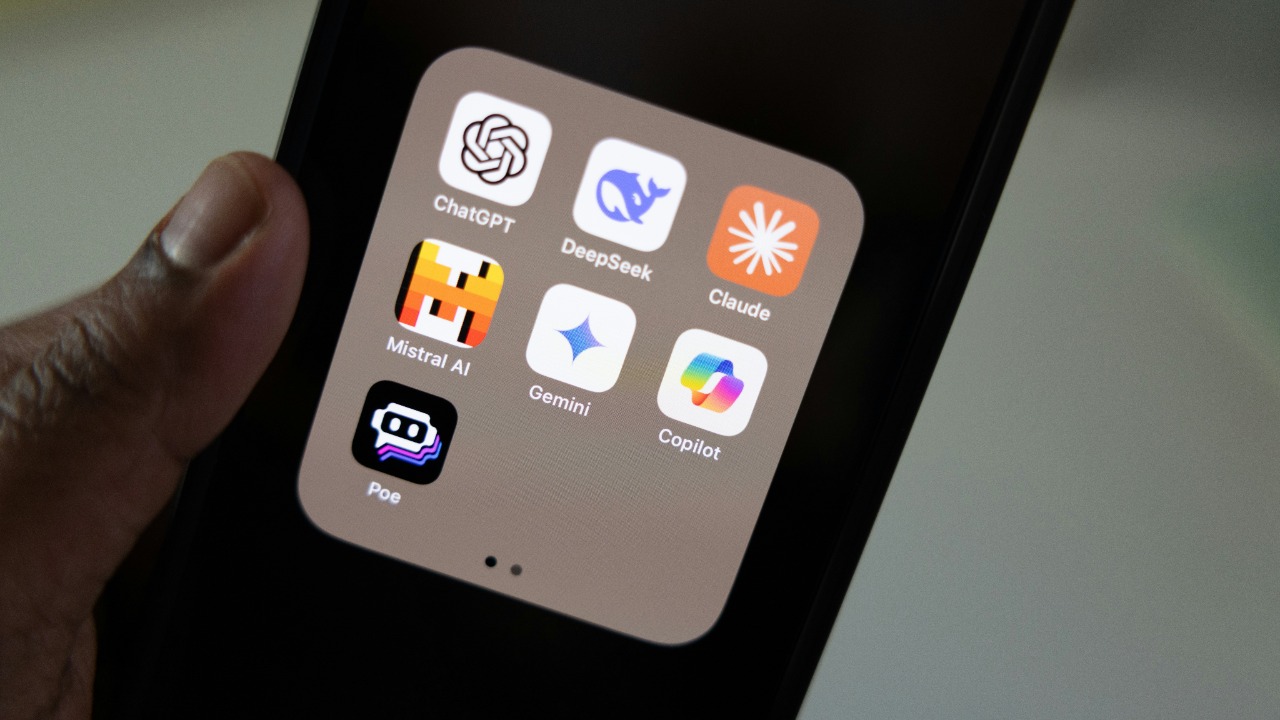

Google and OpenAI are no longer just trading research papers, they are fighting for the default position in how people search, code, write and even browse the web. The question of whether Gemini can truly overtake ChatGPT is not a theoretical one, it is about who sets the rules for the next decade of consumer and enterprise software. I set out to trace where Gemini really leads, where ChatGPT still dominates and how much of the “crushes” narrative survives contact with benchmarks, business strategy and everyday users.
The stakes behind the Gemini–ChatGPT rivalry
The contest between Gemini and ChatGPT is ultimately a battle over distribution and trust, not just raw model scores. Alphabet is weaving Gemini into core products like Search and Chrome, while OpenAI is racing to keep ChatGPT the default assistant inside productivity suites, browsers and operating systems. Whoever wins more of those default slots will shape how billions of people experience AI, from drafting contracts to debugging code.
Alphabet’s strategy hinges on making its models strong enough that the company can safely infuse Gemini into Search without sacrificing quality, while OpenAI is responding to what one internal memo framed as a “red” level of competitive pressure. At the same time, all eyes now turn to Google as the company prepares a Gemini powered version of Chrome, a move that would put its assistant one click away from every web page. In that context, the idea that Gemini might “crush” ChatGPT is really shorthand for whether Alphabet can use its platform reach to erode OpenAI’s early lead.
How “Code Red” and Bard’s fiasco set the tone
The current moment cannot be understood without the memory of Google’s early missteps. The launch of Bard in 2023 was widely described inside the company as a “fiasco” that hurt confidence in its AI strategy and, according to one account, led Alphabet to lose about $100 billion in market value as investors questioned whether it had fallen behind. That shock created the political will inside Alphabet to back a more aggressive Gemini roadmap, including a push to rebuild its assistant stack in roughly two hours of live demos with Gemini 3.
On the other side of the rivalry, OpenAI has treated Gemini’s rise as an existential warning. One detailed account describes how OpenAI Declares a “Code Red” as Google’s Gemini Crushes ChatGPT in internal comparisons, a phrase that captures the sense that the company could no longer assume it would hold the quality crown by default. The combination of Alphabet’s embarrassment over Bard and OpenAI’s Code Red response set the emotional backdrop for the current wave of “crushes” rhetoric, where every benchmark win or product launch is framed as a decisive swing in momentum.
Benchmarks where Gemini really does dominate
On paper, Gemini’s strongest case for supremacy comes from formal evaluations. One widely cited analysis notes that Gemini 3 “crushed benchmarks across the board,” including a score of 37.5% on Humanity’s Last Exam, a demanding test of PhD level reasoning about Humanity and long horizon tasks. That same report emphasizes that this benchmark performance put Gemini just below Sonnet 4.5, positioning it among the very top tier of frontier models rather than a mere catch up effort.
Gemini’s edge is not limited to abstract exams. Earlier iterations like Google Gemini 1.5 were already described as crushing ChatGPT and Claude with a largest ever 1 mn token context window, a practical advantage for tasks like analyzing entire codebases or multi year financial filings. When I look at these numbers together, the pattern is clear: Gemini has turned context length and certain reasoning benchmarks into signature strengths, which gives Alphabet a credible story that its models are not just “good enough” but in some areas objectively ahead.
Where GPT 5.2 still hits back
Yet benchmarks are only part of the story, and OpenAI has not been standing still. The arrival of GPT 5.2 reframed the contest by pushing ChatGPT’s reasoning and coding capabilities closer to the bleeding edge again, enough that some reviewers now frame the best AI strategy as “Use Both” rather than declaring a single winner. A detailed comparison of GPT 5.2 and Gemini 3 notes that in 2025 the generative AI landscape is undergoing one of its most significant competitive shifts yet, with GPT 5.2 and Gemini 3 at the center of a new phase of rivalry, and stresses that OpenAI’s latest model sits amid intensifying competition with Google’s Gemini 3.
Hands on tests echo that nuance. One reviewer who tried ChatGPT 5.2 and Gemini 3 side by side found that Gemini responded with some emotional appeals about how physical media “offers more than just function. It provides t…” and concluded that Gemini can turn a phrase better in certain creative contexts, but the same piece still framed the result as surprisingly close rather than a blowout, especially for structured tasks where GPT 5.2’s discipline shines Gemini. Another user comparing ChatGPT 5.1 and Gemini 3 Pro reported that ChatGPT was a little more accurate with text work and better at understanding what they were getting at with the same prompt, a reminder that OpenAI’s models still hold a perceptible edge in some day to day writing and comprehension tasks Nov.
Enterprise strategy: Alphabet’s platforms versus OpenAI’s ecosystem
From a business perspective, Gemini’s biggest weapon is Alphabet’s distribution. The company is already threading Gemini into Alphabet products like Search, Maps and Workspace, which means enterprises can adopt AI features without signing a separate contract or retraining staff on a new interface. Analysts argue that all of that AI infusion into Search would have been for naught if Alphabet’s models were not competitive, but now that Gemini is, the company can credibly pitch a world where the default search bar, email client and browser are all quietly powered by its assistant.
OpenAI, by contrast, is leaning on partnerships and its own brand. The company’s ChatGPT Atlas initiative is framed as a way to move from a single chatbot into a broader platform that can plug into tools like Slack, Microsoft 365 and custom enterprise workflows, even as All eyes now turn to Google’s Gemini powered Chrome. In practice, that means Gemini’s enterprise story is about seamless integration into existing Alphabet platforms, while ChatGPT’s is about flexibility and depth for organizations willing to wire it into their own stacks.
What power users say when they pay for both
For all the marketing noise, some of the clearest signals come from people who pay for both tools. One user who subscribes to gemini, Claude and chatgpt paid plans wrote that chatgpt does crush its competitors when it comes to data analysis and structured reasoning, while Gemini and Claude can be more helpful depending on your use case, a candid admission that no single model is best at everything and that “Claude and” Gemini often shine in more open ended or creative work Aug. Another thread framed the question more bluntly, asking whether Gemini AI is actually better than ChatGPT or just overhyped, and the top response argued that the initial marketing was overblown, which poisoned the well, but that the actual product is incredibly powerful once expectations are reset Oct.
Trust is another recurring theme. In a discussion about who people actually trust more right now, one user wrote that they use and love Gemini for creative writing and think it is very clever, However they still see ChatGPT as miles ahead when it comes to reliability and factual grounding, even if that view is not always popular in Gemini focused spaces Gemini for. Taken together, these anecdotes suggest that among power users the narrative is less about one model crushing the other and more about a division of labor: Gemini for long context, multimodal creativity and some benchmarks, ChatGPT for precision, analysis and a slightly higher baseline of trust.
Silicon Valley hype versus grounded performance
Public perception of Gemini’s rise has been shaped heavily by Silicon Valley voices. In one widely shared conversation, Salesforce CEO Marc Benioff called Google Gemini 3 an “insane” leap and asked whether ChatGPT is officially beat, while the hosts framed the moment as proof that “Google Is The Big DOG” in AI again Salesforce CEO Marc Benioff. That kind of endorsement matters because it signals to other executives that it is now socially safe, even fashionable, to bet on Google’s stack after a period when OpenAI and Microsoft seemed to own the narrative.
At the same time, more sober analyses caution against reading too much into a single demo or benchmark. One report on Gemini 3’s rapid rollout noted that the Bard fiasco had forced Google and Alphabet to move faster, but also highlighted the risks of overpromising when models are still prone to hallucinations and uneven behavior. Another newsletter that declared Gemini 3 had “dethroned” ChatGPT on tests like Humanity’s Last Exam still acknowledged that the gap to rivals like Sonnet 4.5 was narrow and that real world usage patterns might lag behind benchmark wins Specifically. The tension between exuberant CEO praise and cautious technical assessments is part of why the “crushes” framing feels both compelling and overstated.
How the browser and search wars reshape the contest
The next phase of the rivalry will likely be decided not in standalone chat apps but inside browsers and search bars. All eyes now turn to Gemini as Google prepares to roll out a Gemini powered version of Chrome to a wider audience, effectively turning the browser into a first class AI client. If that integration is smooth, Gemini could become the default assistant for tasks like summarizing long articles, generating emails in Gmail or debugging JavaScript directly in DevTools, simply because it is already there when users need it.
OpenAI is countering by deepening ChatGPT’s role inside partner ecosystems rather than owning the browser itself. The company’s work on GPT 5.2 and the broader ChatGPT Atlas vision is about making its assistant feel like an operating system layer that can live inside any app, from Figma to Salesforce, even as Google leans on Chrome and Search. In that sense, the browser and search wars are really distribution battles that will determine whether Gemini’s benchmark wins translate into habitual use or remain impressive but niche.
So, can Gemini really “crush” ChatGPT?
After tracing the benchmarks, business strategies and user experiences, I come away convinced that Gemini has already “crushed” ChatGPT in some narrow senses but not in the sweeping way the marketing suggests. On tests like Humanity’s Last Exam, where Gemini 3 hit 37.5%, and in context window size where Google Gemini 1.5 crushed ChatGPT and Claude with a 1 mn token context window, the word “crushes” is not hyperbole. Alphabet has also turned its early Bard embarrassment, which cost about $100 billion in market value, into a catalyst for a far more aggressive Gemini roadmap that now touches Search, Chrome and Workspace.
Yet in daily use, the picture is more balanced. Power users who pay for both tools say chatgpt still crushes its competitors for data analysis and structured reasoning, while Gemini shines in creative writing and long context tasks Claude and. Others argue that Is Gemini overhyped in its marketing but incredibly powerful in practice once expectations are reset Is Gemini. When I weigh those accounts against OpenAI’s Code Red response and the arrival of GPT 5.2, which sits at the center of a new competitive phase with At the heart of the rivalry with Gemini 3, the more accurate framing is that each model is crushing specific niches rather than one permanently burying the other.
In that light, the most honest answer to whether Gemini can really crush ChatGPT is that it already has in some technical metrics and product integrations, but the broader market is converging on a “use both” reality. Reviewers who pit NEW GPT 5.2 against Google Gemini 3 increasingly conclude that the Best AI Strategy is to combine their strengths rather than crown a single winner NEW. As Salesforce CEO Marc Benioff’s praise of Google Gemini 3 and OpenAI’s Code Red memo both make clear, the real story is not about one model crushing another in a single moment, it is about a sustained arms race in which users, for now, are the ones who benefit most from the competition.
More from MorningOverview