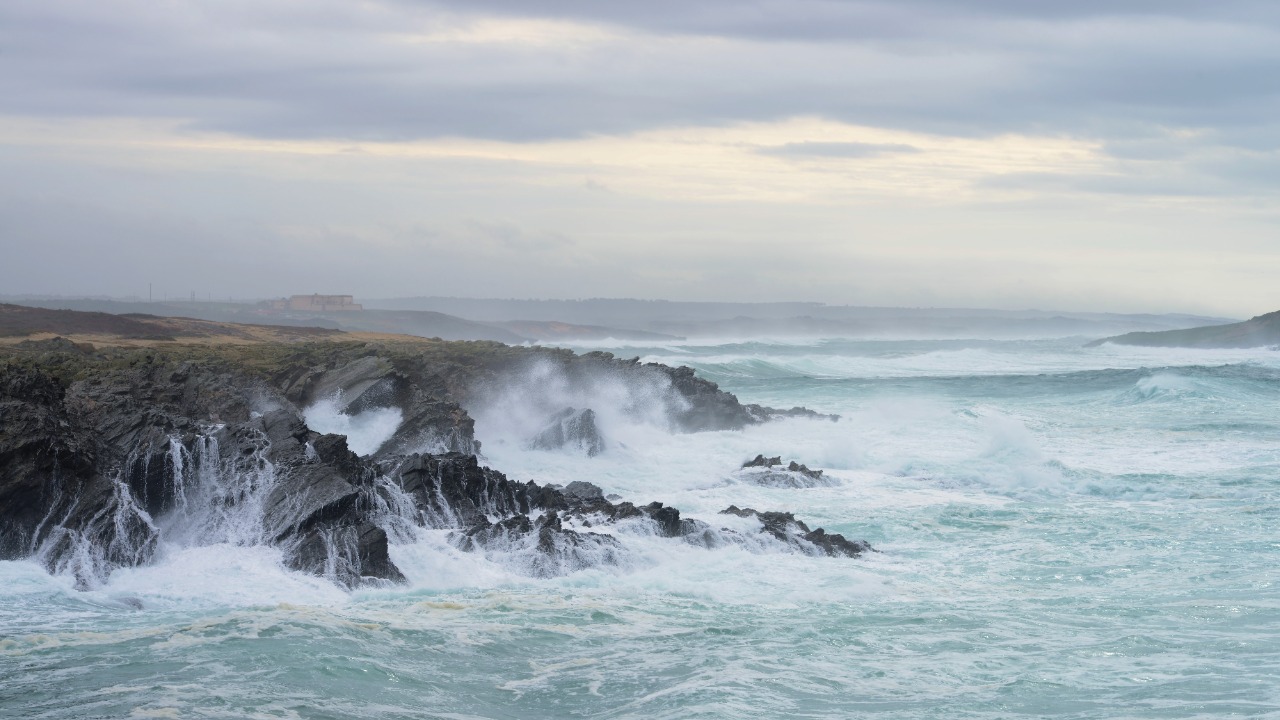

Along the Atlantic seaboard, more than 135 million Americans live in a zone where the ocean is no longer rising steadily but is poised to climb in abrupt, uneven surges as a key Atlantic current system weakens. Scientists now warn that this shift in ocean circulation could drive a rapid jump in regional sea levels, stacking on top of global warming and turning routine high tides into chronic flooding for some of the country’s most densely populated coasts. The stakes are not abstract: from power outages in winter storms to disappearing beaches and salt‑soaked neighborhoods, the physics of the Atlantic are starting to redraw the map of everyday life.
In this piece, I look at how a destabilizing Atlantic current, known as the Atlantic Meridional Overturning Circulation, intersects with global sea level rise, coastal erosion, and climate tipping points to reshape risk for tens of millions of people. The science points to a future where the pace of change is not just faster, but more uneven and disruptive, with some communities facing “exceptionally fast” local sea level jumps long before the global average catches up.
How a hidden Atlantic engine shapes life on land
To understand why the Atlantic can so sharply raise the water line along the United States coast, I start with the ocean’s own conveyor belt. The Atlantic Meridional Overturning Circulation, or AMOC, is a vast system of currents that moves warm surface water northward and returns cold, dense water southward at depth, effectively redistributing heat and storing carbon in the deep ocean. Scientists describe this overturning as a climate superstructure, and detailed explanations of What the AMOC does emphasize how, In the Atlantic Ocean, this circulation drives warm water northwards at the surface and sends cold, carbon‑rich water back south at depth.
When this engine slows, the consequences ripple far beyond the sea surface. A comprehensive overview of the Atlantic meridional overturning circulation notes that weakening would reduce average air temperatures over Scandinavia, Great Britain, and Ireland, because these regions are warmed by the northward flow of heat, and it would also affect marine production in the North Atlantic. That same circulation helps set sea level along the U.S. East Coast, so when it falters, water that would otherwise be pulled away from the shoreline can instead pile up, lifting tides higher against cities from Miami to Boston.
A critical current is weakening faster than expected
Over the past few years, the scientific picture of that Atlantic engine has grown more alarming. Researchers now argue that The Atlantic overturning circulation is no longer a low‑likelihood concern but a system already pushed toward instability by the climate crisis, with the Amoc showing signs of a potential future collapse. High‑resolution “fingerprint” analyses of sea surface temperatures and salinity patterns add weight to this view, with one assessment concluding that the AMOC is the reason for Europe’s mild climate and that Evidence of its slowing has been piling up, suggesting it may be approaching a tipping point.
Other researchers describe a “crucial system of currents in the Atlantic Ocean” that is already displaying early signs of collapse, warning that such a shift would have “severe impacts on the global climate system” and could not be confined to one region of the ocean. That language comes from an analysis of an unstable ocean circulation system that is already threatening to severely affect global climate. A separate synthesis of climate tipping points notes that Another tipping point now in focus is the decline of the currents that make up the Atlantic Meridional Overturning Circulation, underscoring how this once esoteric piece of ocean physics has moved to the center of global risk assessments.
Why a slowing AMOC supercharges U.S. East Coast sea levels
For coastal Americans, the most immediate consequence of a weakening Atlantic circulation is not a distant climate shift in Europe but water creeping up their own streets. When the AMOC slows, the dynamic balance of sea level along the western Atlantic margin changes, allowing the ocean to rise faster along the U.S. East Coast than the global average. A detailed modeling study of the U.S. shoreline found that fluctuations in the AMOC’s strength have already boosted the sea level and associated flooding along the East Coast, showing how circulation changes can amplify storm surge and high‑tide inundation.
Global assessments of sea level change back up this regional picture. A major review of Changes in ocean circulation concludes that such shifts can strongly impact sea level in the regions bordering the North Atlantic, directly linking circulation dynamics to coastal water heights. Another synthesis focused on sea level rise and low‑lying communities stresses that, for understanding responses to climate‑change induced SLR, two aspects of sea level are crucial: the long‑term global trend and the regional deviations driven by circulation, with SLR and Climate interacting to shape local risk.
Global warming is already baked into the water
Even without circulation shifts, the ocean is locked into a significant amount of warming that expands seawater and raises the baseline for every tide. A core physical science assessment finds that global ocean temperature has increased by 0.88 °C between the pre‑industrial period and the last decade, with a likely range of 0.68 to 1.01 °C, and that 0.60 °C of this warming, with a range of 0.44 to 0.74 °C, has occurred since 1980. That heat is not easily reversed, which means the ocean will continue to expand and push sea levels higher even if emissions fall sharply.
Closer to home, scientists have documented significant Warming of North American offshore waters that is attributable to human activities, particularly along the Atlantic coast since 1970. That regional ocean heating both feeds into global sea level rise and interacts with circulation changes, making the Atlantic margin one of the most sensitive places on Earth to the combined effects of warming and current shifts.
Sea level rise is already reshaping coasts and communities
For coastal residents, the numbers translate into a simple reality: the water is coming closer. A broad overview of Sea level rise notes that its Impacts include higher and more frequent high‑tide and storm‑surge flooding, and that Sea level rise also leads to saltwater intrusion into freshwater systems and the loss of coastal habitats. They are not future hypotheticals but present‑day pressures on infrastructure, drinking water, and ecosystems.
On the ground, coastal scientists describe how, Whether or not human activities have contributed to local subsidence, the sea is definitely rising and it jeopardizes our real estate, infrastructure, and natural defenses. As sea level rises, coastal erosion accelerates and shorelines retreat, a pattern echoed in another assessment that finds Higher seas also accelerate coastal erosion, washing away beaches, wetlands, and protective landforms like dunes, which removes natural barriers that reduce storm damage.
When the Atlantic jumps, 135 million Americans feel it
What makes the Atlantic shift so consequential is the sheer number of people in its path. Along the U.S. East and Gulf coasts, more than 135 million residents live in counties that touch the ocean or tidal rivers, a population that includes major hubs of finance, energy, and logistics. Many of those communities are already grappling with compound hazards, from winter storms that knock out power to summer heat waves that strain aging grids, as seen when a quick snow storm left thousands without electricity in Kent County and local reports noted that Dec headlines sat alongside sponsored notices telling Seniors Born Between certain years they Can Receive These new Benefits In 2026, a reminder of how climate risk now shares space with everyday concerns and Sponsored content.
Globally, the vulnerability is even starker. Coastal researchers estimate that Almost half of the world’s 7.6 billion people live along a coastline, and they already face a mix of climate change and other environmental issues that degrade water quality and ecosystems. In the United States, assessments of Climate impacts already link Immigration pressures from Central America to rising sea levels in coastal regions, noting that Due to submerged coastlines, people are already being forced to move away.
From tipping points to security threats
The concern is not only that sea level will rise, but that it could do so in sharp steps if the Atlantic current system crosses a threshold. Climate scientists warn that, As the climate warms and permafrost begins to thaw, carbon dioxide and methane are released into the atmosphere, and the same analysis highlights how the AMOC helps carry cold water back south, meaning its disruption could trigger cascading feedbacks. Another detailed discussion of Atlantic risks notes that Studies suggest the circulation has reached dangerous tipping points in the past, sending it into a precipitous decline as the planet warms and glaciers and ice sheets melt.
National security planners are starting to treat this as more than an environmental issue. In the North Atlantic, officials in Iceland have explicitly defined climate change as a security threat as Atlantic ocean currents show signs of collapse, warning that a breakdown of the AMOC would not be confined to the North Atlantic and could shift tropical rain belts, disrupt agriculture, and drive rapid sea level rise along the eastern seaboard of North America. A separate risk analysis frames the threat in stark terms, warning that This Atlantic current system could collapse within the next few decades, even as a big uncertainty remains about exactly when or if that will occur.
Local extremes in a globally connected climate
One of the hardest messages to convey is that a warming world can still produce pockets of cooling or counterintuitive weather, even as sea levels rise. Climate researchers studying Antarctica describe a “climate paradox” in which warming is cooling parts of the continent, noting that It’s a reminder that climate change impacts do not always stay in one place and that the planet is vast but profoundly interconnected, with disturbances in one region reaching to the ends of the world. The same logic applies to the Atlantic: a shift in currents off Greenland can alter rainfall in the tropics and sea level in New York Harbor.
Ocean scientists also warn that circulation changes and warming are driving Climate change related modifications to oceanic conditions that affect the intensity of upwelling, with consequences for regions that depend on ocean biodiversity. As ecosystems are stressed, a separate analysis of ocean chemistry cautions that This cascading collapse would mean population losses across marine life and the destruction of entire ecosystems, threatening fisheries and coastal ecosystems that millions of people rely on for their livelihoods. For Atlantic communities, that means sea level rise is arriving alongside shifts in fish stocks, coral health, and storm patterns, all tied back to the same underlying climate forces.
What happens if the Atlantic current actually collapses
Scientists are careful to distinguish between a slowing AMOC and a full shutdown, but they are increasingly frank about the stakes if the latter occurs. Long‑term reconstructions suggest that the Atlantic portion of the Through years of scientific research it (the Global Ocean Conveyor Belt) has become clear that the Atlantic portion of this system is now the weakest it has been in at least 1,600 years, a sign of how far human‑driven warming has already pushed the system. Scenario planners warn that a complete collapse of the AMOC would have disastrous consequences, causing dramatic cooling in parts of Europe and rapid sea level rise along the coast of North America, a point underscored in a summary that notes a complete collapse of the AMOC (the Atlantic Meridional Overturning Circulation) would drive such changes along the coast of North America, among other impacts.
Climate modelers often describe the AMOC as a “climate superhighway,” and one detailed explainer urges readers to Think of it (AMOC) as a climate superhighway that redistributes heat from the tropics to higher latitudes, like parts of Canada and Siberia. If that highway shuts down, the resulting traffic jam of heat and freshwater in the Atlantic would not only raise sea levels along the U.S. East Coast but also shift storm tracks, monsoon systems, and agricultural zones, creating a cascade of secondary shocks that coastal planners are only beginning to map.
Mitigation, adaptation, and the narrowing window
Faced with these risks, scientists are blunt about what it would take to reduce the odds of an abrupt Atlantic shift. A dedicated AMOC risk project concludes that The only way to mitigate the risk of an AMOC collapse is to stop burning fossil fuels and rapidly cut global greenhouse gas emissions, underscoring that there is no geoengineering shortcut for stabilizing the Atlantic circulation. At the same time, coastal communities must prepare for higher water regardless, because even a stabilized climate would leave them with decades of committed sea level rise.
That preparation ranges from elevating homes and roads to rethinking where and how we build. In some regions, engineers are exploring surge barriers and living shorelines, while others are debating managed retreat from the most vulnerable zones. The Atlantic’s role in regulating sea level adds urgency to these choices, as one assessment of Greenland’s melt notes that Rising sea levels and The AMOC (Atlantic Meridional Overturning Circulation) together play a role in regulating sea levels in the Atlantic, affecting millions of people and threatening coastal cities.
The Atlantic’s warning for a coastal century
For the 135 million Americans living along the Atlantic and Gulf coasts, the message from the ocean is that the status quo is already over. The combination of global warming, regional circulation shifts, and local subsidence is turning what used to be rare floods into regular events, and the prospect of an “exceptionally fast” regional sea level jump is no longer a fringe scenario. As scientists refine their understanding of how the Atlantic Ocean responds to greenhouse gases, they are also making clear that the window for avoiding the most extreme outcomes is closing quickly.
At the same time, the Atlantic story is a reminder that climate impacts are deeply interconnected. From shifting rain belts and altered fisheries to new migration pressures and security concerns, the same currents that once quietly ferried heat northward are now at the center of a global reckoning with risk. The question for policymakers, city planners, and coastal residents is whether they will treat that warning as a prompt for rapid change, or wait until the water at their doorstep makes the decision for them.
More from MorningOverview