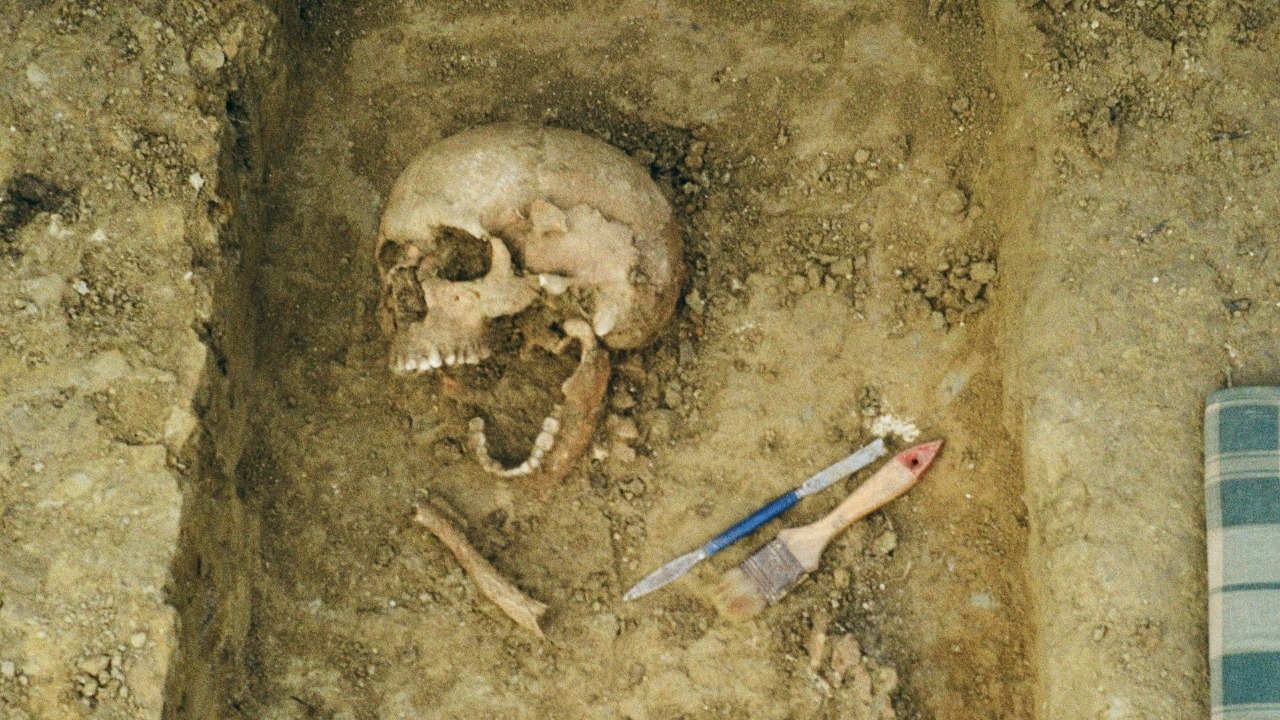

The newly uncovered Viking-era grave in central Norway is forcing archaeologists to rethink what they thought they knew about how Norse people treated their dead. Instead of fitting neatly into familiar patterns of warrior burials or ship graves, this site combines objects, materials, and rituals that have no clear precedent in the archaeological record.
What emerges from the soil in Trøndelag is not just a single oddity, but a carefully staged performance of identity, belief, and power that seems to bend the rules of Viking funerary custom. By tracing the grave’s unusual layout, its puzzling artifacts, and the scientific work now under way, I can show how this one burial is reshaping debates about who the Vikings were and how they understood the boundary between life and death.
Unearthing a mystery in Trøndelag
The grave first came to light in Trøndelag when archaeologists noticed subtle traces in the soil that did not match the typical outlines of a Viking ship burial or a simple inhumation. Instead of a clear boat shape or a straightforward pit, they found a complex arrangement of features that hinted at a carefully choreographed ritual. The site belongs to the Viking Age, yet from the earliest stages of excavation it was obvious that this was not a standard warrior or farmer’s grave.
As the team worked through the layers, they realized they were dealing with a burial that combined elements of several known traditions but followed none of them exactly. The grave goods, the way the body appears to have been positioned, and the surrounding deposits all pointed to a community that was experimenting with ritual, not just repeating a template. That is why specialists have described the find as a Viking, Age Grave Reveals, Burial Unlike Anything Seen Before in Nor, a formulation that captures both its cultural setting and its startling novelty.
Why this grave stands apart from typical Viking burials
Most Viking graves that I have reported on over the years fall into recognizable categories: cremation mounds, boat burials with weapons and tools, or richly furnished chamber graves for elite men and women. This site in Trøndelag refuses to sit comfortably in any of those boxes. The combination of objects, the layering of deposits, and the apparent absence of some expected markers of status all signal that the community was doing something different with this burial.
Archaeologists working on the project have stressed that the grave is extraordinary on multiple levels, not because it is lavish in a conventional sense, but because it breaks the pattern of what is usually found in Norway. The arrangement has been described as a Discovery Unlike Anything Seen Before in Norway, a phrase that underlines how even in a landscape dense with Viking remains, this particular grave stands out as an outlier that demands a fresh interpretive toolkit.
Inside the grave: objects that defy easy explanation
Once the soil was peeled back, the inventory of objects inside the grave quickly became one of its most intriguing features. Instead of the predictable set of weapons, tools, and jewelry, the burial contained items whose placement and combination are difficult to match with known ritual scripts. Some artifacts appear to have been deliberately broken or arranged in ways that suggest symbolic gestures rather than simple provisioning for the afterlife.
Among the most puzzling elements are deposits that include shells and other organic materials that do not normally appear in Viking graves in this region. Specialists have highlighted how these shells complicate the picture, since they do not fit the standard toolkit of Norse ritual symbolism and make the shells even more puzzling in the context of a Viking, Age Grave Reveals, Burial Unlike Anything Seen Before. The result is a grave that reads less like a checklist of status symbols and more like a coded message whose language we are only beginning to decipher.
A burial “extraordinary on multiple levels”
What elevates this grave from a curious anomaly to a major archaeological event is the way its different oddities reinforce one another. The unusual layout, the unexpected materials, and the apparent care taken in staging the burial all point to a community that invested significant effort in crafting a unique send-off. This was not a haphazard collection of offerings, but a structured performance that seems to have been designed to communicate something specific about the deceased and their place in the world.
Researchers involved in the excavation have described the site as Archaeologists Uncover Astonishing Viking, Age Grave, Norway, Discovery Unlike Anything Seen Before, language that reflects both the scientific excitement and the interpretive challenge. When seasoned specialists call a burial “extraordinary on multiple levels,” they are signaling that the site is forcing them to revisit assumptions about social hierarchy, religious practice, and regional variation within the Viking Age.
Clues to rare or overlooked Viking rituals
One of the most important implications of this discovery is that it may point to ritual practices that were always part of the Viking cultural repertoire but have rarely been preserved or recognized. Archaeological records are inherently biased toward what survives in the ground, and many delicate or unconventional practices leave little trace. A grave that combines unusual materials and arrangements offers a rare window into ceremonies that may have been more common than the surviving evidence suggests.
Specialists have argued that this new burial might help explain other enigmatic finds from the Viking Age that have long puzzled researchers. By showing how rare rituals were present but simply unnoticed due to poor preservation or limited excavation, the Trøndelag grave encourages archaeologists to revisit older sites with fresh questions. That is why some have pointed to this case in discussions of how Dec fieldwork and new analytical techniques can reveal that rare rituals were present but simply unnoticed due to poor preservation, a reminder that the archaeological record is always more incomplete than it looks.
Rewriting the story of status and identity in Viking Norway
The grave also has major implications for how I understand status and identity in Viking Norway. Traditional interpretations often draw a straight line between lavish grave goods and high social rank, assuming that more weapons or imported objects automatically signal an elite individual. In Trøndelag, the picture is more complicated. The burial is clearly special, yet its distinctiveness lies less in sheer wealth and more in the originality of its ritual design.
This suggests that communities in Viking Norway may have expressed prestige and identity through creative ritual choices as much as through the quantity of grave goods. The fact that the site is being discussed as a Viking, Age Grave Reveals, Burial Unlike Anything Seen Before in Nor indicates that its uniqueness is itself a marker of importance. In other words, the community may have chosen to honor this person not by copying standard elite templates, but by crafting a one-of-a-kind ceremony that set them apart in death as they likely were in life.
What the grave reveals about belief and the afterlife
Beyond questions of status, the Trøndelag burial opens a window onto Viking ideas about the afterlife and the boundaries between the living and the dead. The careful placement of unusual objects, the possible use of shells and other organic materials, and the layered structure of the grave all hint at a worldview in which the journey after death required more than just weapons and tools. It suggests a belief system where symbolic gestures, perhaps tied to specific myths or local traditions, played a central role in guiding the dead into whatever lay beyond.
Archaeologists have long known that Viking funerary practices were diverse, but this grave underscores just how flexible and inventive those practices could be. The fact that the site is being framed in expert discussions as part of a broader pattern of Viking, Age Grave Reveals, Burial Unlike Anything Seen Before shows that it is not just an oddity, but a key data point in debates about how Norse people imagined the afterlife and how they used ritual to negotiate that transition.
How archaeologists are decoding the burial
To make sense of such an unconventional grave, archaeologists are drawing on a wide toolkit that goes far beyond traditional excavation. Detailed soil analysis, microscopic study of organic remains, and careful mapping of every object’s position are all helping to reconstruct the sequence of events that created the burial. Each layer and each artifact is treated as a clue to the choreography of the funeral, from the initial digging of the pit to the final sealing of the grave.
These methods are being discussed in public-facing explanations of the find, including video briefings where specialists walk viewers through the evidence and its implications. In one such presentation, researchers emphasize how Dec analytical work on this burial might help explain them it may reveal that rare rituals were present but simply unnoticed due to poor preservation, a point that underscores the importance of combining fieldwork with laboratory science. By patiently decoding the grave in this way, archaeologists hope to move from astonishment to understanding, turning a burial unlike anything recorded into a cornerstone of Viking Age research.
A single grave with far-reaching consequences
What makes the Trøndelag discovery so compelling is not just its strangeness, but its potential to reshape broader narratives about the Viking Age. A single grave that refuses to fit established categories forces scholars to question how representative their existing typologies really are. If one community in Norway could stage such an idiosyncratic burial, how many other local traditions have been flattened or overlooked by models that focus on the most spectacular ship graves and warrior tombs?
As more details from the excavation and subsequent analyses are shared, the site is likely to become a reference point in debates about regional diversity, religious experimentation, and the social meaning of death in Viking Scandinavia. The language used in early reports, from Viking, Age Grave Reveals, Burial Unlike Anything Seen Before to Archaeologists Uncover Astonishing Viking, Age Grave, Norway, Discovery Unlike Anything Seen Before, captures the sense that this is not just another data point, but a discovery that compels a rethinking of what a “typical” Viking burial even means.
Why this discovery matters beyond Viking studies
Although the grave is firmly rooted in the Viking Age of Norway, its significance extends well beyond the boundaries of Scandinavian archaeology. It is a reminder that past societies were as capable of creativity, regional variation, and ritual experimentation as any modern culture. When I look at the Trøndelag burial, I see evidence that communities used funerals as stages on which to negotiate identity, belief, and power in ways that could be deeply local and highly personal.
For historians, anthropologists, and anyone interested in how humans confront mortality, the grave offers a case study in how a society can bend its own traditions to meet the needs of a particular moment or individual. The fact that experts are still working to decode a Viking, Age Grave Reveals, Burial Unlike Anything Seen Before in Nor centuries after it was sealed speaks to the enduring power of ritual to communicate across time, even when the language of symbols has partly been lost.
What comes next for the Trøndelag grave
The story of this burial is far from finished. As laboratory analyses progress and new techniques are applied to the soil, bones, and artifacts, more details will emerge about who was buried here, how they lived, and why their community chose such an unconventional send-off. Isotopic studies may reveal where the deceased grew up, while microscopic work on residues could clarify how the shells and other puzzling materials were used in the ceremony.
Future publications and public updates will likely refine, and perhaps even overturn, some of the early interpretations that have framed the grave as a Viking, Age Grave Reveals, Burial Unlike Anything Seen Before. That is the nature of archaeological discovery: the first wave of astonishment gives way to years of careful analysis, debate, and reinterpretation. Whatever the final consensus, the Trøndelag burial has already secured its place as one of the most thought-provoking Viking-era graves yet uncovered, a reminder that even in a well-studied period, the past still has the capacity to surprise.
More from MorningOverview