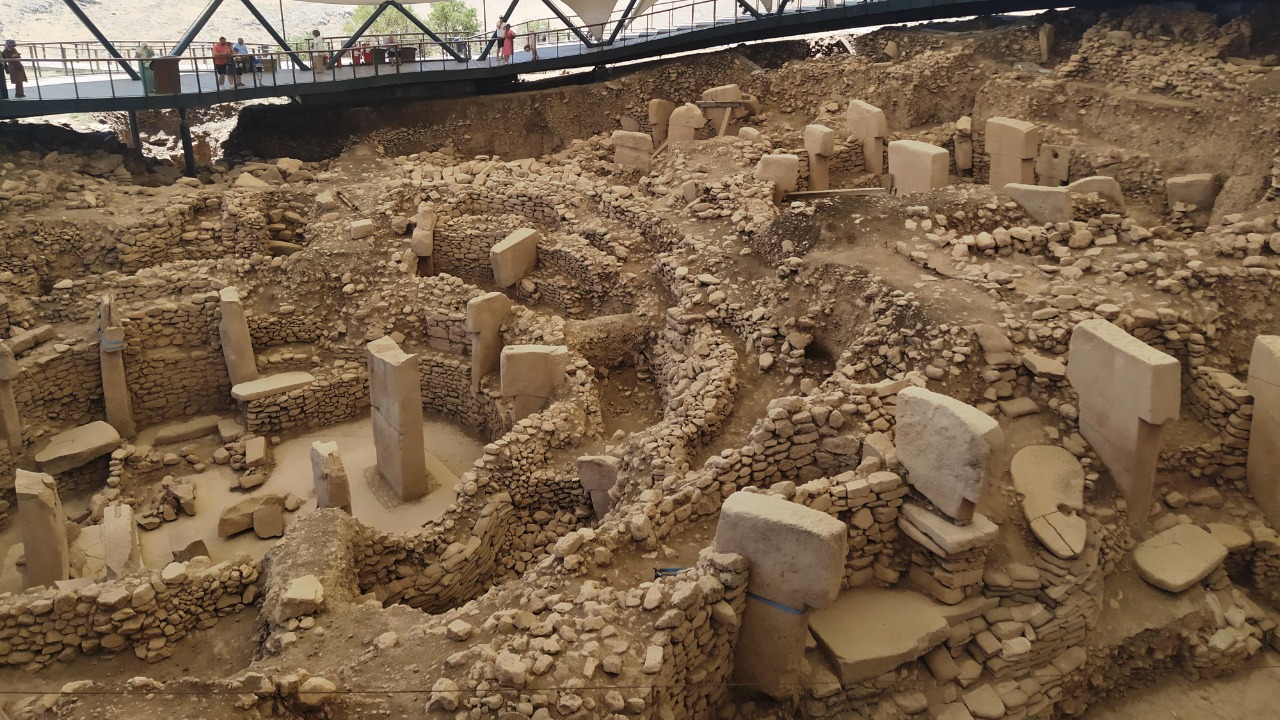

On a low rise in southeastern Turkey, a ring of carved stone pillars has forced archaeologists to rethink how civilization began. The site, known as Göbekli Tepe, is roughly 12,000 years old, which means it predates cities, pottery and even organized farming, yet it carries the unmistakable fingerprints of complex, coordinated human effort. If the old story said agriculture created temples, Göbekli Tepe suggests the desire to gather and worship may have come first.
Instead of a slow, linear march from simple villages to urban states, these ruins hint at a more tangled origin story in which ritual, art and shared belief pulled scattered hunter gatherers into something like organized society. I see in Göbekli Tepe not just a spectacular archaeological discovery, but a challenge to the basic script of how humans learned to live together at scale.
Where Göbekli Tepe fits in the deep human timeline
To understand why Göbekli Tepe is so disruptive, it helps to place it precisely in time. Archaeologists situate the site in the earliest part of the Southwest Asian Neolithic, a phase known as the Pre Pottery Neolithic, when people were only beginning to experiment with settled life and domesticated plants and animals. According to detailed research on Tepe and the Southwest Asian Neolithic, the complex was built and occupied long before ceramics or metal tools, at a moment when stone, bone and wood still dominated daily technology.
Chronologically, that places Göbekli Tepe in the 10th to 9th millennium BCE, on the northern edge of the Fertile Crescent, a region often described as the cradle of agriculture. A conservation profile notes that Tepe was built sometime between the 10th and 9th millennium BCE on the Fertile Crescent, and that it is thousands of years older than the Great Pyramids. In other words, the people who carved these stones lived closer in time to the last Ice Age than to the construction of Giza, yet they were already organizing labor on a monumental scale.
A temple older than cities and farms
For more than a century, the standard narrative of civilization has followed a tidy sequence: first agriculture, then villages, then cities, and only after that, large religious monuments. One influential summary of this view puts it bluntly, arguing that we did not have civilization until we had cities, and we did not have cities until we had agriculture. The discovery that a monumental sanctuary like Göbekli Tepe existed long before settled farming communities forces that logic into reverse, as highlighted in an analysis of Tepe in southeastern Turkey.
Archaeologists now see Göbekli Tepe as a gathering place for hunter gatherer groups who had not yet fully adopted agriculture, but were already capable of planning, building and maintaining a complex ritual center. A detailed overview of early ritual architecture notes that Gobekli Tepe is an ancient site that changed how people view early civilization because it appears to have been built before the rise of agriculture. That inversion, temples before farms, suggests that shared beliefs and ceremonial life may have been the glue that pulled people into more permanent communities, rather than a byproduct of economic change.
The architecture that should not exist at this age
What makes Göbekli Tepe so startling is not just its age, but its scale and sophistication. The core of the site consists of monumental round and oval enclosures, each defined by massive T shaped pillars that can reach several meters in height. One field report describes a labyrinthine complex, only about 5 percent of which has been properly excavated, already famous for its monumental round oval and rectangular structures that are roughly 6,000 years older than Stonehenge.
Each enclosure is anchored by two towering central pillars, surrounded by smaller stones set into carefully prepared walls, all cut from local limestone and hauled into place without metal tools or draft animals. A program on the site’s megaliths notes that Its purpose is still undetermined, but Its Stone Age masons created 20 circles of tall rock pillars weighing up to 20 tons. Some of those pillars carry intricate reliefs of animals and abstract symbols twisting up their broad sides, evidence of a visual language that must have been widely understood by the people who gathered there.
Carved symbols, animal spirits and a lost belief system
The carvings at Göbekli Tepe are not decorative flourishes, they are the most direct clues we have to the belief system that animated the site. The pillars are covered with foxes, snakes, wild boars, birds and other creatures that would have been familiar to hunter gatherers in the region, arranged in compositions that suggest narrative scenes or symbolic associations. Detailed descriptions of the megaliths emphasize that Some of the carved animals twist up their broad sides, as if climbing toward the sky, a motif that hints at a cosmology in which the boundary between human and animal worlds was porous.
Because there are no written records, any reconstruction of the site’s rituals remains speculative, but the sheer investment in carving and arranging these images points to a shared symbolic system that extended beyond a single band or family. A broader overview of the region’s early sanctuaries notes that Tepe was built and occupied during the Pre Pottery Neolithic, a time when new religious ideas and social structures were emerging along multiple trajectories in different regions. In that context, the animal reliefs at Göbekli Tepe look less like isolated art and more like the visible tip of a much larger, now vanished, spiritual landscape.
An ancient observatory in stone
Some researchers argue that the pillars at Göbekli Tepe do more than frame ritual space, they may also encode observations of the sky. At 12,000 years old, Gobekli Tepe predates humanity’s oldest known civilizations, and Its megalithic temples were cut from stone and arranged with a precision that has prompted astronomers to look for alignments with stars and constellations. One detailed investigation notes that At 12,000 years old, Gobekli Tepe predated humanity’s oldest known civilizations, and that Its possible role as the world’s first astronomical observatory remains one of its biggest lingering mysteries.
Whether or not every proposed alignment holds up under scrutiny, the idea that hunter gatherers were tracking celestial cycles closely enough to embed them in stone architecture fits with a broader pattern of early sky watching. The same analysis of Gobekli Tepe and Its megalithic temples points out that the site’s builders may have used the movements of stars to mark seasonal gatherings, coordinate hunting or anchor myths about the origins of the world. If that is correct, then the people who carved these pillars were not only artists and masons, but also careful observers of the cosmos, folding astronomy into the foundations of their social life.
From hunter gatherers to organized labor
However we interpret the carvings or the alignments, the logistics of building Göbekli Tepe are staggering for a Stone Age community. Quarrying, shaping and transporting pillars that weigh up to 20 tons would have required dozens of people working in concert, along with a reliable supply of food and water to sustain them. The description of the site’s megaliths underscores that Its Stone Age masons created 20 circles of tall rock pillars weighing up to 20 tons, which implies not just physical strength but planning, leadership and some mechanism for coordinating labor over months or years.
That level of organization is difficult to square with the image of small, mobile bands of foragers drifting across the landscape. A detailed analysis of early ritual centers argues that Gobekli Tepe is an ancient site that changed how people view early civilization precisely because it shows hunter gatherers acting like the managers of a large building project. To my eye, that suggests that social complexity, including hierarchies and specialized roles, can emerge wherever there is a compelling reason to gather and cooperate, whether that reason is food production, defense or shared ritual.
A UNESCO World Heritage site and a national symbol
In the past decade, Göbekli Tepe has shifted from an obscure dig to a global heritage icon, reshaping how Turkey presents its deep past to the world. The site is located near the modern city of Şanlıurfa, and official mapping tools now highlight Göbekli Tepe’s place on the map as a key destination in southeastern Turkey. That visibility reflects a broader recognition that the hill, once used for simple agriculture, contains one of the most important archaeological landscapes on Earth.
International bodies have taken notice as well. Göbekli Tepe is now inscribed as a UNESCO World Heritage property, recognized for its outstanding universal value as the earliest known monumental megalithic complex. National tourism campaigns emphasize that Turkey Göbeklitepe was included in the Unesco World Heritage list in 2018, turning the site into a symbol of the country’s role in the very origins of settled life. That status brings funding and protection, but it also raises difficult questions about how to balance excavation, conservation and mass tourism on a fragile, partially buried hill.
Only a fraction excavated, and already rewriting history
One of the most striking facts about Göbekli Tepe is how little of it we have actually seen. Archaeologists estimate that only about 5 percent of the site has been properly excavated, yet even that small window has already forced textbooks to change. A detailed travel and research account notes that the labyrinthine site, only 5% of which has been properly excavated, is already famous for its monumental architecture and its status as a World Heritage Site. That means the story we tell about the place is based on a handful of exposed enclosures, while dozens more remain hidden under layers of deliberately piled earth.
Archaeologists working on the northern edge of the Fertile Crescent emphasize that Tepe was built sometime between the 10th and 9th millennium BCE on the Fertile Crescent and that it is older than the Great Pyramids, yet they also stress how provisional any interpretation must be while most of the site remains unexcavated. I find that tension productive: every new trench has the potential to overturn previous theories, whether about the sequence of construction, the social organization of its builders or the reasons the entire complex was eventually buried. The partial view we have now is already revolutionary, and it is almost certainly incomplete.
Why Göbekli Tepe changes the story of civilization
When I step back from the individual pillars and carvings, what stands out about Göbekli Tepe is how thoroughly it scrambles the neat progression that once defined the origins of civilization. The old model treated large temples and complex rituals as the culmination of a long economic evolution, the icing on the cake of agriculture and urbanization. By contrast, the evidence from Gobekli Tepe and its role in the origins of civilization suggests that monumental ritual spaces can appear first, pulling people into new forms of cooperation that then make farming and permanent settlement more attractive or even necessary.
That reversal has implications far beyond one hill in Turkey. If hunter gatherers could organize to build and maintain a site like Göbekli Tepe, then the capacity for large scale collaboration, symbolic communication and long term planning is not a late add on to human nature, it is baked in from the start. Analyses of Tepe in southeastern Turkey argue that the site effectively rewrites the story of civilization by showing that temples, shared myths and communal feasts may have been the engine that drove people to settle down. In that light, the stone circles on Potbelly Hill are not an anomaly, they are an early expression of a pattern that still shapes us: humans will go to extraordinary lengths to build places where they can come together, tell stories and look up at the same sky.
More from MorningOverview