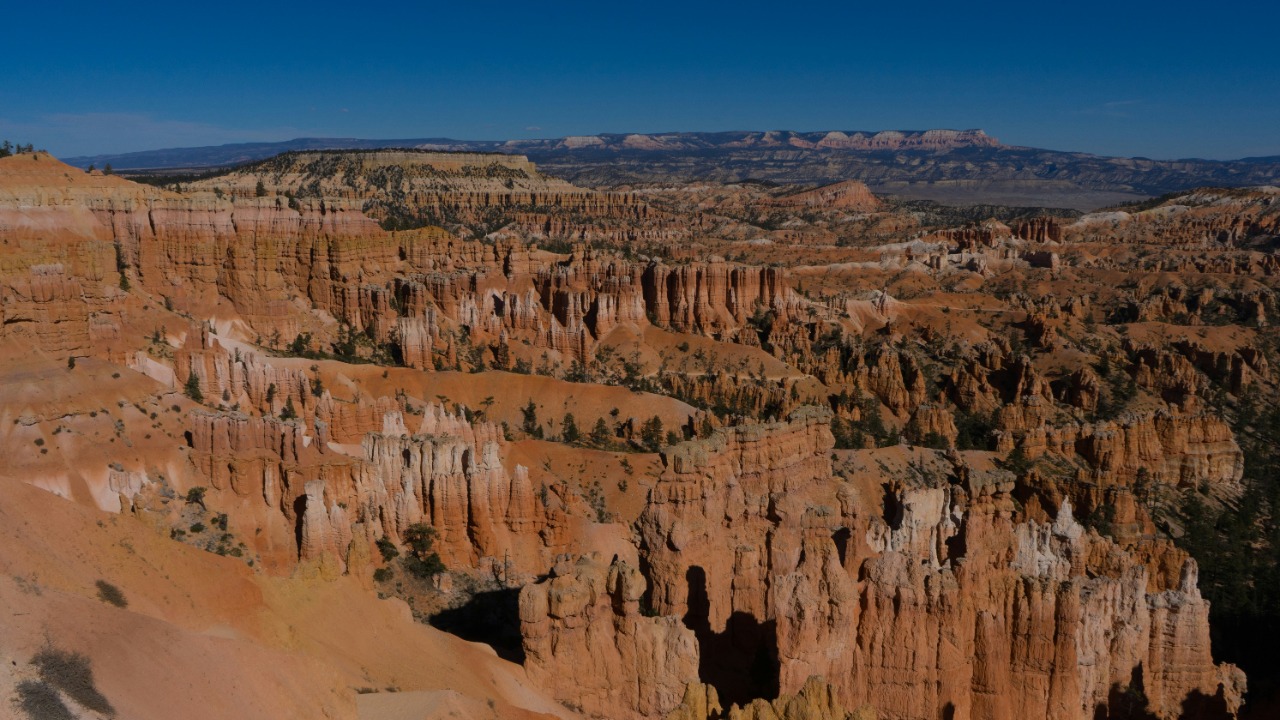

Utah’s desert is suddenly looking less like empty space on the map and more like the front line of a new resource race. A discovery of critical minerals and rare earth elements at a site called Silicon Ridge has raised the possibility that the state is sitting on one of the most consequential domestic deposits in the country, with implications for clean energy, artificial intelligence, and national security. I see in this find not just a mining story, but a test of how the United States intends to balance resource security, environmental risk, and local control in the age of electrification.
The early data suggest that this deposit could rival some of the world’s most important sources of rare earths, the obscure but indispensable ingredients inside everything from electric vehicle motors to precision-guided weapons. If the resource proves out at scale, Utah could move from a supporting player in the mining sector to a central hub in the global supply chain for critical minerals, reshaping how and where the country builds the technologies that will define the next several decades.
Utah’s quiet rise as a critical minerals powerhouse
Utah has long been known for copper, gold, and the sprawling open pit at Bingham Canyon, but the Silicon Ridge discovery signals a shift from traditional metals to the strategic materials that underpin modern technology. The state’s geology, stretching from the Wasatch Front to the red rock country of the south, has always hinted at deeper potential, and the new find suggests that Utah’s subsurface may hold a far broader suite of critical minerals than previously documented. When I look at the emerging picture, it is clear that Utah is no longer just a mining state, it is becoming a focal point in the race to secure the building blocks of the clean energy and digital economies.
That evolution matters because the United States has spent years worrying about its dependence on foreign suppliers for rare earth elements and other critical inputs. Utah’s combination of existing mining infrastructure, a workforce familiar with extraction, and a political culture that has historically supported resource development gives it a head start as companies move to explore and develop deposits like Silicon Ridge. The state’s growing profile as a center for critical minerals is already visible in how often it appears in discussions of domestic supply chains, and even a basic search for information about Utah’s mining and energy landscape now turns up references to rare earths alongside the familiar copper and coal.
Inside Silicon Ridge: a bevy of 16 critical minerals
The Silicon Ridge site is at the center of the current excitement because a Utah-based company has reported uncovering 16 critical minerals and rare earth elements there. That number is striking on its own, but what stands out to me is the breadth of the resource: instead of a single metal or a narrow set of elements, the deposit appears to contain a mix of both light and heavy rare earths along with other strategically important materials. In practical terms, that means Silicon Ridge is not just a niche play, it is potentially a multi-commodity asset that could feed several different industrial supply chains at once.
According to the company’s initial reporting, the Silicon Ridge deposit includes a “bevy” of critical minerals that align closely with the list identified by federal agencies as essential for economic and national security. The presence of both light and heavy rare earths is particularly important because heavy rare earths are harder to source and are vital for high-performance magnets and advanced electronics. The company has framed the discovery as a chance to help “secure America’s energy future,” and the description of 16 distinct critical minerals and rare earth elements at Silicon Ridge in Utah underscores why this single site is drawing national attention.
Why rare earths matter for AI, weapons, and EVs
Rare earth elements are not rare in the sense of being scarce in the Earth’s crust, but they are difficult and expensive to extract and process, which is why concentrated, accessible deposits like Silicon Ridge are so valuable. These elements sit inside the permanent magnets that spin the motors of electric vehicles, stabilize the guidance systems of missiles, and help power the data centers that train and run artificial intelligence models. When I look at the list of technologies that rely on rare earths, it reads like a catalog of the 21st century’s strategic priorities, from Tesla Model Y drivetrains to the cooling systems and power electronics inside AI-focused server racks.
The Utah desert deposit has been described as a major rare earth resource that could help fuel AI, weapons, and EV batteries in the United States, and that framing is not hyperbole. The site reportedly includes 16 high-grade rare earth elements, a mix that could support everything from neodymium-iron-boron magnets for electric motors to specialized alloys used in defense systems. Analysts have noted that the deposit could meaningfully reduce reliance on imports for some of these materials, especially if it proves capable of supplying a significant share of the world’s heavy rare earth supply, which is currently dominated by a small number of foreign producers.
A potential reshaping of the clean energy supply chain
For the clean energy sector, the Silicon Ridge discovery lands at a pivotal moment. The United States is trying to accelerate deployment of wind turbines, solar farms, and millions of electric vehicles, all of which depend on a steady flow of critical minerals. Today, much of that supply is mined and processed overseas, leaving domestic manufacturers exposed to geopolitical risk and price volatility. If Utah can provide a large, stable source of these materials, it could help shorten supply chains, lower transportation emissions, and give U.S. companies more control over their inputs.
Reporting on the Silicon Ridge deposit has emphasized that its mix of critical minerals could “reshape the clean energy supply chain” by providing a domestic alternative to imports for key components. The deposit’s combination of rare earths and other strategic elements has been likened to a modern resource rush, with some observers comparing the opportunity to a new kind of gold rush centered on the metals that make electrification possible. The description of Silicon Ridge’s deposit of critical minerals as a potential catalyst for a clean energy “gold rush” captures both the scale of the find and the intensity of interest from investors and policymakers who see supply security as a prerequisite for meeting climate goals.
National security stakes and the push for domestic control
Beyond climate and industry, the Silicon Ridge discovery carries clear national security implications. Rare earths and other critical minerals are embedded in radar systems, precision-guided munitions, communications gear, and the electronics that underpin modern military capabilities. For years, U.S. defense planners have warned that heavy dependence on foreign suppliers for these materials is a strategic vulnerability. A large, diversified deposit in Utah offers a chance to reduce that vulnerability by anchoring more of the supply chain inside U.S. borders.
The fact that the Utah desert deposit includes 16 high-grade rare earth elements is particularly relevant for defense applications, because heavy rare earths are essential for high-temperature magnets and specialized components used in advanced weapons systems. If Silicon Ridge can reliably produce these materials at scale, it could support both commercial and defense demand, easing pressure on supply lines that currently run through a handful of countries. The framing of the site as a resource that could fuel AI, weapons, and EV batteries reflects this dual-use reality, where the same elements that power consumer technologies also sit at the heart of national security infrastructure.
Economic promise for Utah communities
At the state and local level, the Silicon Ridge discovery represents a potential economic windfall. Mining projects of this scale can bring hundreds of direct jobs in extraction, processing, and engineering, along with indirect employment in transportation, construction, and services. For rural communities in Utah that have watched coal and other legacy industries decline, a new hub focused on critical minerals could offer a path to long-term economic diversification. I see a clear opportunity for the state to leverage its mining heritage while building out a more technologically sophisticated resource sector.
The company behind Silicon Ridge has framed the project as a way to help secure America’s energy future, but that national narrative is inseparable from the local impacts. New roads, processing facilities, and support infrastructure would reshape the surrounding region, bringing both investment and pressure on housing, water, and public services. The description of a Utah-based company uncovering a bevy of critical and rare earth minerals at Silicon Ridge in Utah hints at the scale of the project, and it will fall to state and county leaders to translate that promise into concrete benefits for workers and residents without repeating the boom-and-bust cycles that have marked past resource rushes.
Environmental and water concerns in a fragile desert
Any large mining project in Utah’s desert raises immediate questions about environmental impact, especially around water use and habitat disruption. Rare earth extraction and processing can be chemically intensive, and if not managed carefully, it can contaminate soil and groundwater. In an arid region where every acre-foot of water is contested, the prospect of a major new industrial user will inevitably draw scrutiny from farmers, tribes, and conservation groups. I find it impossible to separate the excitement over the minerals from the reality that they sit beneath fragile ecosystems already stressed by drought and climate change.
Silicon Ridge’s backers argue that modern mining techniques and tighter regulations can mitigate many of these risks, and they have an incentive to prove that a critical minerals project can operate with a lighter footprint than the worst examples from past decades. Still, the scale implied by a deposit that includes 16 critical minerals and rare earth elements suggests that any full build-out will be a major industrial undertaking. The same characteristics that make the site so valuable for the clean energy transition, including its potential to reshape supply chains and reduce reliance on overseas producers, also mean that the environmental stakes in this corner of Utah’s desert are unusually high.
Permitting, politics, and the pace of development
Even with a promising resource in the ground, the path from discovery to production is rarely quick or straightforward. Mining projects in the United States must navigate a complex permitting landscape that spans federal, state, and local agencies, with environmental reviews, public comment periods, and potential legal challenges at each step. In Utah, where resource development is often politically popular, there may be strong support for moving Silicon Ridge forward, but national debates over mining on public lands and the trade-offs of domestic extraction will still shape the timeline.
At the same time, the strategic importance of critical minerals has prompted calls in Washington to streamline approvals for projects that can reduce dependence on foreign suppliers. That tension between speed and scrutiny is likely to define the Silicon Ridge story in the coming years. The deposit’s potential to supply a significant share of the world’s heavy rare earths, as described in coverage of the Utah desert rare earth deposit, will only intensify pressure from industry and national security voices to move quickly, even as environmental and community groups push for thorough review.
How Utah could redefine America’s mineral strategy
Stepping back, the Silicon Ridge discovery forces a broader rethinking of how the United States approaches critical minerals. For years, policy has focused on diversifying imports and building recycling capacity, while domestic mining has remained limited. A large, multi-commodity deposit in Utah challenges that status quo by making a compelling case that some of the most important resources for the energy transition and digital economy can be sourced at home. If developed responsibly, Silicon Ridge could become a model for how to integrate extraction, processing, and manufacturing within a single regional ecosystem.
That vision will not materialize automatically. It will require investment in processing facilities so that raw ore does not simply leave Utah for refining overseas, as well as partnerships with automakers, battery manufacturers, and defense contractors that can anchor long-term demand. It will also demand a social license to operate, built on transparent engagement with local communities and credible commitments to environmental protection. The idea that Utah may be hiding the largest cache of critical minerals in the United States is more than a geological claim, it is an invitation to decide what kind of resource power the country wants to be in an era defined by clean energy, artificial intelligence, and geopolitical competition.
More from MorningOverview