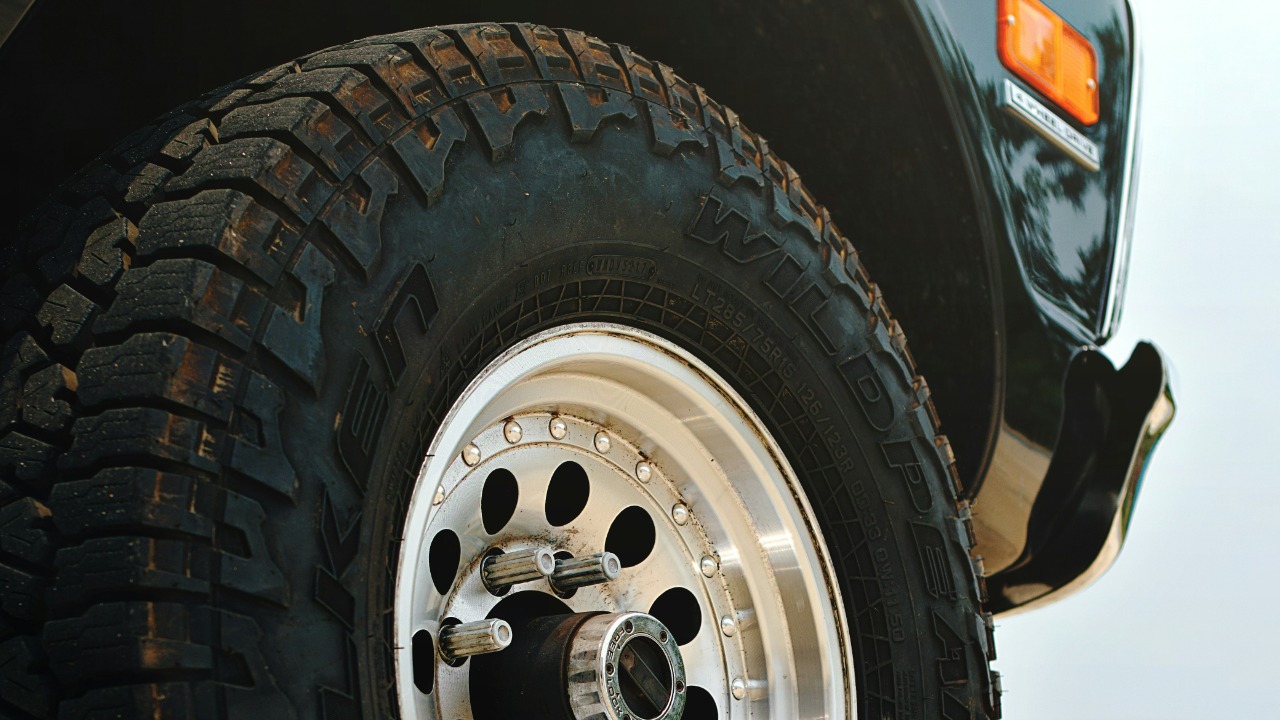

Across the United States, a quiet but consequential fight is unfolding over a small strip of metal embedded in rubber. Studded winter tires, once seen as a straightforward safety upgrade for icy roads, are now at the center of a policy debate that could soon turn routine winter driving into a criminal offense in at least one state. As lawmakers weigh bans and new penalties, drivers are being forced to choose between traction, road budgets, and the risk of a ticket.
I see that debate as a window into how states balance individual safety with shared infrastructure. The push to outlaw or sharply restrict studs is not happening in a vacuum, but against a backdrop of mounting evidence that they chew up pavement, cost taxpayers millions, and may not always deliver the safety edge drivers assume.
Why studded tires became a political flashpoint
Studded tires were designed for a simple purpose: to bite into ice when ordinary rubber slides. For drivers who regularly face black ice on rural highways or steep mountain passes, the promise of shorter stopping distances and better control can feel nonnegotiable. That is why, in much of the northern United States, studs have long been treated as a seasonal fact of life, part of the winter kit alongside snow shovels and windshield scrapers.
The politics start when those metal pins leave the ice and grind into bare asphalt. Tire engineers and transportation officials have documented how the use of studs can cost taxpayers millions of dollars in road wear every year, as the metal claws carve ruts that trap water and force expensive resurfacing projects, a tradeoff that has turned what once looked like a simple safety upgrade into a budget line item. As studs chip away at pavement, they also throw off small particles that contribute to air and water pollution, a side effect that has helped transform a niche equipment choice into a broader environmental and fiscal argument.
The safety promise, and its limits
On pure ice, the case for studs is straightforward. Metal pins can dig into a frozen surface in ways that even the best winter rubber compounds cannot, which is why drivers in mountainous regions and on untreated back roads swear by them. In the right conditions, studs can shorten braking distances and help a car track more predictably through corners, especially for heavier vehicles like full-size pickups and SUVs that are prone to sliding once momentum takes over.
Yet that advantage narrows quickly once the road surface changes. As transportation researchers have pointed out, studs are optimized for hard ice, not for the mix of slush, packed snow, and wet pavement that defines much of winter driving in the lower 48. On bare or merely damp asphalt, the metal can actually reduce grip compared with modern nonstudded winter tires, which rely on advanced rubber compounds and dense siping to maintain traction. That mismatch between perception and reality is part of what is driving lawmakers to revisit old assumptions about whether studs are still the best tool for most drivers, or a legacy technology whose costs now outweigh its benefits.
States that already treat studs as contraband
Some states have already answered that question decisively by outlawing metal studs outright. In warm-weather jurisdictions that rarely see ice, officials have concluded that there is little justification for letting drivers tear up pavement in the name of a safety benefit they will almost never need. In those places, simply bolting on studded tires can get you ticketed, a reflection of how far the policy pendulum has swung away from the old assumption that more hardware always equals more safety.
Reporting on where studs are banned highlights that outright prohibitions cluster in climates where ice is the exception, not the rule. States such as Hawaii and Mississippi are frequently cited as examples of places where studs are simply illegal, while other warm states like Louisiana have little practical need for them. Coverage of studded tire bans notes that these outright restrictions tend to fall on regions that never deal with ice in the first place, underscoring how climate and geography shape the legal map.
Where studs are allowed, but only on a tight leash
In colder regions, the legal picture is more nuanced. Rather than banning studs completely, many states allow them only during a defined winter season, a compromise that tries to capture the safety benefits on ice while limiting damage to bare pavement in shoulder months. Regulations in these places often specify exact start and end dates for when studs can be mounted, and some even tailor the rules by county or latitude to reflect local climate differences.
Guides to winter tire rules emphasize that state laws concerning the use of snow tire studs vary widely, with some states permitting studs year round, others only during certain months, and some not at all. One overview notes that a given State might allow studs in mountainous northern counties while prohibiting them in milder southern regions, a patchwork that can leave drivers guessing as they cross borders. Another resource on Regulations points out that Regions with cold climates such as Canada, Scandinavia and the northern U.S. generally allow studded tires when the roads are most likely to be icy, but may restrict them by county or latitude, a reminder that even within one state, the rules can shift with the weather map.
Washington and Oregon show how criminal penalties creep in
The clearest example of how a state can move from seasonal rules toward criminal-style penalties comes from the Pacific Northwest. In Washington, transportation officials remind drivers each year that they must remove studs by the end of March, or risk being cited. The state treats the deadline as a firm line between acceptable winter preparation and unnecessary road damage, and the message is blunt: keep the studs on too long, and you are breaking the law.
More information about studded tire regulations in Washington is available online, including the March 31 removal deadline that has become a fixture of the state’s winter driving calendar. South of the Columbia River, Oregon drivers face a similar rule, with officials in SALEM, Ore reminding motorists that they must ditch studs by March 31 or face a $165 fine if they are not towing or being towed. In both states, studs are legal in winter but treated as a liability once spring arrives, and the threat of a ticket is the tool that keeps drivers in line.
The Olympia push that previewed a full ban
Washington has also flirted with going much further. Lawmakers in Olympia have previously considered a bill that would have effectively priced studs out of the market and then outlawed them altogether, a two step strategy that reveals how quickly a seasonal rule can evolve into a de facto criminalization of everyday equipment. The proposal would have slapped a triple digit surcharge on each new set of studded tires, with the revenue earmarked for road repair, before phasing in a complete ban.
In that debate, one supporter acknowledged that the proposed fee was “just a tiny little drop in the bucket toward the damage they are causing,” but argued that $400 is “real money” for drivers who might think twice before paying such a premium. The same bill included a ban in 2025, a detail that underscored how the surcharge was less about raising revenue and more about sending a signal that studs were no longer welcome on Washington’s roads. Coverage of the measure noted that it was a Jan proposal that would have moved from a $100 fee on new studded tires to a full prohibition, a trajectory that shows how quickly a state can shift from managing studs to trying to eliminate them.
How other cold states are tightening the screws
Even in places where studs remain legal, the trend is toward tighter control. In the upper Midwest, states that once treated studs as a winter default are now more likely to pair them with strict calendars and enforcement. Drivers in Minnesota and Wisconsin navigate a mix of seasonal allowances and local restrictions, while neighboring Michigan has long weighed the cost of pavement damage against the needs of drivers in the Upper Peninsula. In these states, the conversation is less about whether studs should exist at all and more about how to confine them to the narrowest possible window.
Legal guides cataloging stud rules by jurisdiction show how granular the regulations have become. One resource on United States stud seasons lists states like Alabama, where Rubber studs are permitted but metal is illegal, and Florida, where the climate makes studs largely irrelevant. Another overview of winter tire stud laws notes that Some states permit the use of snow tire studs year round, while others only during certain months, and some do not allow snow tire studs at all. For drivers in Illinois or Texas, where winters are milder and ice events more sporadic, the rules tend to be stricter, reflecting a calculus that the damage is not worth the occasional storm.
Missouri’s statute and the line between equipment and offense
Missouri offers a glimpse of how studded tires are woven directly into state law. The Missouri Revisor of Statutes maintains the Revised Statutes of Missouri, and within that framework Section 307.171 spells out the conditions under which certain vehicle equipment, including traction devices, is permitted. By embedding studs in a numbered statute rather than a loose administrative rule, lawmakers have turned what might seem like a technical detail into a clear legal boundary that drivers cross at their peril.
The language in 307.171 sits alongside references to the Constitution, Committee, and Publications, underscoring that studded tires are treated as part of the broader safety code rather than an afterthought. When a state codifies studs this way, it is not a stretch to imagine how a future amendment could tighten the rules, raise fines, or even convert certain violations into misdemeanors. The statute becomes the hinge on which a policy shift can swing, and drivers who ignore it risk finding that a piece of winter gear has turned into the basis for a criminal charge.
Patchwork rules leave interstate drivers exposed
For truckers and road trippers, the patchwork of stud laws is more than a legal curiosity, it is a practical hazard. A driver who leaves a snowy mountain town with fully studded tires can cross into a neighboring state where those same tires are banned or tightly restricted, turning a safety precaution into a ticketable offense at the state line. That is especially true in regions where climate zones change quickly, such as the transition from the northern Rockies into the plains, or from the Great Lakes into the Midwest.
One guide aimed at commercial operators notes that Drivers in Connecticut may equip tires with metal studs between November 15 and April 13 each year, with the Legality listed as Allowed only within that window. Another overview of stud laws by State emphasizes that Some states permit studs year round while others ban them outright, a contrast that can catch out of state drivers off guard. For someone hauling freight from Michigan through Illinois and into Texas, the legal status of their tires can change multiple times in a single day.
Why some states are moving toward outright bans
Behind the push to criminalize studded tires in at least one state is a broader reassessment of how much damage they do relative to their safety payoff. Transportation agencies have tallied the cost of repairing rutted lanes and replacing prematurely worn pavement, and the numbers are sobering. The use of studded tires is said to cost taxpayers millions of dollars in road wear every year, a figure that does not include the secondary costs of increased noise, dust, and vehicle wear from driving on grooved surfaces.
Analyses of the tradeoff frame it as a choice between safety and infrastructure. One report notes that studs can shorten braking distances on ice, but also accelerate pavement wear to the point that roads need to be resurfaced years earlier than planned. Another technical overview from a tire manufacturer explains that, Additionally, as studded tires chip away at asphalt, they generate fine particles that contribute to air pollution, a hidden cost that rarely shows up in consumer marketing. When lawmakers weigh those impacts against the availability of modern nonstudded winter tires, which perform impressively in most conditions, it becomes easier to see why some are ready to declare that the era of metal studs should end.
The next state to criminalize studs will not be the last
Although no single report names the next state that will formally criminalize driving on studded tires, the direction of travel is clear. Articles cataloging where studs are already illegal list All the states where studded winter tires are illegal, including All the jurisdictions such as Alaska, Washington, Montana, and North Dakota that have drawn hard lines. Other coverage of stud bans points out that Outright prohibitions tend to start in warm regions, but the logic behind them is increasingly being echoed in colder climates that are looking for ways to stretch road budgets and cut emissions.
One analysis of the policy landscape notes that Sep discussions of stud bans often highlight Hawaii, Mississippi, and similar states as early adopters of strict rules, while more recent debates in places like Washington and Oregon show how the idea is migrating north. Another piece on the safety versus infrastructure tradeoff emphasizes that the core question is not whether studs work on ice, but whether they are the best tool for most drivers given the damage they cause. As more states codify their rules, from Wisconsin to Louisiana, the odds grow that at least one will take the final step and declare that driving on studs is not just a traffic infraction, but a criminal act. When that happens, it will not be an isolated quirk, but the latest move in a long running effort to reconcile winter safety with the shared cost of the roads beneath our tires.
What drivers should watch for as laws tighten
For now, the most important thing drivers can do is treat studded tires as a legal choice, not just a mechanical one. That means checking state specific rules before mounting studs, paying attention to seasonal deadlines, and recognizing that what is legal in one jurisdiction may be prohibited in the next. It also means weighing whether modern nonstudded winter tires, with their advanced compounds and tread designs, might offer enough grip without the legal and environmental baggage that studs carry.
Resources that compile stud laws by jurisdiction are a useful starting point, but they also underscore how quickly the landscape is changing. One overview of studded tire rules notes that Regions with cold climates such as Canada, Scandinavia and the northern U.S. generally allow studs in winter, yet even there, local authorities may restrict them by county or latitude. Another guide to state by state rules highlights that Some states are revisiting their regulations in light of new data on road wear and safety performance. For drivers in places as varied as Hawaii, Minnesota, and Texas, the message is the same: the law is catching up with the metal in your tires, and ignoring that shift could turn a winter safety habit into a costly, even criminal, mistake.
More from MorningOverview