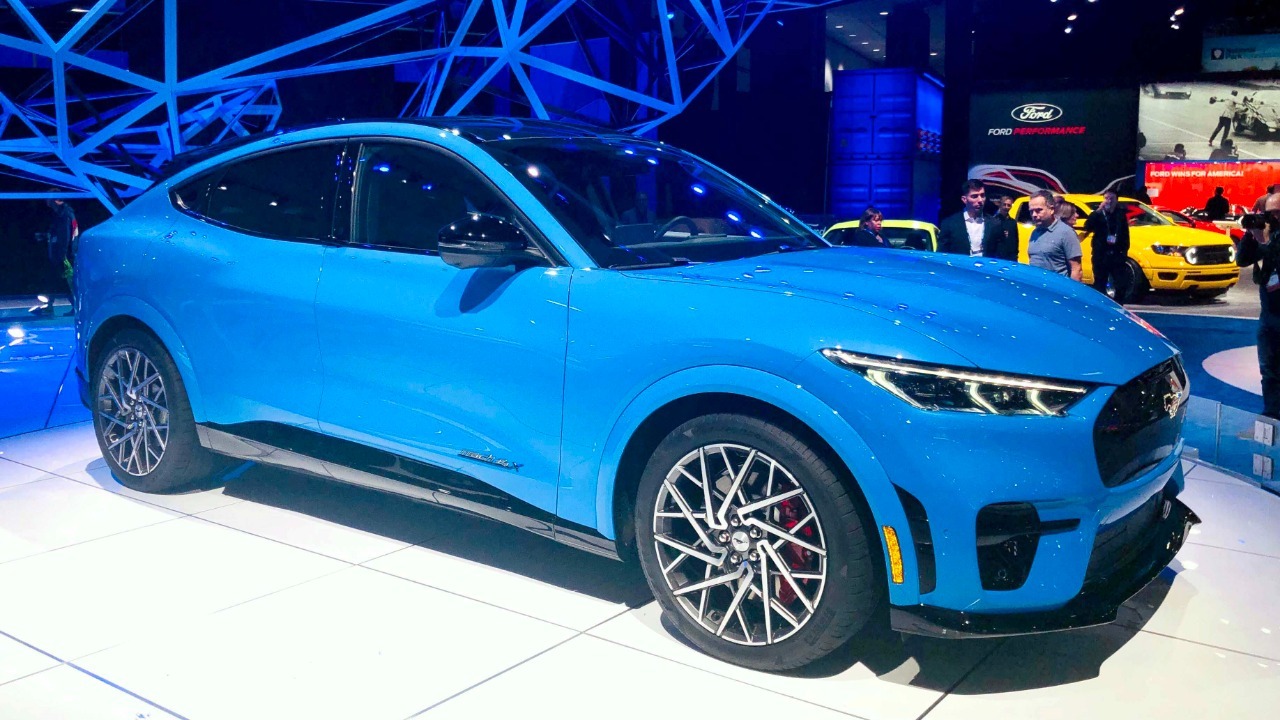

The 2025 Mustang Mach-E does not look radically different on paper, yet one key change in how it rides and responds transforms the way the electric crossover feels from behind the wheel. Ford has quietly reworked the suspension and chassis tuning so the latest Mach-E finally drives like the performance EV its styling has promised from the start. That single focus on composure and control, more than the added tech or sharper styling, is what turns the refreshed model into a far more convincing everyday performance car.
Instead of chasing headline-grabbing power figures, Ford has concentrated on how the 2025 Mustang Mach-E behaves on real roads, in real traffic, and over broken pavement. The result is a car that still delivers the instant shove EV buyers expect, but now does it with a calmer body, more predictable reactions, and a more natural steering feel that encourages you to push harder rather than back off.
The quiet suspension rethink that changes everything
The most consequential update for 2025 is not visible at a glance, because it sits in the springs, dampers, and bushings that govern how the Mustang Mach-E moves. Ford has reworked the suspension calibration, particularly on the Premium trim, to better control body motions without turning the ride harsh. Owners who have sampled the new setup describe a car that feels more tied down in corners, with less float and wallow when the road surface gets messy, which is exactly where earlier versions could feel out of step with their performance branding.
On enthusiast forums, one Well Known Member who moved into a 2025 Premium notes that the car is “supposedly” running a reworked suspension based on feedback from people who have already test driven it, and that impression lines up with the broader sense that Ford has targeted customer pain points rather than chasing novelty for its own sake. That kind of under-the-skin change rarely dominates spec sheets, but it is exactly the sort of tweak that can make an EV feel less like a fast appliance and more like a sorted driver’s car.
How the 2025 Premium and GT now feel from the driver’s seat
From the driver’s seat, the payoff from the suspension work is most obvious when you compare trims back to back. The rear-wheel-drive Premium has always been the sweet spot for range and comfort, but in 2025 it now feels more confident when you lean on it, with better control as weight shifts forward under braking or rearward under acceleration. That stability lets the car put its power down more cleanly, so the driver can focus on the line through a corner rather than managing body roll or mid-corner bobbing.
Step into the GT and the character changes, but the same underlying composure is there. One owner who sampled both a friend’s RWD Premium and the new GT described the earlier car as “crazy fast” yet still felt that the GT takes performance “to an entirely new level,” especially when they drove it immediately after the GT test drive. That kind of reaction suggests the chassis is now keeping up with the powertrain, so the extra shove in the GT feels usable rather than overwhelming, and the gap between trims is defined by intent rather than by how much body motion you are willing to tolerate.
Ford’s mid-cycle strategy: less flash, more feel
Ford’s approach to the 2025 Mustang Mach-E refresh is a study in restraint. Instead of ripping up the formula, the company has treated this as a mid-cycle refinement, focusing on the details that matter most to people who already live with the car every day. The suspension retune sits at the center of that strategy, but it is part of a broader effort to make the Mach-E feel more cohesive, from the way the steering weights up in a bend to how the cabin isolates sharp impacts without feeling disconnected.
That philosophy is reflected in reporting that notes how, starting now, for its mid-cycle refresh, Ford has made “notable tweaks” across the Mach-E family rather than headline-grabbing overhauls. The familiar circular gear selector remains, the basic layout is unchanged, and the focus instead is on how the car drives and how its systems work together. In practice, that means the Mach-E feels less like a first-generation experiment and more like a polished second draft that has listened carefully to early adopters.
Sharper looks that finally match the way it drives
While the suspension work is the most transformative change from behind the wheel, the 2025 Mustang Mach-E also benefits from styling updates that better communicate its intent. The exterior still carries the same coupe-like roofline and muscular haunches, but the details have been massaged to give it a more assertive stance. The front and rear treatments are crisper, the lighting signatures are more distinctive, and the overall impression is of a car that has grown into its own skin.
One early review of the Exterior notes that, visually, the 2025 Mustang Mach-E retains its familiar sporty silhouette, but there are “notable styling” changes that freshen the look without abandoning the original design. That balance matters, because the Mach-E’s styling has always promised a level of dynamism that the previous ride and handling did not fully deliver. With the chassis now catching up, the sharper bodywork feels less like a costume and more like an honest reflection of how the car behaves when you turn the wheel.
Factory tweaks aimed squarely at customer pain points
Ford has been explicit that the 2025 Mustang Mach-E updates are meant to address specific complaints from existing owners rather than to chase a new audience. That is why the company has focused on areas like ride quality, steering feel, and driver assistance behavior, all of which shape how relaxing or fatiguing the car is to live with. The suspension retune is central to that effort, because it directly affects how the car copes with potholes, expansion joints, and quick lane changes on the highway.
The company has framed the 2025 Mustang Mach-E as a model that adds sportier looks, auto lane changes and more in a way that “addresses customer pain points.” That language is not marketing fluff in this case, because the most meaningful change is not a new gadget but a recalibrated suspension that makes the Mach-E feel less busy and more planted at speed. When the car no longer fidgets over every surface imperfection, the driver can trust it more, and that trust is what turns a quick EV into a genuinely enjoyable one.
Dealer-level framing: comfort, confidence, and commitment
On the retail side, dealers are leaning into the idea that the 2025 Mustang Mach-E is a more mature and satisfying product rather than a radical departure. They are highlighting the way the updated car blends comfort with a more dynamic character, which is exactly what a better tuned suspension delivers. The message is that buyers are not just getting a new face or a software update, but a car that feels more composed on the road and more aligned with the Mustang badge on its nose.
One dealership presentation even frames the launch as Christi Hubler Ford Celebrates Ford and its “Commitment” to “Customer Satisfaction” with the “Upgraded” 2025 Mustang Mach-E, emphasizing that the refreshed model delivers a “more dynamic aesthetic.” That language dovetails neatly with the mechanical changes, because a more settled ride and sharper handling are exactly what make a car feel both more comfortable and more dynamic in everyday use. The suspension tweak is the bridge between those two promises.
Why the reworked ride matters more than raw speed
Electric vehicles like the Mustang Mach-E have never struggled to deliver straight-line speed. Instant torque and quiet powertrains make it easy to impress passengers with a quick launch, and both the Premium and GT trims have long been “crazy fast” by any reasonable standard. The problem has been what happens after that initial hit, when the road starts to curve or the surface gets rough, and the driver needs the car to communicate clearly rather than simply accelerate.
By tightening up the suspension and refining the way the chassis responds, Ford has shifted the Mach-E’s character from raw acceleration to controlled performance. Owners who have sampled the 2025 Premium and GT back to back describe a more coherent experience, where the extra power in the GT feels like a natural step up from the RWD Premium rather than a leap into something unruly. The fact that a driver could be “so torn” between trims after sampling a friend’s RWD Premium and then climbing into the GT, as described in the test drove 2025 GT and Premium discussion, speaks to how well the underlying tuning now supports both versions.
How the updated Mach-E fits into Ford’s broader EV push
The 2025 Mustang Mach-E does not exist in a vacuum. It is a key part of Ford’s broader electric strategy, which aims to balance enthusiast appeal with mass-market usability. By focusing on suspension tuning and real-world drivability rather than chasing ever larger batteries or more extreme performance numbers, Ford is signaling that it understands what keeps EV owners loyal once the novelty wears off. A car that rides better, steers more naturally, and feels more predictable in emergency maneuvers is one that people are more likely to recommend to friends and family.
That approach also helps the Mach-E stand out in a crowded field of electric crossovers that often feel similar in straight-line performance but differ dramatically in how they handle a twisty road or a long commute. With the 2025 updates, the Mustang Mach-E now has a clearer identity as a driver-focused EV that still respects comfort and practicality. The single most important tweak, the reworked suspension, is not something you can see in a spec sheet, but it is the change you feel every time the road throws something unexpected at you, and it is what finally makes the Mach-E drive the way it always looked like it should.
More from MorningOverview