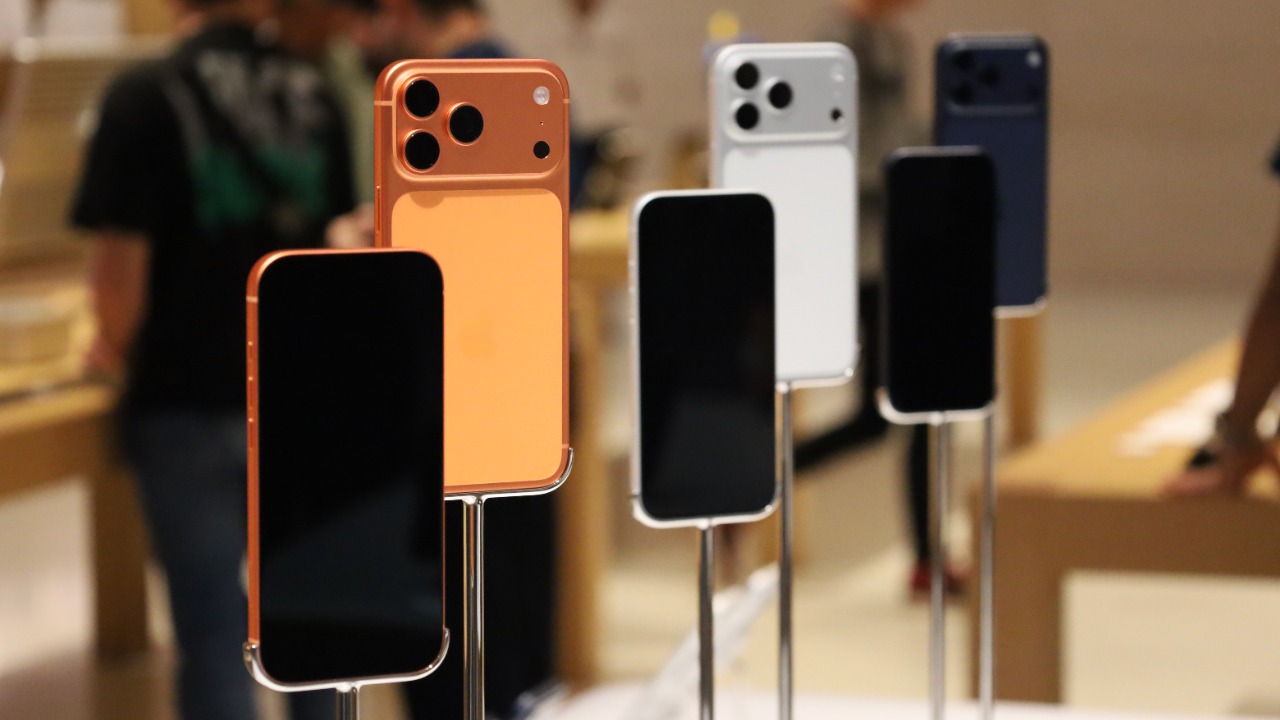

The iPhone 17’s most eye catching upgrade is not its camera or processor, but a display treatment that quietly rewrites the rules for everyday use. For the first time on an iPhone, the screen itself is designed to cut reflections so aggressively that a basic glass protector can undo a marquee feature.
That shift turns a routine accessory decision into a real trade off, forcing buyers to choose between preserving Apple’s new viewing experience and sticking with the cheap, familiar protectors that have lived on their phones for years.
Apple’s new display priority: reflections, not just scratches
For more than a decade, iPhone buyers have been trained to think about screen protection almost entirely in terms of scratch resistance and shatter survival. With the iPhone 17 family, Apple is clearly signaling that glare control now belongs in that same top tier, thanks to a new generation of Ceramic Shield glass paired with an aggressive anti reflective coating. Instead of treating reflections as a minor annoyance, the company is building the display around the idea that outdoor readability and eye comfort are core to the experience, not a nice to have.
That change matters because it reframes what “protecting” the screen even means. If the panel is engineered to be less reflective out of the box, then slapping a generic slab of glass on top no longer counts as neutral. It becomes a modification that can erase the very benefit Apple is selling, especially when the coating is tuned to make the display only 4.6% reflective in the first place.
How Ceramic Shield 2 changes the screen protector equation
At the heart of this shift is a new version of Apple’s toughened glass, often described as Ceramic Shield 2, that is designed to be both more durable and more optically sophisticated than the first generation. The company is effectively telling buyers that the front of the iPhone 17 is already a premium, multi layer system, not a bare pane waiting for a third party to finish the job. That message is reinforced by the way Apple pairs the glass with the anti reflective stack, treating them as a single engineered surface rather than separate components.
In practice, that means the iPhone 17’s front is less of a blank canvas for accessories and more of a finished product that can be degraded by extra layers. When I look at the way Apple positions Ceramic Shield in its marketing and technical briefings, the implication is that the glass is tough enough for daily life without a cheap protector, and that the real risk now is compromising the optical performance that Ceramic Shield 2 is meant to unlock.
The anti reflective breakthrough that standard glass cancels out
The most consequential part of the iPhone 17’s front is not the glass itself but the anti reflective coating that sits on top of it. This layer is tuned to cut down on ambient reflections so aggressively that it changes how the screen looks in bright environments, flattening harsh glare and making content pop in situations where older iPhones would wash out. It is the kind of improvement you notice the first time you step into direct sun and can still comfortably read a long email or navigate in Apple Maps without squinting.
That is precisely why a basic protector becomes such a problem. A standard sheet of tempered glass, with no special optical treatment, effectively replaces Apple’s coating with a plain, reflective surface. The result is that the iPhone 17’s signature anti glare behavior is neutralized, which is exactly what detailed testing of Screen Protectors Without AR Coating Cancel Out the phone’s Anti Reflective Display has shown. Instead of enhancing the device, the accessory drags it back toward the more mirror like behavior of older panels.
Why “standard” screen protectors are suddenly a bad fit
For years, the default accessory playbook has been simple: buy a new iPhone, grab a cheap three pack of tempered glass from a big box store or an online marketplace, and call it a day. Those protectors were designed for a world where the underlying display glass was mostly about hardness and impact resistance, not about carefully tuned optical coatings. On the iPhone 17, that assumption breaks down, because the protector is no longer sitting on a neutral surface, it is sitting on a precision engineered anti reflective stack.
When you put a generic protector on top of that stack, you are not just adding a sacrificial layer, you are replacing Apple’s carefully calibrated interface with the world. The result is a phone that behaves more like an older model in bright light, even though you paid for the latest hardware. That is why I see the iPhone 17 as the first mainstream device where a “standard” protector is not just suboptimal but actively misaligned with the product’s design, a point underscored by the way Ryan Christoffel and others have framed the trade off between glare control and add on glass.
What Apple is (and is not) saying about scratches and edges
One reason many buyers cling to protectors is fear of micro scratches and edge damage, especially on a brand new flagship. Apple has tried to calm some of those concerns by addressing reports of marks on the iPhone 17’s frame and glass, arguing that what some users see as defects are in fact normal characteristics of the material. In its own conversations with reviewers, the company has stressed that the edges are no different from those of other recent models, and that the underlying durability story has not fundamentally changed.
That stance is captured in Apple’s response to questions about iPhone 17 blemishes, where the company has been quoted as saying that Apple, According to its own assessment, the marks some people notice are not actually scratches in the traditional sense. From Apple’s perspective, Ceramic Shield 2 and the surrounding materials are robust enough that most users can safely skip a protector, especially if they are more concerned about display quality than about keeping the glass in museum condition.
How anti reflective coatings work, and why they are so fragile
To understand why the iPhone 17’s display is so sensitive to add on glass, it helps to look at how anti reflective coatings function in the first place. These layers are typically made from thin films with carefully chosen refractive indices, stacked in a way that causes incoming light to interfere with itself and cancel out at the surface. When tuned correctly, they can dramatically reduce the amount of light that bounces back toward your eyes, which is why the iPhone 17 can hit that 4.6% reflective figure instead of behaving like a tiny mirror.
The catch is that these coatings are extremely sensitive to what sits on top of them. Add a plain glass layer, and the carefully tuned interface between air and coating is replaced by a new boundary between glass and air, which the original design never accounted for. That is why a protector without its own anti reflective treatment does not just slightly reduce the benefit, it can effectively erase it. In optical terms, the protector becomes the new front surface of the system, and unless it is engineered to cooperate with the underlying stack, the original anti reflective behavior is lost.
Choosing the right kind of protection for iPhone 17
For buyers who still want some form of physical protection, the iPhone 17 era demands a more nuanced approach than “any glass is fine.” The first option is to skip a protector entirely and trust Ceramic Shield 2, accepting the risk of minor cosmetic marks in exchange for the full benefit of the Anti Reflective Display. That path will appeal to people who use their phones heavily outdoors, rely on accurate color work in apps like Lightroom or Procreate, or simply care more about day to day readability than about resale value.
The second option is to seek out protectors that explicitly advertise their own anti reflective coatings and are tuned for the iPhone 17’s optics. These will not be the cheapest accessories on the shelf, and they may be harder to find in the early months, but they are the only way to preserve most of the glare reduction while still adding a sacrificial layer. When I scan the growing wave of product listings tailored to the new phones, the key differentiator is whether they mention anti reflective or oleophobic treatments that are designed to work with Apple’s own stack rather than overwrite it.
Everyday trade offs: glare, fingerprints, and drop anxiety
In daily use, the choice between a bare iPhone 17 screen and a standard protector comes down to a familiar triangle of trade offs: glare, smudges, and impact protection. A naked display will give you the best possible outdoor visibility and the truest colors, but it will also show fingerprints more readily and leave you more exposed in a serious drop. A basic protector, on the other hand, will soak up some of those smudges and may crack instead of the underlying glass, but it will also bring back the kind of reflections that the Anti Reflective Display was built to eliminate.
There is also a psychological dimension that Apple cannot fully control. Many people simply feel better knowing there is a sacrificial layer between their phone and the world, even if the data suggests Ceramic Shield 2 is robust enough on its own. That is why I expect to see a split in the iPhone 17 audience: some will embrace the new display as a reason to finally ditch protectors, while others will hunt for premium, anti reflective compatible options rather than go back to the cheap, glossy glass that made sense on older models but now undermines the very feature they just paid for.
More from MorningOverview