
From 2,000 feet above the interstate, a small single‑engine plane can see what radar guns on the shoulder cannot: long stretches of highway where drivers treat the speed limit as a suggestion. In one Midwestern state, that vantage point has quietly become a central tool in the fight against deadly crashes, with troopers in the sky timing cars with stopwatches and relaying violations to colleagues waiting on the ground.
Instead of relying solely on roadside patrols or automated cameras, this state has revived an old‑school aviation tactic and scaled it into a modern traffic‑enforcement program. The result is a system that can clock a driver’s speed over hundreds of yards, document aggressive behavior that would be hard to catch from a cruiser, and send a clear message that even wide‑open rural highways are not beyond the reach of the law.
Why Missouri is taking speed enforcement to the sky
The state leaning hardest into aerial speed enforcement is Missouri, where the Missouri State Highway Patrol has turned aircraft into a routine part of its traffic strategy. The agency is not dabbling with a one‑off experiment; it has built a structured program that treats planes as another patrol asset, alongside cruisers and motorcycles, to police some of the state’s fastest and most crash‑prone corridors. By putting troopers above the traffic stream, commanders can monitor long segments of interstate that are difficult to cover from the ground and can respond to patterns of speeding rather than isolated cars.
According to reporting on the program, the Missouri State Highway Patrol completed at least 40 aerial enforcement operations in a recent year, a scale that reflects how central the tactic has become to its approach to speed and aggressive driving. Those flights, conducted at roughly 2,000 feet, focus on stretches of interstate where troopers have documented high crash counts and chronic speeding, and they are designed to feed a steady flow of violators to ground units staged along the route. The agency’s own description of the program underscores that this is not a publicity stunt but a sustained effort to curb dangerous driving through coordinated air‑to‑ground operations, with each mission planned around specific problem areas and measurable results, as detailed in coverage of the aerial enforcement operations.
How a stopwatch and painted lines replace radar
From the outside, “speed enforced by aircraft” can sound like a high‑tech promise of laser sensors and automated tracking. In practice, the method is surprisingly simple, and that simplicity is part of its power. The Missouri State Highway Patrol uses a technique that dates back decades: a trooper in the aircraft times how long it takes a vehicle to travel between two fixed points on the pavement, then uses basic math to calculate speed. The pilot or observer does not need exotic equipment, only a clear view of the road, a stopwatch, and a way to talk to troopers on the ground.
On the highway, that system starts with “blocks,” reflective markings or painted lines laid out at measured intervals along the roadway. When a target vehicle’s front bumper crosses the first block, the trooper in the plane starts the stopwatch; when it reaches the second block, the trooper stops it and converts the elapsed time into miles per hour. If the calculated speed exceeds the posted limit by a meaningful margin, the trooper radios a description of the vehicle and its lane position to ground units waiting ahead. This low‑tech, time‑over‑distance method is the same basic approach described in broader explanations of aircraft enforcement, where pilots simply fly above the car at the same speed or slightly slower and monitor how long it takes to cover the marked distance, as outlined in reporting on aircraft‑based speed monitoring.
The Missouri playbook: blocks, briefings, and busy interstates
Missouri’s version of this system is built around careful site selection and repeatable procedures. The highway patrol identifies roadways with a high volume of traffic violations and serious crashes, then lays out the reflective blocks that make stopwatch timing possible. Those blocks are not random; they are placed at measured distances that allow troopers to calculate speed quickly and accurately, and they are often concentrated on straight segments of interstate where drivers are most tempted to push well beyond the limit. Before each mission, supervisors brief both air and ground units on the target area, the direction of travel to focus on, and the specific mile markers where blocks are located.
Once the aircraft is in position, the operation becomes a kind of assembly line. The trooper in the plane watches for vehicles that stand out from the flow, times them between blocks, and calls out violators to troopers waiting on the shoulder or in median crossovers. Those ground units then pull out, locate the described vehicle, and make the stop, often within a few miles of the timed segment. Detailed accounts of the program describe how the highway patrol uses these blocks and pre‑planned corridors to stop speeders and other violators, and how the cost of the aircraft and pilot’s salary is weighed against the number of citations and crashes prevented, as laid out in coverage of how Missouri troopers use planes.
Inside a flight: what troopers see from 2,000 feet
From the cockpit, an aerial enforcement mission is part surveillance, part coordination drill. The aircraft typically flies at about 2,000 feet above the highway, high enough to stay clear of obstacles but low enough for the trooper to track individual vehicles and see the reflective blocks on the pavement. The trooper in the plane watches for patterns that are hard to spot from the ground, such as a driver weaving through traffic, tailgating multiple cars in succession, or accelerating sharply after passing a marked cruiser. When a vehicle stands out, the trooper times it through the blocks, confirms the speed, and then immediately starts talking to the ground.
In the airplane, a trooper with the MSHP Aircraft Division uses a stopwatch to measure the time it takes a driver to go from one block to the next, then radios that information to colleagues below. The description typically includes the vehicle’s color, make, lane position, and any distinctive features, along with the recorded speed and the block segment where it was timed. Ground units, already staged along the route, listen for those calls and move into position to intercept the vehicle. Reporting on these missions describes how the MSHP Aircraft Division has been doing this work for a long time, with troopers emphasizing that the stopwatch method has remained reliable even as other technologies have come and gone, as detailed in coverage of how highway patrol catches speeding drivers from the air.
From sky to shoulder: how stops unfold on the ground
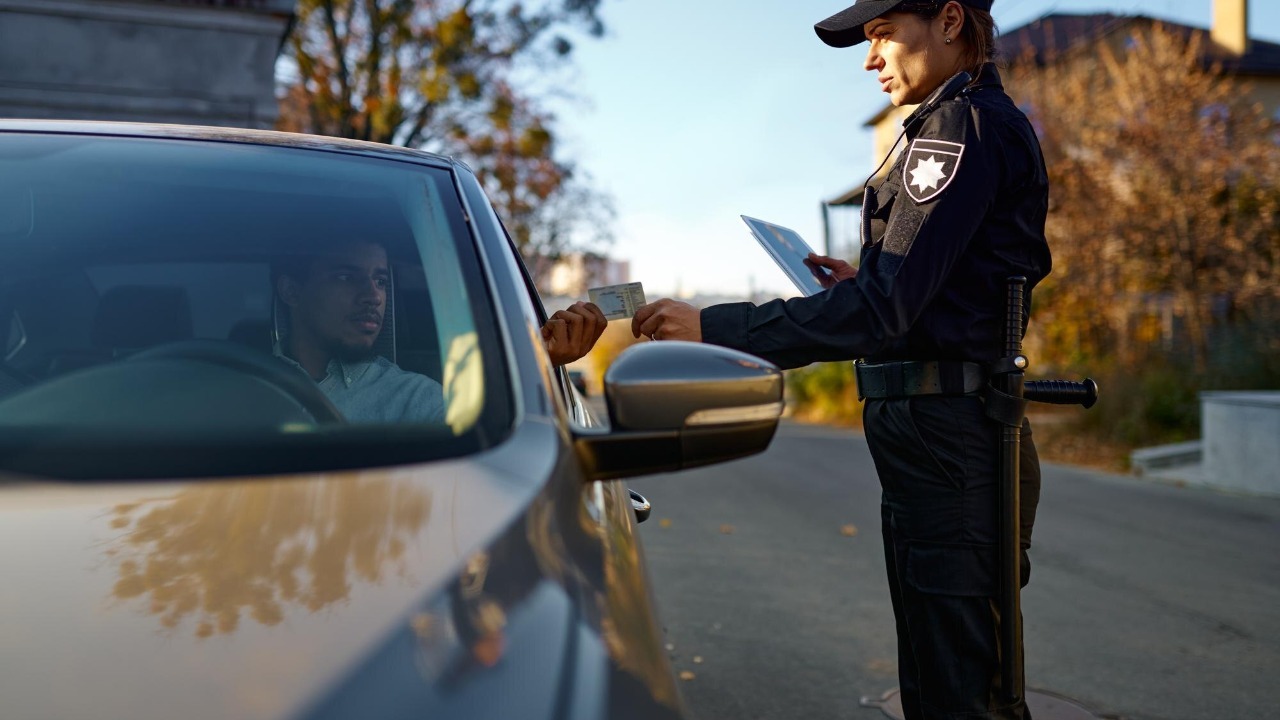
For drivers, the first sign that they have been clocked from above is not the sound of an aircraft but the flash of red and blue lights in the rearview mirror. Troopers on the ground are the visible face of the operation, and their work begins long before the first stop. Units are positioned at strategic points along the enforcement corridor, often in pairs so that one trooper can pull out to make a stop while another remains in place to catch the next violator. When the aircraft calls out a speeding vehicle, the nearest unit merges into traffic, confirms the description, and initiates a stop as safely as possible.
Once the vehicle is on the shoulder, the trooper explains that the stop originated from an aircraft observation, a detail that can surprise drivers who never saw the plane. The citation or warning is based on the timed speed between the blocks, which is treated as evidence in the same way as a radar or lidar reading. Ground troopers rely on the aircraft’s stopwatch data and their own observations of any additional violations, such as unsafe lane changes or following too closely. Local television coverage has shown how these stops play out in real time, with anchors like John Murphy introducing segments and reporters such as Caleb Anderson walking viewers through the process as they stand beside troopers and watch the aircraft feed calls to the highway, as seen in a broadcast on how the Missouri Highway Patrol catches speeding drivers from the air.
The roots of aircraft enforcement and its old‑school tools
Missouri’s program may feel novel to drivers who have grown used to roadside radar signs and smartphone speed alerts, but the idea of using planes to catch speeders is not new. For decades, highway patrol agencies have experimented with aircraft as a way to monitor long, straight stretches of road where traditional enforcement struggles. The basic concept has changed little: a trooper in the air matches the speed of a target vehicle or flies slightly slower, times its progress over a known distance, and then relays the result to a unit on the ground. What has evolved is the level of coordination and the willingness of agencies like Missouri’s to invest in making the tactic a regular part of their toolbox.
Earlier accounts of aircraft enforcement describe how highway patrols used simple stopwatches and visual cues long before GPS and digital mapping were widely available. On most freeways, pilots would simply monitor speed by flying low above the car at either the same speed or slower, then use the elapsed time between reference points to calculate how fast the driver was going. That low‑tech approach remains at the heart of modern programs, even as agencies refine their procedures and integrate better radios and navigation tools, a continuity that is clear in explanations of how aircraft signs reflect real enforcement.
Why Missouri thinks planes are worth the cost
Running an aircraft division is not cheap, and Missouri’s decision to keep planes in the air for traffic enforcement reflects a calculation that the safety benefits outweigh the expense. Each mission involves the cost of fuel, maintenance, and the pilot’s salary, along with the time of the trooper in the aircraft and the ground units assigned to the corridor. Commanders weigh those costs against the number of violations detected, the deterrent effect on drivers who know aircraft are in use, and, most importantly, the potential reduction in serious crashes on the targeted routes.
In practice, the patrol’s leadership has argued that aircraft can be more efficient than saturating a corridor with additional cruisers, especially on rural interstates where long sightlines and high speeds make traditional enforcement difficult. A single plane can monitor multiple miles of highway at once, identify the worst offenders, and direct ground units only when a clear violation has been documented. That targeted approach allows the patrol to focus on the drivers who pose the greatest risk, rather than pulling over every car that drifts a few miles per hour over the limit. Accounts of how the highway patrol identifies high‑violation roadways, sets up blocks, and factors in the pilot’s salary when evaluating the program show that the agency is treating aircraft enforcement as a strategic investment rather than a novelty, as detailed in reporting on how Missouri uses planes to stop speeders.
Drivers’ reactions and the psychology of being watched from above
For drivers, the idea that a plane might be timing their car from 2,000 feet up can feel both remote and unnerving. Many have grown accustomed to seeing “speed enforced by aircraft” signs without ever encountering a real operation, which can breed skepticism about whether anyone is actually watching. Missouri’s program cuts against that complacency by pairing those signs with active missions, so that the warning on the roadside reflects a genuine possibility that a trooper is overhead with a stopwatch in hand. When drivers who are stopped learn that their speed was measured from the sky, the surprise itself can be a deterrent.
That psychological effect is part of why agencies continue to invest in aircraft enforcement even when other technologies are available. The knowledge that enforcement can come from an unexpected direction changes how some drivers think about wide‑open stretches of interstate, where the absence of visible patrol cars might otherwise invite risky behavior. Coverage of Missouri’s operations has highlighted how Most of the public expects police to enforce speed with ground‑based tools, and how the use of aircraft challenges that assumption by extending the patrol’s reach vertically as well as horizontally, a dynamic captured in reporting on how this US state is targeting speeders from the air.
From Missouri to the broader debate over traffic enforcement
Missouri’s embrace of aircraft enforcement lands in the middle of a broader national debate over how aggressively to police traffic and what tools to use. Some communities have leaned into automated cameras and digital ticketing, while others have pulled back on traffic stops in response to concerns about equity and over‑policing. By contrast, the Missouri State Highway Patrol has doubled down on a method that relies on human judgment at every step, from the trooper in the plane deciding which car to time to the trooper on the ground choosing whether to issue a citation or a warning.
That human‑driven model has its own trade‑offs. It allows troopers to focus on the most dangerous behavior, such as extreme speeding or aggressive weaving, rather than minor technical violations, but it also depends on consistent training and oversight to ensure that discretion is used fairly. The program’s visibility, with aircraft circling above major interstates and multiple ground units working in concert, makes it a high‑profile symbol of the state’s priorities on road safety. Earlier descriptions of highway patrols using airplanes to catch speeders, including accounts of how a Highway Patrol trooper in Jul used a stopwatch to time cars on a straight piece of road while another trooper waited ahead to make the stop, show that Missouri is part of a longer tradition of agencies turning to the sky when the ground alone is not enough, as reflected in reporting on how Highway Patrol uses airplane to catch speeders.
More from MorningOverview